
Schuman: The Hanging Gardens of Brussels
Let’s turn the Schuman Roundabout into a more sustainable hub connecting a green corridor between Cinquantenaire Park and Royal Park.
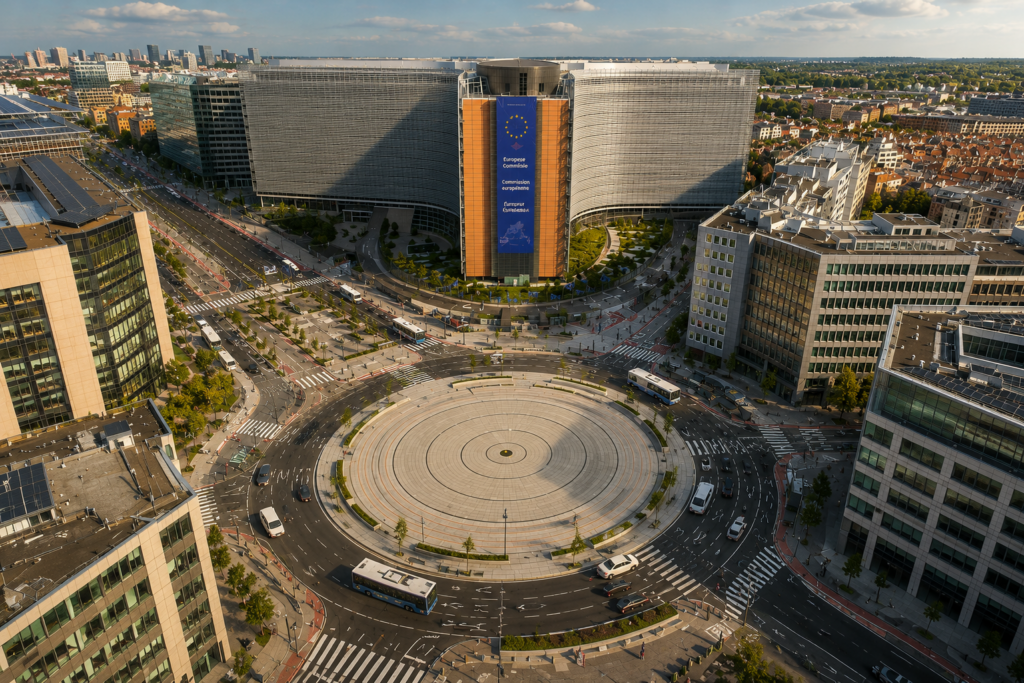
During Europe’s hottest ever June on record, a concrete desert has been unveiled in Brussels: the Schuman Roundabout, which has become a shadeless expanse in an effort to create a more pedestrianised zone in the heart of the European Quarter. Through a combination of budget cuts, building extension, governance failures, the final outcome is far from the original design which included an area shaded by a green roof. Francis De Wolf, lead Belgian architect of the project, described the result as “the worst possible outcome”.
But it shouldn’t take a fancy architect firm to envision a roundabout built in an age of sustainable progress.
But it shouldn’t even take a fancy architect firm or a massive urban planning department to envision a roundabout built in an age of sustainable progress. It takes a little creativity, a basic vision of a more sustainable future, and a little backbone in decision-making.
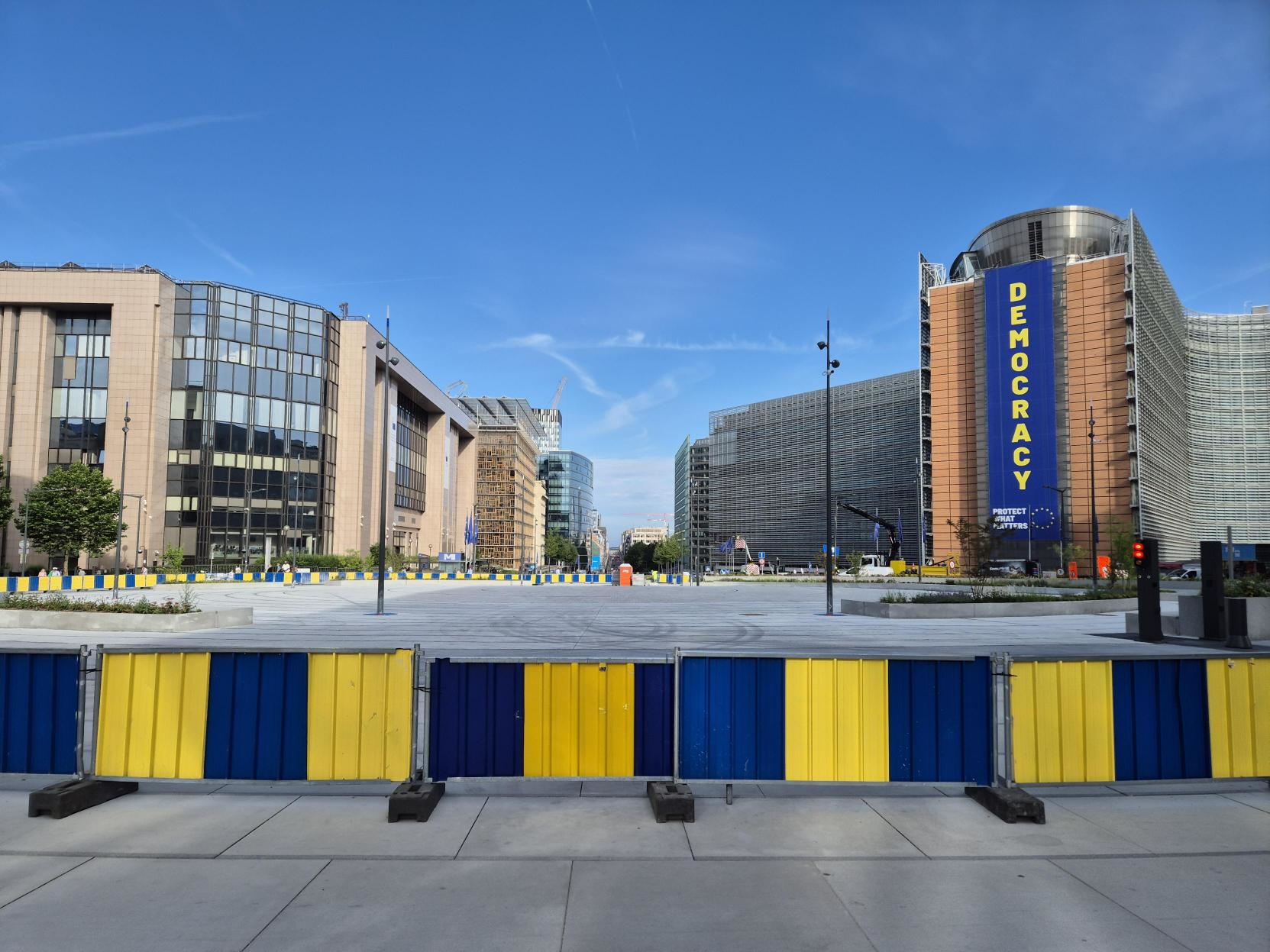
Like many others in Brussels, REVOLVE is confused by the development and implementation of the Schuman roundabout project. The immediate question is: why is it so difficult to include more trees in urban plans? Legislation should simply make it mandatory to include trees.
The EU Nature Restoration Regulation, a historic step in enshrining the protection and restoration of nature in law, sets a legal requirement for 10% tree coverage in cities by 2050, alongside a commitment to no net loss of green space. Brussels’s own Environment Minister, Alain Maron, told the Brussels Times in 2024 that “every square metre counts” when it comes to creating space for nature in cities. By our calculation, the Schuman Roundabout is approximately one hectare. That’s 10,000 square metres of missed opportunity.
Green spaces in cities such as urban forests reduce air pollution, decrease the urban heat island effect by up to 10 degrees Celsius, and enhance overall mental well-being. There’s a clear consensus that integrating nature into urban planning makes cities more livable. And not only for people. Trees and bushes and flowers attract urban biodiversity, providing green corridors through urban areas.
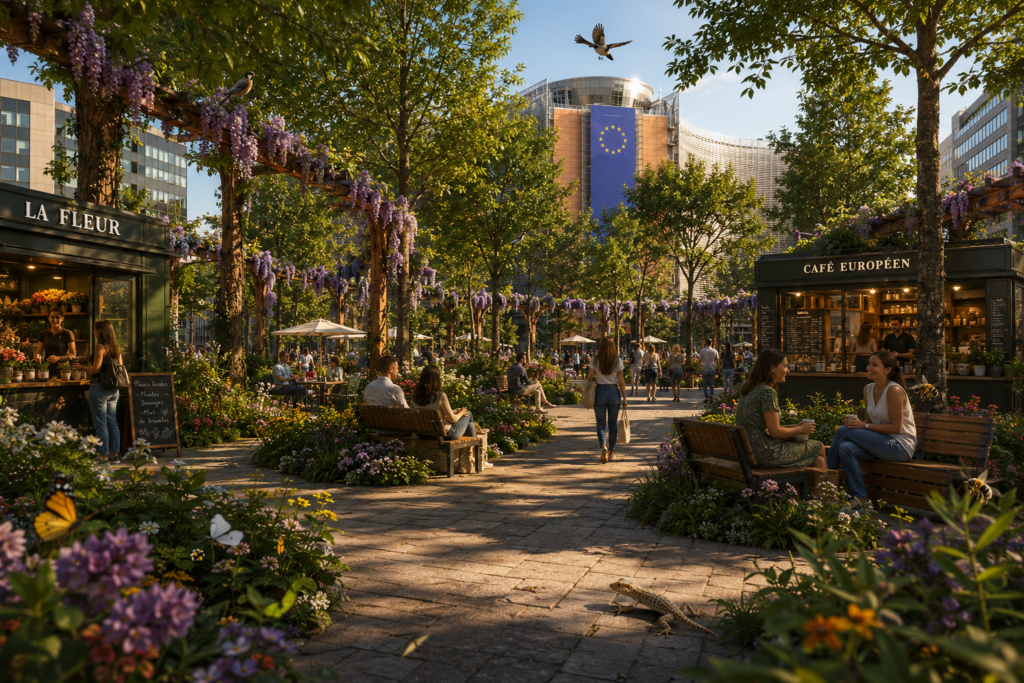
Let’s imagine we had a different outcome. The Schuman Roundabout is instead a vibrant urban nature hub in the centre of the European Quarter. A mini urban forest expands out in concentric rings with canopies of oak and cherry trees, while climbing wisteria and jasmine cover pergolas. People walk together around the roundabout or enjoy a lunch break under the shade. Birds, butterflies, and other pollinators thrive among the trees and plants. Bicycle lanes and zero-emission bus routes connect this beating green heart with Parc du Cinquantenaire and the Parc Royale down the Rue de la Loi, now a tree lined street, guide you under leafy canopies right into the Inner Ring of Brussels. Imagine this green corridor in the heart of the European Quarter.
We believe that this would create a more livable, more vibrant, and more thriving city that flourishes for people and nature alike.