
Making the Case for Livestock
Photo: Monte Silveira
As Europe confronts soil degradation, grazing animals are being reimagined as tools for regeneration, not extraction.
Wildflower meadows stretch beneath scattered cork and holm oaks. A tawny pipit flits through the pasture to hunt among the hum of insects. Griffon vultures circle high above, riding spring’s warm currents. A herd of cows moves slowly between the trees, grazing on abundant pasture. Beneath it all, unseen, rich soil teems with underground life.
This is a montado system. Covering more than a million hectares in Portugal, it is one of the country’s most iconic landscapes. Across the border in Spain, where it is known as dehesa, it extends another 3.5 million hectares. These open woodlands and pastures did not emerge by accident. They evolved over centuries through the interaction of trees, grasslands, people, and grazing animals. The result is a biodiversity hotspot – a landscape rich in life because of livestock, not in spite of it.
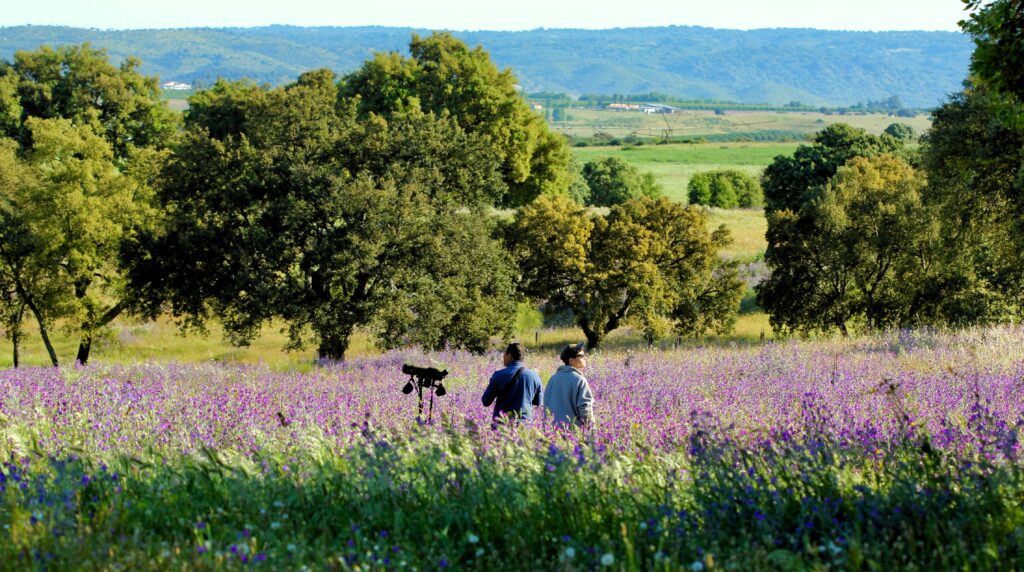
“Animals and plants live together. Animals depend on plants, and plants depend on animals,” says Diogo Pinho, Research and Development lead at Monte Silveira, a 700-hectare farm in Portugal’s Castelo Branco region, where around 500 hectares are managed as montado. “If animals are always in movement and at high density,” he adds, “we mimic what happens in nature.”
If animals are always in movement and at high density, we mimic what happens in nature.
Diogo Pinho, Research and Development lead at Monte Silveira
This scene feels far removed from the dominant narrative of sustainable food production, where eliminating livestock is often framed not only as necessary, but as a moral act: fewer animals, fewer emissions, fewer hectares devoted to feed and pasture, fewer forests cleared for soy.
But this story is incomplete. It treats livestock as inherently extractive and rarely asks a harder question: what role can animals play within mixed farming systems – like a montado – when they are managed not as isolated units of production, but as part of living landscapes?
In Europe, that question is arising as another crisis becomes impossible to ignore – soil degradation.
The real front line of climate change
Soil is the foundation of landscapes as we know them. It is one of the planet’s largest carbon stores, the most scalable water reservoir, and the basis of our food system. According to the Food and Agriculture Organisation of the United Nations (FAO), around 95% of global food production depends on soil. Grasslands, forests, and farms are all rooted in it. Yet this living resource, built slowly over centuries, is routinely treated as expendable.
Across Europe, the scale of the problem is stark. The European Commission estimates that 70% of soils in the EU are degraded, resulting in annual losses of around €50 billion due to declining soil health. This is part of a global pattern: the World Atlas of Desertification finds that more than 75% of land worldwide is already degraded. A 2025 global review identifies unsustainable agriculture as the main driver, with tillage, heavy machinery, overgrazing, and simplified crop systems disrupting soil-building processes.
As soils degrade, they lose their ability to absorb water, store carbon, and support plant growth. The result is a dangerous feedback loop: drought intensifies as soils shed moisture, while floods worsen as rainfall turns rapidly into runoff. When heavy rains arrive, bare or compacted soils erode, stripping away fertile topsoil and leaving landscapes more vulnerable with each event.
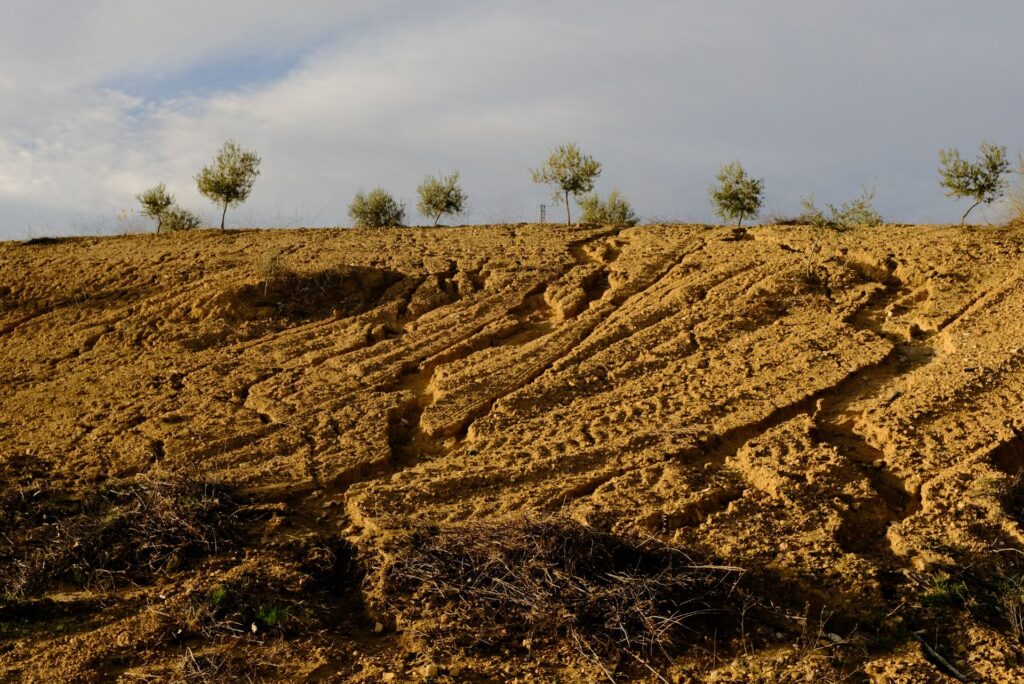
The frequent flooding in southern Europe is the result of changing rainfall patterns, but also soils that can no longer hold water. Soil erosion has also been identified as a driver of what the UN describes as “water bankruptcy” in a 2026 report.
“Now we’re facing not just erosion driven by climate change,” says Maria Anastasi, coordinator of the EU-funded project Groundwork, “but soils that are losing their basic ability to function.”
Groundwork, led by the Cyprus Research and Innovation Centre, is part of a growing wave of initiatives attempting to reverse this trajectory – not by treating soil as inert, but as a living system that must be rebuilt through changes in farming practices and land management. At the EU level, strategies such as Farm to Fork and the EU Mission A Soil Deal for Europe set ambitious goals to reduce agriculture’s environmental footprint and restore soil health – goals that Groundwork aims to translate into on-the-ground practice.
Working through five Living Labs across Portugal, Germany, Sweden, Belgium, and Serbia, Groundwork tracks how different farming approaches influence soil health over time under real climatic, ecological, and economic conditions.
Livestock as a keystone species for soil health
“For me, farming was only crops – annual or permanent – until I started to measure what animals were doing to soil life,” explains Diogo Pinho Research and Development lead at Monte Silveira, one of Groundwork’s Living Labs.
Trained as a biotechnologist, Pinho later completed a PhD in soil microbiology. His early research focused solely on plant–soil systems. That changed when he joined Monte Silveira, a former conventional tobacco farm that converted to an integrated organic system in 1999 and now brings together five livestock species – cattle, black pigs, sheep, goats and horses – across a mosaic of montado, olive and almond groves, and arable cropland.
Pinho and his team began on-farm trials to understand what happens below ground after animals move through a field. Sampling soils before and after grazing, they measured microbial diversity and activity. “The animals had a strong impact on the soil,” he observes, “and over time, microbial activity increased – soil life recovered.”
By 2023, longer-term data confirmed the trend. “In five years, we increased soil organic matter by 50%,” he notes, adding there were clear signs of rising biological activity. “That’s when I realised that animals are key to speeding up soil regeneration.”
In five years, we increased soil organic matter by 50%, that’s when I realised the animals are key to speeding up soil regeneration.
Diogo Pinho, Research and Development lead at Monte Silveira
Next to this, field assessments at Monte Silveira show exceptionally high biodiversity, with more than 100 plant species across montado pastures and around 300 animal species – from insects to birds and mammals – suggesting that carefully managed grazing can enhance ecological complexity.
Regenerative grazing livestock practices
These findings align with the principles of Regenerative Grazing Livestock Practices (RGLPs), which use grazing animals as part integrated farm management. By controlling grazing intensity, timing, and recovery, these practices rebuild soil organic matter, stimulate soil life, improve water infiltration, and regenerate landscapes – with livestock acting as biological catalysts rather than extractive pressure.
Popularised by Allan Savory, the approach draws on the behaviour of wild herbivore herds grazing intensively, moving quickly and allowing grasslands time to recover. “In nature, wild herds have two main concerns,” Pinho describes. “To eat as much grass as possible – and to frequently move to avoid predators.”
Grazing shapes which plants thrive and how they grow. What animals leave behind – dung, urine, and even saliva – returns organic matter and nutrients to the soil. Grazing also affects root growth and the release of carbon-rich exudates that feed soil microbes and the many organisms that make up the soil food web. Improving structure and water retention, reducing erosion, and locking carbon into the ground.
Several thousand kilometres east, the same hypothesis is being tested under different conditions. In the Allgäu Alps of Germany, Christine Bajohr and her husband Martin Wiedemann-Bajohr, part of another Groundwork Living Lab, manage KugelSüdhangHof, a mixed meat and dairy system exposed to increasingly extreme weather. Scorching summers, winters dropping to -20°C, and rainfall arriving in longer, more intense bursts.
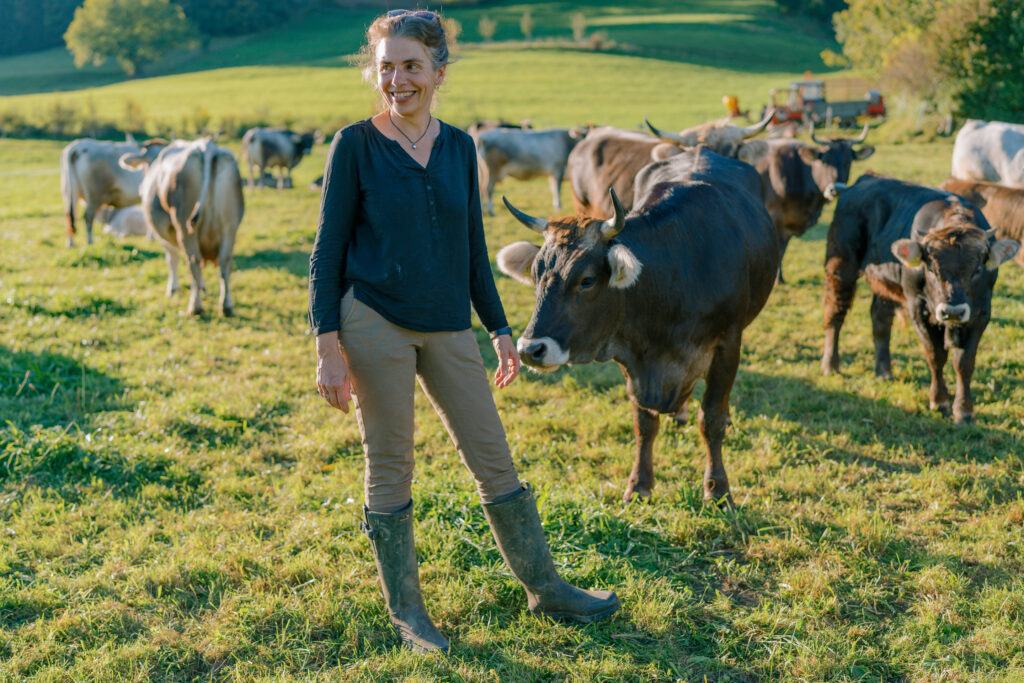
Their shift toward regenerative grazing began in 2003, after successive droughts exposed the limits of their system. Searching for ways to adapt, they focused on soil health, drawing on research, experimenting with composting, and rethinking how animals, plants and soils interact. “We started to look much more closely at what our herd is actually doing,” Bajohr explains.
Changes in grazing management helped stabilise pastures and extend the time animals could remain outdoors. The system has not become immune to climate extremes, but it has become more resilient: more grass in dry years, better recovery after heavy rain, and a farm that responds rather than collapses under pressure.
Rest and recover
Central to this approach is rest and recovery. “More important than how long animals stay in one place is how long you let the pasture and soil recover,” Pinho describes. “You have to let the system breathe – recover, recycle nutrients, regrow – and only then bring the animals back.”
This is as much about energy balance as it is about grazing pressure – not just for animals, but for plants and soil life. “You have to leave enough energy in the system,” Bajohr elaborates. On her mountain pastures, that shapes herd decisions. “I can’t afford a cow that produces 10,000 litres of milk. I can’t feed her. She takes too much energy out of the system.”
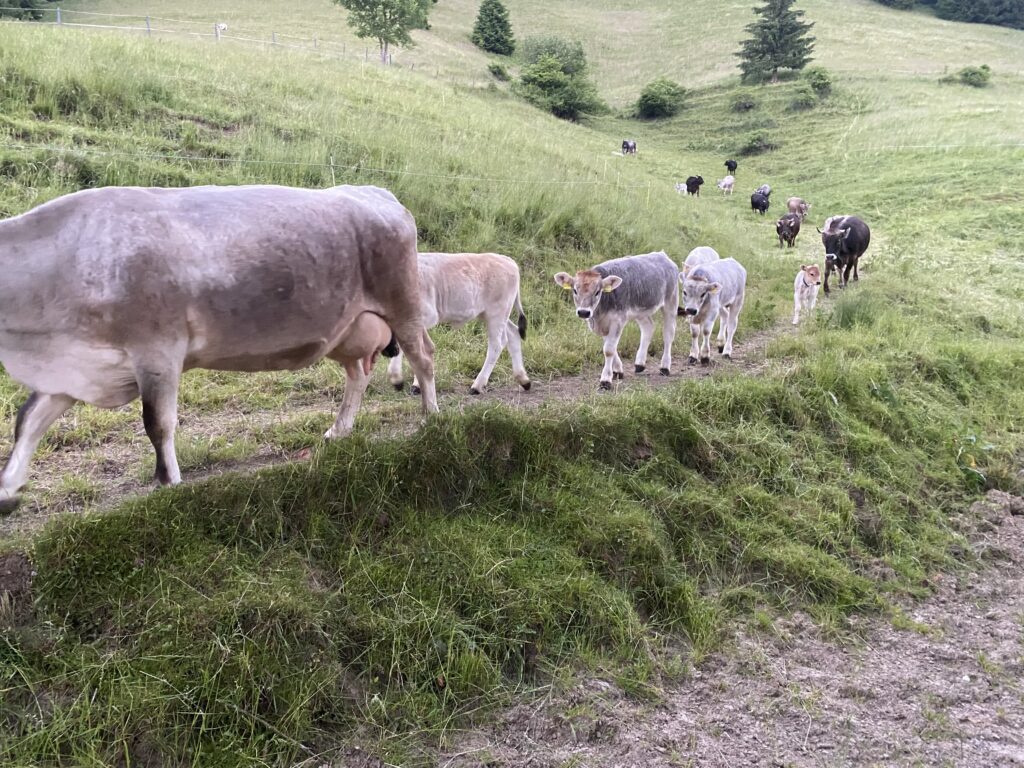
Animals, she argues, must be matched to the landscape’s capacity, ensuring enough biomass remains to regenerate plants and sustain soil organisms.
For Maria Anastasi, this emphasis on observation, context, and recovery exposes a deeper flaw in modern agriculture. “People came up with solutions to produce faster and more,” she argues. “Instead of slowing down and looking at the source – the soil – production just became more intense.”
The great simplification – and the way forward
At the turn of the 20th century, a European farm rarely existed without livestock. Sheep passed through fallow fields. Cattle grazed meadows after harvest. Pigs rootled beneath orchards. Animals moved across landscapes that mixed crops, trees and pasture, cycling nutrients back into the soil that fed them.
“Animals have always been part of farming systems – most farms were mixed until the mid-20th century,” says Anastasi. “When animals graze land and return organic matter through manure, they tend to regenerate soils rather than degrade them.”
Animals have always been part of farming systems – most farms were mixed until the mid-20th century.
Maria Anastasi, Coordinator of Groundwork
Over the course of the 20th century, that complexity was steadily dismantled. As agriculture industrialised, animals were separated from the land that sustained them. Feed was grown in one place, animals raised in another. Manure accumulated as waste rather than returning to fields as fertility. Cropping systems became dependent on synthetic fertilisers; tillage intensified; soil cover declined. Landscapes were simplified – and with them, ecological relationships unravelled. Animals no longer cycled nutrients; they disrupted them.
“Because we don’t understand complexity, we try to split nature into parts to control it and make it efficient,” says Pinho. “And we end up with something completely artificial.”
Within industrial food systems, livestock impacts appear overwhelmingly negative. When feed production, fertiliser use, transport and land-use change are included, livestock accounted for over 85% of agricultural greenhouse gas emissions in the EU in 2017, according to the report Future of EU livestock: how to contribute to a sustainable agricultural sector.
For Bajohr, the emissions story of livestock is told within narrow boundaries. “Climate balance is only measuring the cow in an artificial system,” she argues. “But what happens when cows are working a grassland ecosystem? You need to track the bugs and flies and birds and plant species, which are only there because the cow is there.”
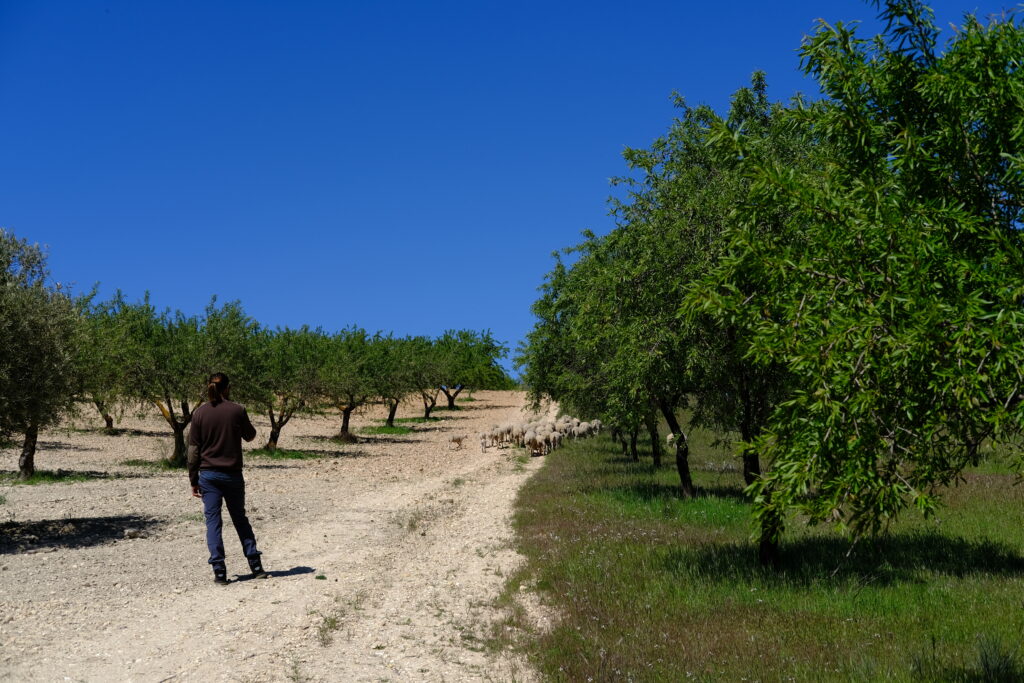
Industrial livestock production has also driven biodiversity loss, water pollution, and deforestation, alongside severe animal welfare impacts. But in regenerative grazing systems – such as in the high Alps or the montado landscapes of Monte Silveira – animals operate within a different logic: a partnership between people, soil health, and ecosystems, shaped through long-term management and holistic principles.
This is the space Groundwork operates in. Working across the five Living Labs in Europe, the initiative works to understand how regenerative livestock grazing can restore soil health and ecological function while keeping farmers at the centre of decision-making. “We’re not another project where researchers tell farmers what to do,” Maria says. “We co-create with them.”
Seen in this light, the transition to a sustainable food system built on healthy soils should not be about choosing sides. It should be about redesigning agriculture around what land can sustain. That will likely mean fewer animals overall in Europe – particularly fewer animals fed on imported grain and confined in systems that sever nutrient cycles and externalise damage.
But it also means recognising where grazing animals still belong: on permanent grasslands, in semi-natural landscapes, and within mixed systems where their presence supports soil structure, water retention, biodiversity, and long-term fertility.
The question, ultimately, is not whether livestock are good or bad, but where, how and in what numbers they function as part of a living food system.