
What is Agroforestry?
Photo: Belén G. Carmona / REVOLVE
Blending trees with farming to boost biodiversity, resilience, and livelihoods.
Agroforestry is a land-use system that combines crops, livestock, and trees on the same piece of land. By mimicking natural ecosystems, it enhances soil fertility, protects biodiversity, provides shade and windbreaks, and strengthens resilience against climate change — all while supporting food production and livelihoods.

Trees play a central role in agroforestry. They store carbon, prevent soil erosion, recycle nutrients, and create habitats for wildlife. Far from being just “agriculture with trees,” agroforestry integrates ecological, social, and economic benefits into farming.
Far from being just “agriculture with trees,” agroforestry integrates ecological, social, and economic benefits into farming.
Why it matters
Agroforestry has the potential to restore degraded land and increase food security for 1.3 billion people. Agroforestry can also reduce soil erosion by 50 per cent and increase soil carbon by 21% – figures that underscore its power as a solution for sustainable agriculture and climate resilience. Furthermore, it improves the regulation of water flows and boosts biodiversity by providing shelter for birds, insects, and other species that help control pests. These functions make farms more resilient during droughts or heavy rains.

In Europe, agroforestry is practiced on around 15 million hectares — roughly 9% of agricultural land. Systems vary from silvopastoral setups, where livestock graze under scattered trees, to orchards combined with grazing or rows of trees integrated into arable fields. Globally, traditional practices such as shade-grown coffee or cattle raised beneath coconut palms demonstrate the long-standing role of trees in farming systems.
The benefits extend beyond the environment. Agroforestry diversifies farm outputs, helping farmers spread risk and generate additional income. It can also empower rural women by creating new livelihood opportunities. Recognised in global climate and biodiversity policies, agroforestry both mitigates climate change and helps communities adapt to it.
Three common systems
Agroforestry can take many forms, but three main systems are widely used:
- Agrisilviculture combines crops with trees. This can be as simple as planting cereals between fruit trees or as complex as multilayer systems with vines, shrubs, and herbs.
- Silvopasture integrates trees with grazing animals. The trees provide shade and fodder, while livestock enrich soils through natural nutrient cycling. Examples range from sheep grazing in rubber plantations to cattle grazing below trees in Europe.
- Agrosilvopasture mixes crops, livestock, and trees on the same land. This highly diverse system is particularly valuable in drylands and tropical highlands, where it sustains rural populations with a wide variety of products while conserving fragile ecosystems.
Agroforestry in action
Agroforestry shows us that farming doesn’t have to be a choice between productivity and sustainability. By working with nature, farmers can secure food, income, and healthier ecosystems all at once.
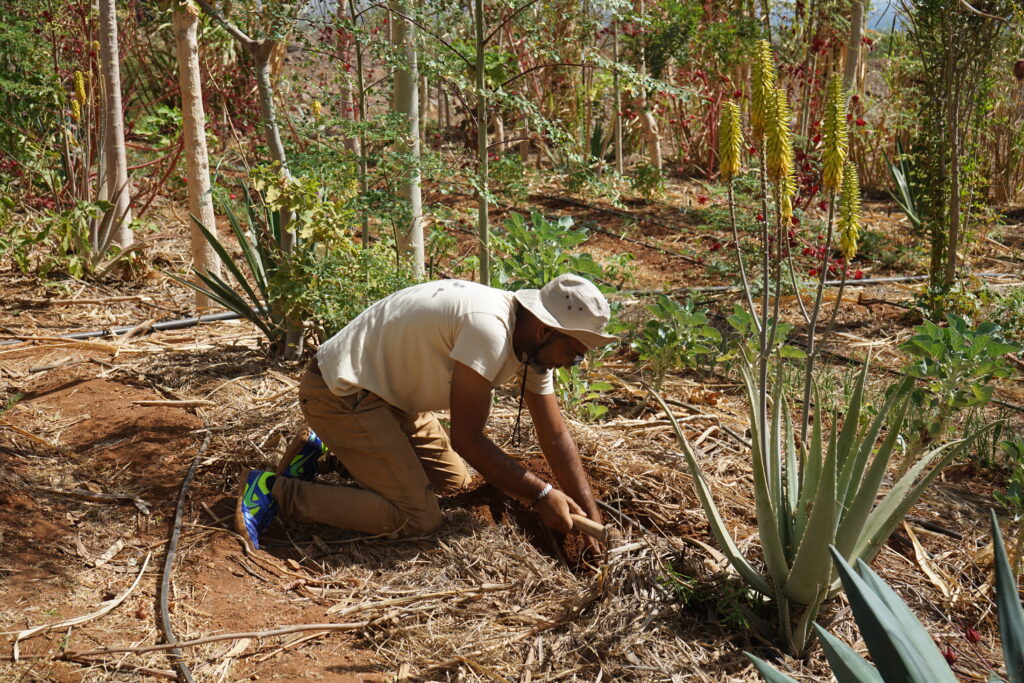
One project bringing this to life is CIRAWA, led by REVOLVE partners in West Africa and Europe. CIRAWA supports communities in Cape Verde, Ghana, Senegal, and The Gambia to implement agroforestry and other agroecological practices that improve food security and resilience in the face of climate change.