
Indian Cities are Sweltering, and It’s by Design
Photo: Jatin Verma / Pexels
As Indian cities top global heat charts, declining forest and urban green cover are driving temperatures even higher.
In April 2026, India accounted for 98 of the 100 hottest cities in the world, with temperatures in cities across Rajasthan, Gujarat, and Uttar Pradesh crossing 47°C. This is not just another difficult summer, it is a warning sign. Across the country, daily life is beginning to feel like living inside a furnace, where stepping outdoors is exhausting, nights offer little relief, and a “hot summer day” no longer sounds like fun. But while climate change is the backdrop, a key cause of this crisis lies much closer to the ground: in the steady disappearance of trees.
In April 2026, India accounted for 98 of the 100 hottest cities in the world, with temperatures in certain cities crossing 47°C.
A large part of this intensity comes from how cities themselves are built. As trees disappear and concrete spreads, heat gets trapped and lingers, creating what are known as “urban heat islands.” These are areas that have significantly higher temperatures than their surroundings, often by 2–5°C compared to nearby rural regions. The difference is not incidental. Rural areas, with more vegetation and open land, cool naturally. Cities, stripped of tree cover and layered with heat-absorbing materials, lose that ability.
The science behind this is straightforward. Trees provide shade and cool the air through evapotranspiration, releasing moisture that absorbs heat. Remove the trees, and cities lose one of their most effective cooling systems. What replaces them – roads, buildings, glass façades – does the opposite. Cities in India are not just experiencing heatwaves, they are amplifying them.
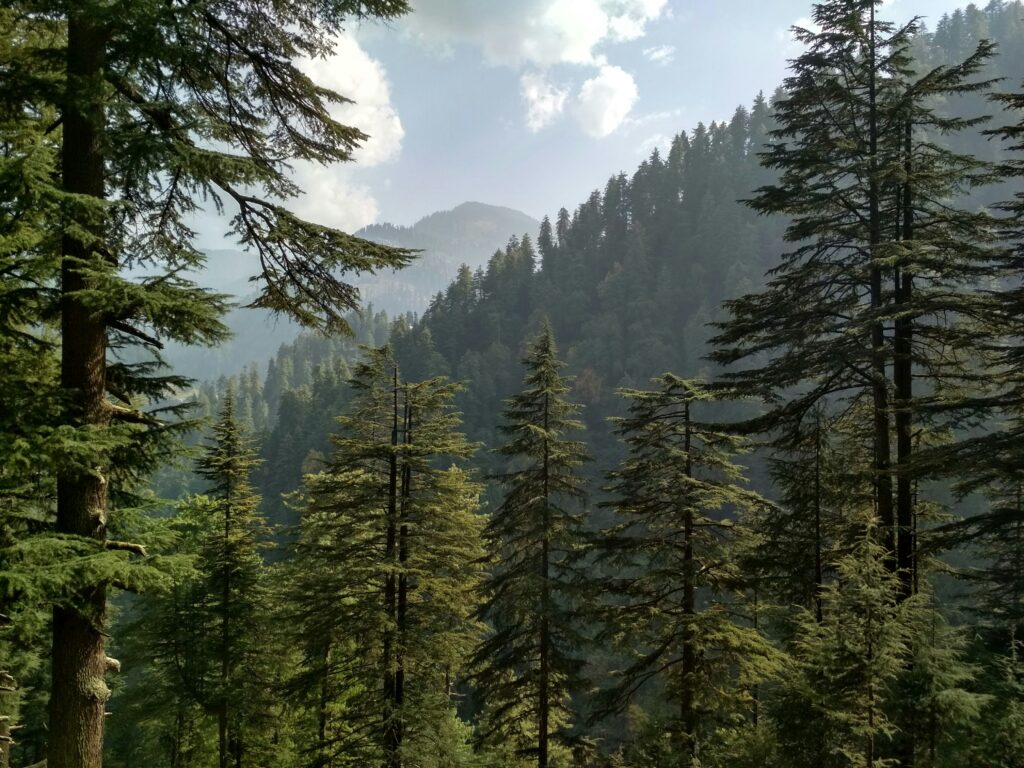
Recent city-level studies reveal how stark this relationship has become. In Ahmedabad, neighbourhoods with minimal tree cover face significantly higher heat risk, with nearly half the population living in areas classified as “thermal danger.” In Bengaluru, decades of unchecked urban expansion have replaced green and blue spaces with built-up land, creating hundreds of heat pockets where temperatures spike dramatically. These are not isolated cases; they are a pattern.
Tree felling…is framed as a necessary trade-off for development. But this framing misses a critical point: trees are infrastructure.
Tree felling, whether for highways, real estate, or infrastructure, often happens incrementally, is framed as a necessary trade-off for development. But this framing misses a critical point: trees are infrastructure. They regulate temperature, improve air quality, and reduce energy demand. Their removal is not just an environmental loss; it is a direct blow to urban resilience.
Policy signals are increasingly reinforcing this trajectory. The recent decision to reduce mandatory green cover in industrial estates from 33% to 10% reflects a broader shift towards easing environmental safeguards in favour of rapid development. At a time when cities desperately need more green cover to cope with rising heat, such measures risk locking in higher temperatures for decades to come.
The same logic extends beyond cities. The proposed Great Nicobar Infrastructure Project shows how these trade-offs are now being made at a much larger scale. The project involves clearing vast stretches of forest, estimated at nearly a million trees, to build a transshipment port, airport, and township. But these are not just any forests. Great Nicobar is home to dense tropical ecosystems, rich biodiversity, and fragile coastal and mangrove systems that act as natural buffers against storms and sea-level rise.
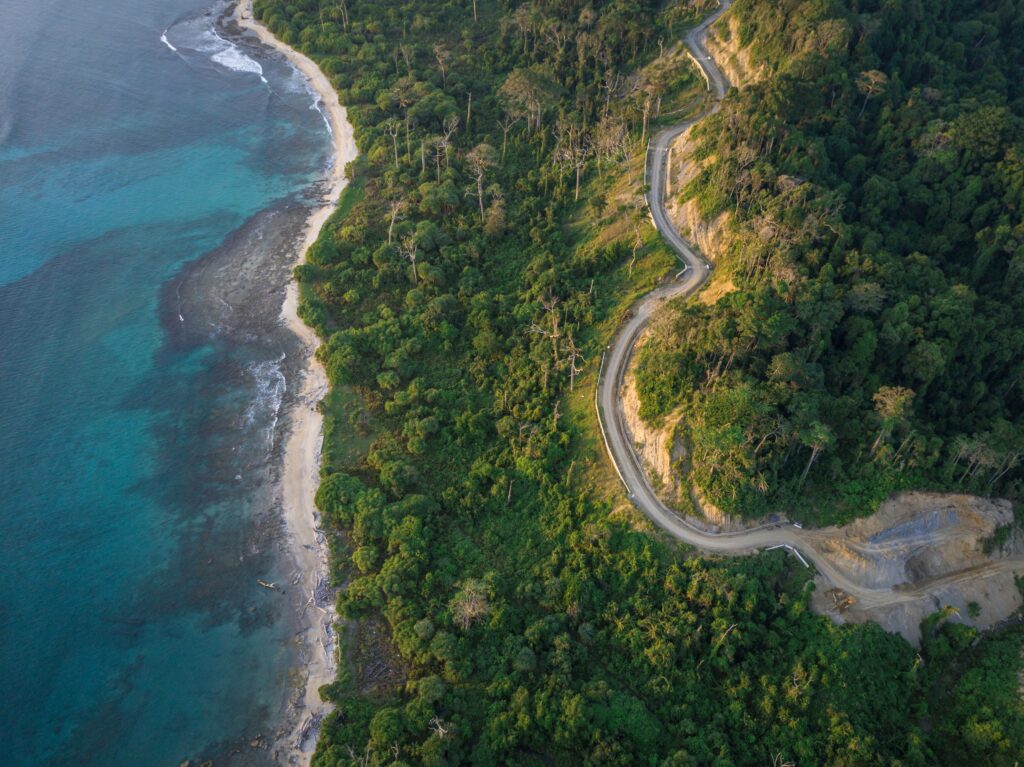
Clearing them does more than remove trees; it disrupts entire ecological networks, threatens wildlife habitats, and weakens natural climate regulation. While positioned as a strategic and economic investment, the project reflects a deeper problem: the continued undervaluation of ecosystems that quietly stabilise temperatures, protect coastlines, and reduce the impact of extreme weather.
What cities need is not token greenery, but integrated planning [where trees are] treated as essential infrastructure rather than optional additions.
Planting trees is often presented as the solution, but the reality is more complex. Scattered plantations or compensatory afforestation on city outskirts cannot replace mature, well-distributed urban tree cover. What cities need is not token greenery, but integrated planning, continuous, dense green networks that are treated as essential infrastructure rather than optional additions.
India’s heat crisis is frequently framed as an unavoidable consequence of global climate change. But the severity of heat in its cities is also the result of local choices, of how land is used, how cities expand, and what is valued in the process. Every tree cut down, every half-hearted policy, every poorly planned development compounds the problem.
If India is serious about making its cities liveable in a warming world, it must rethink its approach to development. The question is no longer whether cities can afford to keep their trees. It is whether they can afford not to.

