
E-Waste to Resource
Photo:
Europe’s growing mountain of electronic waste is exposing gaps in collection, repair and reuse across the Mediterranean.
Europe is buying more electronic devices than ever, but collection and recycling systems are struggling to keep pace. In 2023, more than 14 million tonnes of electrical and electronic equipment were sold across the EU, while the average e-waste collection rate stood at around 37.5%.
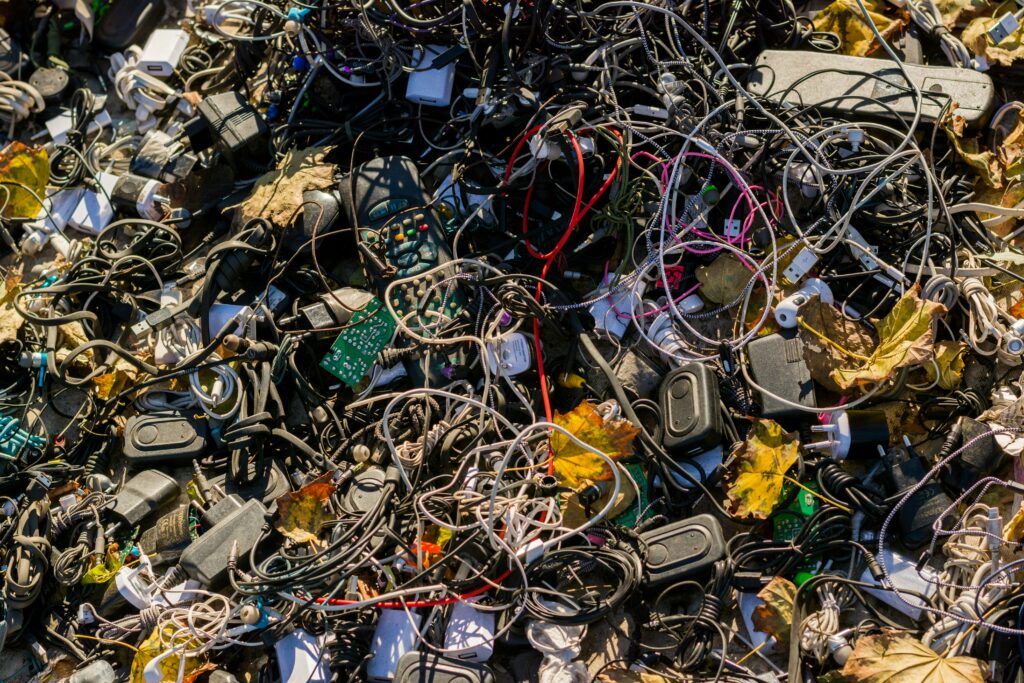
For the Mediterranean, the challenge is particularly acute. Electronic waste that escapes formal collection can end up in dumpsites, informal recycling operations or illegal shipments, allowing hazardous substances to contaminate soil, groundwater and ultimately the sea. At the same time, discarded electronics contain valuable materials, making e-waste not only an environmental problem but also a potential resource.
Ricardo Sobral, project manager of eWAsTER, spoke with journalist Ahmetcan Uzlaşık for Everything Is Changing about why Mediterranean countries are struggling with e-waste, the role of overconsumption, the economic potential of repair and reuse, and how the project is testing new circular models across the region.
Most of us have old phones, laptops, or chargers sitting somewhere at home. What should actually happen to these devices when we no longer need them?
Ideally, they should always go to a dedicated collection point. Every country has organisations responsible for collecting wasted electrical and electronic equipment, or e-waste, and these devices should enter those formal systems so that they can be properly recycled, reused or disposed of.
The problem with simply putting an electronic device into ordinary household waste is that many of the materials inside it are valuable, but some can also be hazardous. Lead, for example, is a neurotoxic substance. When electronic waste is improperly discarded, these substances can eventually contaminate soils, groundwater, and aquifers.
There is also an international dimension. In countries that consume large quantities of electronics but fail to collect them properly, some of that waste can end up being illegally shipped elsewhere. We have seen the consequences of this in parts of Africa and North Africa, where communities can ultimately bear the environmental and health costs of waste generated somewhere else.
Why is e-waste an especially important issue for the Mediterranean?
The EU originally set a collection target of 65% of the electrical and electronic equipment placed on the market, measured by weight. But collection performance varies significantly between countries.
Some Mediterranean countries are lagging considerably behind. Cyprus and Portugal, for example, have been among the countries with particularly low collection rates, while Spain, Italy, Greece and Slovenia have also faced significant gaps.
But the waste does not simply disappear when it is not formally collected. It can enter dumpsites or informal recycling operations, where practices such as open burning can release hazardous substances into the air and allow toxic materials to leach into the ground and eventually reach groundwater, aquifers and the Mediterranean Sea.
The challenge is made more complicated by the diversity of the region. Countries have different legislation, governance systems, economic conditions, consumption patterns, and population densities. That makes collection and enforcement very uneven.
Ultimately, this becomes a development issue. If one country has weak enforcement and another has illegal dumping, we are simply moving the problem from one place to another. We all share the same sea, so we cannot keep moving the environmental consequences elsewhere indefinitely.
Is overconsumption ultimately at the root of the e-waste problem?
It is certainly one of the starting points because everything begins with how much we purchase. We have normalised constantly buying new gadgets in much the same way that we are now seeing with ultra-fast fashion.
And electronic waste is much broader than people sometimes realise. Even a children’s toy containing batteries, wires and electronic components eventually becomes e-waste. Consumers may not immediately think of it that way.
So, there are several interconnected problems: overconsumption, the incentives companies create for us to purchase new products, insufficient public information and inconvenience. Through eWAsTER, we spoke with NGOs, companies, and organisations involved in waste management to understand what barriers different Mediterranean regions were facing.
One thing we found is that people often simply do not know how to recycle electronics. Many countries have spent years educating children and adults about general recycling, but e-waste has often been missing from that conversation.
There is also a major problem around repair and reuse. We have created a system in which replacing a device can be far easier than repairing it. If a washing machine or phone breaks, and a repair takes several days, buying a replacement that arrives tomorrow can seem like the easiest option. We need to make repair and reuse much more convenient if we want that behaviour to change.
E-waste also contains critical materials such as lithium, copper, and palladium. Could treating waste as a resource have economic benefits for Europe?
Absolutely, and that idea is embedded in the project itself. Our objective has always been to look at how e-waste can become a resource through circular economic models.
There is clearly a geopolitical discussion taking place in Europe around reducing external dependencies and strengthening access to materials and infrastructure. But we wanted to approach this from the regional level and identify solutions that can start small and then be scaled.
There is clearly a geopolitical discussion taking place in Europe around reducing external dependencies and strengthening access to materials and infrastructure.
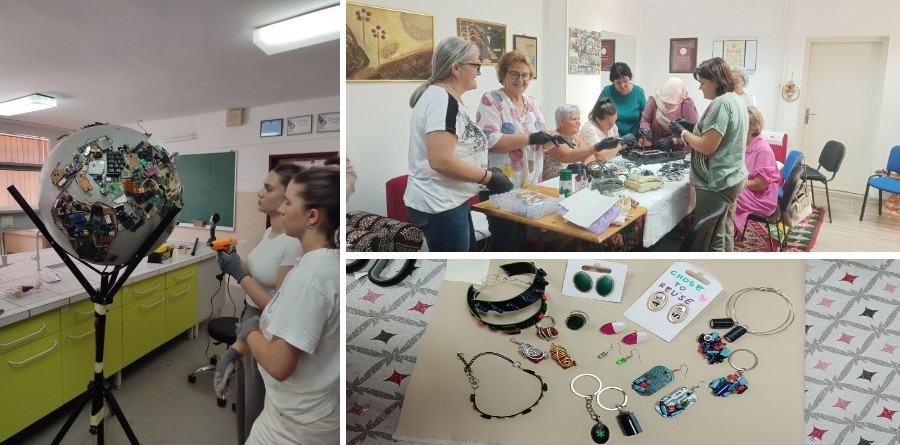
One example comes from Slovenia and Bosnia and Herzegovina, where we worked on repair and refurbishment. Around 90 people were trained, many of them facing long-term unemployment, disabilities, or other forms of social vulnerability. The initiative worked with SMEs to create jobs around giving electronic devices a second life.
Those activities resulted in 18 permanent jobs and around 20 tonnes of equipment being processed during the project. That shows how circularity can simultaneously reduce waste, recover economic value, and create livelihoods.
How has eWAsTER involved schools and local communities?
Education became another major part of the project. We tested school-focused approaches in Cyprus, Greece, Spain, Italy and Bulgaria, but rather than communicating environmental problems as something abstract or distant, we tried to connect them directly to people’s communities.
That is particularly important in places with large seasonal tourism flows, such as Málaga in Spain, Rethymno in Greece or Varna in Bulgaria. During peak tourism periods, pressure on waste collection can rise dramatically.
During peak tourism periods, pressure on waste collection can rise dramatically.
We therefore wanted children and families to understand that e-waste is not simply some distant environmental problem. It can affect the neighbourhood, beach, or community where they live.
Around 2,000 students and 200 classrooms participated in school-based collection competitions, collecting approximately three tonnes of e-waste. In several places, these activities have helped establish recurring collection campaigns and integrate e-waste into broader environmental education.
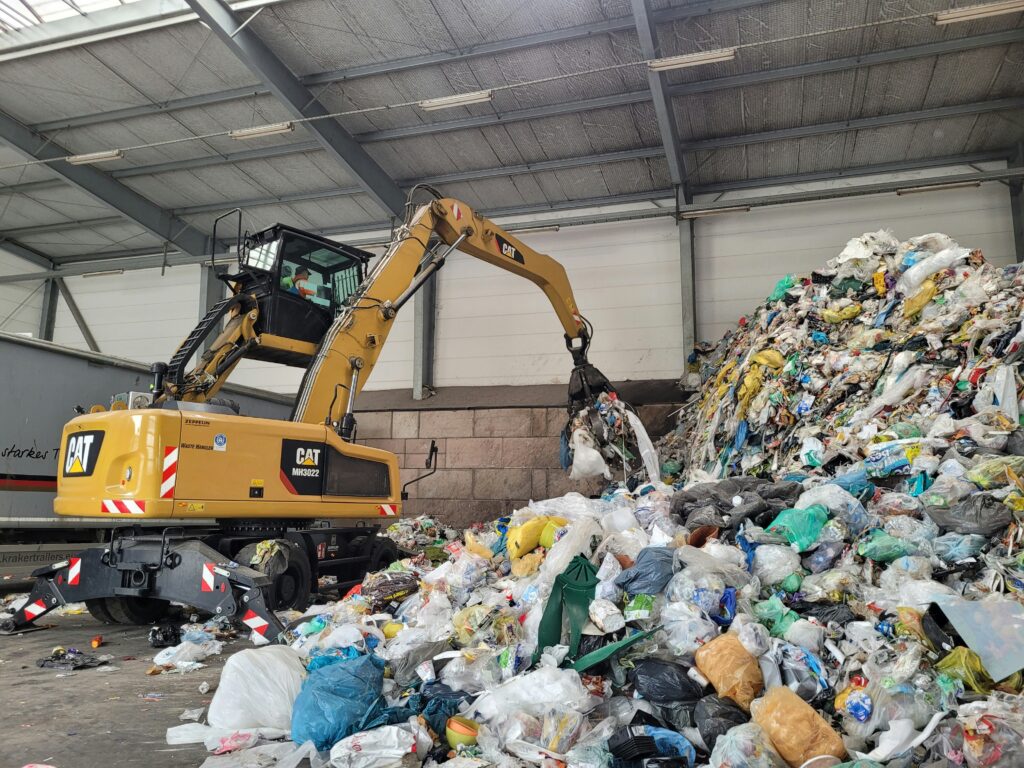
You also worked directly with municipalities. What did that involve?
Our third approach focused on public authorities in Italy, Bulgaria and Bosnia and Herzegovina. Municipalities can have very different financial resources and equipment needs, even within the same region.
We therefore helped develop equipment-swapping networks. A larger municipality might replace computers that are still perfectly usable, while a smaller municipality may urgently need that equipment but lack the resources to buy it new.
Instead of throwing those devices away or immediately recycling them, municipalities can transfer them to another authority. They can also connect with vocational and technical schools, repair training programmes and refurbishment businesses.
This creates an ecosystem in which equipment stays in use for longer. It also gives municipalities and citizens clearer access to organisations capable of repairing and refurbishing devices.
After 30 months of eWAsTER, what achievements stand out most?
I would choose three because we tested three very different approaches.
First, we demonstrated that school-based education and collection competitions can change consumer habits when environmental communication is connected to something communities care about immediately.
Second, we helped create employment opportunities for socially vulnerable people through repair and refurbishment. These are not simply temporary environmental activities; they are jobs based on circular economy practices that can be both financially and environmentally sustainable.
Third, we established intermunicipal networks that allow electrical and electronic equipment to be exchanged rather than immediately becoming waste.
And that reflects perhaps the most important lesson of the project: recycling should be the last R. The order should be repair, reuse, and then recycle. The objective should always be to keep equipment and its materials in productive use for as long as possible.
Illegal movements of electronic waste remain a major problem. How can Europe address them?
It is one of the most complicated challenges because governance and waste management systems differ significantly between European regions.
Projects such as ours can strengthen collection networks, improve cooperation between organisations, expand repair and reuse infrastructure, and improve public education. But there are limits to what regional initiatives can achieve.
Some measures need to come from the European level, particularly regulation concerning waste exports, circular product design, and the conditions under which electronic goods are placed on the market.
At the individual level, we should also think more carefully about consumption. Whenever something is extraordinarily cheap, somebody or something is usually absorbing the real cost. It may be workers, communities elsewhere in the world, or the environment.
That does not mean responsibility rests solely with consumers. Structural regulation and better systems are essential, but consumption is still part of the equation.
Do policymakers and citizens understand the scale of the e-waste problem?
Overall, not enough. Among policymakers and stakeholders working directly on this issue, there is considerable awareness of the dangers of e-waste. The much more difficult part is translating that awareness into everyday behaviour.
Consumers are operating in an environment where companies spend enormous amounts of money encouraging them to buy new products. It is not simply one person deciding whether they really need another phone; that person is competing with millions of euros in marketing designed to persuade them that they do.
That is why communication needs to connect e-waste to things people care about emotionally and locally. At the same time, authorities need to make the sustainable option easier through accessible collection points, repair networks, equipment-swapping platforms, and education.
Digital tools can also help. We developed a virtual reality experience for e-waste education, partly because some Mediterranean regions have low population densities and are difficult to reach through conventional activities. There is an interesting possibility here: the same technology contributing to the e-waste challenge can also become part of the solution.