
Heatwaves Change How We Travel
Photo: Alexander Van Steenberge / Unsplash
Extreme heat isn’t just uncomfortable for commuting – it’s quietly breaking the systems meant to move us.
Growing up in Istanbul, I purposefully avoided going outside when the summers got a bit too warm, and as a result I was stuck in the city. The idea of spending hours commuting in never-ending traffic sounded hellish. Sticky metros, buses, and the 15 million population of the mega-city put me off.
Now that I no longer have those leisurely school holidays, travelling by public transport in the heat isn’t a choice – it’s what most of us have to do to get to work. I live in Belgium now, and I’m sure many of you have already witnessed how warm it is, in cramped buses, trams, and trains, making me want to never step out of the house without my electric portable mini fan.
The heatwaves that sunk their teeth into Europe in the summer of 2026 affected our wellbeing and productivity, and force a rethink of routines we’ve long taken for granted.
On a human level, commuting in intense heat is an unpleasant affair, but what we often overlook is how the heat can affect the very transport systems meant to get us where we’re going – and how that, in turn, reshapes our behaviour.
What the research shows
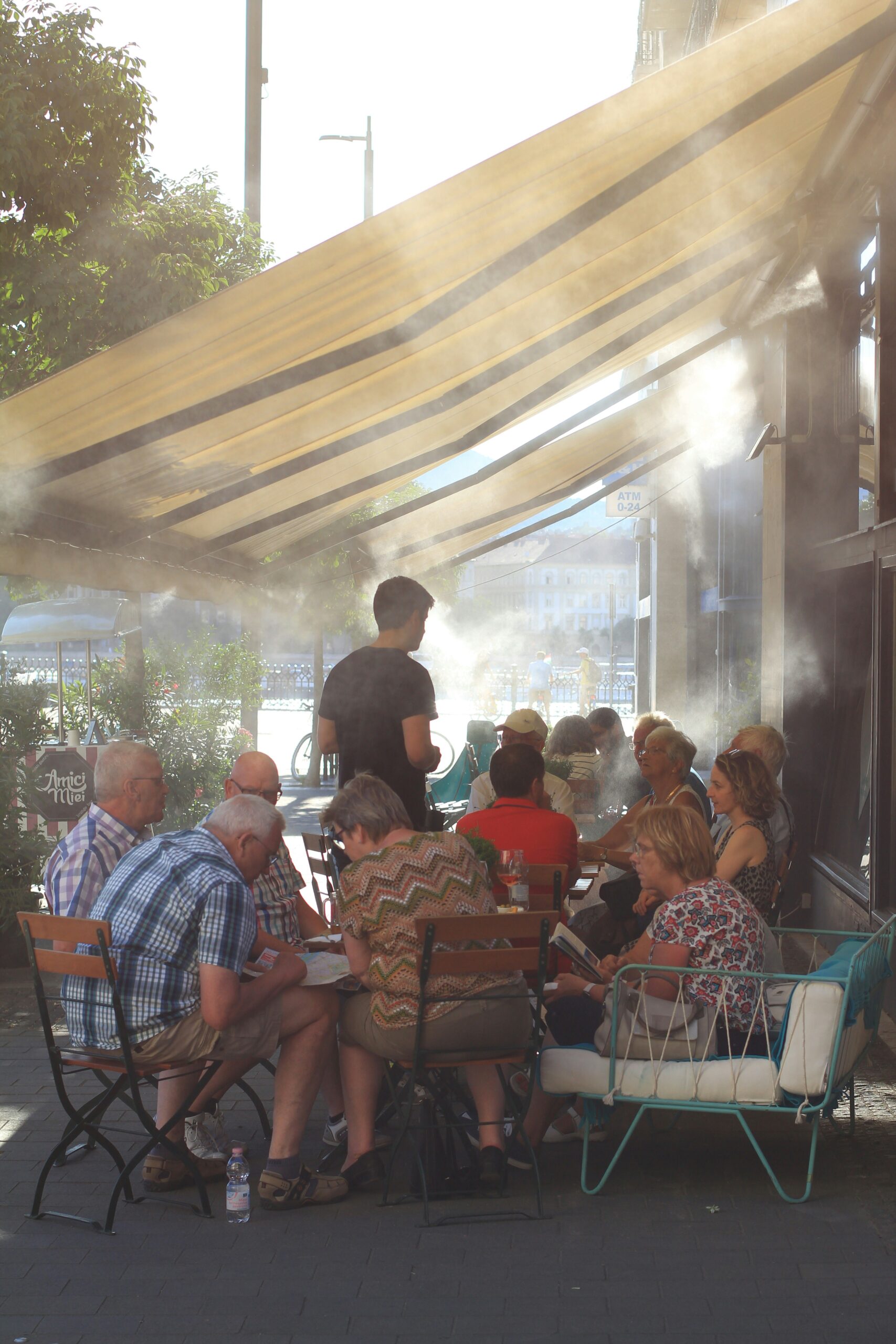
In Europe, there are a number of examples that illustrate how ill-equipped transport systems are to extreme heat. In Prague, for example, only one in six trams is equipped with air conditioning, leaving most riders to endure peak-heat commutes with no relief. Budapest’s buses face a different problem: their cooling systems are designed to shut down automatically once temperatures exceed 35°C, meaning the AC fails precisely when it’s needed most.
During the June 2026 heatwave, French authorities encouraged teleworking specifically to reduce crowding on public transport, treating remote work as a heat-mitigation tool rather than just a convenience.
This fits a broader pattern documented in transport research on disruptive events more generally, from unplanned disruptions to planned events. Travellers respond with a predictable set of coping strategies: reducing trips, retiming them, rerouting, or switching modes entirely. According to the findings, it’s important to note that some of these adjustments don’t fully reverse once the disruption ends – a heatwave can have a lasting imprint on someone’s daily routine long after temperatures drop.
The deeper story here is one of inequity. On the hottest days, people who can adapt tend to do so – they stay at home, shift trips to cooler hours, or abandon heat-exposed transportation modes altogether. But not everyone has that option. Low-income and minority residents, who often happen to live in the hottest neighbourhoods, are also the least likely to have access to home air conditioning or a private vehicle. The result is what researchers call an ‘adaptation gap’ – the people most exposed to heat are often the ones with the fewest tools to escape it.
The people most exposed to heat are often the ones with the fewest tools to escape it.
A global review of meteorological impacts on transport proves that heatwaves, alongside intense rain, snow, and storms, disrupt networks operations and reshape mode choice – underscoring the need for climate-adaptive planning across the board. In the Netherlands, researchers have found nonlinear threshold effects: it’s not simply that hotter means less travel, but that behaviour changes sharply once specific temperature and microclimate thresholds are crossed.
Infrastructure wasn’t built for this
Rising global temperatures and increasingly frequent and intense heatwaves are set to drive delays, route closure, and disruptions across Europe’s networks, affecting both passenger and freight transport. Scientists estimate that European transport infrastructure’s exposure to extreme heat could increase roughly 30-fold, and that by mid-century, around 19% of European transport networks could be exposed to forest fires. High temperatures don’t just inconvenience travelers – they degrade the physical materials transport systems are built from, melting asphalt, expanding steel, and triggering equipment malfunctions.
Wim Thiery, a climate scientist at VUB, has made it clear: “The EU’s transport infrastructure isn’t ready for what’s coming.” Roads, railways, ports, airports, and inland waterways will face escalating exposure to extreme heat, drought, wildfire, and flooding in the decades ahead, and the downstream consequences – for supply chains, public health, and economic activity – are difficult to predict. Thiery projects that by the end of the century, fire-related disruptions to roads and railways could occur up to 26 times more often, while flood exposure could increase eightfold. The Mediterranean region is expected to bear the brunt of this.
How it hits each mode of transport
Roads and pavements: Heat degrades asphalt directly – reducing stiffness and strength, increasing deflection under load, and causing transverse cracking and deformation. Temperature swings cause pavement to expand and contract, accelerating wear. Adapting infrastructure to projected temperature rises means thicker hot-mix asphalt and base layer reconstruction, which can cost upward of $60,000 per kilometer in some cases. More promising mitigation options include reflective pavements that suppress surface temperatures and thermochromic materials that self-regulate heat.
Heat reliably drives down ridership as people avoid the discomfort of hot vehicles and stations.
Heat also makes roads more dangerous: Traffic collision risk rises measurably in the summer, with road accidents surging by roughly 2.5% during periods of high ambient temperature. The causes are layered – heat affects road surface conditions, but also human cognition, behaviour, and driver fatigue. Mitigation ranges from adjusting speed limits during extreme heat, to infrastructure investment in more heat-resilient roads, to public awareness campaigns.
Railways: Rail infrastructure faces some of the most acute risks. Heat causes tracks to buckle and rails to expand thermally, and in extreme cases produces “sun kinks” – sudden misalignments in the rail caused by heat-driven expansion beyond what the track structure can absorb. These are a serious safety hazard, particularly for high-speed trains, and often force operators to run reduced schedules or impose speed restrictions even as concerns grow about whether aging rail networks can withstand repeated extreme heat events. Some operators are already adapting: Deutsche Bahn, for instance, has rolled out heat-resistant track materials, improved drainage to manage flood risk, and a dedicated climate risk management plan.
Air transport: Rising temperatures affect both runway integrity and aircraft performance. One recorded case found a runway slab surface temperature of 56°C when the surrounding ambient temperature was only 34°C, a reminder of just how much hotter infrastructure surfaces run relative to the air around them. Around 10% of flights currently face weight restrictions tied to heat and could rise to 30% as temperatures climb; scheduling flights during cooler parts of the day is one of the more workable near-term mitigations.
Public transportation: Heat reliably drives down ridership as people avoid the discomfort of hot vehicles and stations. Conventional bus stops, often built from heat-retaining materials, can become uncomfortably, even dangerously, hot to wait at. Redesigning stop materials, alongside simpler interventions like free water stations, shaded waiting areas, and misting systems, are among the mitigation strategies being explored.
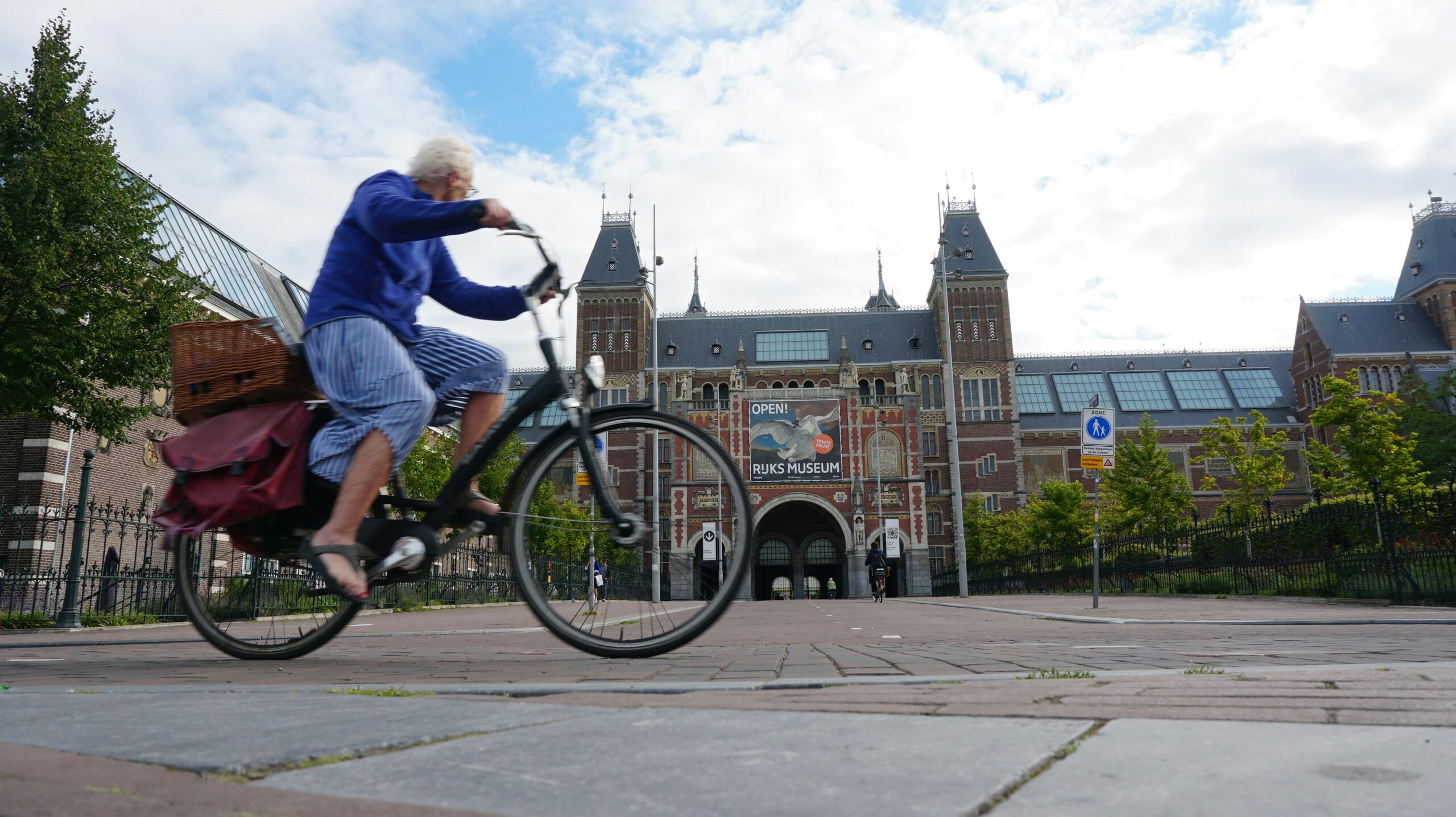
Active transportation: Once temperatures climb past roughly 25-35°C, cycling and walking drop sharply across multiple cities. Heat doesn’t just make active travel uncomfortable it also affects safety, with studies showing slower cyclist response times and heightened risk perception at temperatures above 30.4°C. Heat-damaged infrastructure, like buckled paths or degraded surfaces, compounds the problem.
Behaviour, timing, and the limits of what we know
The pattern across all of this is consistent: heat doesn’t just make travel uncomfortable, it actively reshapes infrastructure, safety, and behaviour. Adaptation happens on two levels – physically, as people acclimatise to heat over time, and psychologically, as expectations and tolerance for heat shift with the season.
Adaptation happens on two levels – physically, as people acclimatise to heat over time, and psychologically, as expectations and tolerance for heat shift with the season.
The scale of this effect can be significant. One Dutch study found that nearly 80% of daily fluctuation in bicycle traffic is attributable to weather alone. Timing shifts show up clearly elsewhere too: in Greece, outdoor presence stays relatively stable during cooler morning hours in summer but falls sharply after midday, and overall use of open public spaces tumbles significantly as temperatures rise. Perception matters as much as behaviour – Dutch research has found that temperatures above 25°C negatively affect how people evaluate their surroundings while traveling, independent of whether they actually change their route or mode.
It’s also worth remembering who bears the heaviest physical burden here: the workers building and maintaining this infrastructure. Heatwaves significantly raise the physiological risks facing construction and maintenance crews on transport projects, from heat stress and dehydration to heat exhaustion and, in severe cases, life-threatening heat stroke.
The physical demands of the job compound the risk – strenuous labor raises internal body temperature and accelerates fluid loss, undermining both physical and cognitive performance. Notably, research shows a disproportionate share of heat-related occupational deaths occur among workers doing moderate-to-heavy labor, often within the first few days of heat exposure, before their bodies have had time to acclimatise.
Despite the scale of this evidence, research gaps remain. Much of the literature struggles to capture heat’s impacts holistically across all dimensions of travel, to translate findings into actionable transport planning, and to account for how perceptions of “extreme” heat shift by season and region.
Where this leaves us
None of this means transport systems are powerless against rising heat – but it does mean the response has to be deliberate. The evidence is consistent on one point: proactive action is far cheaper than reactive repair. Reinforcing a rail line, redesigning a bus stop, or adjusting flight schedules ahead of a heatwave costs a fraction of what it takes to fix buckled tracks, replace melted asphalt, or manage the fallout of a transit system that grinds to a halt when temperatures spike. A heatwave action roadmap, one that lays out clear, sequenced steps, gives cities and transport agencies a way to move from constantly reacting to anticipating what’s coming.
Bringing this to life requires working across boundaries that transport planning doesn’t always cross easily. Regional collaboration matters, as does checking progress against public health indicators. The risks heat poses rarely arrive alone – they compound with flooding, wildfire, and ageing infrastructure – so resilience has to be built by working across sectors and scales at once, not by addressing each hazard separately. That also means having real metrics to track whether mitigation efforts are actually working.
Some of the most effective tools are also some of the simplest: early warning systems paired with clear public communication, protections for outdoor and infrastructure workers during extreme heat, and accessible indoor cooling spaces for people who have nowhere else to go. None of these require reinventing transport infrastructure from scratch, but they do require coordination across agencies, jurisdictions, and levels of government that often operate separately. Codes and regulations that account for heat risk still need to be written or updated in many places, and there’s real value in cities and countries exchanging what they learn as they go.
Underserved communities have the most to gain from getting this right, since they’re consistently the ones least equipped to adapt on their own. But there’s no single template – what works will depend on local climate projections, the state of existing infrastructure, and the resources each city has. What’s needed is treating heat resilience as a core part of how transport systems are planned, and not an afterthought once the damage is already done.