After the Storm: Rebuilding Trust for Climate Resilience
Photo: Marcela Morgado / REVOLVE
In a climate emergency, the information vacuum is as dangerous as the disaster itself.
Extreme weather events are becoming the norm in Europe. The continent is the fastest warming in the world, and the effects of this are clear: more frequent and intense floods, heatwaves, droughts and wildfires, impacting livelihoods, ecosystems and human health. But not only. Climate emergencies are also threatening trust in information and the media.
When a climate emergency hits a local community, two emergencies arrive at once. The first is the one everyone films: the flood, the fire, the mud. The landscape impact of the emergency. The second is quieter, and it does not normally make it to the headlines: the moment trusted information breaks down, official warnings fail to reach the people most at risk, and rumour starts travelling faster than the water.
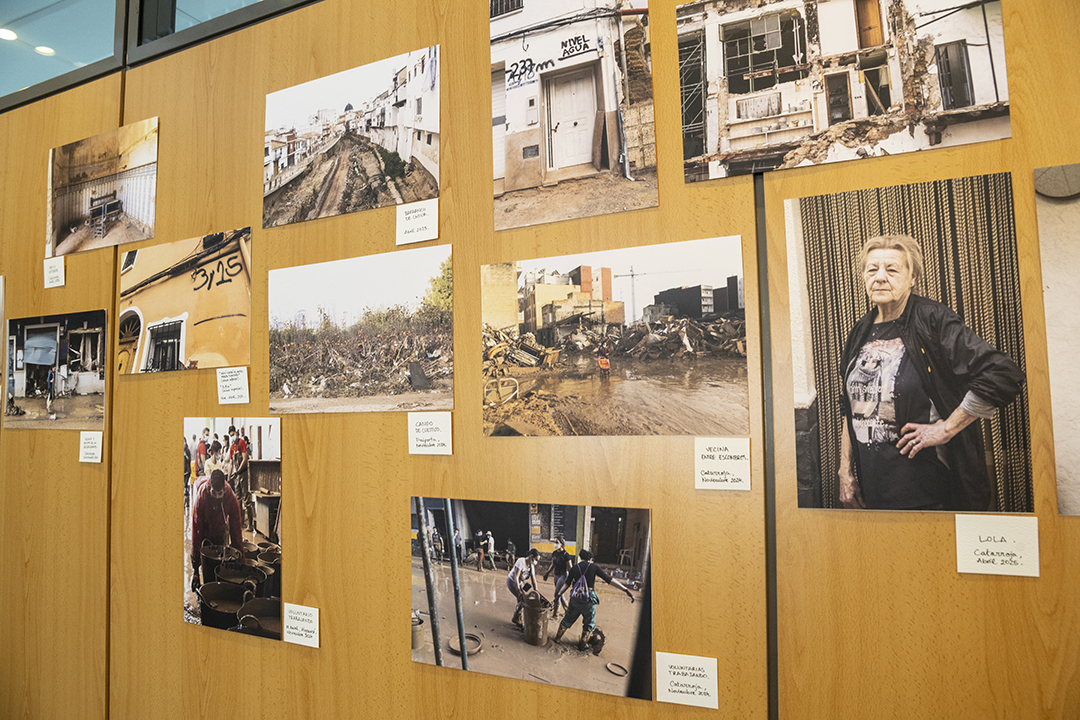
We tend to treat the second as a footnote to the first. But climate emergencies are becoming information crises beyond disasters. The DANA in Valencia in October 2024 — the severe flooding where at least 232 people lost their lives — is an example of the spread of disinformation and its impact on crisis management. Disinformation travels fast through social media and is a real threat to local communities, lacking easy access to trusted information when they need it most.
In that context, Climate Frontline emerged. An initiative built on the opposite idea: that in an emergency, the information a community can actually trust is not a side effect of the crisis but part of what decides who comes through it, as much as a drainage channel or an early-warning siren.
This joint initiative of the European Journalism Centre and REVOLVE, launched in mid-2025, spent a year on the front lines of southern Europe’s climate emergencies: the aftermath of the DANA floods in Valencia and the wildfire seasons that return to the Iberian Peninsula every summer. Working with four local newsrooms — Sul Informação and Jornal Região de Leiria in Portugal, and El Salto Diario and elDiario de la Comunitat Valenciana in Spain — it set out to answer a question most disaster response skips over entirely: what would it take to make trusted local media part of how a region prepares for, survives, and recovers from a climate emergency?
The outcomes of the year-long work from Climate Frontline are gathered in the Climate Emergency Reporting Toolkit, a free tool for editors, reporters and newsroom leaders to shift from event-based reporting towards systemic resilience journalism, enhancing preparedness in local communities. The toolkit was launched at EURESFO 2026, the European Urban Resilience Forum hosted in Guimarães(Portugal), during the session ‘Winning the Climate Narrative’, hosted by ICLEI Europe and moderated by Clemens Schöll, journalism programme manager at Clean Energy Wire.
A question of trust
In an emergency, trust behaves like infrastructure. When it holds, people act on reliable information and protect each other. When it fails, no amount of accurate data reaches anyone in time. The research carried out by Alberto López and Germán Llorca-Abad confirms that “disinformation in natural crises follows patterns of information disorders, hindering institutional response and shaping public perception of events.”
To understand these (dis)information flows and gather insights from the affected communities, the Climate Frontline initiative hosted workshops in Valencia (Spain) and Coimbra (Portugal) during the first quarter of 2026 with civil society organisations, researchers, journalists and representatives from civil protection and local and regional governments. These sessions aimed to collect their input on how the information flows were before, during and after the disasters and co-create narrative principles to improve future coverage.
Ana Abrunhosa, president of the Coimbra Municipal Council, framed it precisely at the Coimbra workshop. “How to communicate better, before, during and after a climate emergency, especially to build trust,” she said. “And it is trust that generates safety and safe behaviours.” Coming from the head of a regional government, that is a statement about public safety, not media strategy.
The reason this matters beyond newsrooms is that misinformation has a source, and it is usually a vacuum. In both Valencia and Coimbra, participants described the same sequence: the emergency hits, official information arrives slowly, or in language no one can use, and rumour rushes to fill the space left open. That space belongs to institutions as much as to journalists. Local governments that communicate late, or only in technical terms, widen the very gap that misinformation exploits, which makes closing it a shared responsibility and a governable one.
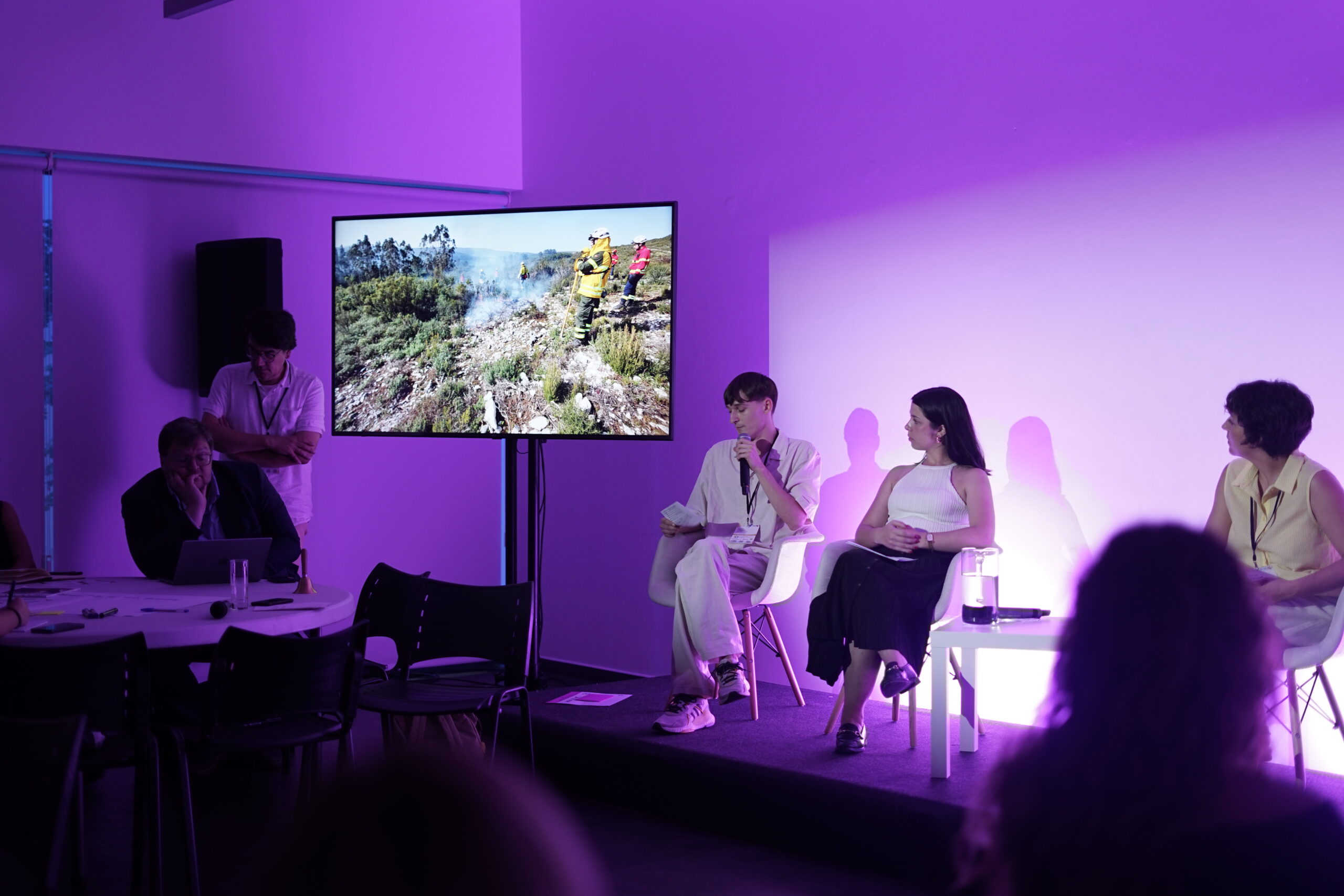
The workshops hosted in Valencia and Coimbra aimed not only to gather feedback but also to facilitate a space where a myriad of local actors involved in the preparedness and response to a climate emergency could meet and make connections, strengthening the local communication ecosystem and building trust. A similar space was facilitated at EURESFO 2026, following the launch of the Climate Frontline toolkit. The event featured interventions from the initiative’s four grantee newsrooms, as well as representatives from two municipalities (Alzira in Spain and Almada in Portugal) and the intermunicipal community of Coimbra (Portugal).
The session offered a space where journalists, communicators, researchers and policymakers gathered and discussed how to communicate climate risk by connecting with local values, experiences and places. A recurring finding of the EURESFO session was funding and resourcing as the missing piece for the trusted communication that safety depends on. As Clemens Schöll of Clean Energy Wire, who moderated the session, put it: “a single headline about adaptation does not build trust.” Trust is built in the ordinary intervals between emergencies, by newsrooms and institutions that show up before anyone is watching.
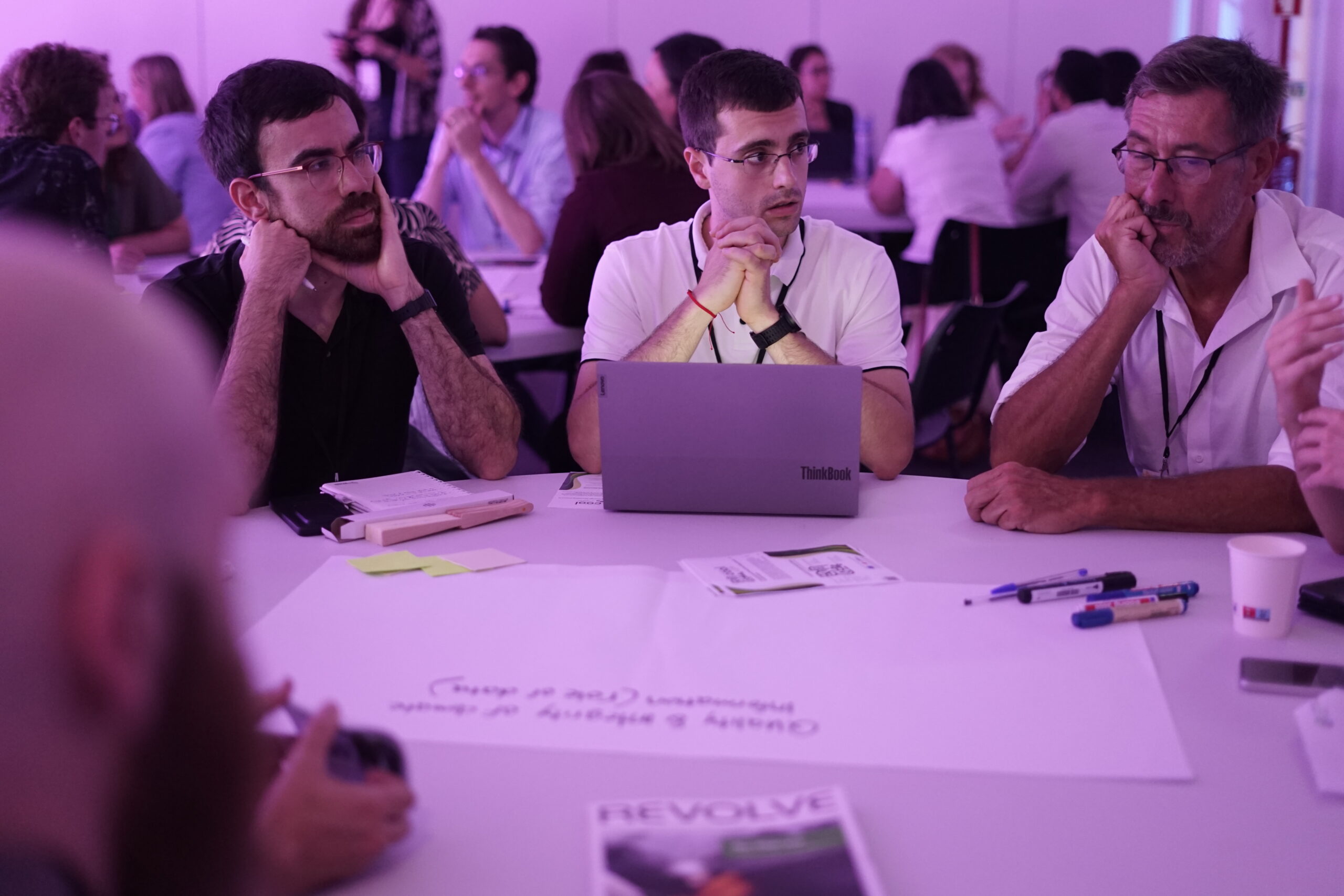
Mariló Gradolí, president of the Association of Victims of DANA 29-O, was direct about what that obligation entails during the workshop in Valencia. “To what extent should the media be asked to take on this educational task? Well, it is a public service, so it is their responsibility,” she underlined. The same could be said of every institution a community is expected to trust when a climate emergency threatens their safety.
Disasters are not natural
When Yaisa Córdoba, project coordinator at Fundación Felisa, opened her session at the Climate Frontline workshop in Valencia, she began with a provocation. “Disasters are not natural,” she said. “We must stop placing responsibility on nature. If we leave responsibility to nature, we will not take any action to prevent these events.”
It sounds obvious when stated plainly. But a significant portion of climate disaster coverage still treats flooding, wildfires, and heatwaves as random acts rather than outcomes of human choices. The coverage of disasters normally follows a similar pattern: dramatic aerial imagery, death tolls, political recriminations, and then silence.
What usually receives far less attention is that the flood plains hit hardest were disproportionately occupied by lower-income residents, that ageing drainage infrastructure had been flagged for years, or that warning systems failed to reach the populations most at risk. This is where the reporting question becomes a public one.
As Danylo Titenko, Climate Frontline grantee from elDiario.es, pointed out at the EURESFO Conference 2026 during the presentation of the Climate Frontline toolkit, “climate change is a social issue, and we can’t protect people from climate change if we don’t face the social inequalities.”
In the case of the DANA in Valencia, climate change intensified the rainfall, but it was decades of land-use decisions and neglected infrastructure that determined who drowned and who did not, and none of that made it into the aerial footage. And it was a local official who put it most bluntly. “Incompetence, misinformation and denialism kill,” said Alfons Domínguez, mayor of Alzira, at the same forum. An elected leader naming the accountability that most disaster coverage leaves unspoken.
When the cameras leave
Perhaps the deepest structural problem is what happens when media attention fades. Participants of the Climate Frontline workshop in Valencia described journalists as “slaves of immediacy,” arriving for the dramatic images and leaving when the story stopped trending, precisely when the most consequential decisions about reconstruction, accountability, and adaptation are being made.
Recovery is where inequality hardens into permanence. Reconstruction timelines diverge sharply along socioeconomic lines, promises made in the emergency phase go untracked, and adaptation plans that could reduce future risk sit unread in municipal archives while the journalists who might hold any of this to account have long since moved on to the next disaster.
Closing that gap is not something a newsroom can do alone, and that is the shift the Climate Frontline project keeps returning to. The same point was raised during the EURESFO session discussions. Participants pointed out that individual journalists are often held responsible for climate emergency coverage that is inaccurate, lacks follow-up after the emergency passes, or fails to address the full scope of the emergency. However, that burden shouldn’t fall on them alone. It belongs to the media and information ecosystem they work in, which too often fails to provide the resources journalists need to do their jobs safely and professionally.
Juan Bordera, journalist at CTXT who has reported extensively on climate topics and especially on the Valencia floods, argued that this pattern can only be interrupted by a culture of risk. “Events like the DANA of 2024 will happen more and more frequently,” he said. “That is why pedagogy is fundamental; incorporating a culture of risk and prevention improves preparedness.”
He also pointed to something that institutional narratives consistently overlook: the value of community self-organisation. Valencia’s Local Emergency and Reconstruction Committees, known as CLERs, became essential coordination points precisely because they were embedded in the communities they served. “It is the community that knows itself and organises to manage these situations,” Bordera said.
This is not a romantic argument. Local knowledge, held in neighbourhood networks and informal channels, often reaches closer to the truth than a call to the mayor’s office and the national weather agency. The lesson for local government is concrete: communication works when it is built into a wider resilience ecosystem. When journalists, municipalities, civil protection, researchers and community networks are already coordinating before the emergency, not improvising during it.
Neide Areia, a researcher at the University of Coimbra, framed the goal as a strategic one: not more information, but relevant information matched to the people and the region. Treated that way, local media stops being an observer of the recovery and becomes part of the machinery that makes a region safer.
That’s exactly the point Alfons Domínguez, Mayor of Alzira, touched upon at EURESFO. “We need to give the right relevance to information and communication during emergencies,” Domínguez highlighted. In his municipality, they have created a Climate Change and Emergency Response Office to give the right space to communicate better and involve the right actors before, during and after emergencies.
A practical guide for climate hazard reporting
None of this is easy to put into practice, which is why the Climate Frontline central output is a working tool. The Climate Hazard Reporting Toolkit gathers what the workshops surfaced into something a newsroom can use: an operational guide organised around the full arc of an emergency before, during and after. It covers building seasonal hazard calendars and trusted source networks in advance, verifying information under pressure, reporting with the communities most exposed, and tracking recovery promises and reconstruction funding long after the story leaves the front page. It is open, adaptable, and built from real pilots in Spain and Portugal rather than from theory.
But a tool is only as good as the conditions under which it is used. The clearest message from the EURESFO session was that trusted local reporting needs resourcing and needs to be recognised as part of a region’s preparedness, not left to whatever attention a disaster happens to attract.
That is where the way forward is genuinely shared. For newsrooms, the toolkit is a starting point. A structured entry into coverage that holds through the whole cycle, not just the crisis. For municipalities, civil protection and resilience actors, it is an invitation to treat local media as a partner in preparedness rather than an audience to brief. For civil society — the neighbourhood associations, community networks and local organisations that so often become the real information infrastructure when official channels fail — it is a recognition and an offer: that their knowledge belongs in the coverage, and that trusted reporting works best when it is built with them rather than about them.
And for the funders and institutions now weighing the mounting cost of climate disruption, it makes a practical case: strengthening trusted information is one of the lower-cost, higher-return investments a vulnerable region can make.
DANA events and wildfires will recur and be exacerbated by other hazards, like the record-breaking heatwaves Western Europe is going through this summer. But what can change is how prepared communities are when the next emergency comes. And how much of that preparation is built quietly, in advance, by the people who report on these places and the institutions that govern them. The toolkit is one place to begin. The harder, more valuable work is deciding to treat trusted local information as infrastructure and to build it before it is needed.