
19 October 2021

The realities and challenges of imported deforestation, forest governance and their link with climate change
About
On the road to COP26 and in cooperation with the International Union of Forest Research Organizations (IUFRO), REVOLVE organized an International Press Briefing on Tuesday 19 October 3-4pm CET for journalists to interact with four internationally renowned political scientists and forest and land use researchers about the complexities and realities of ‘imported deforestation’.
‘Imported deforestation’ is a central theme to global climate action since what is consumed in urban areas has an impact on forests in other parts of the world; the provenance of forest-risk commodities and how to better conserve and protect forests is a key aspect to the city-forest nexus and to this Press Briefing.
The Press Briefing was exclusive to journalists and was meant to provide insights into the challenges of international forest governance and global deforestation causes and patterns to be able to cover deforestation-related climate issues in a more informed and accurate manner in the lead-up to, during and after UNFCCC COP26 in Glasgow.
The briefing provided a press release as well as FAQs, Facts & Figures, infographics & visuals on imported deforestation, land use governance and climate change, and the opportunity for further interviews with the four experts and other knowledgeable forest and land use governance specialists in different languages.
Experts remain available for interviews in German, English, French, Italian, Portuguese, and Spanish. And the one-hour recording of the press briefing is available upon request by journalists: please contact Sören Bauer.
In cooperation with:
The experts are

Dr. Metodi Sotirov
Assistant/Associate Professor at the Chair of Forest and Environmental Policy, University of Freiburg i. Br., Germany
His main areas of expertise are in forest policy, environmental (biodiversity, climate, timber trade) governance and policy integration.

Dr. Connie McDermott
Jackson Senior Fellow and Associate Professor Land Use and Environmental Change University of Oxford, UK
Her main areas of expertise are in integration of forest governance into the global climate regime, effects of market globalization on domestic forest policy, certification of forests and forest products, and related initiatives.

Dr. Pablo Pacheco
WWF Global Forests Lead Scientist
His main areas of expertise are in forest governance and institutions, global environmental change, land systems and deforestation, markets and supply chains, livelihoods and landscape change, and sustainable development.
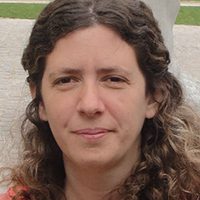
Dr. Sarah Lilian Burns
Assistant Professor at the Facultad de Ciencias Agrarias y Forestales – Universidad Nacional de La Plata, Argentina
Her main areas of expertise are in forest policy, international regimes and Latin America.
Additional experts:

Dr. Guillaume Lescuyer
CIFOR Senior Associate

Dr. Marie-Gabrielle Piketty
Economist at Centre de Coopération Internationale en Recherche Agronomique pour le Développement (CIRAD)

Dr. Paolo Cerutti
Senior Scientist and Interim Hub Leader – Nairobi, www.cgiar.org

Dr. Andre Guimaraes
Director of Amazon Institute of Environmental Research (IPAM)
Press Release
FAQs
Prepared in Sep 2021 by Dr Nelson Grima and Dikshya Devkota, IUFRO-GFEP Project Managers
On deforestation
What is deforestation?
According to FAO, deforestation is either the conversion of forest to another land use, or the long-term (>10 years) reduction of tree canopy cover below 10% of the area. Deforestation defined broadly includes also degradation that reduces forest quality.
How has deforestation evolved over the last decades?
According to FAO, from 2015 to 2020 the collaborating countries reported a global tree cover loss of 1.64%, while Global Forest Watch (GFW) estimated from remote sensing data a loss of 4.19% for the same period. A longer time period provided by GFW shows that from 2001 to 2020 the world lost 411.4 Mha (10.5%) of tree cover.
What are the main causes of deforestation?
“The most important direct causes are the conversion of forested lands for agriculture and cattle-raising, logging, urbanization, mining and oil exploitation, acid rain, and fire” (FAO 2007, p.11).
Besides the direct causes, the underlying causes include major international economic phenomena, deep-rooted social structures, which result in inequalities in land tenure, discrimination against indigenous peoples, subsistence farmers and poor people in general, political factors such as the lack of participatory democracy, the influence of the military and the exploitation of rural areas by urban elites, and overconsumption by consumers in high-income countries (FAO 2007).
Why is deforestation a problem?
Deforestation has many socio-ecological and economic consequences with devastating long-term impacts, such as the destruction of traditional lifestyles and religious beliefs, breakdown of social institutions, or encroachment of indigenous communities resulting in violent confrontations. Economically, deforestation not only represents a loss in forest capital (valued at USD 45 billion in 2007) but also, all potential future revenues and future employment that could be derived from their sustainable management for timber and non-timber products disappear. One of the most serious consequences of deforestation is the loss of biodiversity (estimated annual extinction of 50,000 species). Deforestation is also an important contributor to global warming (about 25% of the total CO2 emissions), it disrupts weather patterns creating hotter and drier weather, affects water quality and flow, and contributes to soil degradation and desertification.
What does the acronym FLEGT stand for, and why is it important?
FLEGT stands for Forest Law Enforcement, Governance, and Trade. The EU’s FLEGT Action Plan was established in 2003 aiming to reduce illegal logging by strengthening sustainable and legal forest management, improving governance, and promoting trade in legally produced timber. Partnerships have been formed under FLEGT to transform the timber sector, combat illegal logging, strengthen forest governance, and encourage sustainable economic development.
On imported deforestation
What is imported deforestation?
Imported deforestation is the deforestation caused by the production of goods that are consumed by a population elsewhere.
Who “imports” deforestation, and how?
The larger importers of deforestation are the high-income countries, China, and India, mainly through the import of agricultural products, pulp and paper, energy, and minerals.
What are forest-risk commodities?
Forest-risk commodities (FRC) are globally traded goods and raw materials that originate from tropical forest ecosystems, either directly from within forest areas, or from areas previously under forest cover, whose extraction or production contributes significantly to global tropical deforestation and degradation.
On land use governance
What is governance?
Governance refers to the formation and stewardship of the formal and informal rules that regulate the public realm, the arena in which the state, as well as economic and societal actors, interact to make decisions (Hydén and Mease, 2004).
What is land use governance?
Land use governance is about the decisions that are made regarding access to land and its use, the manner in which these decisions are implemented and enforced, and the way that competing interests in land are managed.
What is forest governance?
Is the way in which public and private actors, including formal and informal institutions, and other stakeholders negotiate, make, and enforce binding decisions about the management, use, and conservation of forest resources.
What is the history of forest governance globally?
In most parts of the world, the state continues to be the dominant authority in governing forests. Current forest governance comes mainly in three forms: decentralization (the state transfers technical capacity and/or formal authority to local administration), participation (forest management is implemented by local communities themselves or jointly with regional forest departments), and marketization (market-based mechanisms are applied to guarantee the conservation or improvement of forests).
What are the main regulations and governance frameworks for forests globally?
At the global level, forest governance is highly fragmented. The international forest regime includes regulations in various forest-related intergovernmental bodies, eg. UNFCCC, CBD, UNFF, etc. In addition, several (often market-based) governance frameworks involving private actors have also been established. Examples are Participatory Forest Management (PFM) in its diverse forms, forest certification (with its two main promoters being the Forest Stewardship Council – FSC, and the Programme for the Endorsement of Forest Certification – PEFC), or the different Payment for Ecosystem Services (PES) schemes (including REDD+).
Which countries/regions already have regulations in place regarding imported deforestation, or are planning to do so? What do these regulations say?
An interest in developing a global framework to address deforestation was expressed by a few countries several decades ago, however, no agreement was reached.
At national and regional levels, several regulations address imported deforestation. For example, the EU’s FLEGT regulation (2005) controls the entry of timber to its territory by signing with third countries the Voluntary Partnership Agreements (VPAs). Other bilateral agreements, such as United States’ trade promotion agreement with Peru (2007) contains mandatory provisions to address illegal logging, improve forest enforcements, track protected tree species through the supply chain and the management of forest concessions. Many other countries also have plans to develop regulations to address imported deforestation.
On (Imported) deforestation, land use/forest governance – and climate change
What does deforestation have to do with climate change?
Clearing forests not only reduces the number of trees that capture greenhouse gases preventing them from accumulating in the atmosphere and warming the Earth, but it also creates emissions by releasing the carbon stored in trees back to the atmosphere. Deforestation causes around 10-20% of global emissions.
How could – and should – land use/forest governance address climate change?
It should promote predictable, open, and informed policymaking based on transparent processes, as well as a bureaucracy imbued with a professional ethos, an executive arm of government accountable for its actions, and a strong civil society participating in decisions related to the sector.