
A Future Stuck in the Past
Photo: Anelo / Shutterstock
A climate-ruined world feeds on carbon protein and memories of what was.
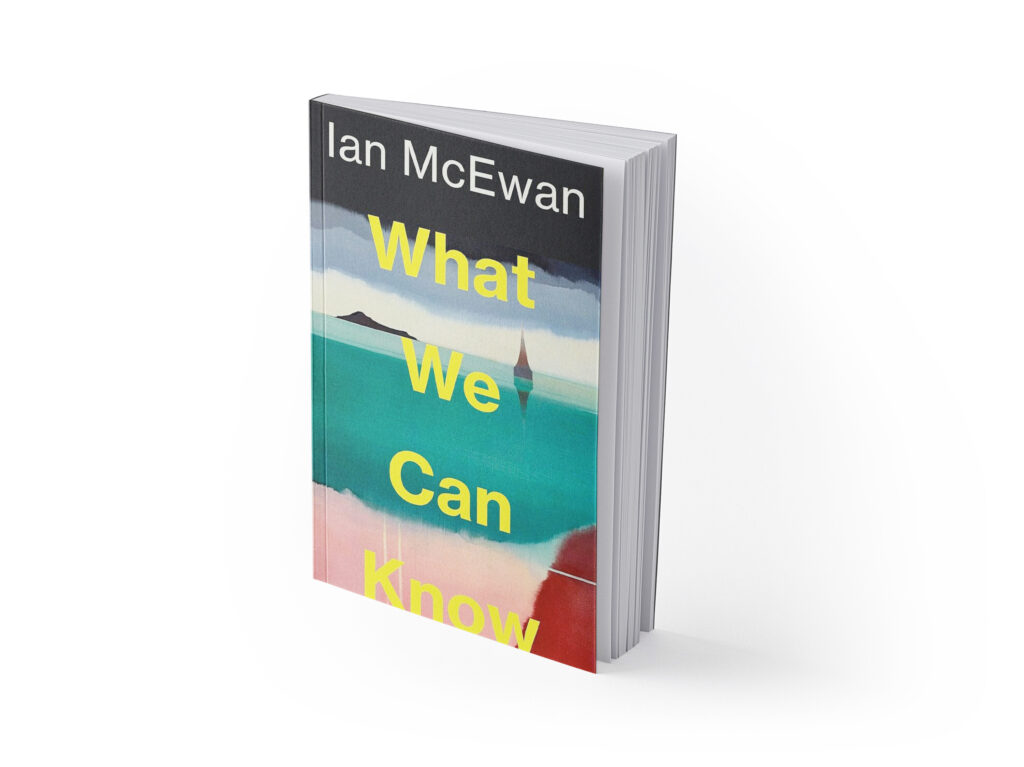
What We Can Know
Ian McEwan. London, Penguin Random House UK, 2025, 301 pages, 20,95€
For most of the novel, set in the year 2119, we are saddled with Tom Metcalfe, a man whose talent for melancholy is matched only by his tediousness. We are shown, through Tom’s perspective, that the Derangement (the time in which we are currently living) was a period in history when people clearly knew the damage they were causing to the planet and did not change. By 2119, humanity has dwindled; nuclear war, floods, and relentless heat have rendered the world nearly uninhabitable.
In this stark future, Tom – a scholar marooned in what remains of Britain (now a scattered archipelago) – and his sparse circle of acquaintances pick their way through a world devastated by disaster. The vivid details of this ruined Earth are highlights of Part 1.
Food as we know it is gone. People now survive on acorn coffee and a synthetic protein cake made from “atmospheric carbon dioxide and cultivated soil bacteria”, a miracle innovation in a world stripped bare. A bar of chocolate costs the equivalent of 3 hours’ work, and sunbathing is remembered as a bizarre phenomenon of the past. Floods have covered roads and runways, so only boats can cut through the waterlogged landscape. The United States has splintered into territories ruled by warlords and violent gangs, while Nigeria has become the guardian of the internet. AI and online technology have stagnated, frozen by the collapse of natural resources and infrastructure. Every scrap of digital history – texts, emails – remains archived and searchable, turning the past into a vast, twisting maze of the potentially knowable.
Tom’s obsession orbits a lost poem – a near-mythic piece read aloud only once at a dinner party in 2014, a moment the protagonist returns to with almost ritualistic fervour. Yet beneath this literary scavenger hunt, it is Vivien, the poet’s wife and the poem’s intended recipient, who truly occupies Tom’s thoughts, becoming both muse and object in his relentless obsession.
Tom clings to the belief that the missing poem is both vital and within reach, though the reason for its importance remains elusive. He is certain that unearthing it will unlock a truth humanity desperately needs and lacks. This arrogance of the expert felt familiar to me: whether scientist, politician, or religious leader, each is convinced that their knowledge is uniquely correct, yet so often unable or unwilling to use that knowledge as a catalyst for real change or connection. Tom’s inertia and solitude are impossible to ignore and, while important to the text, make Part 1 a tough meal to digest – one that demands patience and persistence (lots of chewing required – perhaps akin to eating a protein cake).
The quest for this holy grail – the lost poem – fills Tom’s life with more purpose in its absence than anything the real world provides. Even his fleeting moments of connection are tinged with a fragile, hollow sense of superiority, as if he is sure he exists on a higher plane. Tom lives generally untouched by emotion and convinced he belongs to a vanished golden age. This quiet elitism echoes throughout the story, perhaps reflecting a personal pet peeve of the author.
When Part 2 begins, the narrative voice shifts, and the result is akin to a cool breeze after stifling heat; leaving Tom’s viewpoint behind is a relief, despite the shock and violence that ensue. The last 115 pages shed the earlier lethargy, letting the story finally snap together like the final pieces of a challenging puzzle. The plot is ultimately both disturbing and rewarding, delivering a gratifying conclusion to those who persist.
McEwan’s message is clear: what we can know – the knowledge currently available to humanity – is enough. We do not need a holy grail, a magical sign, or a whisper from a world beyond. The truth has not evaded us or been hidden in a secret code – it is right in front of us, sometimes right in front of our eyes, and sometimes buried with our own hands.
But is knowing truly enough? Our planet and most of humanity say no.
The catastrophic floods in this text did not come as a surprise, and they will not surprise us. Intellectualizing the climate crisis without action is a waste of time and energy – an elitist form of paralysis. Because we are living in the Derangement era, paralysis, though seemingly passive, allows violence. As What We Can Know so deftly illustrates, knowledge, whether historical or scientific, may be either worthless or priceless, depending on whether the knowing triggers action; it is only the action of the knower that determines the worth of any knowledge.