
Could VR Become a New Tool for Ocean Literacy?
Photo: Anaïs Voşki / Stanford Social Ecology Lab
A new generation of ocean education may begin with a headset rather than a shoreline.
Across Europe, ocean literacy education is entering a new phase through the integration of immersive technologies. In Türkiye, the rapidly growing network of European Blue Schools is working to raise awareness among students about marine ecosystems and sustainability. But could the “double immersion” method, which combines virtual reality (VR) with underwater experiences, help shape the future of marine education in Türkiye?
Oceans and seas absorb around 90% of excess global heat and roughly 30% of carbon emissions, playing a critical role in sustaining life on Earth. Yet for children growing up far from the coast, marine ecosystems often remain abstract concepts confined to textbooks.
To bridge this gap, the European Commission-supported Network of European Blue Schools is integrating ocean literacy into educational systems. According to the latest figures, 504 schools across Europe have joined the network, resulting in 567 certifications being awarded. In recent years, Türkiye has emerged as one of the fastest-growing participants in the programme. Nail Üçyol of the Turkish Marine Research Foundation (TÜDAV) said the number of active schools in Türkiye has reached 249, adding that the SHORE project – of which TÜDAV is a partner – has played a key role in this growth.
Taking ocean literacy beyond the classroom
Ocean literacy, at its simplest, refers to understanding the mutual relationship between humans and the ocean. Through the Blue Schools programme, students are encouraged not only to learn about marine life but also to connect broader issues such as climate change, plastic pollution, biodiversity loss, and sustainable fisheries.
Üçyol noted that while ocean literacy is gaining traction in Türkiye, it remains less widely known than environmental education. Strengthening young people’s connection with the sea, he argued, is particularly important for a country surrounded by water on three sides and seeking to build a healthier relationship with its marine resources in the future.
Knowledge alone is not enough
Research in environmental psychology suggests that providing information alone is rarely sufficient to change behaviour. Géraldine Fauville, a lecturer at the University of Gothenburg and researcher at Stanford University, explained to REVOLVE that emotional connections to nature are just as important as knowledge.
People who spend time in nature and see themselves as part of the natural world are generally more likely to adopt environmentally friendly behaviours.
When it comes to oceans, however, an additional challenge emerges. Fauville pointed out that the sea is not equally accessible to everyone. “Not everyone lives by the coast or has the opportunity to experience the ocean directly,” she said. “That means we need to find alternative ways for people to connect with it.”
That means we need to find alternative ways for people to connect with it.
The “double immersion” method
This is where virtual reality enters the picture.
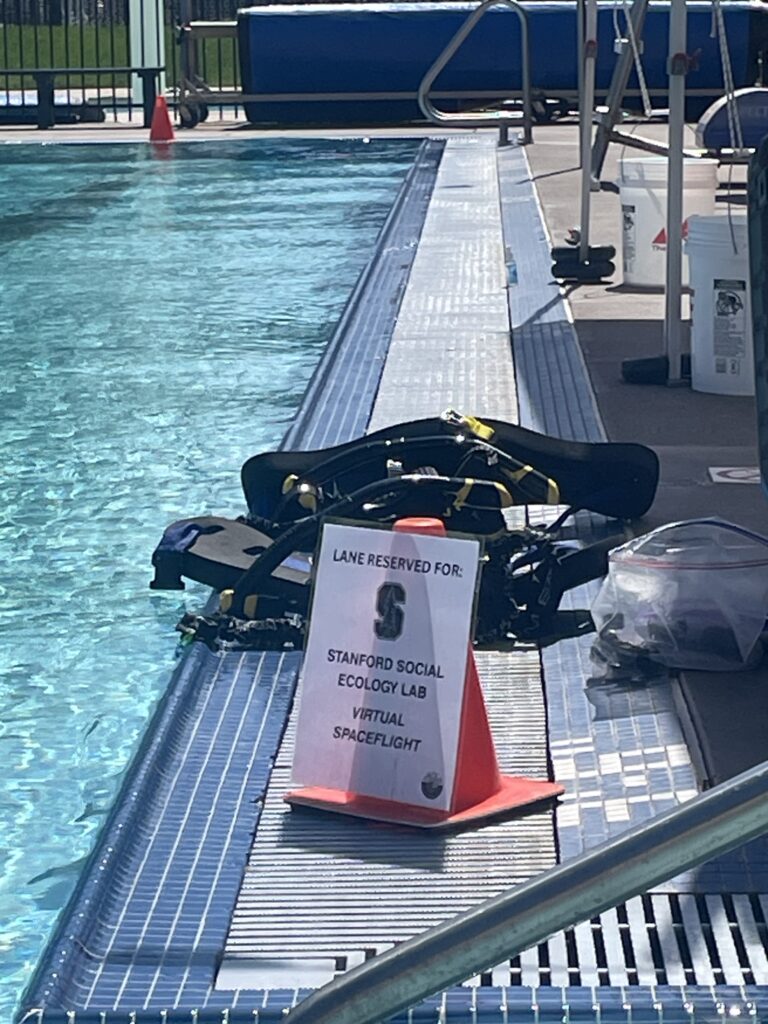
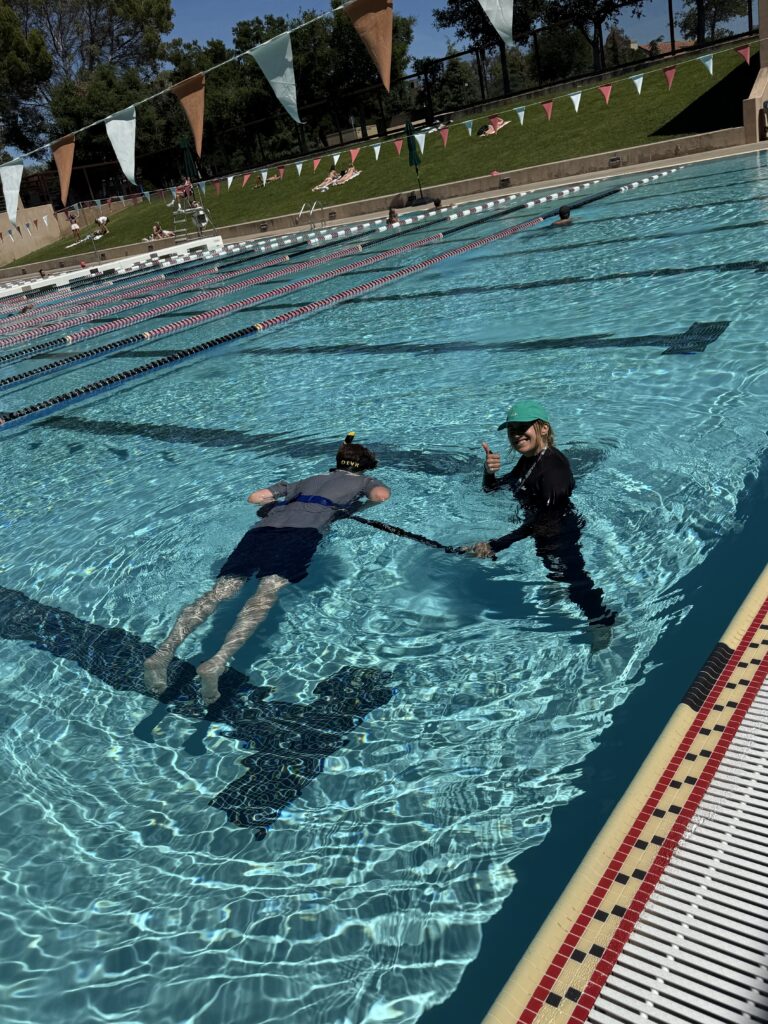
In conventional VR experiences, users wear a headset and explore underwater environments visually. The system developed by Fauville and her team goes a step further. Known as “double immersion,” the method places participants in a real swimming pool while wearing a VR headset, allowing them to experience marine ecosystems both visually and physically.
“In regular VR, you see yourself underwater, but your feet are still on the ground,” Fauville explained. “With underwater VR, your body is actually floating in water. The visual and physical senses work together.” The approach aims to create a more realistic and emotionally engaging experience than traditional VR alone.
Stronger ocean connections
In a controlled experiment published in 2025 by researchers from Stanford University and the University of Gothenburg, 214 participants were divided into three groups. One group viewed the same content on a computer screen, another used traditional VR, and the third experienced the underwater VR system.
The findings showed that participants who experienced underwater VR reported stronger connections to the ocean, higher levels of awe and ocean attachment, and were significantly more likely to donate to a marine environmental organisation following the experiment.
Anaïs Voşki, a doctoral researcher at Stanford Doerr School of Sustainability and co-author of the study, said MedyaScope that evidence regarding long-term behavioural change remains promising but limited.
“The evidence for long-term pro-environmental behaviour change resulting from immersive experiences is encouraging, but still limited,” she said. “Whether the effects last depends both on individual differences and on how the experience is designed.”
Voşki stressed that the goal is not simply to give people a memorable ten-minute experience. “What matters is helping people transfer what they learn into their own lives and identify concrete actions they can take in their daily routines,” she said.
What matters is helping people transfer what they learn into their own lives and identify concrete actions they can take in their daily routines.
Can it work in Türkiye?
According to Üçyol, examples of VR-supported underwater experiences and hands-on marine education already exist and could be adapted to Türkiye.
“Such approaches can help students better understand marine ecosystems and connect theoretical knowledge with direct experience,” he said. “However, wider implementation requires the right infrastructure, technical equipment, safety measures, and trained personnel.”
He also cautioned against viewing technology as an end in itself. “For learning to be lasting, supportive elements such as teacher guidance, curriculum integration, project-based work, and field experiences must also be part of the process,” he said.
Fauville echoed that concern, emphasising that virtual reality should not become a stand-alone attraction.
“Educators need to work with students before and after the experience,” she said. “The goal is not simply to provide an impressive experience, but to create a long-term learning journey.”
Underwater VR systems require specialised equipment, trained staff, and access to suitable swimming pool facilities. These operational demands significantly increase costs and present challenges for large-scale adoption.
Fauville noted that the technology remains in the research stage and that broader deployment will take time.
“Our biggest question right now is whether this technology can genuinely contribute to ocean literacy,” she said. “If the results continue to be positive, the next step will be making it more accessible.”
The challenge of shared learning
Beyond infrastructure and cost, another challenge remains. One of the foundations of environmental education is collective learning – students sharing impressions and reflecting together on their experiences. Current underwater VR systems, however, can only accommodate one participant at a time.
Voşki identified this as one of the technology’s key limitations.
“At the moment, one of the biggest limitations is that it cannot create a shared social experience,” she said. “Making the technology more accessible and participatory will be one of the major research areas in the coming years.”
Can virtual reality replace the ocean?
On this point, experts are unanimous: virtual reality cannot replace the ocean itself.
No digital experience can fully replicate walking along a shoreline, observing coastal wildlife, or physically interacting with the sea. Yet these technologies may offer a valuable alternative when direct access to marine environments is impossible, helping make the underwater world more visible and accessible.
Ultimately, the question is not whether technology can teach children about the ocean. It is whether it can help a child who has never seen the sea develop that first emotional connection strong enough to inspire its protection.
Technology alone is not the solution. But when combined with effective educational programmes, it may become one of the most powerful complementary tools available for advancing ocean literacy.
This article was originally published in Medyascope.