Nature as Infrastructure
Photo: Tom Lovett / REVOLVE
Europe must invest in living infrastructure to meet the challenges of biodiversity loss and climate change.
The dawn chorus crescendos above the gentle lap of the tide. Migratory birds descend from long journeys only to be hustled by year-round residents or earlier arrivals. A heron takes flight. And suddenly a jet engine roars overhead, drowning out the bucolic scene.
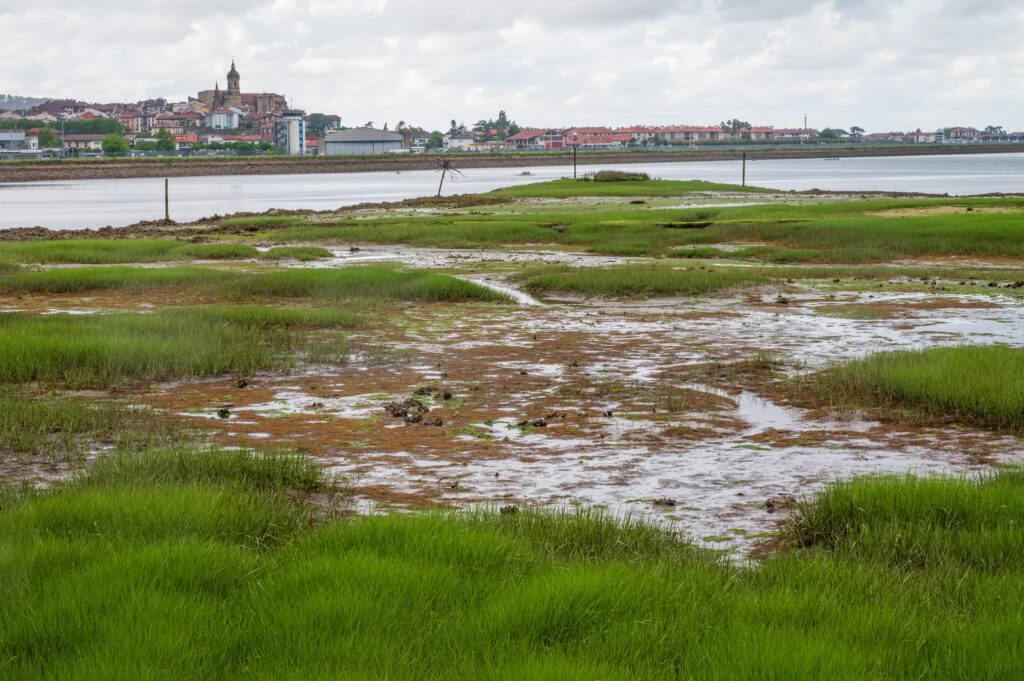
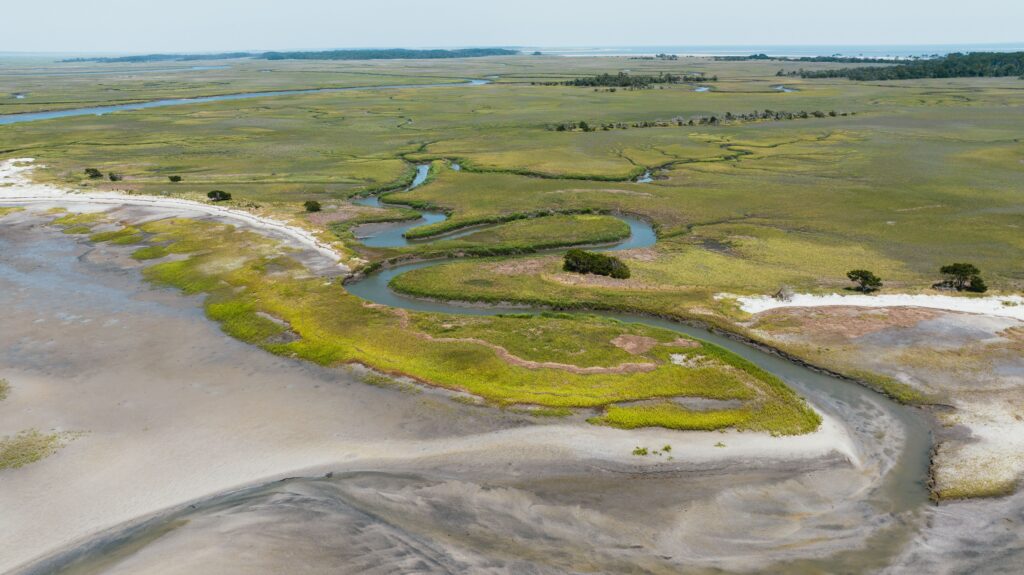
It is an auditory reminder that despite being a key bird reserve on the Basque coast, San Lorenzo lagoon is not a remote wilderness. This wetland area sits between the city of Irun and Hondarribia airport on Txinguidi Bay, which straddles the border of France and Spain. The intertidal zone is one component of a wider coastal defense that incorporates nature-based solutions to enhance adaptation to climate change and mitigate its potential impacts.
Across Europe, a new perspective of nature is emerging, one that treats ecosystems not as obstacles to development, but as infrastructure in their own right. Restored wetlands, floodplains, and coastal marshes are not understood simply as habitats for wildlife – they are being designed and managed as living systems capable of reducing flood risk, storing carbon, cooling cities, and supporting local economies.
As Europe finalises a new integrated framework for climate resilience and risk management, expected in 2026 and based on a sobering 3°C global warming trajectory, and as member states look for ways to put the EU Nature Restoration Regulation into practice, nature-based solutions offer a promising pathway to both adapt to climate change and restore nature.
Managing disaster risk
Wedged between the Cantabrian Mountains and the Bay of Biscay, the Basque Country is uniquely exposed to climate risk. Nearly three-quarters of its 2.2 million residents live along the coast, where rising seas, increasingly intense rainfall, and more frequent heatwaves threaten communities, ecosystems, and infrastructure alike. A 2022 coastal risk assessment of the Basque region found that average sea levels are expected to rise between 51 and 71 centimetres by the end of the century, while extreme precipitation events could increase by 30%.
Coastal flood losses in Europe already amount to a staggering €1.4 billion per year, directly affecting 100,000 citizens annually. Looking at the broader timeline, weather-related extremes caused €822 billion in economic losses across the European Union between 1980 and 2024, according to the European Environment Agency, with water-related events accounting for nearly half of all recorded disasters. The trajectory is stark: without significant, immediate adaptation, annual losses could climb to over €209.8 billion by 2100, with up to 3.9 million people flooded annually.
“The droughts, floods, and extreme weather events we see across the European Union were all predicted long ago,” Michal Wiezik, an MEP for the Renew Europe Group, tells REVOLVE. “Today, they’re happening exactly as the scientific data warned.”
The droughts, floods, and extreme weather events we see across the European Union were all predicted long ago. Today, they’re happening exactly as the scientific data warned.
Michal Wiezik, MEP for the Renew Europe Group
For much of the last century, the answer was straightforward: build higher flood walls, straighten rivers, reinforce coastlines and keep water at bay through engineering. Those measures remain indispensable, particularly in densely populated cities and ports. But as climate hazards become more frequent and more unpredictable, hard infrastructure alone cannot keep pace with intensifying rainfall, coastal flooding, and the complex interactions between landscapes and extreme weather.
Investing in living infrastructure
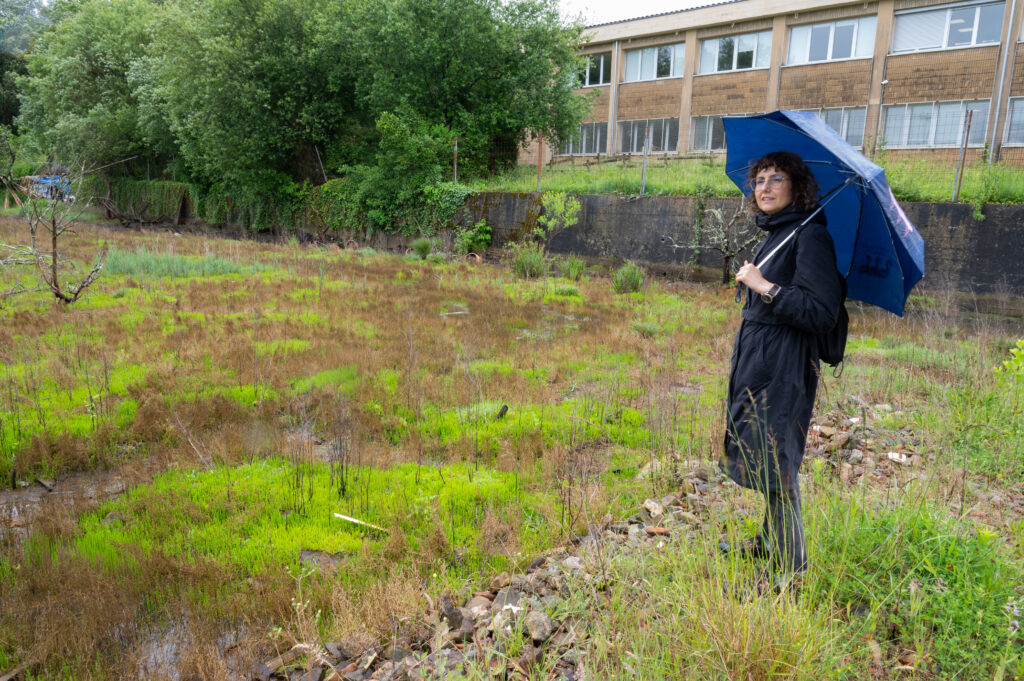
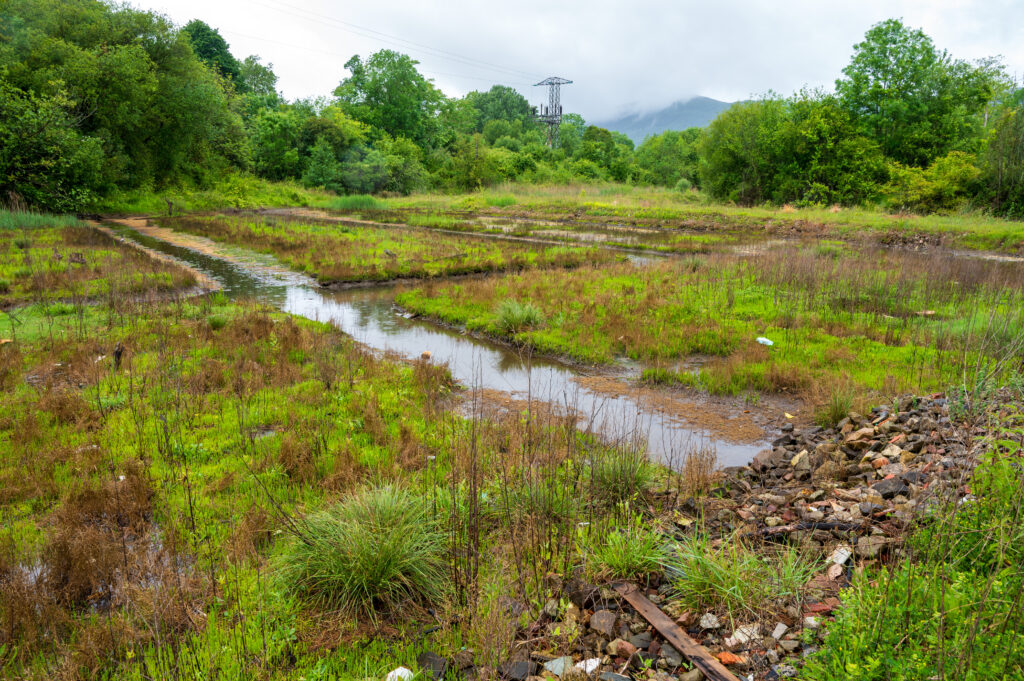
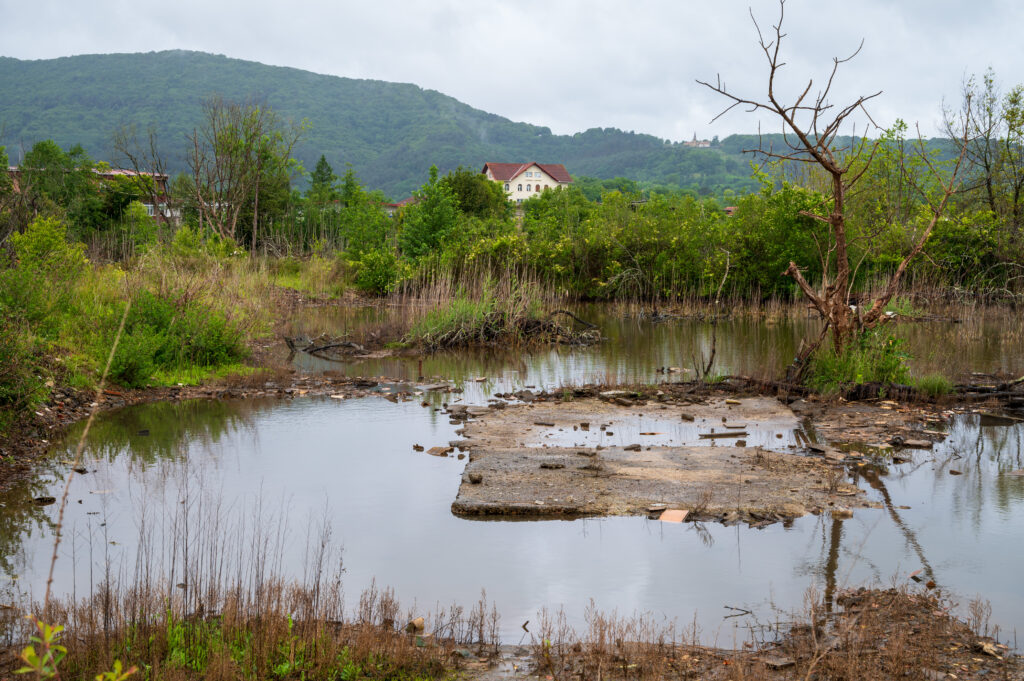
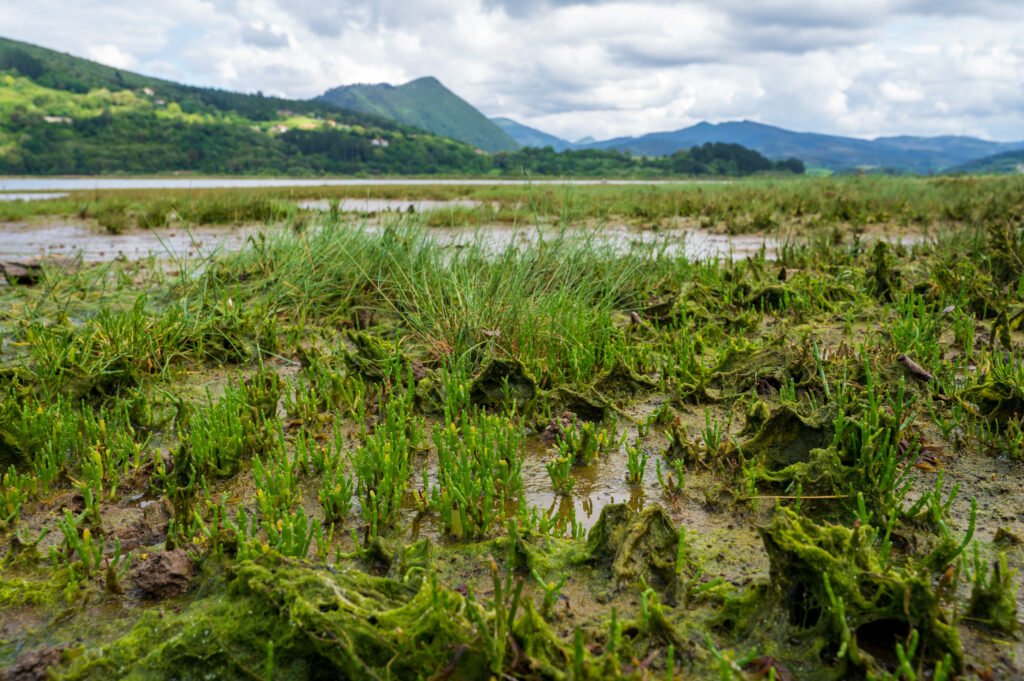
“Since we last visited the site, new salicornia shoots have started to emerge,” says Andrea del Campo Pena, a researcher at AZTI and part of the Basque consortium of Regions4Climate (R4C) partners. She points towards the concrete remains of a greenhouse. Among the mud, scattered litter, and industrial detritus, green shoots push upward: salicornia, or glasswort. “This plant is one of the first pioneers of the salt marsh,” del Campo Pena explains. “We will observe the area to see what changes take place over the coming years.”
This stretch of abandoned farmland neighbouring San Lorenzo lagoon is earmarked for saltmarsh restoration. The plan is to restore natural tidal processes while improving flood protection, biodiversity, and public access. Restoring this area will involve reopening tidal channels, removing old embankments, and fully reconnecting 5.5 hectares of former agricultural land with the sea.
Although small in scale, this intervention will offer sanctuary for migratory birds on the East Atlantic Flyway, the critical route connecting Europe and Africa, where the 2025 Assessment reports that 33% of waterbird populations are declining due to the loss of intertidal habitat.
The same natural infrastructure that provides this ecological refuge also serves as a vital defense for coastal communities. A landmark meta-analysis of 69 studies found that salt marshes reduce wave heights by an average of 72%. Remarkably, even restored marshes less than ten metres wide can meaningfully reduce wave energy, showing that relatively small interventions can offer real protection in densely developed estuaries.
Regions4Climate (R4C) is a Horizon Europe programme bringing together 12 demonstration regions to develop practical pathways toward climate resilience. Leading the effort locally is Ihobe, the Basque Government’s public environmental management agency. “The role of Ihobe is to engage all stakeholders, identify their respective needs, and make science and research available to both citizens and municipalities,” explains Laura Gutiérrez García, head of nature-based solutions at the agency.
The intervention in San Lorenzo is part of a wider shift underway in the Basque Country. The urgency is not abstract: in August 1983, catastrophic flooding of the Nervión and Ibaizabal rivers submerged much of Bilbao and caused the deaths of over 30 people with thousands displaced. It remained the costliest flood disaster in Spain until the devastating floods in Valencia in October 2024, which caused over 200 deaths and an estimated €10 billion in damages.
A regional Basque climate law passed in 2024, which requires territorial and urban planning instruments to explicitly account for future climate risks – including river and coastal flooding, sea-level rise and heat stress – and include adaptation measures before developments can proceed. Rather than reacting after disasters occur, adaptation becomes a legal requirement shaping how towns, infrastructure, and landscapes are designed.
Nature-based solutions offer a suite of adaptation measures. Coastal wetlands absorb wave energy before it reaches urban areas. Floodplains give rivers space to overflow safely during periods of high discharge. Healthy agricultural soils store rainfall instead of shedding it rapidly into downstream communities. Urban parks become temporary reservoirs during heavy storms while doubling as recreation space, cooling the city and supporting wildlife.
Unlike traditional “grey infrastructure,” which often displaces biodiversity or degrades ecosystems, this “green infrastructure” delivers more than resilience – it creates thriving, multi-functional landscapes that restore nature, enhance public wellbeing and generate lasting economic value.
Self-healing sea defense
Every tide carries fine sediment suspended in seawater into the estuary. As pioneer species like salicornia establish themselves across the mudflats, their stems slow the flow of water just enough for those particles to settle. Over months and years, the trapped sediment gradually raises the marsh surface. As the ground rises and floods less frequently, new plant communities take hold: salt-tolerant grasses such as Puccinellia stabilise the soil, while the upper marsh eventually develops into a diverse mosaic of vegetation inundated only during the highest tides.
It’s a textbook example of what Dutch coastal ecologist Jim van Belzen describes as self-organisation – the continuous interaction between tides, sediment and vegetation that allows an ecosystem to build its own resilience. Rather than remaining static, the marsh responds to changing conditions, adjusting as sea levels rise and recovering naturally after storms. “Damage on the marsh can, like any living system, just heal by itself,” van Belzen explains to a TEDx audience.
This capacity for self-repair is what sets living infrastructure apart from conventional grey engineering. A seawall gradually deteriorates, requiring expensive maintenance and eventual replacement. A healthy salt marsh, by contrast, keeps trapping sediment, growing vegetation and strengthening its natural defenses year after year.
That makes nature a sound investment. According to the European Commission, every euro invested in nature yields up to €38 in benefits. As Commissioner Jessika Roswall told audiences at EU Green Week 2026: “Ecosystems are the infrastructure that prop up all other infrastructure.”
Ecosystems are the infrastructure that prop up all other infrastructure.
Jessika Roswall, European Commissioner for Environment, Water Resilience and a Competitive Circular Economy
In the UK, the Environment Agency estimates that coastal wetlands provide flood defense benefits worth over £786 million annually, while in the US, during Hurricane Sandy in 2012, coastal wetlands reduced property damage by 10%.
Gemma García-Blanco, senior researcher in the climate change adaptation team at Tecnalia, an applied research and technology centre and member of the Basque Research and Technology Alliance (BRTA), argues that realising this value requires integrating nature-based solutions into every planning decision, rather than treating them as a separate environmental concern – across sectors from farming and water management to health, and even insurance.
“It is important for insurers to understand the need for increasing investments in NbS that prevent flooding, reducing future payouts,” she says. “They would have a strong incentive to support them, shifting towards mandatory adaptation requirements.”
For nature-based solutions to function as investments in public safety, financial resilience and long-term prosperity, they must become integral to public policy. Yet a report by Network Nature found that NbS are rarely integrated into global and EU policy: of 48 policies reviewed – covering EU 2030 policy targets, the European Green Deal, and EU Missions – only 17 – 35% – mention them explicitly. As extreme weather events grow more frequent, closing that gap becomes more urgent every year.
Monitoring to understand changes
NbS sound great on paper but understanding how they change over time is critical to deploying truly resilient interventions. “We’re developing long-term monitoring of the nature-based solutions to understand the conditions before intervention and the conditions after,” describes Gutiérrez García. “It’s one of the gaps that we have, in the Basque Country but also at a general level.”
A video camera installed above the nascent saltmarsh constantly monitors changes, so long-term trends can be understood. It’s part of a sophisticated monitoring network stretching along the Basque coastline that records changes in waves, shoreline position, and sediment movement. Combined with satellite observations, tide gauges and numerical models, they provide researchers with an unusually detailed picture of how coastlines evolve through time.
“The flood protection benefit is actually one of the most difficult things to demonstrate directly,” says coastal engineer Roland Garnier, who studies estuarine dynamics in the Basque Country at AZTI. Because restoration projects are still relatively small compared with the size of the estuary, changes in tidal flows are often subtle.
Researchers combine the video observations with hydrodynamic computer models to simulate how restoring intertidal habitat alters water movement during storms. Those models consistently indicate that expanding salt marshes and tidal flats increases the estuary’s capacity to accommodate incoming tides, reducing flood levels under future sea-level rise scenarios. “Increasing these intertidal areas helps the estuary adapt,” Garnier explains. “It gives the water more space.”
The politics of living with water
True resilience requires a hybrid model: combining the buffering capacity of restored marshes with necessary grey infrastructure, advanced warning systems, and predictive storm modeling. It’s about limiting construction in places that was once reclaimed. It means accepting that some spaces are more valuable as functioning ecosystems than as real estate. Importantly, adaptation cannot be voluntary; it requires the political courage to prioritise long-term safety over short-term gain.
History offers powerful examples of resolving this tension through bold planning. After a devastating flood in 1954, Austrian architect August Zottl proposed a radical idea for Vienna: divide the Danube into two channels to control its power. His vision became reality with the creation of Danube Island, a 21-kilometre-long, man-made flood defense. Built to withstand a “1-in-5,000-year flood” (up to 14,000 cubic meters of water per second), it has successfully protected the city during major floods in 2002, 2013, and beyond.
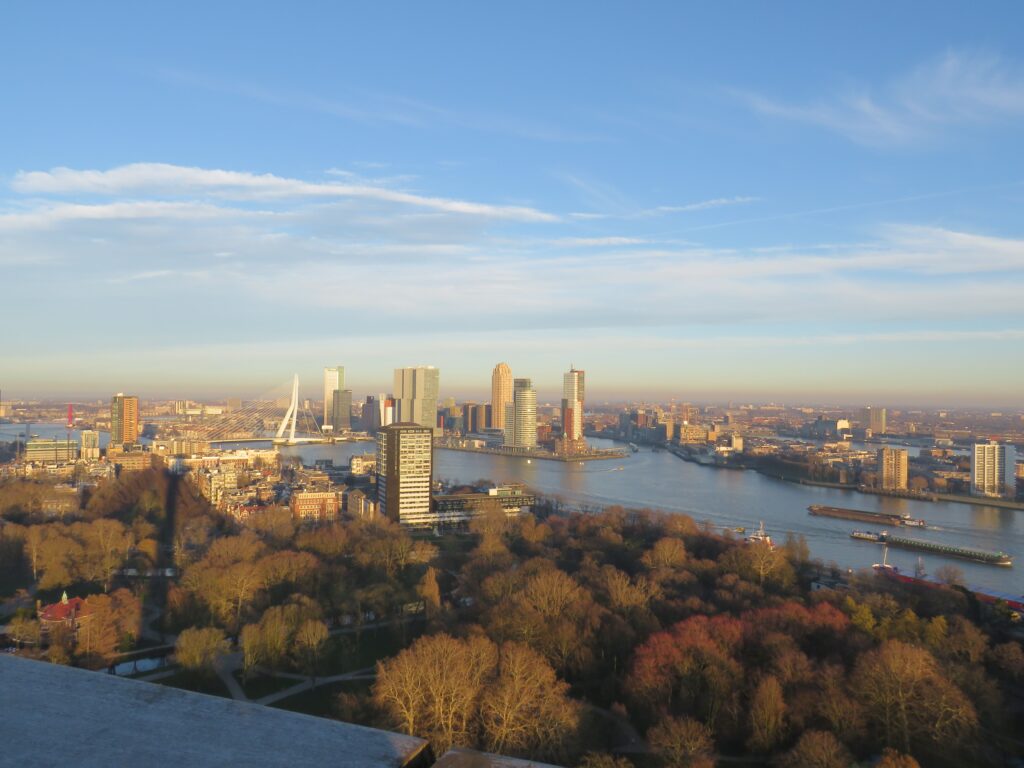
Similarly, in the Netherlands, the Ruimte voor de Rivier (Room for the River) program marked a paradigm shift. Instead of raising dikes indefinitely, the Dutch government bought farmland to widen the Maas and other rivers, allowing them to flow more naturally and slowly during peak discharge. In the Basque Country, the Txomin-Enea flood park in Donostia serves as a successful local blueprint: a designated floodplain that minimises river flooding risks while serving the community.
Crucially, these interventions offer citizens more than flood protection – they deliver value as recreational areas and refuges from urban life. Gutiérrez notes a growing public perception that nature-based solutions significantly improve quality of life, a view supported by a growing body of research linking access to green and blue spaces with reduced stress, improved mental health and stronger community cohesion.
In Bilbao, interventions that reduced traffic lanes to revegetate riverbanks saw “great social acceptance,” signaling a shift in public values. Yet, the tension remains. Just over 100 kilometres west of Txingudi, proposals to build a satellite Guggenheim museum within the Urdaibai Biosphere Reserve sparked sustained public resistance. Environmental groups and local residents argued that the internationally protected estuary should be valued for the ecosystem services it already provides, rather than converted into another development opportunity.
The debate reflected a broader cultural shift: landscapes are increasingly recognised not simply for their conservation value, but for the protection they offer surrounding communities. Green infrastructure is about safety, resilience, and improving the quality of life.
Adaptation can no longer be voluntary, nature restoration is not simply an ecological issue – it is about applying a principle of precaution in order to protect people and guarantee sustainability.
Gemma García-Blanco, senior researcher in the climate change adaptation team at Tecnalia
“Adaptation can no longer be voluntary,” García-Blanco argues. “Nature restoration is not simply an ecological issue – it is about applying a principle of precaution in order to protect people and guarantee sustainability.”
A resilient future takes root
As another aircraft roars overhead, the tide quietly continues its work. Each day the water deposits another thin layer of sediment. Each season the marsh rises by another few millimetres. Unlike concrete, it grows stronger with time.
Europe now faces a choice. It can continue rebuilding after every disaster, paying an adaptation bill projected to exceed €200 billion a year by the end of the century. Or it can begin investing in infrastructure that repairs itself.
On the mudflats of Txingudi, the answer is already taking root – one small salicornia plant at a time.