
Changing Gear on Rural Tourism
Photo: Ernesto Pastor
With cities saturated, a cycling route in Spain shows how cycling can disperse tourism’s benefits and revive villages – if Europe invests in connectivity.
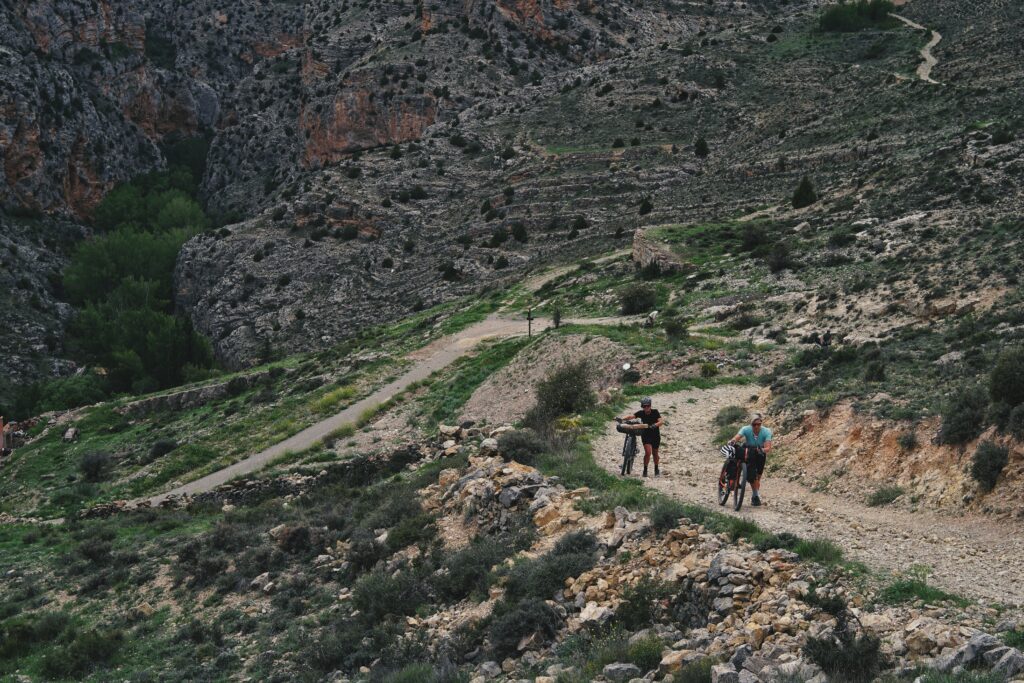
There’s a road in Teruel, Spain, where you can ride your bike for a day and not see another person. No traffic, no intersections, no hurried commuters – just endless gravel under your tires, grass swaying in the wind, and a kind of silence that people, if they live in a city, have forgotten exists.
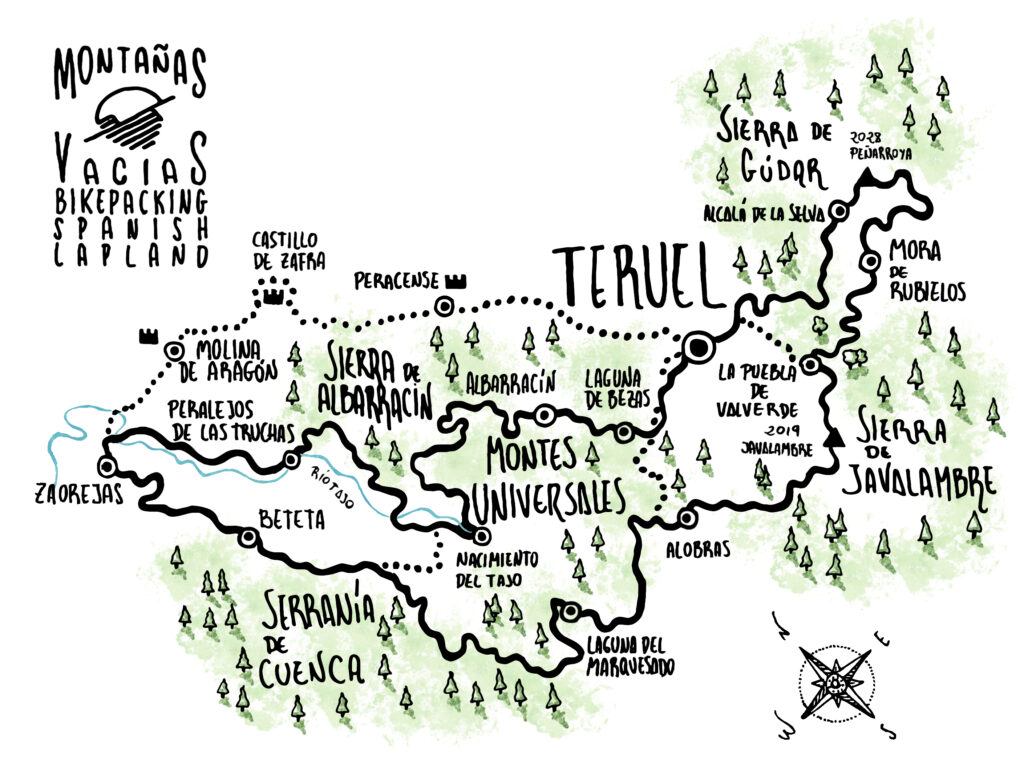
This stretch of road is part of Montañas Vacías, a 700km bikepacking route that in 2024 helped the surrounding area earn a Quiet Parks certification. The quietness comes from the region’s incredibly low population density, earning it the nickname “Spanish Lapland” after years of rural depopulation. For cyclists looking for adventure, this emptiness is one of the main attractions: uninterrupted vistas, breathtaking nature, and the freedom to ride as you please.
Three hundred kilometres away in Valencia, the story is the opposite. The streets are packed, and resentment towards tourism is growing as short-term rentals push prices up and people out of their neighbourhoods. The situation has prompted the local council to introduce a cap on tourism apartments. It’s a symptom of a wider imbalance that European Commissioner for Tourism Apostolos Tzitzikostas laid out at the Global Tourism Forum 2025. Four countries – Spain, France, Germany, and Italy – account for more than 60% of overnight stays across Europe, and a third of those stays are crammed into just July and August.
“This creates real pressures,” Tzitzikostas told the audience, “on infrastructure, housing, scarce natural resources such as water, and on local communities themselves. Such pressures risk undermining tourism’s long-term competitiveness and even its acceptance by local residents.”
Overcrowding on one side, emptiness on the other. As Europe prepares to roll out a new Sustainable Tourism Strategy, Tzitzikostas has been clear about what the goal must be: “Sustainability means reducing emissions, including from travel to and within destinations. But it also means managing resources wisely, protecting cultural and natural assets and ensuring that tourism contributes to balanced regional development across Europe.”
Can cycling deliver that by dispersing tourism’s benefits into places that need them, rather than simply relocating the crowding? And what would it take to make that work at scale, rather than as one well-loved route in one corner of Spain?
Cycle tourism is no longer a niche pursuit
For some readers the thought of jumping on a bicycle and travelling 100 km in a day might seem like a terrible idea. Surely some would relish it. Whichever tribe you fit into, there’s no denying that the cycle tourism market is growing globally.
The global market was valued at $146.1 billion in 2025, according to Grand View Research, with Europe the largest regional market at 39.5%. Growth accelerated hard after the Covid-19 pandemic as people sought accessible adventures from their homes.
Furthermore, with the sustainable tourism market expected to reach $2.3 trillion in 2026 and eco-friendly travel now accounting for 41.8% of total demand according to a Future Market Insights report, environmentally conscious travellers are increasingly prioritising low-impact holidays to mitigate the 7.3% of global greenhouse gas emissions attributed to the tourism sector, a figured published by the World Tourism and Travel Council.
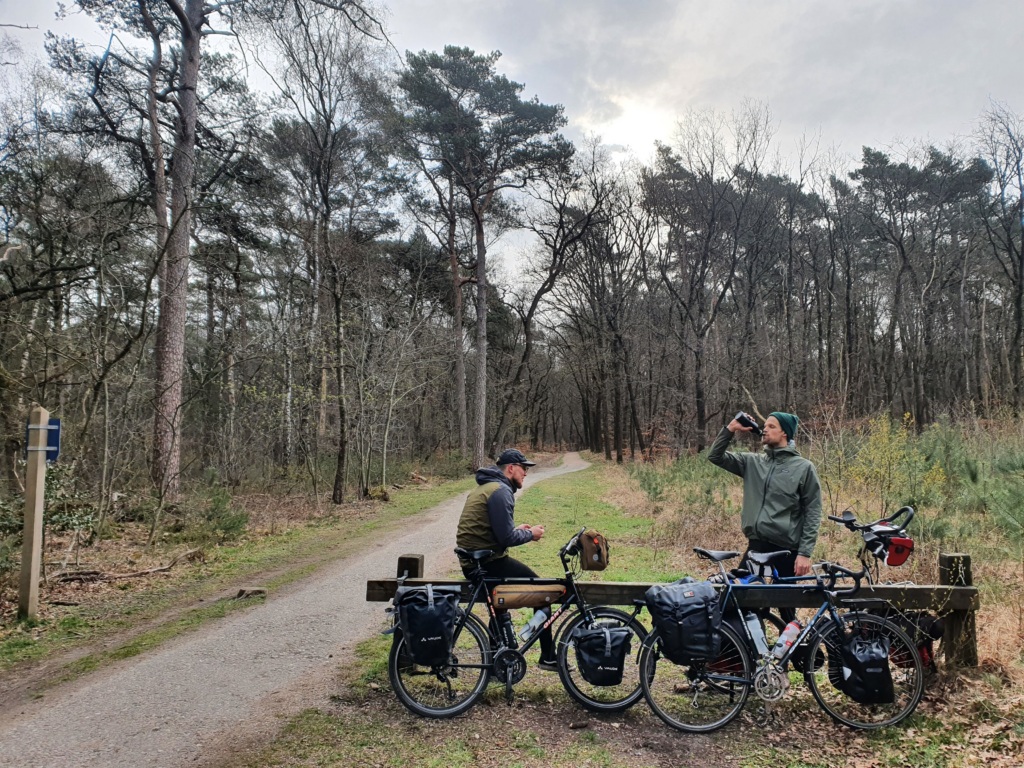
Part of the appeal lies in how little cycling demands. Unlike many adventure sports, it requires relatively little specialist equipment and can be enjoyed at almost any level, from a leisurely ride along a riverbank to a multi-day bikepacking expedition or an ultra-distance event. This accessibility, combined with people’s search for sustainability, positions cycling not just as a sport, but as a viable, low-carbon alternative holiday.
Research in the Journal of Applied Sport Psychology, surveying more than 2,300 cyclists, found a common thread across that spectrum: people are drawn to long-distance cycling because it lets them safely test themselves. The paper calls it “benign masochism” – many riders don’t just tolerate covering tens or hundreds of kilometres a day, they savour it, motivated by a sense of accomplishment.
It’s healthy, gets people moving, and habits stick. Studies by the German Bicycle Industry Association (ZIV) indicate that every second cycle tourist increases their daily cycling after a trip, turning a holiday into a life habit.
The cycling infrastructure already exists
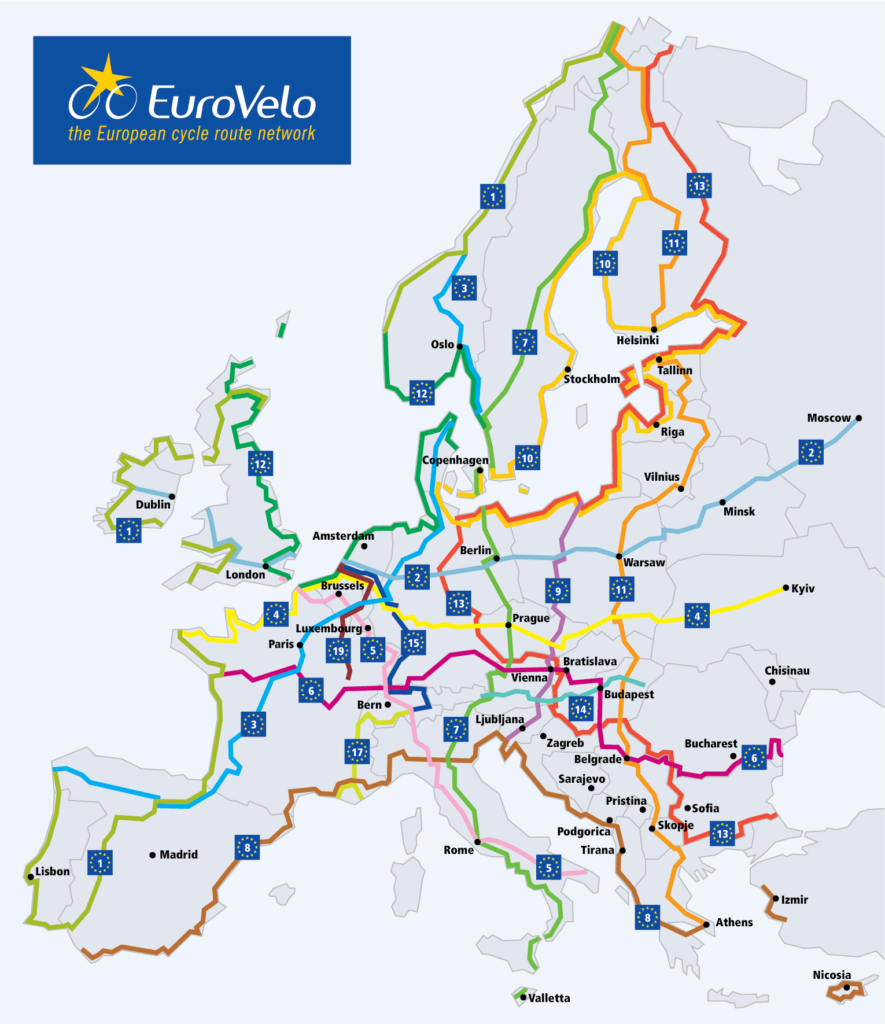
Cycling infrastructure has expanded across Europe in the last decades. EuroVelo, the continent’s long-distance cycle network, turns 30 in 2027 and is currently 69% developed and comprises more than 63,000km of routes. Alongside it sit Europe’s greenways: roughly 30,000km of car-free paths, about 20,000km of which run along former railway lines – only around a fifth of all disused railway tracks on the continent, hinting at how much further this could go. In Spain alone, 3,500km of abandoned railway has already been converted into Vías Verdes.
Beyond these signposted, institutionally built networks, another movement has grown in parallel: routes designed not by tourism boards but by local riders, often shared informally through platforms like bikepacking.com. From legendary Alpine passes to multi-day gravel expeditions and island-hopping journeys, this is where bikepacking has carved out its own identity – distinct from road touring or casual cycling, built around discovery rather than competition.
Montañas Vacias: a protest at emptying Spain
Ernesto Pastor grew up in Castilla-La Mancha, near Madrid, and came up through competitive road cycling before stepping away around 2016, looking for something better for his mental health and less defined by competing against other riders. While training for his first bikepacking events, he began riding multi-day loops from home – and over time, those loops grew into one large loop connecting the region’s mountain areas. That loop became Montañas Vacías.
Named as a nod to the term “España Vaciada” – “Emptied Spain” – he designed the route to highlight the issues of rural depopulation. For decades, young people have left rural provinces for Madrid, Barcelona, and beyond. This is not unique to the area: an EU publication from 2023 said that 75% of Spanish municipalities lost population in the last decade, with 50% of rural areas now at risk of disappearing. While France, Italy, and parts of Eastern Europe face a similar hollowing-out, Spain’s case is widely recognised as the sharpest example in Europe, creating profound demographic and economic chasms between the city and the countryside.
“I wanted to find a way to match my new life exploring by bike with the issue of rural depopulation which I could see around me,” Pastor tells REVOLVE. However, he wanted to do it his own way.
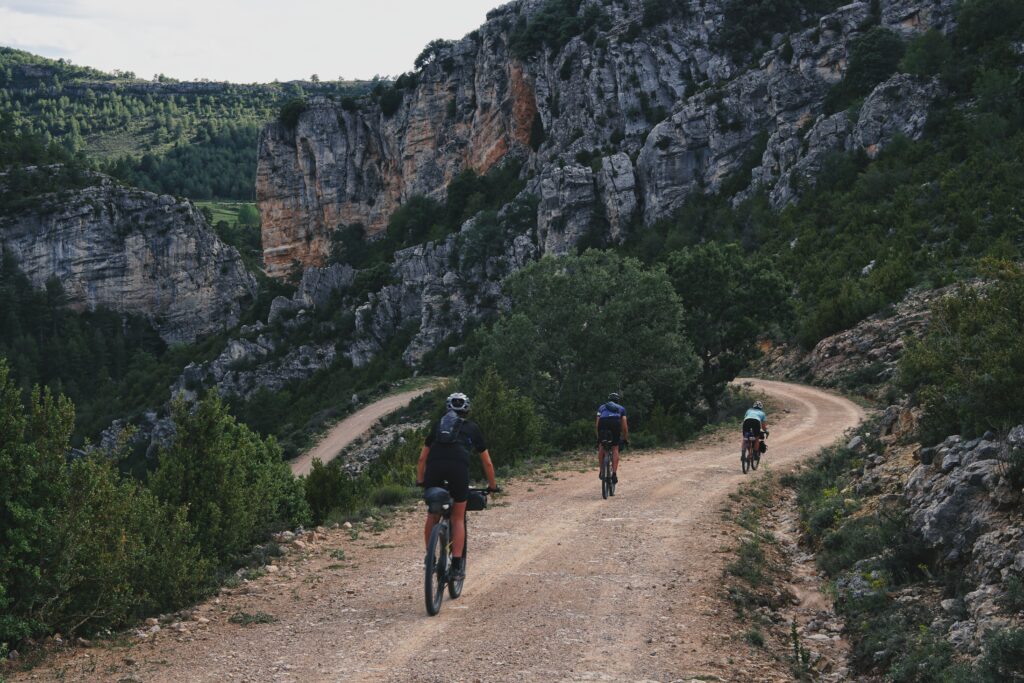
For years, Pastor says, there have been attempts to combat rural depopulation with large-scale public tourism projects. These initiatives often arrived with fanfare: big launch events, marketing budgets running into the millions, and promises of revitalisation. Yet, too often, they come and go, leaving little behind once the funding dried up.
In contrast to these large public funded projects, Pastor realised that just creating a bikepacking route could be a different kind of tool. “I saw that riders from around the world were already seeking exactly what we had to offer,” he says, referring to the empty landscapes, mountains and kilometres of gravel roads, “and we could try to create something that doesn’t cost a euro to build but leaves a positive impact in small village.”
Bikepackers seek authentic experiences and want to adapt to new landscapes. That’s a key to this working, says Pastor. “The touristification of villages doesn’t have to happen,” he adds. “They don’t have to adapt – it’s the visitor who has to adapt.”
Why cyclists build a different kind of economy
Roughly eight years on, the route sustains a steady, growing stream of visitors – both from within Spain and abroad. For Bar Casa Rural Papi, in the 50-person village of Zafrilla, the Montañas Vacías route has been a lifeline. “We didn’t have any accommodation at all when Ernesto started the route – we were still building the bar itself, bit by bit, between the six of us,” says Rosa Castelblanque, who runs it with her family.
She explains that since the 1960s the village population has declined as people migrated to cities for employment. “What the politicians were supposed to do for villages like ours, Ernesto Pastor has done. An ordinary citizen has brought life to these villages with this route.”
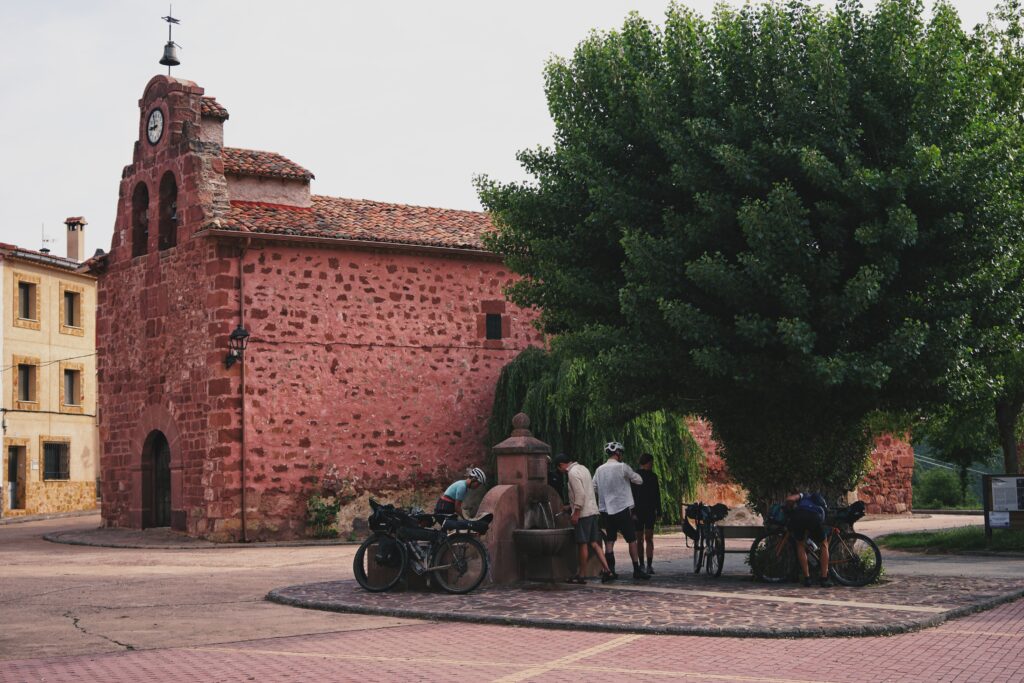
Cyclists arriving to a remote village like Zafrilla at the end of a long day on the road are tired and hungry, making them eager for food and accommodation. And they’ll likely spend more than other tourists. According to a study by the French Agency for Ecological Transition (ADEME) on the socio-economic impact of cycling in France, cycle tourists spend an average of €68 a day, compared with €55 for regular visitors.
“The people that pass through that don’t eat or with us, they eat in the next town, or the one further along,” explains Castelblanque. The steady stream of cyclists looking for adventure brings business throughout the whole year, not just in peak season, Pastor explains.
Bikepackers are often driven by the desire to avoid crowds, arriving out-of-season, they organise trips outside of the summer heat, or seek the challenge of riding in varied weather conditions. Castelblanque confirms this: “Zafrilla is at 1,425 metres in the mountains. Although it snows and gets icy, people still pass through in winter. However, most cyclists come in spring or autumn.”
Newer, smaller businesses have followed. Juan Manuel Pérez, a cyclist himself who completed Montañas Vacías in five days, runs the adventure company Cañi Bikes that offers guided hikes, kayaking, and bike rentals. He also operates a repair service and reaches people along the route with his four-by-four van.
“I know what it means for people to have a goal, a challenge of completing a route in a certain number of stages,” Pérez tells REVOLVE. “And for someone not to be able to complete it because of a mechanical problem – as a cycle tourist myself, that would really bother me. I put myself in their shoes.”
However, Pérez warns that he often sees people who do not fully understand what they are getting into. “I went out to get a guy who bought a bike on Friday and was riding on Monday. He had the wrong tyres and was completely unprepared.”
Activities like bikepacking and cycle tourism are becoming more popular. Research from the European Cyclists’ Federation (ECF) finds that 55% of Germans who aren’t yet cycling tourists could imagine a cycling holiday and 27% of Dutch cycle tourers in 2024-2025 were doing one for the first time.
However, cycling cannot be the only focus. As Agathe Daudibon, EuroVelo and Cycling Tourism Director at ECF, tells REVOLVE, cycle routes can encourage new services to open, but “tourism alone in a less-visited destination cannot enable a yearly business to run.”
For remote areas looking to diversify, cycling offers a way in that doesn’t require reinventing the local economy from scratch. It could sit well alongside other rural diversification already underway – farm stays, or routes that tell the story of regenerative agriculture alongside the ride itself, giving visitors more reasons to stop and spend along the way.
Building infrastructure creates lasting impact
When asked what help areas could receive to support cycling routes, Pastor’s is minimal: not signage, not marketing, just continued maintenance of the rural roads and tracks they already keep up for farming, hunting, and fire prevention. “That would be the only help that I would ask for,” he says.
This aligns with what actually drives rural tourism growth. A 2026 study points to investment in infrastructure connectivity like roads and rail, as the thing that have the biggest impact, while the softer spending many tourism projects favour instead – marketing campaigns, sustainability programmes, innovation labs – rarely pays off quickly enough to outlast the funding cycle that paid for it.
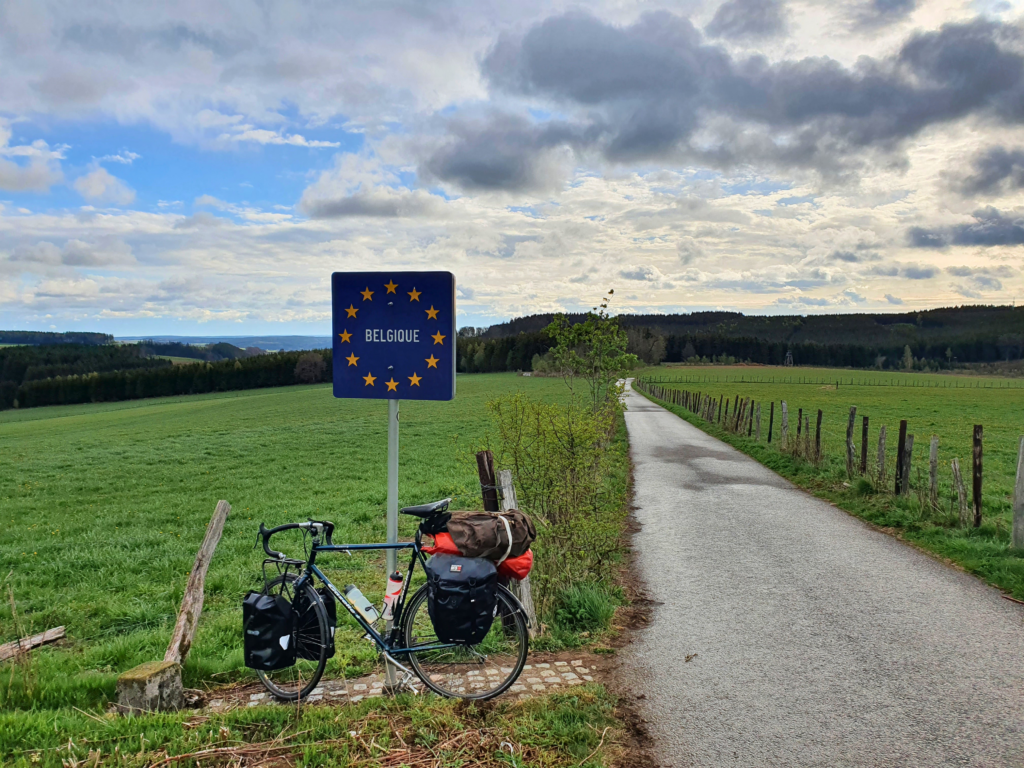
Likewise, Euro Velo routes aren’t only used by tourists. On the Austrian section of EuroVelo 6, following the Danube, of 916,000 cyclists recorded in 2025, roughly a third were everyday commuters, a third local day visitors, and only a third tourists. On French touristic cycle routes, an average of 60% of cyclists in 2022-2023 were local residents.
The elephant in the room
For all of this, there’s a hole in the argument that cycle tourism is automatically sustainable: how people actually get there. If a rider flies in to reach a route built around low-impact travel, their carbon footprint will still likely outweigh the need for the trip in the first place.
Daudibon puts it bluntly: “One of the main challenges of tourism in rural areas is accessibility, while most tourism carbon emissions come from transport. The combination of rail with cycling is particularly efficient, but only if proper services and infrastructure are available.”
Right now, that infrastructure is patchy. Bike spaces on trains often require advance reservation, summer capacity fills fast, and small rural stations often lack bike facilities entirely. Workable fixes exist: dedicated bike carriages on popular routes, and wider use of services like Spain’s domestic bike-shipping option, which lets a rider post their bike ahead, take the train unencumbered, ride, and post it home again.
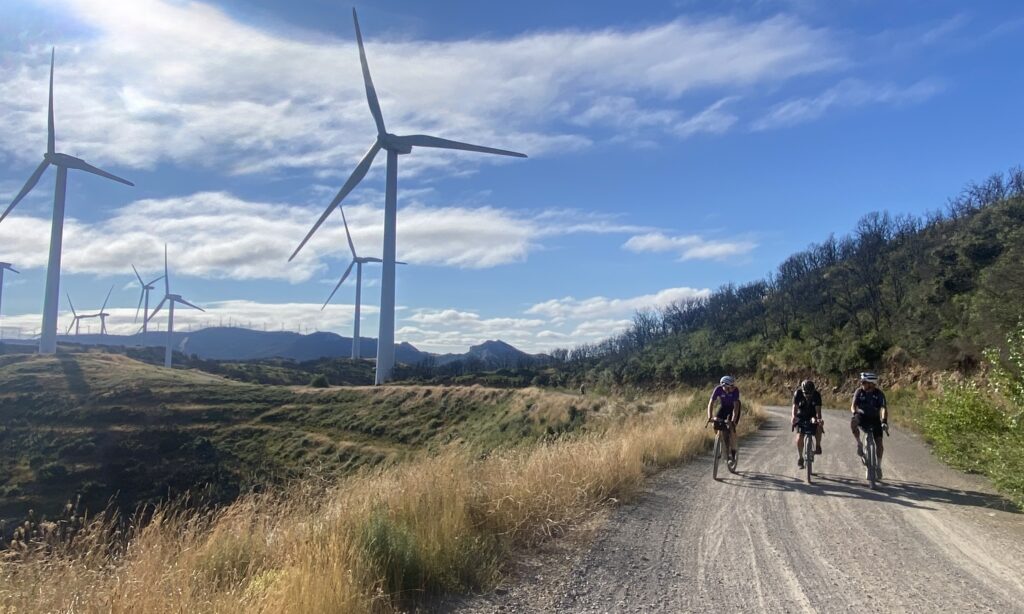
Done properly, this kind of intermodal connection could put a Montañas Vacías-style experience within an accessible train ride of most of Europe – or even within reach from a rider’s own front door, opening up the kind of low-effort “micro-adventure” that makes flying unnecessary in the first place.
A different kind of tourism
Back to that empty road in Teruel. For decades, its emptiness was read only as decline. Ridden today, it reads differently: space, silence, and time, a luxury in a Europe where cities are capping holiday rentals and residents are pushing back against overtourism.
Cycle tourism won’t reverse rural depopulation on its own – it isn’t a substitute for schools, healthcare, or public transport, and nobody involved in Montañas Vacías claims otherwise.
But it offers something genuinely useful: a way to disperse tourism’s benefits into places that need them, built on infrastructure Europe has mostly already paid for, and connected – if the rail links catch up – without needing a single flight. Not more visitors. Better ones, arriving the right way, into villages that get to stay exactly as they choose to.