
Sharing Mobility, Sharing Cities
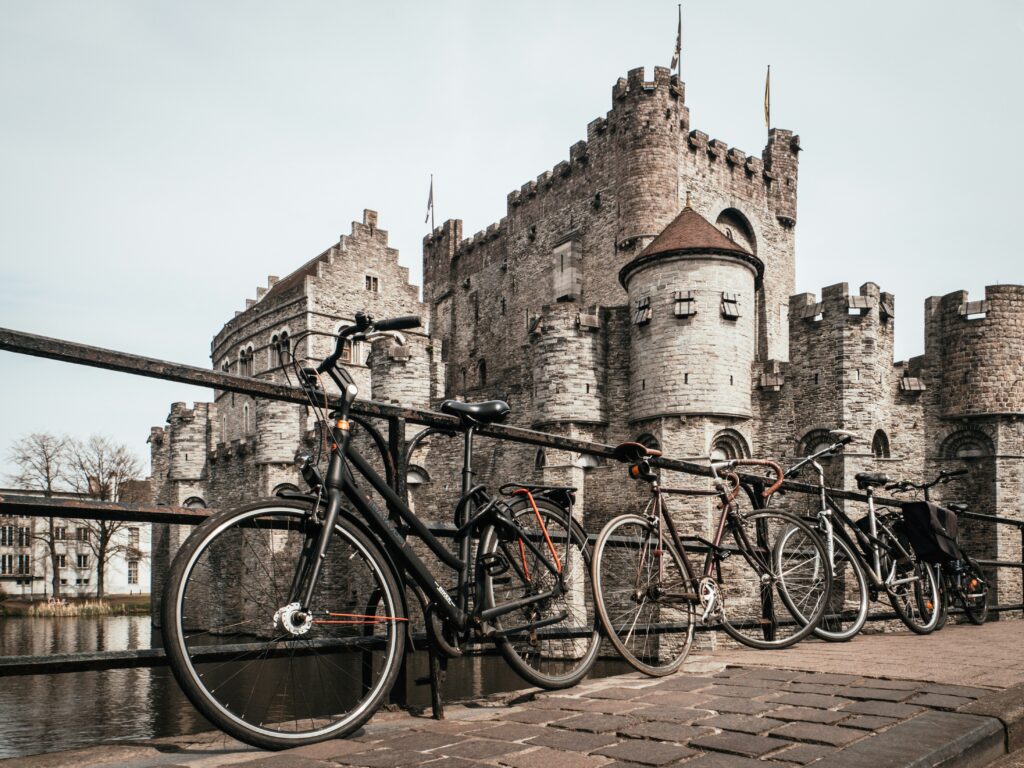
Photo: Mahdi Samadzad / Unsplash

Shared mobility succeeds when cities put people, not cars, at the centre of transport systems.
As cities rethink transport in response to climate change, congestion and rising energy costs, shared mobility is becoming more than a niche concept. It is increasingly seen as a tool for creating more accessible, inclusive and sustainable urban environments. At the same time, technological innovation alone is not enough. Questions of accessibility, affordability and public policy remain central to how people move.
Ahmetcan Uzlasik spoke with Esen Köse, Project Manager at Mpact, about Belgium’s shared mobility ecosystem, why sustainable transport is ultimately about people, and how cities can become more inclusive for everyone.
Ghent is often recognised as one of Europe’s leading cycling cities. From your perspective, what makes it a successful model for sustainable mobility?
My relationship with Ghent has evolved over the years. As a child, it was simply the city where I visited relatives, usually by car, because there is a large Turkish community there. Later, when I became a student, I experienced the city through public transport, and after joining Mpact I discovered it from yet another perspective; cycling, shared mobility and sustainable transport.
What makes Ghent remarkable is that cycling feels natural rather than exceptional. The city has invested consistently in infrastructure that allows people to move comfortably and safely by bicycle. But this transformation did not happen overnight. Years ago, local decision-makers made difficult political choices to challenge the dominance of private cars and prioritise active mobility instead. Today, those decisions are paying off.
Ghent has received international recognition for car sharing and shared mobility, showing that long-term political commitment can fundamentally change how people move around a city.
Mpact began as a response to the 1970s oil crisis. How has the organisation evolved alongside today’s mobility and climate challenges?
Mpact started in 1975 as a grassroots initiative responding to the oil crisis. At that time, sustainability was not a widely discussed topic, which is why we often describe ourselves as pioneers. Over the decades, however, society has changed significantly, and so have the challenges we face.
Today, Mpact has evolved into a social innovation organisation. While shared mobility remains at the heart of our work, we now also focus on sharing goods, sharing spaces and exploring broader solutions that respond to changing societal needs. We constantly ask ourselves how developments such as climate change, digitalisation and even the changes brought by the COVID-19 pandemic should influence the way we work.
We have an innovation team dedicated to identifying emerging challenges, understanding how global issues translate into local problems, and co-creating practical solutions with citizens, governments and organisations. We do not believe we need to solve everything ourselves. Collaboration is central to our approach, because lasting solutions require strong partnerships.
Carpooling has existed for decades, yet it remains relatively niche in Belgium. Why has it struggled to become mainstream?
Carpooling has actually been at the core of our organisation since the beginning. Our former name, Taxistop, came from the idea of people standing by the roadside asking for a shared ride. Over the years we developed digital matching platforms, particularly for companies, allowing colleagues with similar commuting routes to travel together.
Trust is certainly one factor, but it is not the only one. Even within Belgium, there are clear cultural differences between regions in how willing people are to share rides with others. At the same time, public policy plays a major role. Countries like France have introduced dedicated carpooling lanes and stronger policy incentives, making shared commuting part of everyday mobility. Belgium has not yet created the same supportive framework.
Ultimately, successful carpooling depends on several elements working together: supportive government policies, digital tools that make matching easy, and services designed around the people who are most likely to benefit from them.
If public transport is the backbone of sustainable mobility, where does shared mobility fit into the system?
We absolutely see public transport as the backbone of a sustainable mobility system. Shared mobility should never replace it, it should strengthen it.
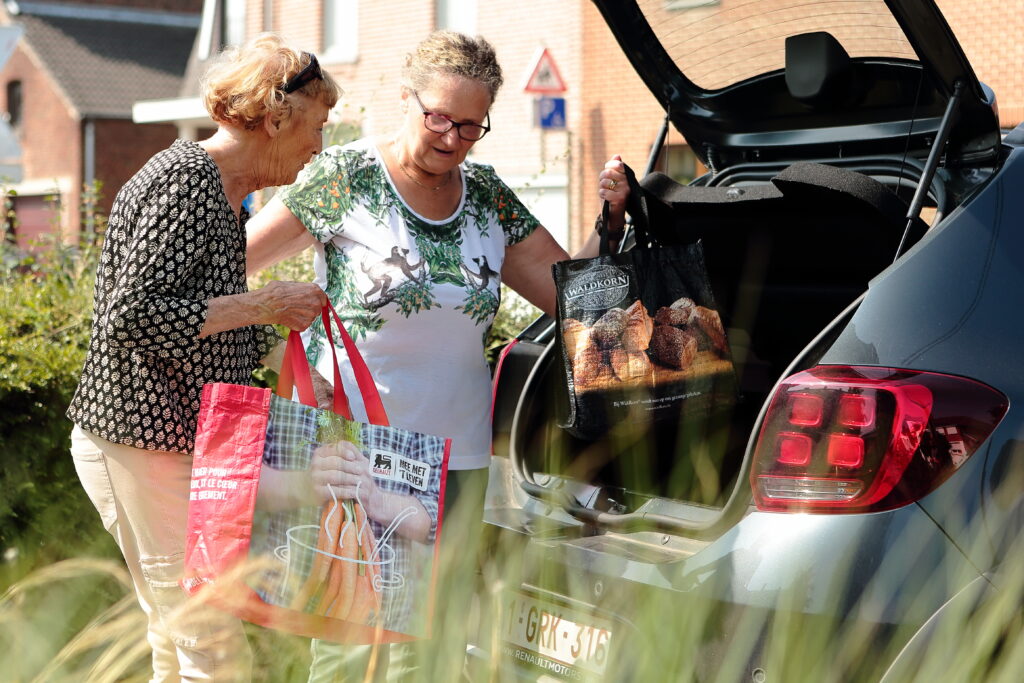
The reality is that public transport cannot meet every need. Some people live too far from stations, others work irregular hours, while certain groups simply cannot use conventional public transport because of physical or social barriers. Shared mobility helps bridge those gaps by providing first- and last-mile connections or alternative transport where regular services fall short.
That is also why Mpact developed services like Mobitwin, which connects volunteer drivers with people experiencing social isolation or reduced mobility. These services complement rather than compete with public transport. A truly sustainable mobility system is one where buses, trains, cycling, shared vehicles and volunteer transport all work together to ensure nobody is left behind.
Many of Mpact’s projects focus on accessibility. Why is inclusive mobility becoming increasingly important?
Historically, our mobility systems were designed around a fairly narrow group of users-mainly able-bodied adults travelling to work. As a result, many people still struggle to access transport that meets their needs.
When we talk about adapted mobility, we mean creating transport options for people with physical, mental or temporary impairments, elderly citizens and anyone who does not fit the traditional assumptions built into our transport systems. This includes adapted bicycles, specialised vehicles and new forms of shared mobility.
Accessibility should not be treated as a niche topic. If we design mobility systems that work for the people with the greatest challenges, we end up creating better transport for everyone. Inclusive mobility ultimately leads to safer, more flexible and more resilient cities.
Mpact also operates a Children’s Bicycle Library. How does this initiative contribute to sustainable mobility?
Children grow quickly, and families often need to buy several bicycles during the first years of a child’s life. That is both expensive and resource-intensive.
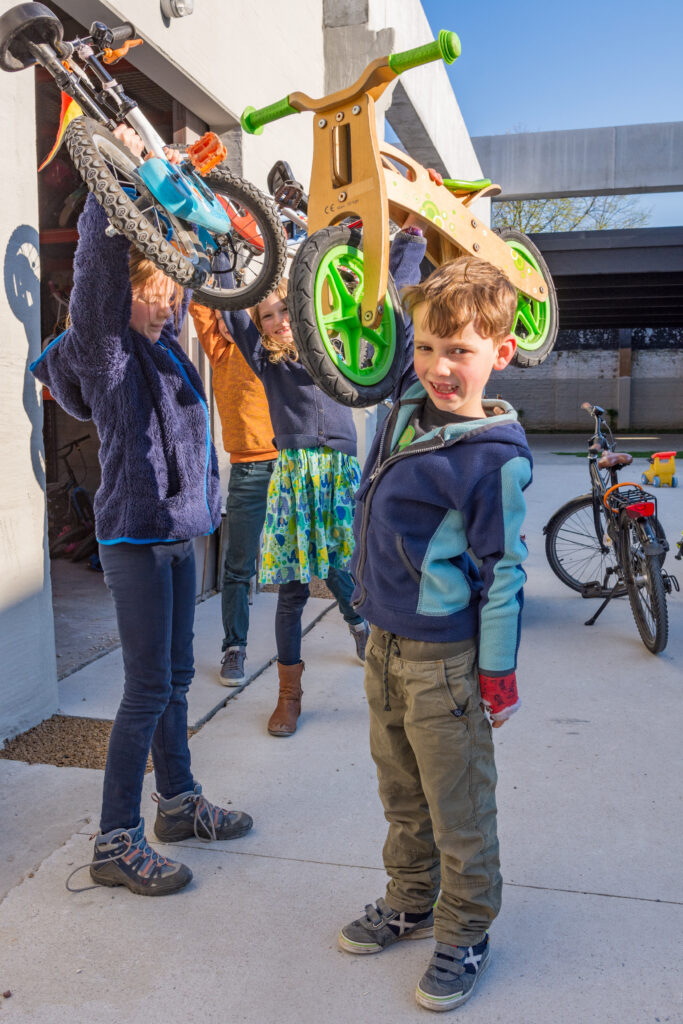
The Children’s Bicycle Library addresses this by collecting donated bicycles, repairing them and allowing families to borrow bicycles as children grow. Instead of buying a new bicycle every few years, parents can simply exchange it for the next size.
But the project goes beyond bicycles. It is part of a broader sharing ecosystem that also includes toys, clothes and other goods. Sustainable mobility is not just about travelling from one place to another, it is also about creating communities where resources are shared more efficiently, reducing waste while making everyday life more affordable.
How do projects like Everyone Mobile demonstrate the importance of collaboration?
Everyone Mobile grew out of a European Interreg project called SMALL, Shared Mobility for All, which focused on making shared mobility accessible to people with reduced mobility.
The project brought together organisations with very different expertise. Mpact provided the peer-to-peer sharing platform, healthcare organisations understood the needs of users, while transport providers supplied adapted vehicles. Together, we developed a system that allows people to borrow specialised vehicles without always requiring volunteer drivers.
One of the biggest lessons was that successful mobility projects cannot be developed in isolation. Cities determine where vehicles can be located, governments shape funding mechanisms, and users themselves must be involved in designing the service. Co-creation with end users and local authorities proved essential throughout the entire process.
Artificial intelligence is increasingly entering the mobility sector. How do you see its future role?
Artificial intelligence is becoming impossible to ignore, and organisations like ours need to understand its opportunities as well as its risks.
At Mpact, we have not yet fully integrated AI into our projects, partly because the technology is evolving so rapidly. We are also aware of important concerns surrounding data centres, energy consumption and environmental impacts. Those issues need to be taken seriously.
At the same time, AI will undoubtedly influence mobility in the future, whether through transport planning, user services or operational efficiency. Our approach is therefore to stay informed, understand the technology, and carefully evaluate where it genuinely creates value without losing sight of its broader societal impacts.
When discussing sustainable mobility, what does sustainability actually mean to you?
For me, sustainability is much broader than environmental performance alone. It starts with people.
A sustainable solution should address a real societal need and improve people’s daily lives. It should also be financially sustainable, meaning it can continue operating over the long term rather than disappearing after a short pilot phase. Environmental sustainability remains essential, particularly at a time when consumption levels continue to rise, but we should also focus on using existing resources more intelligently rather than constantly producing new ones.
Ultimately, sustainability means creating mobility systems that are environmentally responsible, socially inclusive and economically viable at the same time.
Looking ahead, what would your ideal city look like ten years from now?
I would love to see cities designed around two groups: children and elderly people.
If a city allows both of those groups to move independently, safely and affordably, then it will naturally become a better place for everyone else as well. Children should be able to cycle safely. Older people should feel confident using public spaces and transport without fear. Those goals require good infrastructure, accessible transport, safe streets and policies that prioritise people over vehicles.
It may sound like an abstract vision, but I genuinely believe that if we place the youngest and oldest members of society at the centre of mobility planning, we will create cities that are more inclusive, healthier and far more liveable for everyone.