
Ancient Wisdom for a Thirsty Future
Photo: Albina Andreeva/ Unsplash
Traditional water harvesting techniques in southern Tunisia provide resilient, water-smart agriculture that honours heritage and embraces innovation.
When we think of climate resilience, we often picture advanced technologies or large-scale infrastructure. But in the arid lands of southern Tunisia, resilience has long been rooted in local tradition.
Long before climate change became a global concern, communities in Matmata, Gabès, Sfax, and Djerba had already developed ingenious techniques like jessour, tabias, and clay pot irrigation, to survive in dry and unpredictable environments. These ancestral systems, born from necessity and deep ecological knowledge, are now seen as models for sustainable water use, land conservation, and food security.
Their relevance is growing, especially in the Mediterranean, a region warming 20% faster than the global average, and one that is increasingly affected by extreme weather. As climate challenges mount, it becomes clear that traditional knowledge and modern science must go hand in hand.
Initiatives, like the EU-funded project ResAlliance, are stepping up to bridge that gap by boosting the flow of information and building the capacity of foresters and farmers to adapt and thrive.
Let’s take a closer look at how time-tested wisdom is inspiring the landscapes of tomorrow.
Three traditional water harvesting techniques
Carved into the rugged slopes of southeastern Tunisia, jessour (singular: jesr) are terraces built between 400 and 600 metres above sea level on slopes ranging from 10% to 30%. They consist of a series of micro-catchments arranged in terraces following the contours of the landscape.
These structures – crafted by Berber communities since Antiquity – form a chain of micro-catchments that trap runoff, slow erosion, and transform barren hills into productive agricultural plots.
Each jesr consists of three key elements: a rocky impluvium that captures rainwater, an agricultural terrace that stores fertile sediment, and a retention dam made of compacted earth and stone. During brief but intense rain events, water runs down the slopes, gathering momentum. The dam halts this flow, allowing water and nutrient-rich sediments to settle on the terrace below.
Over time, these terraces develop deep soils up to five metres thick – ideal for growing drought-tolerant crops like olives, figs, dates, and legumes. But jessour are more than farming tools. They recharge groundwater, stabilise soil, and support biodiversity through microclimatic effects. In fact, its efficiency lies in the rapid conversion of limited rainfall into usable runoff, particularly during short but intense precipitation events. Moreover, the agricultural terrace lies downstream of the runoff path.
Jessour recharge groundwater, stabilise soil, and support biodiversity through microclimatic effects.
This zone is formed through the gradual deposition of fine sediments behind each dam, creating deep, fertile soils. These soils contribute to water retention and root development, favouring the cultivation of perennial and drought-tolerant crops.
Despite their value, many are now abandoned or degraded. Of the estimated 35,000 jessour in southeastern Tunisia, a large proportion suffer from neglect due to outmigration, weakening traditional knowledge systems, and shifting socio-economic priorities. Revitalising these structures is essential, not only to preserve a cultural heritage but also to adapt to a drying climate.
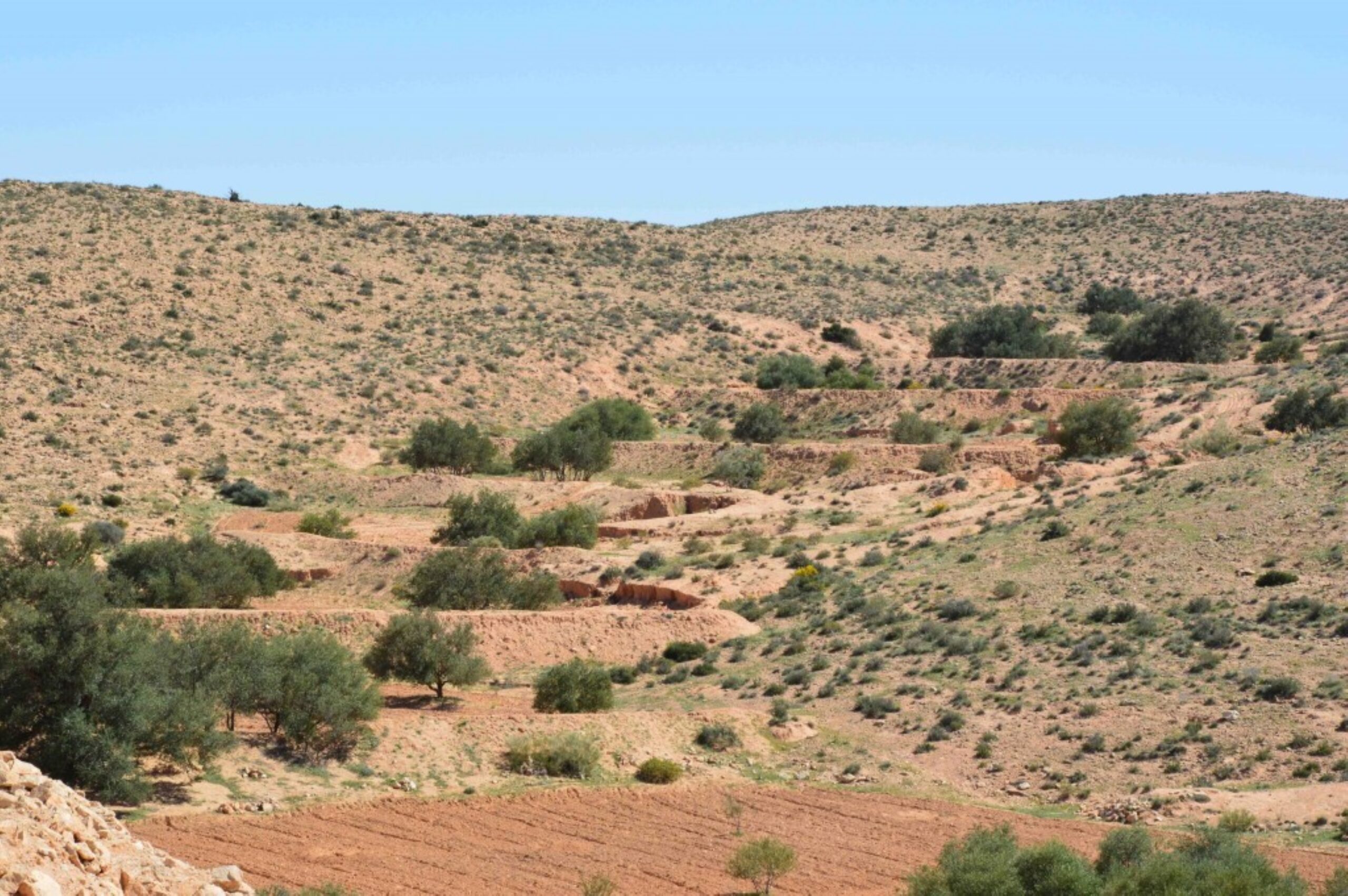
While jessour reign over mountains, tabias thrive in gentler terrains, low-slope piedmonts generally in southeastern zones of Tunisia. These systems are especially common in the regions of Gabes and transitional zones between mountainous areas and coastal plains.
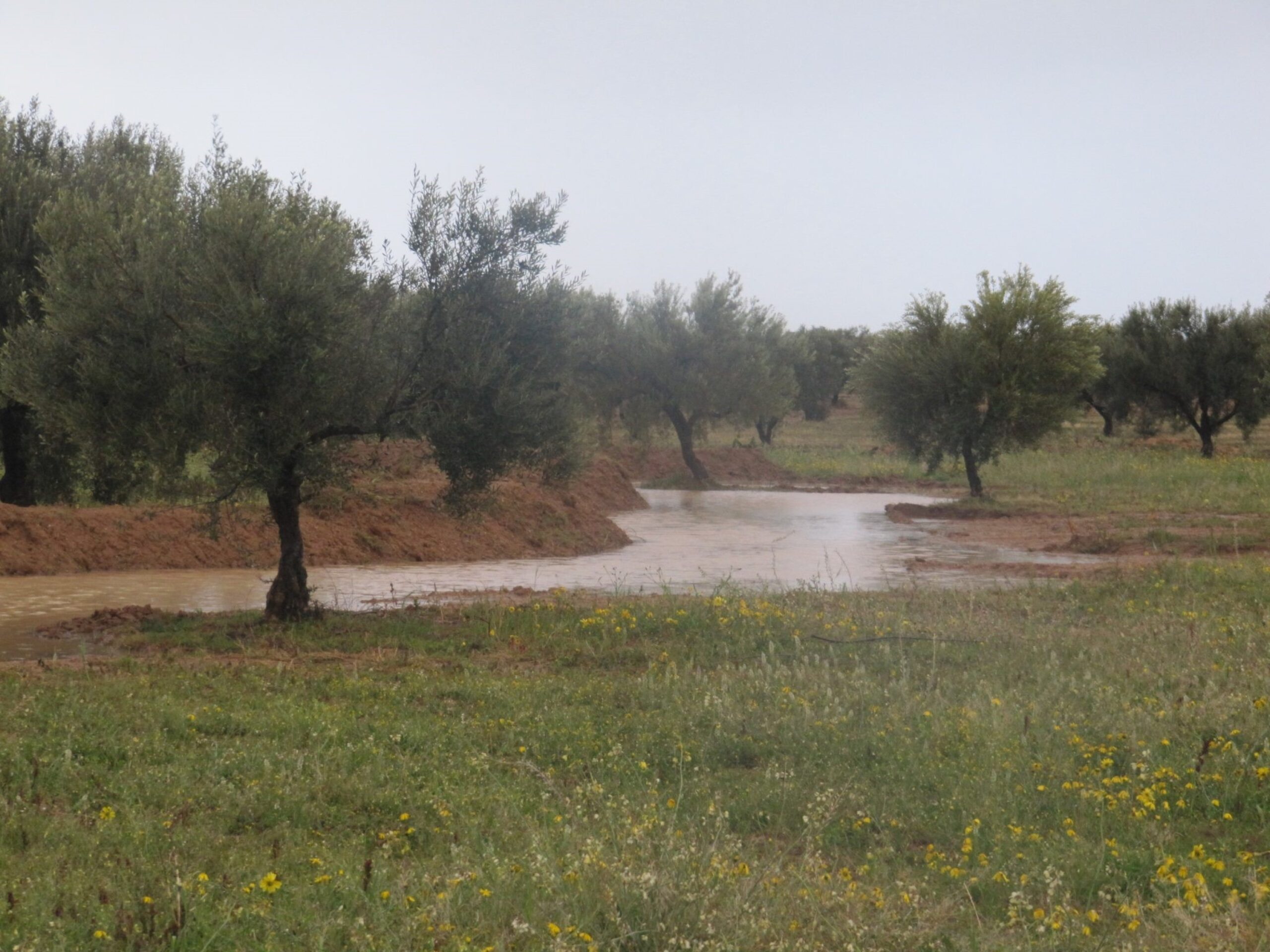
Found around El Hamma and Gabes, tabias evolved as a downstream adaptation of the jesr, designed for flat or slightly undulating lands. Instead of managing steep runoff, they capture diffuse flows from small catchments. Built with earthen embankments reinforced with stones, Tabias gently canalise and store water across larger plots.
Overflow is diverted with secondary dykes, allowing flexible irrigation across multiple fields. These systems work with the land’s natural hydrology, turning occasional floods into lifelines for crops. Tabias enable the cultivation of olives, pomegranates, barley, and legumes. Compared to untreated land, they can triple the effective water available to crops. They slow down runoff, reduce erosion by up to 80%, and improve infiltration-feeding shallow aquifers and keeping soils moist for longer. Their architecture includes several integrated features that allow for effective water control and agricultural utilisation.
Their social value is equally significant: tabias fit well into smallholder farming systems and have traditionally depended on community cooperation. However, the erosion of communal management, increased reliance on boreholes, and land fragmentation now threaten their sustainability. The challenge is not just technical, it is deeply social and institutional.
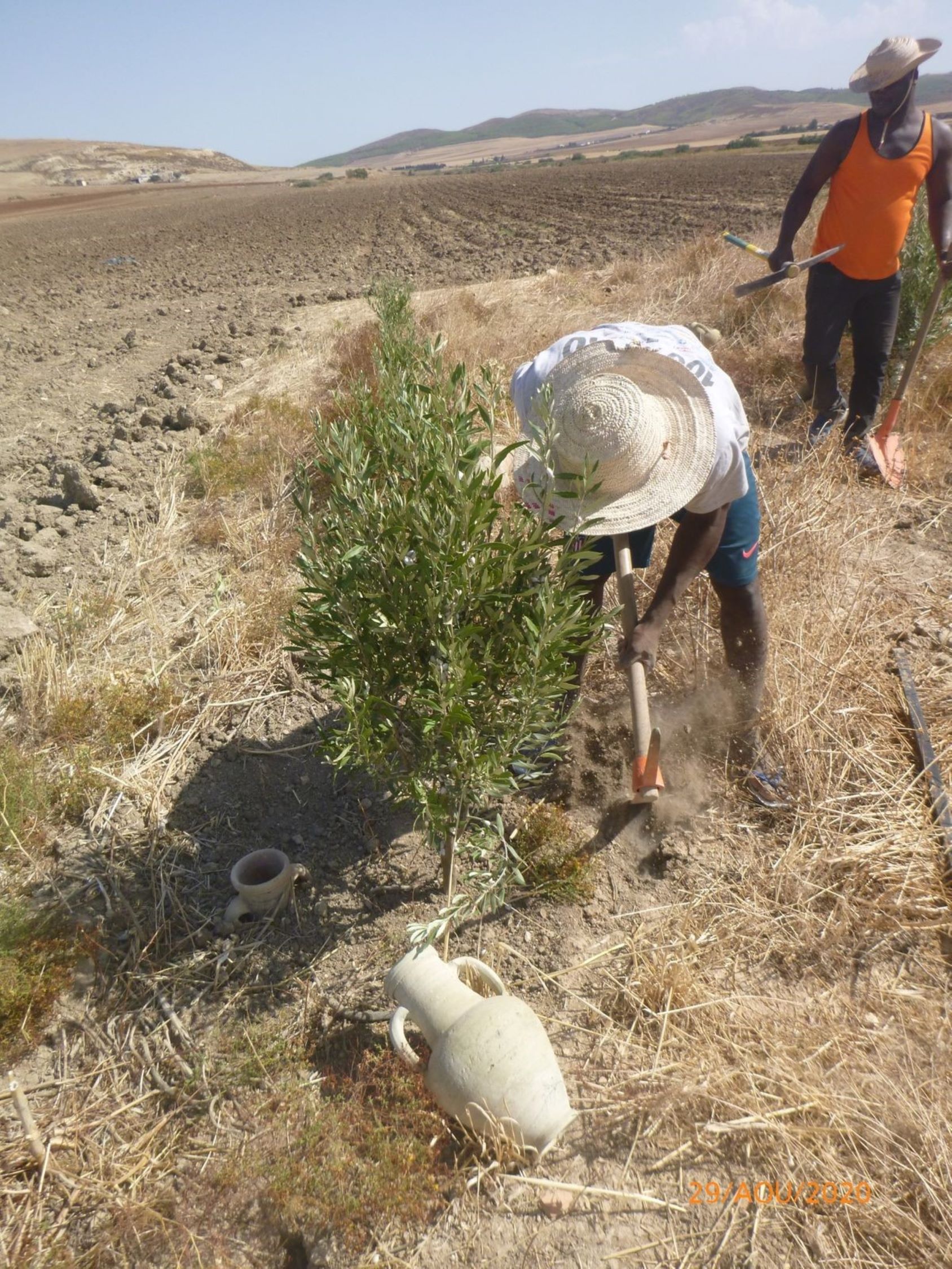
In the coastal and inland regions of Sfax, Médenine, and Djerba, farmers have quietly perfected a third technique: subsurface clay pot irrigation, also known as Golla irrigation. For this, unglazed terracotta pots are buried next to plants and filled with water.
The pots, thanks to their porous nature, slowly release water directly into the surrounding soil based on plant demand. The system involves the use of porous clay pots, typically with a capacity ranging between 30 and 50 litres, which are buried in the soil up to their necks and filled with water.
This passive system, powered by gravity and the natural gradient of soil moisture, is incredibly efficient, saving 50% to 70% of water compared to traditional surface irrigation. It reduces evaporation, minimises weed growth, and promotes strong root systems. In saline environments, it even helps mitigate salt buildup by maintaining consistent soil moisture. Used primarily for home gardens and small plots, clay pot irrigation has demonstrated remarkable success in boosting yields of vegetables like tomatoes, beans, and maize.
Clay pot irrigation has demonstrated remarkable success in boosting yields of vegetables like tomatoes, beans, and maize.
It is ideal for remote, off-grid areas with water constraints. Yet, despite its simplicity and effectiveness, its broader adoption is hindered by limited access to durable pots, the labour required for setup, and a lack of standardised production. Supporting local potters, investing in new designs, and integrating this method into agroecological programs could help reintroduce this time-tested technique into mainstream agriculture.
One goal, three paths: efficient water use
All three systems jessour, tabias, and clay pots offer profound hydrological and agronomic benefits:
- Jessour can intercept up to 500 mm of annual runoff, reduce soil erosion by 85-90%, and recharge groundwater.
- Tabias amplify effective rainfall by up to threefold, decrease erosion by 75-80%, and improve soil fertility.
- Clay pot irrigation conserves 50-70% more water than surface irrigation and promotes better plant survival during droughts.
These systems not only improve crop productivity but also contribute to broader environmental resilience: controlling floods, enhancing biodiversity, and reducing desertification risks. And they do so without high-tech machinery or fossil fuels.
Despite their strengths, traditional systems face growing threats:
- Technical constraints: jessour requires significant labour to build and maintain; Tabias suffer from sedimentation; clay pots break easily and need regular replacement.
- Social erosion: younger generations increasingly abandon these practices. Communal maintenance traditions are fading, and knowledge transmission is weakening.
- Climate stress: extreme rainfall events threaten dam integrity. Rising temperatures increase evapotranspiration. And sediment buildup in Tabias reduces infiltration capacity unless regularly desilted.
Without intervention, many of these systems may fall into disuse – just when we need them most.
The answer to these challenges lies in blending tradition with innovation. Modernisation does not mean replacing ancestral systems – it means enhancing them. For jessour and tabias geographic information systems can help identify optimal locations and predict runoff patterns.
The answer to these challenges lies in blending tradition with innovation.
Using composite materials or geosynthetics in spillways can boost durability. Sensors and internet of things devices can alert farmers to sediment build-up or water overflow.
For clay pots, 3D printing can ensure uniform porosity. Integrated moisture sensors can help automate irrigation schedules. Supporting artisanal production and quality control will make these systems more accessible and scalable.
Institutionally, these systems should be recognised as nature-based solutions, worthy of climate adaptation funds and policy support. Educational programs can combine ancestral knowledge with environmental science, attracting new generations. Payments for ecosystem services could incentivise farmers to maintain and protect these structures.
A participatory approach, rooted in community engagement and supported by public policy, is key to their future.
Bridging memory and innovation
Traditional water harvesting and management systems represent the culmination of centuries-old indigenous engineering. The traditional water harvesting systems of southern Tunisia – jessour, tabias, and clay pot irrigation – are not relics of the past. They are living testimonies to how human ingenuity can flourish in even the harshest environments.
These techniques offer sustainable, low-tech, and ecologically sound solutions to the modern crises of water scarcity, land degradation, and climate change. By bridging the wisdom of the past with the tools of the future, Tunisia can lead the way in building a resilient, water-smart agriculture that honours heritage and embraces innovation. These systems show us that resilience is not always about reinvention. Sometimes, it’s about remembering – and choosing to value what has already stood the test of time.
Resources:
Blond, N., Marlet, S., & Requier-Desjardins, M. (2019). Dynamiques territoriales et changement climatique : le cas des oasis tunisiennes. Revue Tiers Monde, 240(4), 53–71.