
Where Policy, Business, and Reality Meet
Photo: Joshua Colah / Unsplash
Reflections on navigating India’s evolving sustainability landscape across NGOs, start-ups, and corporations.
In a conversation with REVOLVE, Sumit Jugran, Founder of Value Sustainable, discusses his journey across NGOs, start-ups, and corporations, and how India’s evolving sustainability landscape has shaped his approach to building solutions that align policy, business, and on-ground realities.
You have worked across corporations, NGOs, start-ups, and funding agencies. How has this shaped your approach to creating long-term sustainability impact in India?
When I look back, I realise my career has evolved alongside India’s sustainability regulations. I was not just observing policy shifts, I was working within them as they unfolded.
My early years were with NGOs, where I worked on programme implementation as well as fundraising. That experience shaped how I understand accountability. Fundraising requires translating grassroot realities into language that funders understand without losing the truth on the ground.
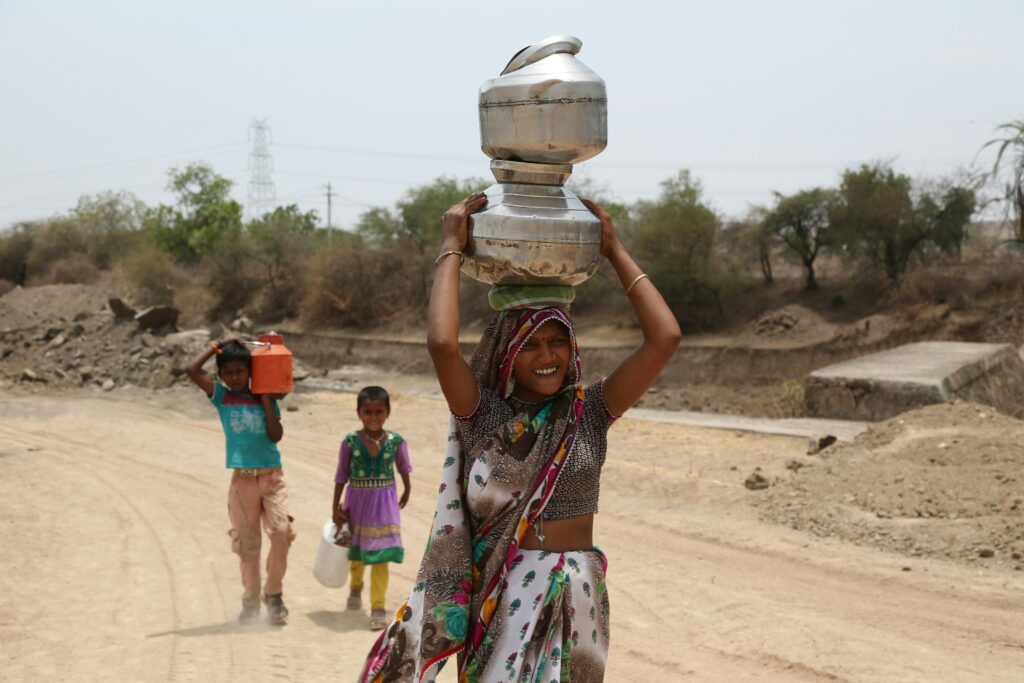
Through this work, I saw communities dealing with water stress, livelihood risks, and environmental degradation long before these issues entered mainstream corporate conversations. According to NITI Aayog (a leading policy think tank in India), nearly 600 million Indians face high to extreme water stress. When you witness such realities firsthand, sustainability stops being theoretical, it becomes immediate and deeply personal.
Even well-funded initiatives can fail if they do not align with local habits, incentives and constraints.
I also learned early on that good intent does not automatically produce good outcomes. Even well-funded initiatives can fail if they do not align with local habits, incentives and constraints. On the ground, the margin for error is very small.
My next phase was in start-ups, during a period when India’s E-Waste (Management) Rules were just being introduced. At the time, India generated over a million tonnes of electronic waste annually; today the figure exceeds 1.6 million tonnes. Companies were still trying to understand compliance, and the idea of “scientific disposal” (environmentally safe management of waste) was largely unfamiliar.
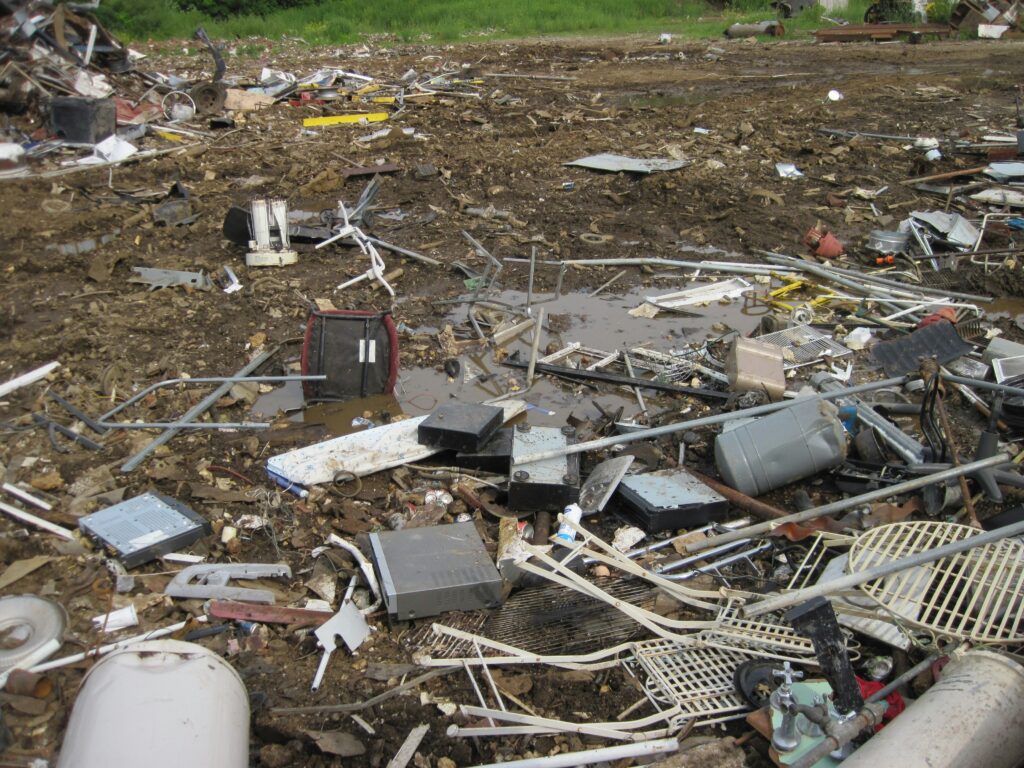
Working in an early-stage e-waste management start-up meant building systems from the ground up. There was no established playbook. During this time, I spent time studying the informal e-waste value chain across Delhi and parts of Uttar Pradesh. What I saw was stark. Informal recycling clusters relied on hazardous methods such as burning circuit boards, smashing CRT monitors, and using acid baths to extract metals. These practices exposed workers to toxic fumes and heavy metals, yet they also supported thousands of livelihoods.
At that time, India had only a handful of authorised dismantlers. Today the ecosystem includes dozens of formal recyclers operating with more structured systems and compliance processes. While the sector is still evolving, it is far more organised than it once was.
Later in my corporate career, I again found myself working during a period of regulatory change. India generates more than three million tonnes of plastic waste annually, while segregation at source continues to be a systemic challenge. During these years, the Plastic Waste Management Rules were strengthened, Extended Producer Responsibility obligations became clearer and the Single-Use Plastic ban came into effect.
Much of the work during this period involved building recycling ecosystems rather than simply meeting compliance targets. For complex packaging formats, progress depends on multiple elements working together: collection systems, segregation at source, aggregation networks, recycling capacity and viable end markets for recycled materials. None of these can function in isolation.
Across NGOs, start-ups and corporations, one lesson has remained consistent for me: sustainability impact lasts only when three elements align—regulation, business logic and ground reality. If these do not reinforce each other, even well-designed solutions struggle to scale.
Many organisations still see Environment, Social, and Governance (ESG) Criteria as merely a compliance requirement. What practical steps can leaders take to embed sustainability into core business decisions?
In many organisations, ESG doesn’t get ignored, it just gets separated. It lives in a report, a dashboard, or a sustainability team presentation. Once that happens, it slowly becomes a compliance function.
I have seen this from inside large organisations. The turning point comes when leaders stop treating sustainability as a reporting exercise and start linking it directly to business risk and opportunity.
When sustainability starts solving future risks, it stops being optional.
At Tetra Pak, instead of viewing carton recycling as a compliance cost, we framed it as an ecosystem investment. Building collection partnerships, supporting recycler capacity, and launching AARC (Actional Alliance for Recycling Beverage Cartons) as a collective platform wasn’t just about meeting EPR obligations, it was about securing long-term material circularity and policy credibility. When sustainability starts solving future risks, it stops being optional.
I saw something similar during my time with Coca-Cola. Water stewardship was not approached only as a corporate social responsibility initiative. In countries highly vulnerable to climate variability and water stress, securing community trust and water access was directly linked to business continuity. The Water Stewardship project wasn’t just about replenishment numbers, it strengthened stakeholder relationships, improved regulatory goodwill, and reinforced brand legitimacy. That’s when ESG becomes strategic, not symbolic.
From my experience, there are three practical steps leaders can take: Integrating ESG into business metrics, assigning clear ownership, and normalising trade-offs (sustaintability will not always look good in quarterly numbers, there will be investments before returns show up).
India’s regulatory environment, from EPR frameworks to the Business Responsibility and Sustainability Reporting (BRSR) requirements introduced by SEBI, is pushing companies in this direction. But regulation alone won’t create integration. Leadership mindset does.
The companies that will lead in the next decade are not the ones with the best sustainability reports. They are the ones where ESG questions are asked in the same room where capital allocation and growth strategy are discussed.
That shift from reporting to decision-making is where embedding truly begins.
How can companies design sustainability programmes that genuinely benefit communities rather than just improving brand perception?
Most companies don’t set out to design superficial programmes. The problem is usually speed. Projects are often shaped by reporting timelines, annual CSR budgets, or campaign cycles, and not by community realities.
India spends over ₹25,000 crore annually under the Companies Act CSR mandate. The scale of funding is significant. But money alone does not guarantee impact. What makes the difference is how programmes are designed and who is involved from the beginning.
One of the biggest lessons I have learned, particularly from working in waste and recycling ecosystems, is that communities are not “beneficiaries”; they are already economic actors. In India, an estimated one-and-a-half to four million informal waste workers form the backbone of the recycling system. When sustainability programmes ignore them or attempt to replace them rather than strengthen their role, they risk doing more harm than good.
During my work in carton recycling and broader waste management ecosystems, we saw that collection systems only improve when informal aggregators, kabadiwalas, and small recyclers are integrated into formal value chains, not bypassed. When companies invest in capacity building, fair pricing mechanisms and predictable offtake agreements, recovery rates improve and livelihoods stabilise. That’s when environmental and social outcomes move together.
The same principle is applied in water stewardship projects. The goal was not just infrastructure creation but shared ownership. Over 3,000 families benefited directly but the sustainability of the project depended on involving local governance structures and community groups in maintenance and decision-making. Without that, even well-built systems deteriorate.
Through Value Sustainable, you aim to mentor the next generation. What gaps do you see in sustainability education and professional training today?
There’s a lot of interest among young people in sustainability today, far more than a decade ago. That’s encouraging. But interest alone doesn’t automatically translate into readiness.
Globally, the green transition is already reshaping labour markets. According to the International Renewable Energy Agency (IRENA), the renewable energy sector alone supports over 13 million jobs worldwide, and that number is expected to grow significantly as countries accelerate energy transition. The World Economic Forum has also projected that climate, and sustainability-linked roles will be among the fastest-growing job categories this decade.
In India, the opportunity is equally significant. With ambitious renewable energy targets, expanding circular economy frameworks and stricter ESG disclosure requirements, demand for sustainability professionals is rising across sectors from manufacturing and FMCG to finance and infrastructure.
But here is the gap I see: Most educational programs still focus heavily on concepts like climate change theory, SDGs, ESG frameworks, reporting standards. These are important. But real-world sustainability work is rarely neat or linear. It involves navigating regulation, managing stakeholder resistance, understanding informal economies, balancing cost pressures, and making trade-offs under uncertainty.
Very few students are exposed to what sustainability actually looks like inside a factory, a municipal system or a rural community.
Many young professionals say they want to “work in sustainability,” but they don’t know what roles exist beyond titles like ESG analyst or CSR manager.
Another gap is employability clarity. Many young professionals say they want to “work in sustainability,” but they don’t know what roles exist beyond titles like ESG analyst or CSR manager. There is limited visibility into operational roles like supply chain decarbonisation, circular design, compliance systems, water risk management, waste value chain integration. These are practical, high-impact careers but they are not always visible in classrooms.
There’s also a mentorship gap. Sustainability is still an emerging field in India. Unlike traditional professions, there aren’t decades of structured career pathways to follow. Young professionals need exposure to real experiences including mistakes, failures and course corrections.
Through Value Sustainable, my focus is to bridge this gap between theory and practice. I try to create conversations around questions like: How does regulation actually affect business decisions? What does implementing EPR look like operationally? How do you work with informal sector stakeholders? What trade-offs do sustainability leaders face inside organisations?
Green jobs will grow, that is inevitable. But preparing professionals who are comfortable with complexity, ambiguity, and long timelines is equally important.
From your experience, where does India’s policy ecosystem support sustainability innovation, and where does it still fall short?
India’s policy ecosystem has become far more active in sustainability over the past decade. In many areas, regulation has moved from voluntary encouragement to structured accountability and that has created real momentum.
India has set ambitious targets including 500 GW of non-fossil fuel capacity by 2030. That clarity has unlocked investment, innovation, and large-scale private participation. The same is true for waste management. Extended Producer Responsibility (EPR) frameworks under Plastic Waste and E-Waste Rules have pushed companies to think beyond disposal and toward lifecycle accountability.
Similarly, the introduction of Business Responsibility and Sustainability Reporting (BRSR) for the top 1,000 listed companies has raised the transparency bar. ESG data is now publicly disclosed and scrutinised. That changes behaviour.
From my own experience, whether in early e-waste systems or later in plastic and carton recycling, regulation often creates the first push. It brings structure to what was previously informal or fragmented. Without those rules, formalisation would have taken much longer.

But where India still struggles is implementation consistency.
Policies may be strong at the central level, but execution varies significantly across states and local bodies. For example, waste segregation rules exist in many cities, yet on-ground segregation rates remain uneven. Infrastructure gaps, behavioural challenges, and limited enforcement capacity slow progress.
Another area that needs attention is support for small and medium enterprises (SMEs). Large corporations may have sustainability teams and compliance budgets. Smaller businesses often don’t. Yet they form the backbone of India’s manufacturing ecosystem. If sustainability compliance becomes too complex or costly without adequate support mechanisms, innovation may slow instead of accelerate.
Infrastructure gaps, behavioural challenges, and limited enforcement capacity slow progress.
There is also a disconnect at times between policy design and informal sector realities. In waste and recycling, millions of livelihoods are involved. Formal systems must integrate and not displace these actors.
That said, I see a clear shift happening. India is no longer treating sustainability as a peripheral agenda. It is increasingly linked to economic competitiveness, global trade expectations, and investor confidence.
India has the ambition. The regulatory signals are strong. The opportunity now lies in execution depth, turning policy direction into everyday operational reality.
If that alignment strengthens, India’s sustainability transition could become one of the most dynamic in the Global South.

