When Giants Sleep, and Lights Turn On
Photo: Charis Brice / REVOLVE
Sleeping Giants offers a haunting tribute to Iceland’s thawing glaciers, through a lens that invites both deep reverence and critical reflection.
Artist: Kristján Maack
Exhibit: Sleeping Giants, Museum of Photography, Reykjavík, Iceland
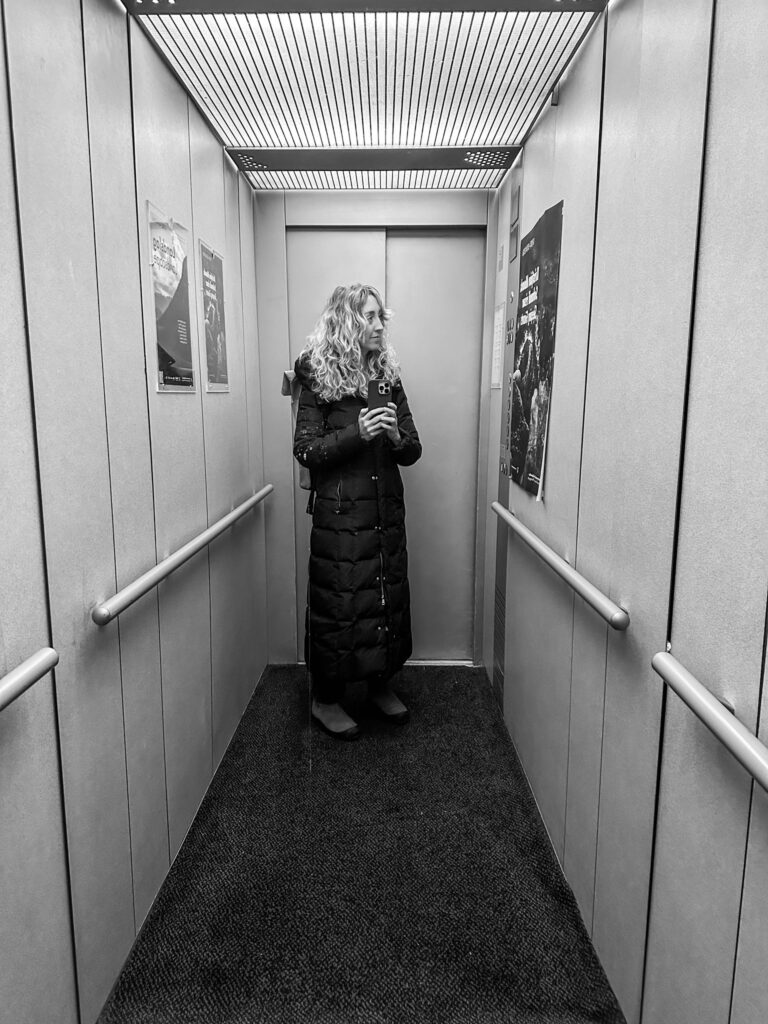
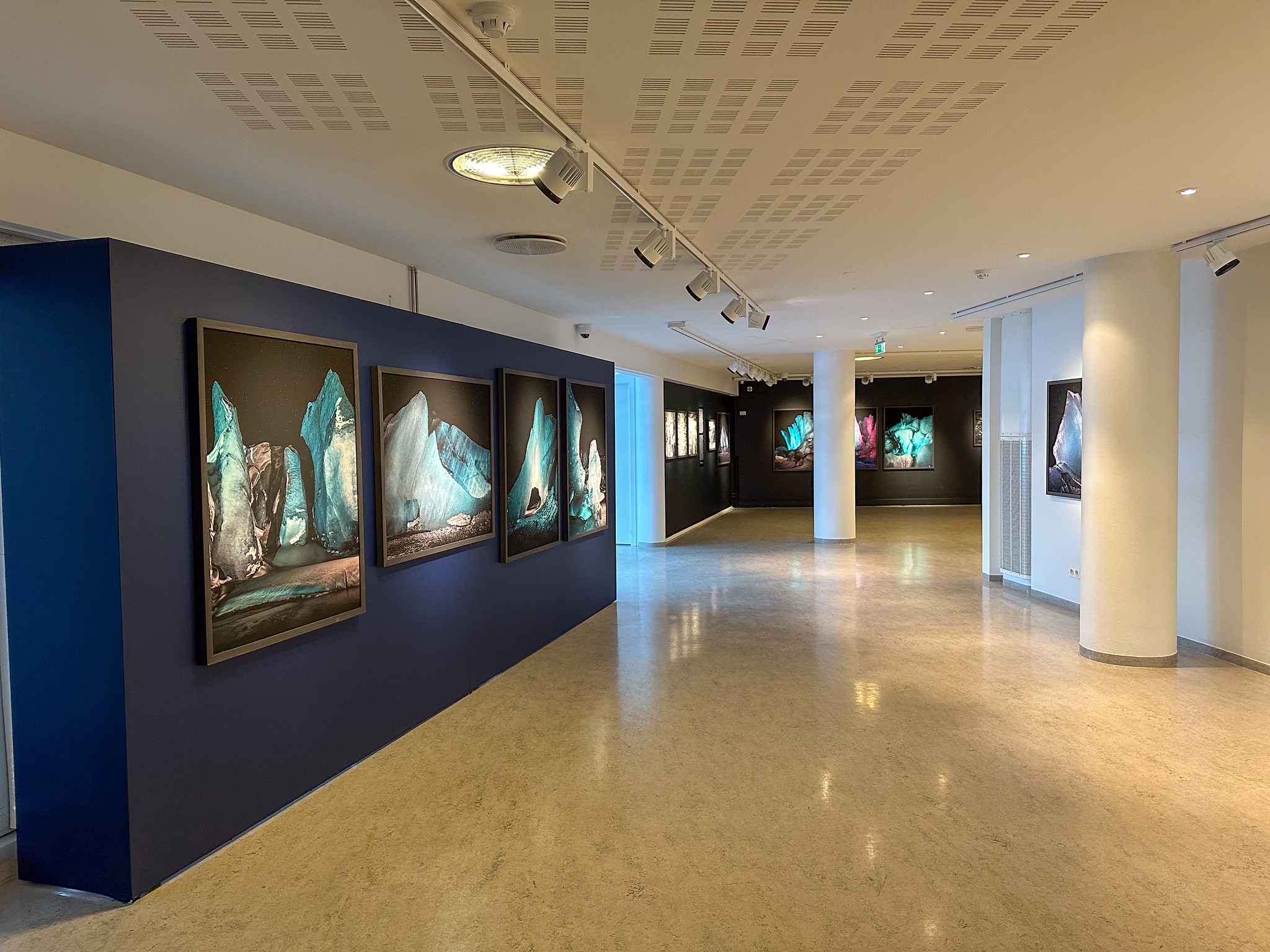
The Museum of Photography in Reykjavík is smaller than one might expect. Quietly tucked into the city, it invites you to slow down long before entering, in part because it is difficult to find. Access is possible only by taking a narrow elevator to the 6th floor – leaving you triumphant on arrival, like entering a speakeasy with a secret knock.
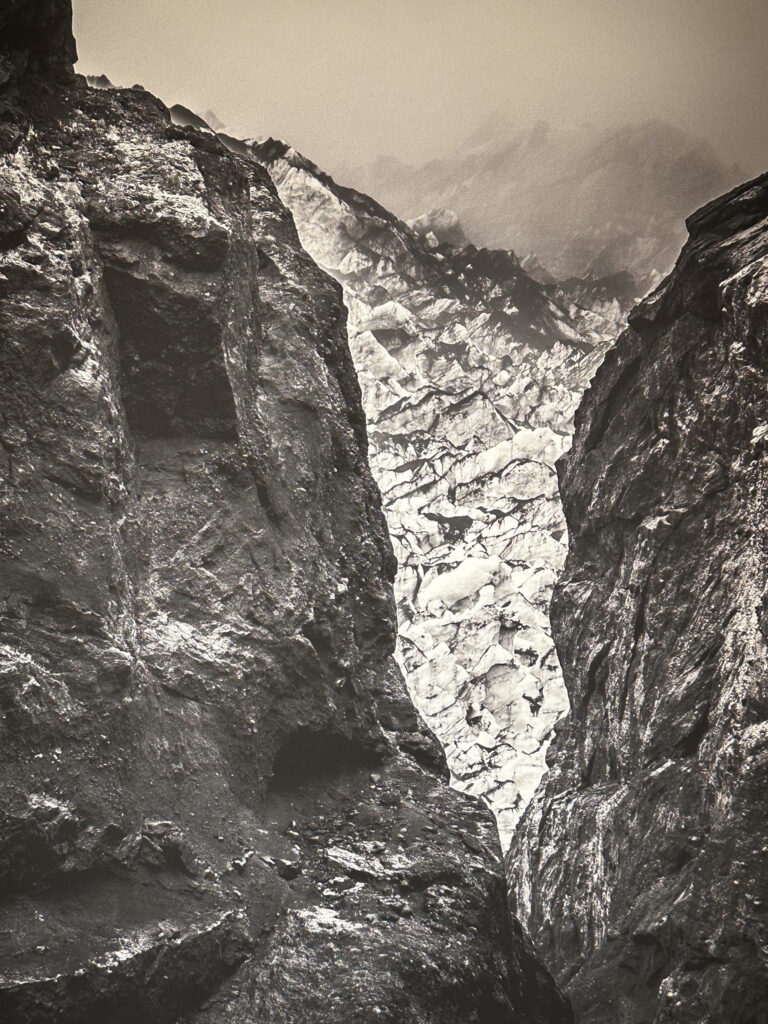
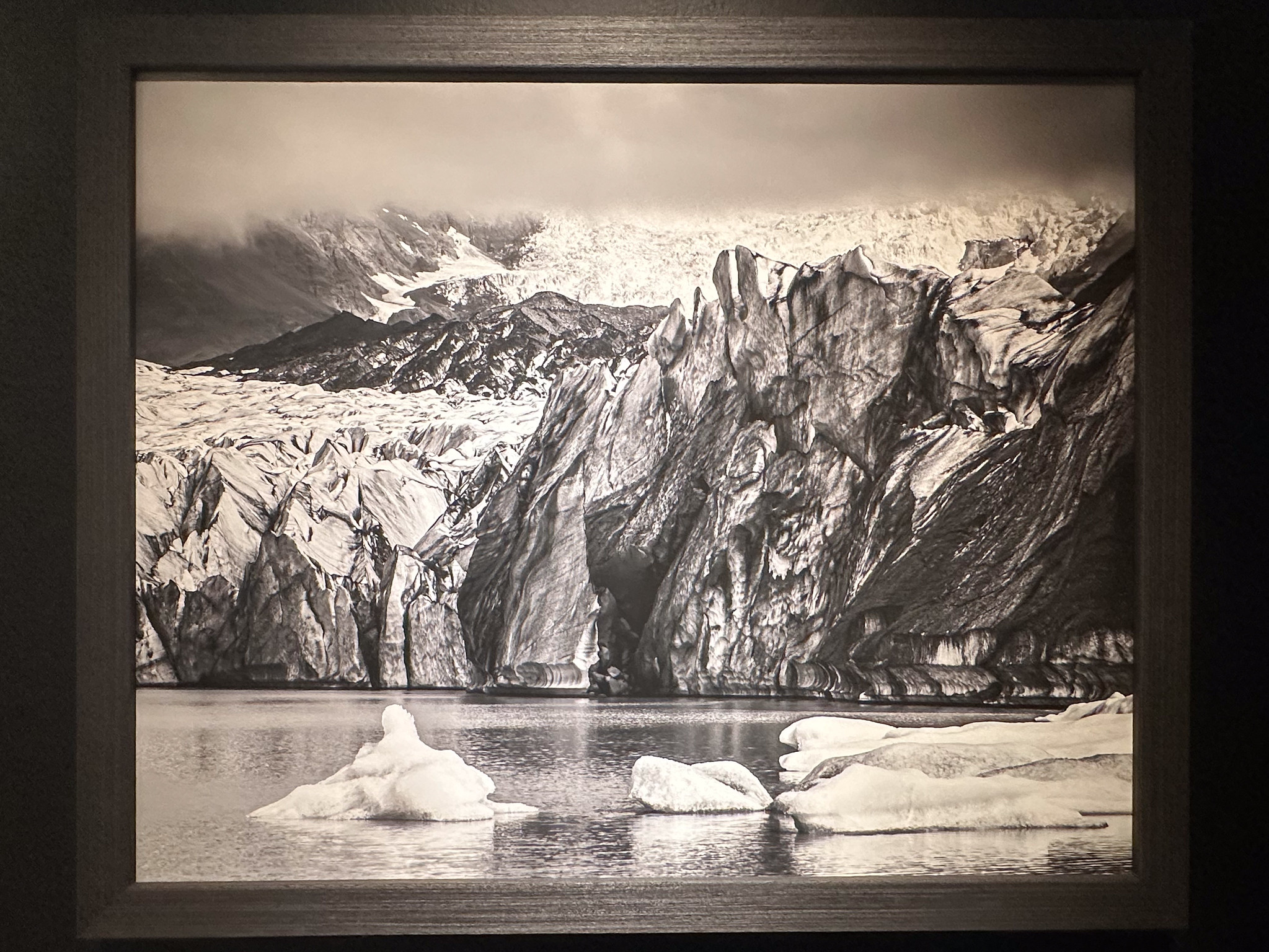
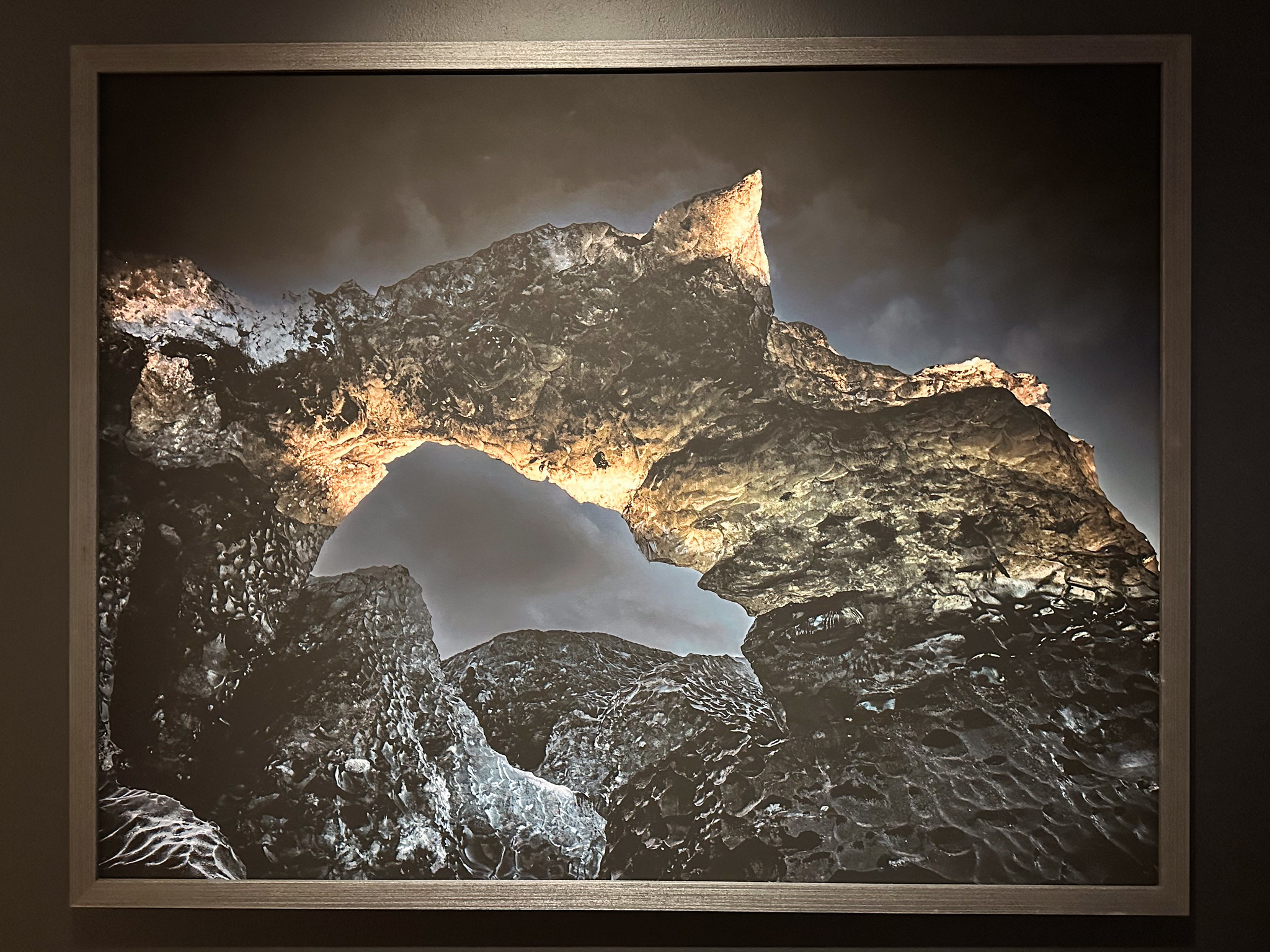
Kristján Maack’s Sleeping Giants is backed by serious credentials. A native of Iceland, Maack is considered one of Iceland’s most successful and prolific photographers and has worked in the field for over thirty years. In 2015 he published a book on the Thríhnúkagígur volcanic crater, confirming that glaciers and Icelandic landscapes are a life-long love for Maack. In the current exhibition, there are approximately 100 photographs, as well as a room featuring the sounds of a glacier. The older work featured (assumed, as nothing in the exhibit is dated or titled) is black-and-white, much of it arranged in a triptych. These black-and-white photographs are layered and beautiful, tender and vulnerable – like a nude photograph of a lover. Maack has an eye for the glacier as living architecture: the compression of centuries made visible – ice rendered in gradients of grey that somehow elicit texture and emotion in a depth beyond color. Standing before these pieces creates a specific, almost sacred quiet that only great nature photography can inspire. The glaciers do not perform for the camera – they simply exist – and Maack, in these works, is wise enough to let them.
This brings us to the (assumed) newer photographs.
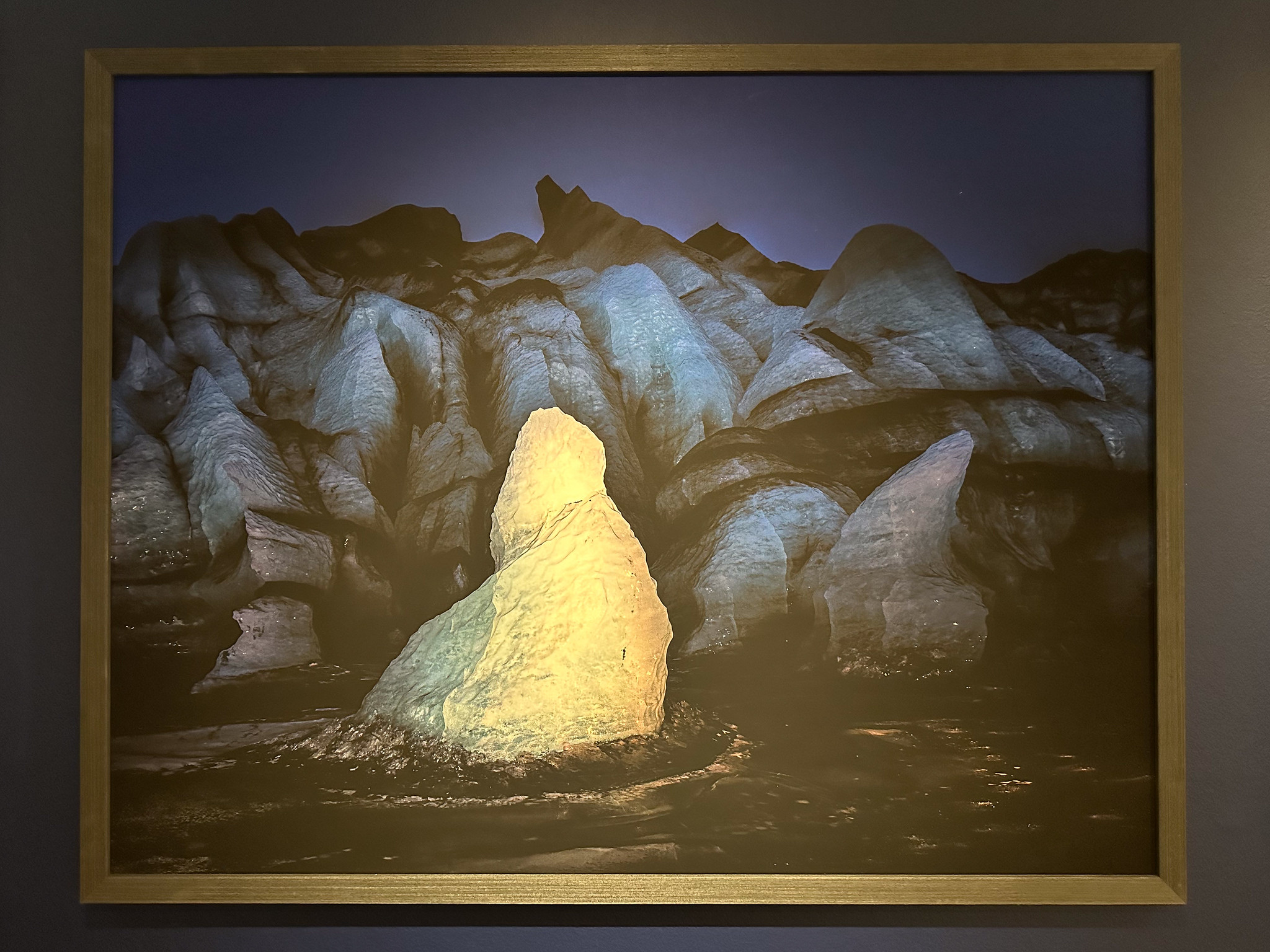
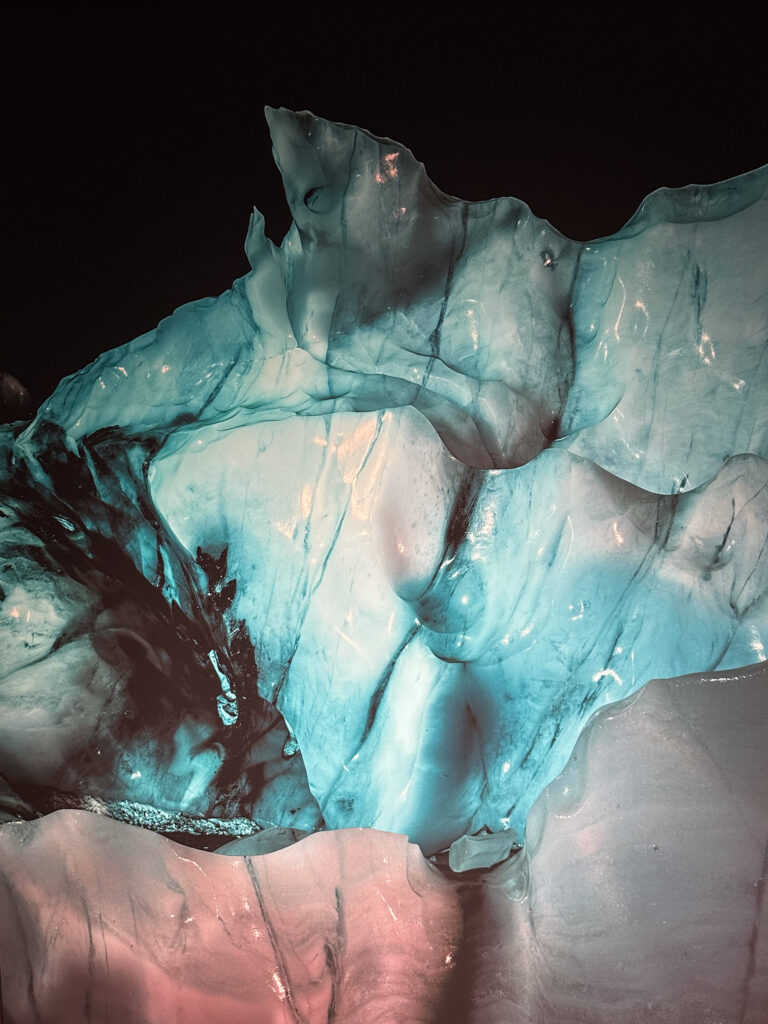
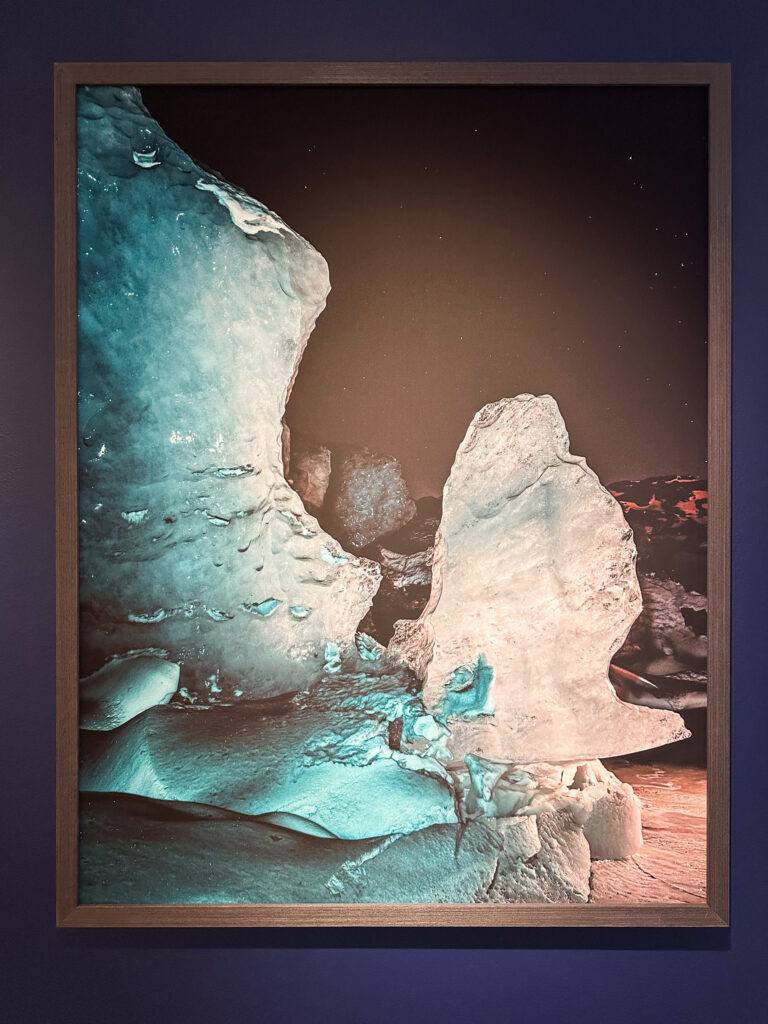
In the body of work that forms the centrepiece of this exhibition, Maack has introduced a technique of illuminating the glaciers with artificial light. Flashlights, coloured gels, beams of electric blue and amber cut across and behind the ancient ice. The effect is strange and jarring, like lipstick on a baby. But stay with it long enough, and a different reading begins to emerge. Iceland’s glaciers are dying, melting faster than maps can be updated. Maack knows this better than most. Perhaps the lights are not decoration or performative carnivalisation, but an alarm: the representation of the photographer’s wish to rouse the glaciers from their impending oblivion and to rouse the world from its incessant paralysis and amnesia. In Maack’s own words, climate change is “our greatest threat, even when we sleep, for it takes no rest.”
This is one interpretation. And I want to believe it.
But the glaciers in these photographs do not look warned; they look dressed up. The coloured lights, however intended, transform ancient, dying ice into something closer to spectacle: vivid, eye-catching, sexy, but cheapened and diminished in the process. The intervention draws attention to the photographer’s hand and technique rather than to the ice itself, thereby undermining the very thing the artist so clearly reveres and grieves.
If we are losing these giants – if climate change is stripping the planet of something immense and irreplaceable – then surely the most eloquent and efficient argument is the glacier itself, unadorned. The black-and-white photographs make this case: they show something so intrinsically beautiful and true that its loss is unthinkable – no flashlight required.
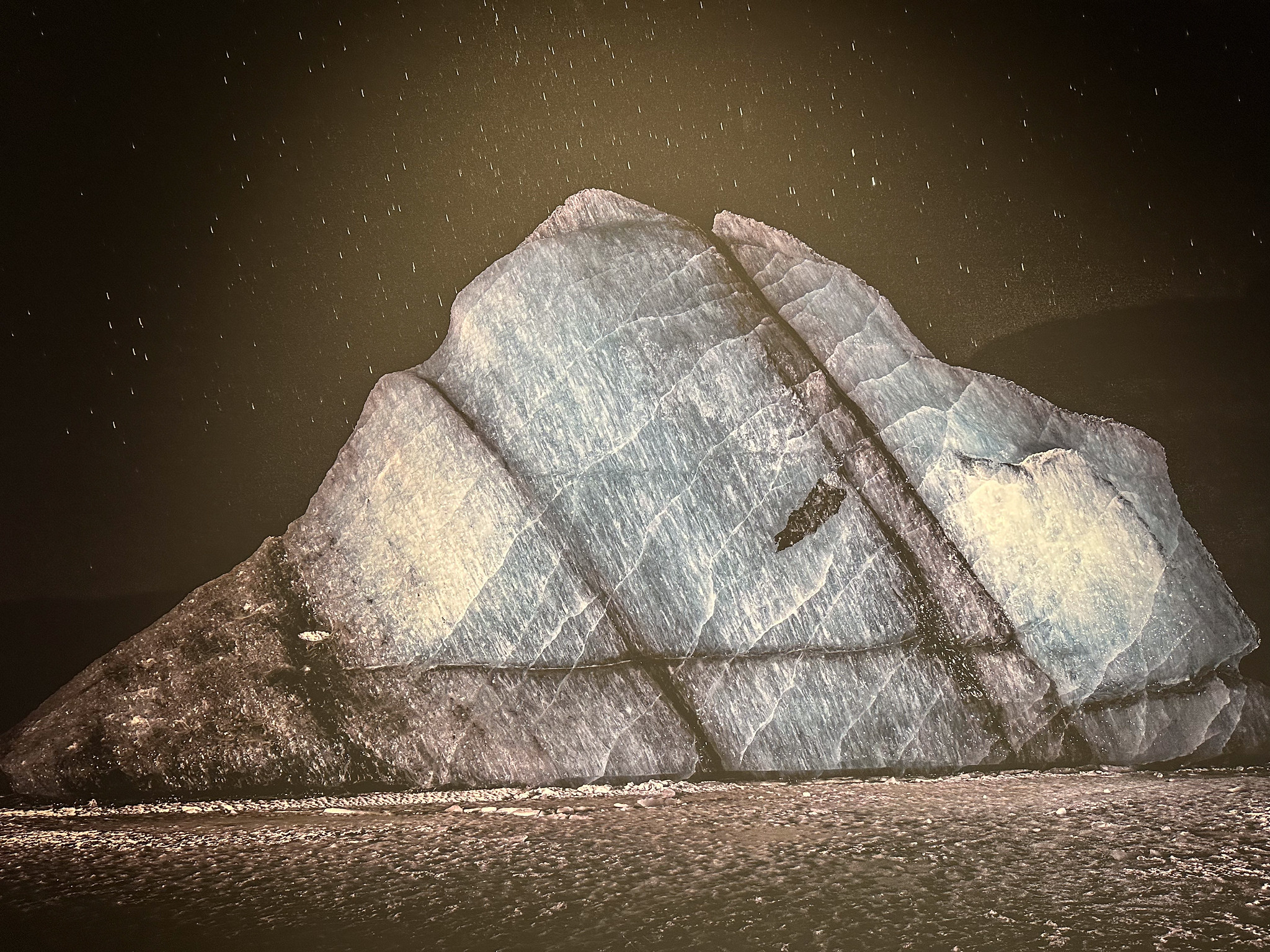
Walking out into the freezing Reykjavik afternoon, it was those images I carried with me – the moments captured in time when the photographer trusted that the ice was enough.
Sleeping Giants contains some of the most beautiful glacier photography I have encountered and includes a body of work that has not yet found a visual language equal to the urgency and advocacy which so clearly motivate the artist.
Despite my critique, I am grateful for Kristján Maack, an artist who sees that the Giants who sleep are dying, an artist who is spending their time on earth sounding the alarm.