
Food Security Is Rooted in Soil Health Not Fertilisers
Photo: Alexandra Kollstrem/ Pexels
Europe’s new fertiliser plan fixes prices but ignores the living soil beneath our feet.
The EU’s Fertiliser Action Plan published on 19 May 2026 is a direct response to the volatile trade conditions created by the Iran War. Since the closure of the Straits of Hormuz, up to 30% of global exports of ammonia and urea – key ingredients for fertiliser production – have been disrupted. The price of nitrogen fertiliser jumped 40% between February and April 2026, a price surge that will put strain on Europe’s farmers. The Commission itself warns of severe risks to global food security, noting that the crisis could disrupt planting decisions on a scale not seen for decades.
The Fertiliser Action Plan aims to offer financial relief for farmers while securing long-term strategic autonomy by scaling domestic production of green amonia and bio-based fertilisers. Yet, despite its goals to stabilise supply and decarbonise production, the Plan misses the fundamental point: this is more than a supply chain issue, it’s the inevitable result of a system built on a misunderstanding. We are trying to feed plants, when we should be feeding soil.
We are trying to feed plants, when we should be feeding soil.
Soil is an intricate, living ecosystem teeming with microorganisms, fungi, and bacteria, that naturally sustain plant life. These organisms are a hidden workforce, mining minerals from the soil and delivering them directly to plant roots in exchange for sugars. This symbiotic relationship, known as the ‘Soil Food Web’ and championed by Dr. Elaine Ingham, is a service no fertiliser can replicate. Thanks to figures like Ingham and her online school, as well as global movements like Kiss the Ground, this understanding has gone from fringe to mainstream in a matter of years.
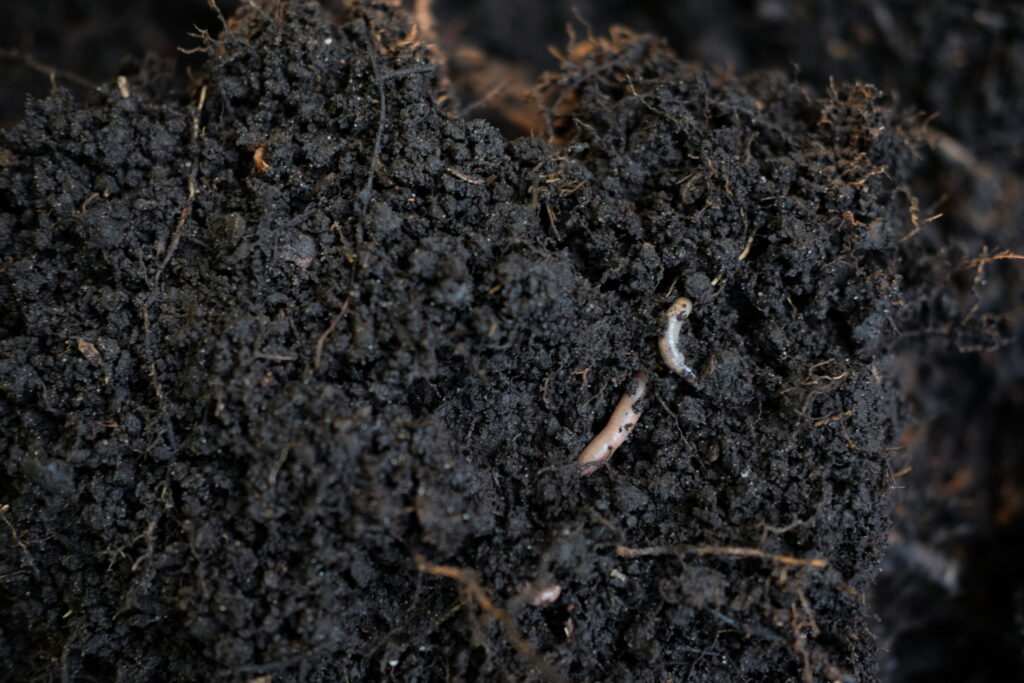
The Fertiliser Action Plan doesn’t mention the Soil Food Web. It discusses soil health through nutrient cycling and efficiency, but stops short of biology. This is merely the latest attempt to manage soil chemistry without understanding the living system beneath it. By ignoring the complex world sitting right under every farmer’s feet and treating soil as a mere substrate, the perspective is off. And the Hormuz crisis demonstrates exactly how fragile our food system becomes when we depend on outsourcing fertiliser to feed plants rather than nurturing the ground beneath us.
The roots of this “feed the plant” mentality trace back to the 19th century. When London launched its new sewer system, scientists like Justus von Liebig, often called the “father of fertiliser”, warned that flushing human waste into rivers instead of returning it to farmland would trigger a food crisis. He argued that society was mining soil nutrients without replenishing them, comparing the soil to a well that runs dry if pumped without return.
He formalised this view in his “Law of the Minimum”, which states that growth is limited by the scarcest nutrient. Liebig’s logic implied that it didn’t matter how those nutrients were delivered as long as the missing element was added. This culminated in the Haber-Bosch process, which extracts ammonia from the air to produce synthetic nitrogen. Hailed as the ultimate triumph of 20th-century scientific agriculture, it offered a technological fix that bypasses the natural cycle entirely.
Modern agriculture is built on this process. It allows for scale, sure, but it is artificial. It treats soil as a substrate, not a living system. Pioneers of the organic movement knew this well. Sir Albert Howard, an English botanist and organic farming pioneer, outlined this in his 1947 book The Soil and Health. He wrote: “The soil is, as a matter of fact, full of live organisms. It is essential to conceive of it as something pulsating with life, not as a dead or inert mass.” Soil is not simply a medium to stick plants into; it is a teeming ecosystem.
The soil is, as a matter of fact, full of live organisms. It is essential to conceive of it as something pulsating with life, not as a dead or inert mass.
Sir Albert Howard
When I worked in the Netherlands and spoke to people collaborating with Wij.land, a network of Dutch farmers transitioning to nature-inclusive dairy farming, some admitted they had never learned about soil health at agricultural college. Instead, the curriculum was all about fertilisers and pesticides. Conventional agriculture offers a rigid formula: apply a set amount of seed for a set amount of chemicals. This approach – combined with practices such as intensive tillage – actively degrades the land, trapping farmers in a vicious cycle. They must apply ever more chemicals to chase productivity, even as the fertility of their most vital asset – the soil itself – is exhausted.
The consequences extend far beyond individual farms. The FAO estimates that nearly 1 billion hectares of land worldwide have been degraded by unsustainable agricultural practices, a crisis threatening food security globally.
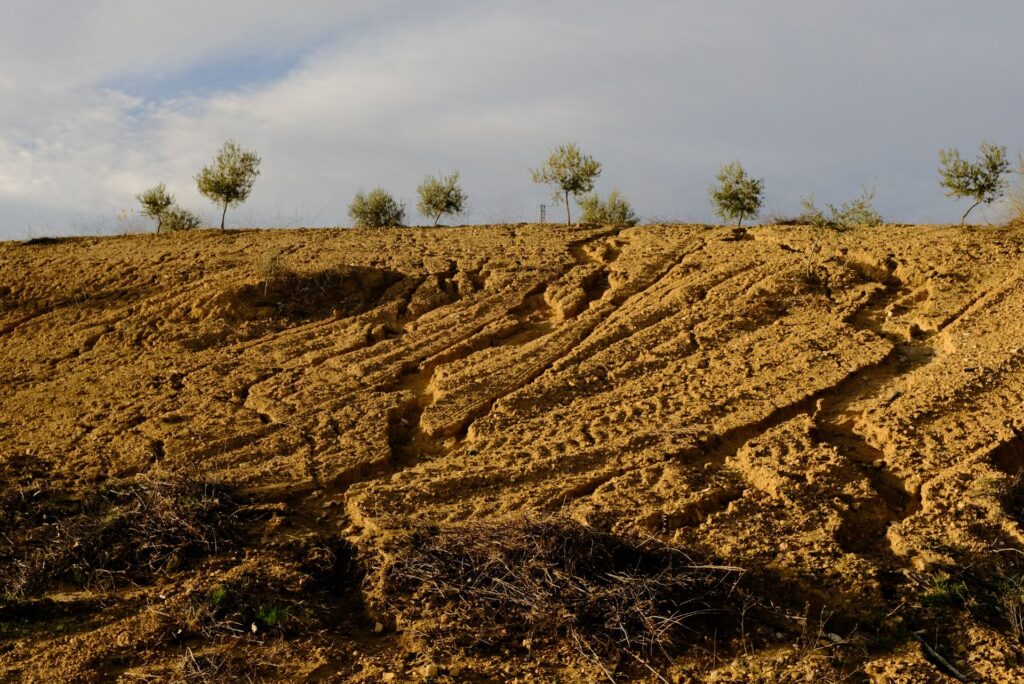
Regenerative agriculture aims to reverse this trend by actively building soil health. Through techniques like diverse cover cropping, minimal tillage, and holistic planned grazing, these methods stimulate the underground soil ecosystem. By feeding the microbial network rather than just the plant, they create a rich, living substrate that naturally cycles nutrients and retains water.
We don’t have to imagine the potential; it’s being proven right now across Europe. The EU-funded GroundWork, operating under Mission Soil, is currently restoring soil health through regenerative livestock grazing in five Living Labs, where farmers and stakeholders co-design practices tailored to local conditions. These labs demonstrate that we can build resilient farms and sustainable food systems by working with biology, not against it. Complementing this on-the-ground restoration, CURIOSOIL, also funded under Mission Soil, brings this potential to a wider audience by addressing critical gaps in soil health understanding among students, teachers, citizens, policymakers, and practitioners.
The regenerative movement preaches what agroecology practitioners have known for millennia: treat your soil right, and it will grow healthy plants. For years, the agricultural industry railed that non-conventional approaches lead to reduced yields. That narrative is now being disproven by farmer-led studies.
The European Association for Regenerative Agriculture (EARA) recently published a landmark study of 78 farms across 10 countries. The results show these farms increased soil health and drastically reduced synthetic inputs, all while matching yields with conventional counterparts and delivering higher gross margins per hectare. But the benefits extend beyond the balance sheet. While over 30% of livestock feed currently imported into Europe leaves the continent vulnerable to global shocks, the regenerative farms in the study sourced their feed exclusively from within Europe.
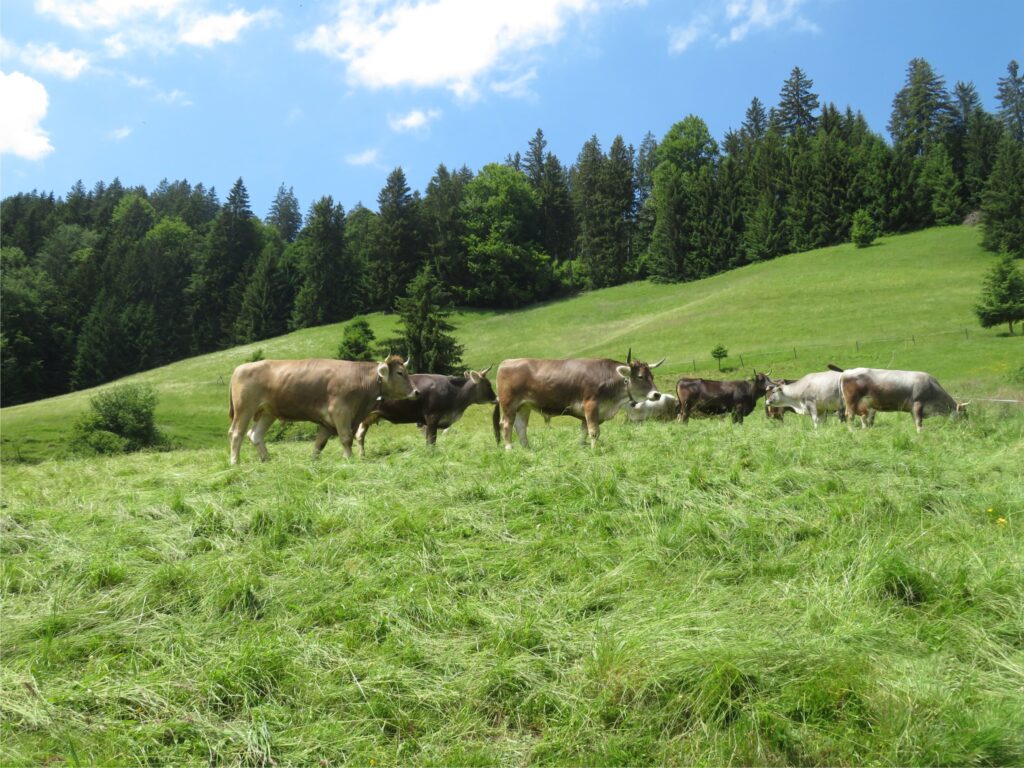
To give the Action Plan credit it mentions agroecological practices like crop rotation, nitrogen-fixing crops, and soil green cover. But these are treated as optional add-ons to help farmers use less fertiliser, not as a replacement for the system itself.
The plan also highlights industrial innovation, and rightly so. The development of low-carbon fertilisers like green ammonia and bio-based solutions like biogas digestates are important steps. We absolutely need cleaner, locally-produced solutions to decarbonise the fertiliser supply chain and reduce reliance on volatile global markets. But these innovations should act as supplements to thriving soil ecosystems, not the primary strategy for fertility.
If Europe is serious about food sovereignty and supporting farmers, it needs to change its perspective. It must recognise that soil is the foundation of long-term regional food security. Crises like the one we are experiencing today should act as a catalyst to accelerate the transition away from chemical dependency, ensuring that emergency responses are aligned with long-term soil health planning. This requires farmer education, legislation that rewards outcomes rather than just input efficiency, and investment into creating circular, local nutrient cycles. But most importantly, it demands a fundamental shift in how soil is understood and respected: not as a simple substrate, but as a living partner.
The geopolitics of today mean that we must make soil the basis for a food sovereignty we all need and want. Not doing so leaves us vulnerable to volatility. It’s time for Europe to stop relying on a 19th-century solution for 21st-century problems.