
The Social Ecology of Rose Cultivation in Türkiye
Photo: Irina Dambrauskas
Rose farming in Türkiye reveals how culture, capitalism, and ecology shape sustainable agriculture.
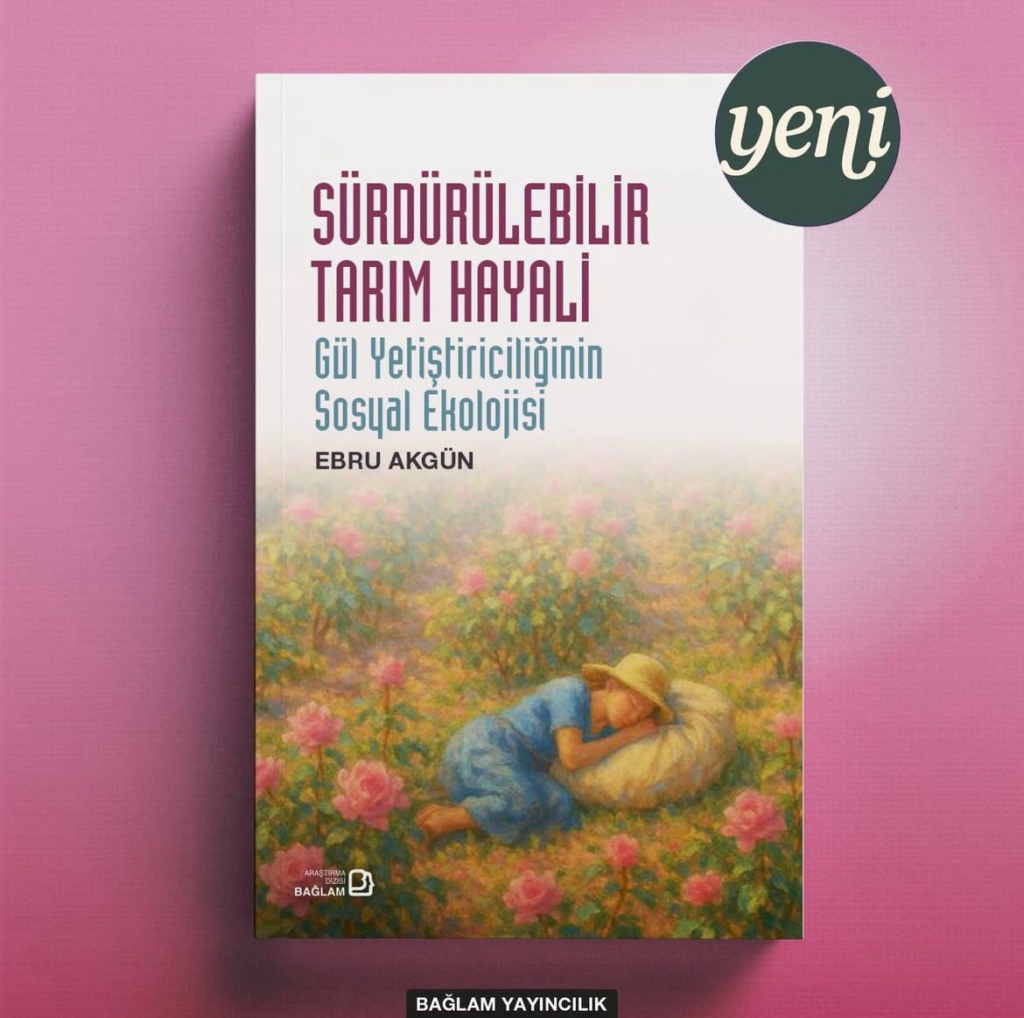
Sustainable agriculture is often discussed through technology and policy, but deeper cultural and social dynamics also shape how humans interact with nature. In her book A Dream for Sustainable Agriculture: The Social Ecology of Rose Cultivation, researcher Ebru Akgün explores how agricultural traditions, economic transformations, and environmental challenges intersect in rural Türkiye.
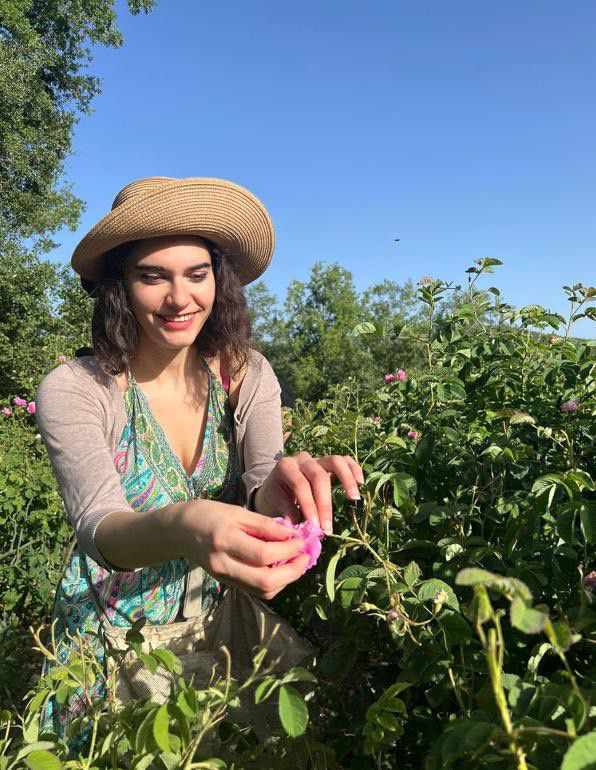
Ebru Akgün is a doctoral researcher based in Belgium working on sustainability from anthropological and social perspectives. With a background in political science, anthropology, and sustainable development, she has worked on sustainability-related advocacy in Brussels and is preparing to begin a role at the European Commission’s Directorate-General for Environment. In this conversation with Journalist Ahmetcan Uzlaşık for Everything is Changing, Akgün explains the ideas behind her research, the transformation of rose farming in southwestern Türkiye, and what sustainable agriculture could look like in the future.
What motivated you to carry out this research and write this book?
It all started in 2019, shortly after I graduated with a bachelor’s degree in political science in Türkiye. At that time, I was searching for direction. During a trip to Paris, I visited the famous Shakespeare and Company bookstore near Notre-Dame. I found myself surrounded by books on food anthropology and agriculture, and that moment sparked something.
I began reading works by major scholars and became increasingly aware of how eating and farming practices are shaped by biological, social, and political factors. That multidisciplinary perspective stayed with me and eventually motivated me to move to Belgium to pursue a master’s degree in social anthropology and sustainable development. The book itself grew out of that intellectual journey and is rooted in my master’s thesis, which I wrote between 2020 and 2022.
Your book uses several important concepts, including “social metabolism” and “Capitalocene.” Why were these ideas important for your research?
The title of the book reflects my broader vision. I dream about sustainable agricultural practices, but more importantly about new ways of relating to nature that can make sustainability possible.
Historically, humans have inherited a long philosophical tradition that places us above nature. This hierarchical mindset has justified the exploitation of natural environments and even social systems. What is striking is that this worldview is often internalised very early in life through education and socialisation, without us questioning it.
However, humans are not separate from nature. We are biologically embedded within it. We are part of nature just like birds, insects, or plants. Instead of maintaining a hierarchical relationship, I suggest an interactionist perspective on human–nature relations.
This is where the concept of social metabolism becomes useful. Originally proposed by Karl Marx and later developed by contemporary scholars, social metabolism describes the continuous exchange between society and nature. Resources flow from nature into society, are transformed through production processes, consumed, and eventually returned as waste. It is very similar to how the human digestive system functions.
Within this metabolic process, scholars distinguish between “hardware” and “software.” Hardware refers to the physical infrastructures that enable these exchanges, such as machines, factories, or technologies. Software, on the other hand, includes cultural values, institutional arrangements, and motivations that shape how these processes occur.
In my research on rose cultivation, the distillation infrastructure used to produce rose oil would be an example of hardware, while the economic motivations and cultural values behind farming practices represent the software.
The concept of the Capitalocene builds on this framework. While the term Anthropocene suggests that humanity as a whole is responsible for environmental destruction, the Capitalocene emphasises that capitalist systems and their value structures are the main drivers of ecological and social crises. Under these systems, nature becomes primarily a resource to be extracted, transformed, and turned into profit.
In my research, I examine how changing capitalist relations have reshaped rose farming in the town of Ağlasun and contributed to sustainability challenges.
Why did you choose rose cultivation in Ağlasun as your case study?
Interestingly, before moving to Belgium I had never heard of Ağlasun. My interest in the region emerged through research projects connected to the Sagalassos archaeological site, which Belgian researchers have been excavating since the 1990s.
Alongside archaeological research, scholars have also been studying the modern town of Ağlasun from sociological and geographical perspectives. Through this network, I was introduced to the topic by my supervisor, who suggested rose cultivation as a compelling case study.
Rose farming in the Lakes Region of southwestern Türkiye has existed since the Ottoman period in the 19th century. It has historically been a locally rooted agricultural practice shaped by indigenous knowledge and family traditions.
What makes it particularly interesting is how dramatically the practice has transformed over time. Agricultural traditions that once relied heavily on local knowledge are increasingly shaped by broader national and global dynamics.
Neoliberal agricultural reforms in Türkiye have expanded cultivated land, introduced private capital into farming, and increased dependence on imported agricultural tools and chemicals. At the same time, urbanisation has drawn younger generations away from villages, leading to labour shortages and the erosion of traditional knowledge. Climate change is also affecting rose cultivation through plant diseases and extreme weather conditions.
Despite these challenges, what motivates rose growers to continue farming today?
Earlier research conducted in 2016 showed that nearly 80% of rose farmers were willing to continue cultivating roses. This was unusually high compared to other agricultural products.
In my own research, I revisited many of the same farmers who had participated in that survey. Through qualitative interviews, I found that this number had dropped to roughly 40%.
Rose farming remains deeply embedded in family traditions and emotional attachments. However, many farmers no longer see a viable future in agriculture due to rising production costs, labour shortages, crop diseases, and broader economic pressures.
In fact, many farmers explicitly told me they do not encourage their children to continue farming. Younger generations have largely moved to cities such as Antalya, Ankara, İzmir, and Istanbul, where they pursue urban careers and lifestyles.
What opportunities still exist for rose cultivation in Ağlasun?
I would group these opportunities into three categories: environmental, economic, and social.
From an environmental perspective, rose cultivation requires very little irrigation. This makes it relatively resilient under drought conditions, which are becoming more common due to climate change. Rose farming also contributes to biodiversity, soil balance, and carbon sequestration.
Economically, rose cultivation provides farmers with supplementary seasonal income. Many farmers today have other professions – working as drivers, civil servants, or in the service sector – and rose farming complements those livelihoods.
Rose products, particularly rose oil and rose water, also have strong export potential. Around 70% of Türkiye’s rose production is exported, with European markets representing a major destination. Turkish rose oil is often preferred over Bulgarian rose oil because of its higher oil content.
There is also a growing connection between rose cultivation and tourism, which generates additional income and visibility for the region.
In your book you also discuss “rural gentrification.” What does that mean in the context of Turkish villages?
Rural gentrification refers to the process through which rural areas are reshaped by newcomers, often from urban middle- and upper-middle-class backgrounds.
When people move from cities to villages, they bring their lifestyles, habits, and values with them. As a result, rural spaces begin to change socially, economically, and culturally.
Villages that were historically organised around agriculture, kinship networks, and subsistence practices increasingly become spaces of tourism, leisure, lifestyle aspirations, or commercial agricultural production.
These changes can bring investment, infrastructure, and economic opportunities. However, they can also drive-up land prices and transform agricultural land into guesthouses, second homes, or industrial farms. Over time, long-term residents may find it more difficult to sustain their traditional livelihoods.
In this sense, rural gentrification represents a broader cultural transformation in how rural life is imagined and organised.
Finally, what policy recommendations would you make for sustainable agriculture in Türkiye?
My recommendations are grouped into environmental, economic, and social dimensions. However, the most important point is that sustainability is not only a technical or economic issue. It is also an imagination crisis.
We need to rethink how we construct our relationship with nature. A truly sustainable approach must integrate environmental protection, economic viability, and social well-being.
Environmentally, this means decarbonising agricultural practices, expanding renewable energy use, and improving energy efficiency.
Economically, governments, cooperatives, and NGOs should create incentives that support sustainable farming methods while strengthening institutional support for farmers. Research is also crucial, as there is still a major knowledge gap in sustainable agricultural development.
Socially, policies should invest more in rural infrastructure and support family farming traditions. Indigenous agricultural knowledge that has been passed down for generations represents a valuable resource that should not be lost.
Improving agricultural education and strengthening farmer organisations are also key steps. Ultimately, sustainable agriculture requires both innovation and respect for traditional knowledge systems.