Solar’s Next Challenge: Performance
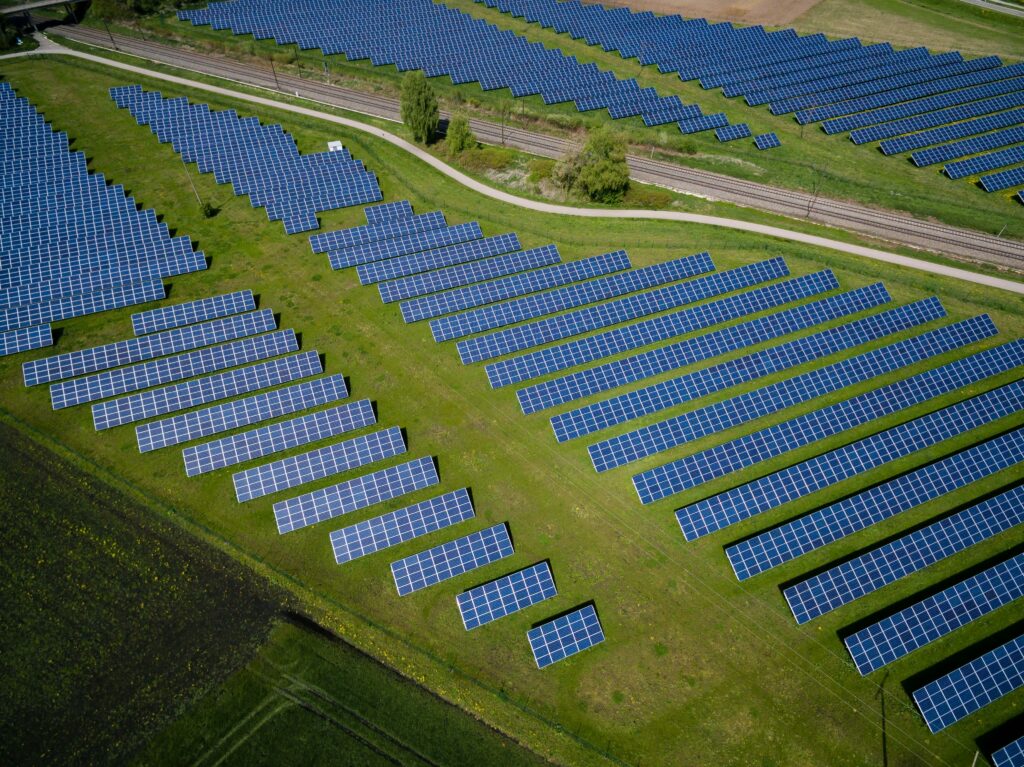
Photo: American Public Power Association / Usplash
Smarter operations now define solar’s success as Europe scales photovoltaic capacity
As solar capacity rapidly expands across Europe, the challenge is no longer just building new installations, but ensuring they perform efficiently. The PVOP Project is tackling this shift by using artificial intelligence and big data to improve photovoltaic (PV) operations at scale. In this interview, project coordinator Luis Narvarte explains why solar’s next phase is about intelligence, optimisation, and system integration.
How would you describe the current phase of the European solar sector now that growth is no longer the main challenge?
Growth is no longer the central issue, but it has created a new layer of complexity that the sector must now manage. The rapid expansion of photovoltaic installations across Europe means that operators are dealing with an unprecedented volume of data coming from their plants.
Each installation generates continuous streams of information, performance metrics, alarms, operational signals, and the teams responsible for monitoring them are often overwhelmed. These supervision teams were not designed to process such large quantities of data, which makes it difficult to identify issues efficiently or react in time.
So the challenge today is not about building more solar capacity, but about managing what already exists. This is where digitalisation becomes essential. We need systems that ensure data quality first, and then tools that can automatically analyse that data and support decision-making.
In this sense, the sector is entering a new phase: one where operational intelligence and data management define success.
How promising is solar in Europe’s energy mix in the current geopolitical context?
Solar is absolutely central to Europe’s energy future, but its role differs from country to country. In places like Spain, we already see situations where photovoltaic capacity exceeds what the grid can absorb at certain times. In other countries, more capacity is still needed.
However, the real challenge is not just producing electricity, it is transforming how energy is consumed. Europe must electrify sectors like heating, transport, and industry, which still rely heavily on fossil fuels. Solar will provide a large share of this electricity, but it must be integrated into a broader system transformation.
This transition will take time. It requires not only more renewable generation, but also grid upgrades, storage solutions, and changes in consumption patterns. Solar is highly promising, but it is part of a much larger structural shift.
Why is operational performance becoming as important as installing new solar capacity?
Because installing PV systems is no longer the difficult part. Technologically and economically, solar is already one of the most competitive energy sources available.
The real challenge begins after installation. We must ensure that systems actually deliver the energy they were designed to produce. Even small inefficiencies, when multiplied across large portfolios, result in significant losses.
This makes operation and maintenance critical. We need to monitor performance continuously, detect deviations quickly, and respond before losses accumulate. Given the volume of data involved, this cannot be done manually anymore.
So the focus is shifting from deployment to optimisation, ensuring that every installed system operates at its maximum potential.
Why do many PV plants still underperform today?
There is no single reason, underperformance is the result of several combined factors.
First, expected production is often overestimated during the design phase. This creates a gap between projected and actual performance from the beginning.
Second, there are technical issues across different components. These include disconnected strings, faulty module connections, overheating in inverters, and malfunctioning trackers. Some of these issues are subtle and difficult to detect without advanced monitoring.
Third, cost reductions have changed installation practices. PV systems are increasingly installed on uneven terrain without proper adaptation of tracking algorithms, leading to shading losses.
Finally, grid constraints and market conditions also play a role. Sometimes the grid cannot accept all generated electricity, and at other times, prices are too low to make production economically optimal.
Addressing these challenges requires better modelling, continuous monitoring, and smarter operational strategies, including the integration of storage.
In simple terms, how are AI and big data changing the way solar plants are operated?
Artificial intelligence is becoming essential because the scale of data is beyond human capacity to manage. AI allows us to analyse large datasets, detect anomalies, predict failures, and optimise performance automatically.
But it is important to understand that AI is not a replacement for human expertise, it is an extension of it. Human knowledge is needed to train these systems and interpret their outputs.
As photovoltaic energy becomes a dominant part of the electricity system, AI is not optional. It is the only realistic way to manage such a complex and data-intensive infrastructure efficiently.
Where does PVOP fit into this shift toward data-driven solar operations?
PVOP is designed around three main pillars. The first is ensuring high-quality data through improved sensorisation. Without reliable data, it is impossible to detect small inefficiencies or train AI systems effectively.
The second pillar is advanced data analysis. We develop tools using big data and AI to automatically evaluate performance, detect failures, and diagnose their causes. This enables faster and more accurate decision-making.
The third pillar is battery integration. Batteries are still costly, so they must be used strategically. We develop AI-based systems that optimise when to store energy, when to release it, and how to provide services to the grid.
Together, these elements create a smarter operational framework for photovoltaic systems.
Can PVOP solutions be implemented at a wider scale beyond Europe?
Yes, and this is actually essential. The photovoltaic market is global. European companies managing PV assets often operate across multiple continents, from South America to Asia and Australia.
This means that the challenges we address – data overload, performance optimisation, and system integration – are not specific to Europe. They are shared worldwide.
As a result, PVOP solutions are designed to be scalable and transferable. They can be applied wherever large-scale PV systems exist, making their impact potentially global.
In partnership with