Beyond the Aquarium Walls
Photo: H. Lamblin-Iconocom
Nausicaá’s leaders discuss ocean literacy, youth advocacy and turning awareness into collective action
For the Blueboard series by Everything is Changing, journalist Ahmetcan Uzlaşık spoke with Iwona Gin and Lolita Couchene about ocean literacy, youth participation and the role of aquariums in shaping environmental action.
How would you describe what Nausicaá really is today beyond being an aquarium?
Iwona Gin: From the very beginning, when Nausicaá opened in 1991, our ambition was never simply to become a traditional aquarium displaying marine species behind glass tanks. Our mission has always been much broader: restoring the relationship between humans and the ocean and helping people reconnect emotionally, intellectually, and responsibly with marine ecosystems.
Today, Nausicaá is a space where science, education, conservation, culture and public engagement all come together. We try to create a bridge between the scientific world and everyday citizens by making ocean issues understandable, emotional, and accessible. We speak not only about marine biodiversity, but also about climate change, sustainable fisheries, pollution, coastal communities, and the role the ocean plays in all our lives.
We want visitors to understand that the ocean is not something distant or abstract. It is deeply connected to our economies, our climate, our food systems, and even the air we breathe. That is really what makes Nausicaá different from a traditional aquarium.
How do you transform a visit into a lasting emotional connection with the ocean?
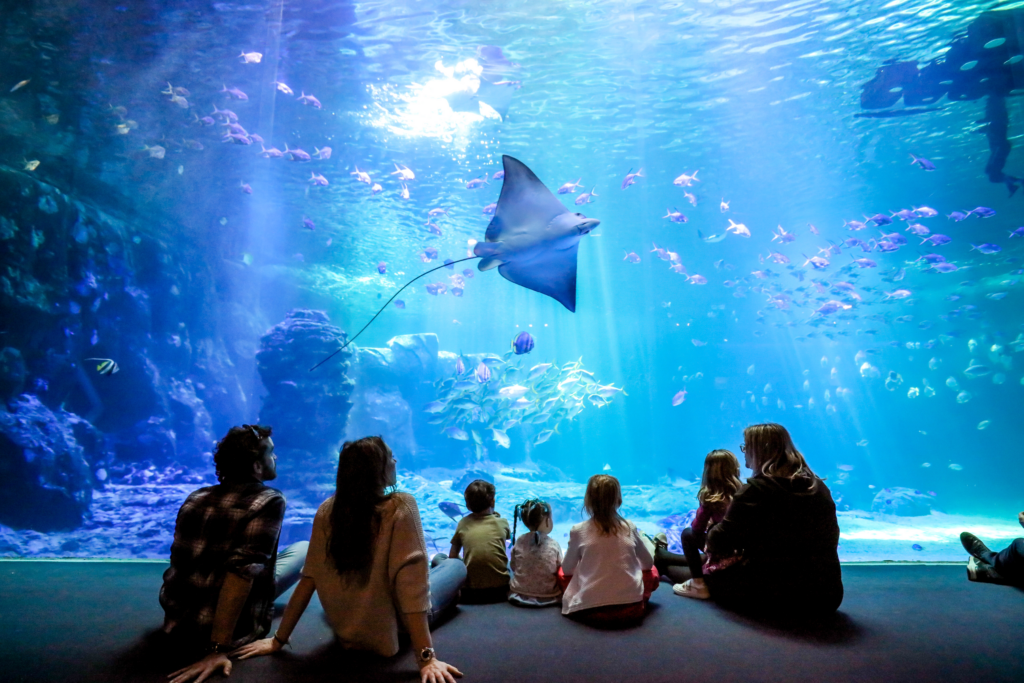
Iwona Gin: We always try to design experiences that fully immerse visitors in the marine world. Of course, the visual aspect is very important. Seeing coral reefs, open-ocean ecosystems, or large marine species can already create a strong emotional reaction. But we also work with sound, touch and storytelling because emotional connection happens through many senses.
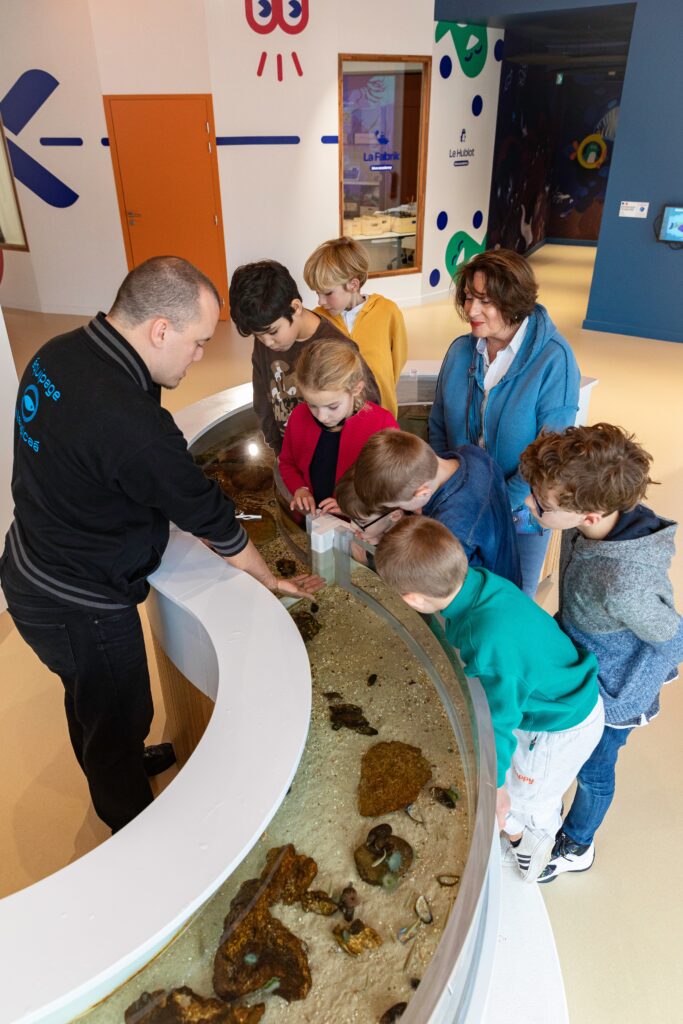
For example, our soundscapes combine music with real underwater sounds like whale songs or reef crackling, helping visitors feel surrounded by the ocean environment. We also have “touch experiences” where visitors can interact directly with certain species, making the relationship more tangible and personal.
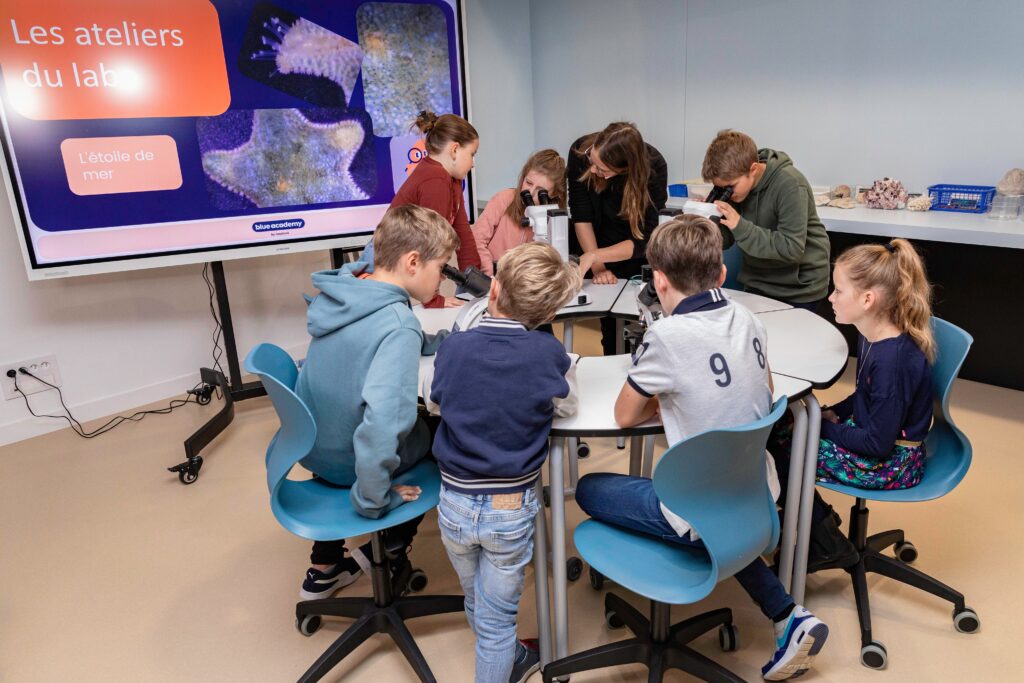
But immersion alone is not enough. We combine these experiences with educational workshops, guided visits, school programmes, and citizen science activities. Marine science can often feel distant or too complex, especially for children, so our role is also to translate complicated environmental concepts into stories and experiences that people can relate to emotionally.
We believe that wonder is extremely important. When people feel wonder, they begin to care. And when they care, they become more willing to act and protect what they love.
We believe that wonder is extremely important. When people feel wonder, they begin to care.
Why is citizen awareness essential for ocean governance today?
Lolita Couchene: Because ocean governance cannot function effectively without society being involved. Environmental protection is not only the responsibility of governments or scientists. Citizens also need to understand the issues, feel concerned by them, and be able to participate in decision-making processes.
At Nausicaá, we try to create this connection between science, policy, and society. We raise awareness, but we also try to empower people so they feel capable of engaging with ocean issues. Individual actions are important, but systemic change is equally necessary. For systemic change to happen, decision-makers need to hear a diversity of perspectives.
This includes youth, coastal communities, indigenous peoples, researchers, NGOs, and ordinary citizens. Policies become stronger and more relevant when these voices are included. Ocean governance should not happen only inside political institutions; it should involve society as a whole. That is why ocean literacy is so important. People protect what they understand and what they feel connected to.
Do you see a gap between policy discussions and what ordinary citizens understand about ocean issues?
Lolita Couchene: Yes, there is definitely still a gap. International policy discussions can be very technical, complicated, and sometimes inaccessible to ordinary citizens. Even understanding how these governance systems work can already be difficult.
There are also practical barriers. Participating in international conferences often requires financial resources, institutional support, and knowledge of how these spaces operate. This means that many perspectives are still underrepresented, especially those of younger generations or vulnerable communities.
That is why organisations like Nausicaá are important intermediaries. Part of our role is translating these complex policy discussions into something understandable and meaningful for citizens. At the same time, we also bring citizen perspectives back into policymaking spaces.
We also work a lot on youth participation because many young people want to engage but simply do not know how to access these discussions. We try to give them tools, training, and opportunities to understand governance systems and participate more actively.
There is progress, but there is still a lot of work to do to make these spaces truly inclusive and representative.
How do you help children emotionally connect with the sea rather than simply learn facts?
Iwona Gin: Children are absolutely central to our mission because early experiences often shape lifelong values and behaviours. But simply giving children scientific information is not enough: emotional connection is essential.
The ocean can feel very distant for many children because underwater ecosystems are not naturally accessible to humans. You cannot simply walk into the ocean world the same way you walk into a forest. So, we must create experiences that make the marine environment feel alive, personal, and emotionally meaningful.
We use storytelling, hands-on learning, immersive exhibitions, workshops, and outdoor activities to create these connections. We also try to make environmental issues understandable without overwhelming children with fear or anxiety.
What is important is helping them feel empowered. We always try to show that there are actions they can take, whether through sustainable choices, citizen science activities, or simply understanding the importance of marine ecosystems.
And yes, we do see changes. Sometimes children come back later and explain how they now see marine species differently or how they spoke with their families about environmental issues afterward. Those moments are very meaningful for us.
How can aquariums and science centres influence real political momentum?
Lolita Couchene: Today, institutions like Nausicaá are much more than educational spaces. Because of our expertise and our public reach, we also have a responsibility to contribute to policy discussions and environmental advocacy.
We participate in international networks and coalitions that work on ocean protection, and we bring our experience in ocean literacy and citizen engagement into these discussions. We also develop recommendations and proposals together with scientists, NGOs, and other organisations.
What is important is that we connect public awareness with political action. For example, we may first introduce visitors to a topic through exhibitions and educational programmes, but then we continue working on the same issue through advocacy and policy engagement.
Deep-sea ecosystem protection is one example where this happens strongly. We raise awareness among visitors, but we also contribute to international discussions about how these ecosystems should be protected politically.
We believe awareness alone is not enough anymore. Institutions also need to help create concrete change.
Are young people finally being taken seriously in ocean diplomacy?
Lolita Couchene: There has definitely been progress. Youth participation is much more visible today than it was several years ago, and more international institutions are creating spaces for young people to contribute.
But consultation is not the same thing as real inclusion in decision-making. Young people are often invited to speak or share perspectives, but they do not always have actual influence over final decisions.
There is also still an issue of representation. Many young people who participate internationally come from privileged backgrounds because access requires financial resources, education, and institutional support. So there is still a need for broader diversity and accessibility.
At Nausicaá, we try to support young people not only by giving them visibility, but also by helping them understand how governance systems work and how they can engage effectively. Youth participation should not be symbolic. It needs to become structural and meaningful.
If every visitor left Nausicaá with one mindset shift, what would you hope it is?
Iwona Gin: I would hope visitors understand that protecting the ocean is not simply an environmental gesture or an act of altruism. Protecting the ocean ultimately means protecting ourselves.
The ocean regulates our climate, produces much of the oxygen we breathe and supports millions of livelihoods around the world. Our lives are directly connected to its health, whether we realise it or not.
So for me, the most important mindset shift is understanding that humans are not separate from the ocean. We are part of the same system, and our future depends on maintaining that balance.
Lolita Couchene: For me, I would hope visitors leave not with fear, but with the will to act. Environmental issues can sometimes feel overwhelming, especially when discussing climate change or biodiversity loss.
But we want people to leave with awareness combined with hope and responsibility. We want them to feel that their actions matter and that positive change is still possible.
If people leave Nausicaá feeling emotionally connected to the ocean and motivated to protect it in their own way, then we have achieved something meaningful.
In partnership with