EU to Update its Arctic Policy
Photo: Willian Justen de Vasconcellos / Unsplash
Amid accelerating climate change and rising geopolitical tensions, the EU is preparing to update its Arctic Policy later in the third quarter of 2026.
In the Arctic, climate change is advancing at unprecedented speed, with the region warming three to four times faster than the global average. Retreating sea ice, thawing permafrost, and ecosystem disruption are reshaping the region. Scientific forecasts indicate that the Arctic Ocean may experience at least one ice-free summer before 2050.
At the same time, the region faces growing geopolitical and geoeconomic pressures due to its strategic location, abundant natural resources, and the development of new polar shipping routes. Since Russia’s invasion of Ukraine, the Arctic has entered a new geopolitical phase, with traditional channels for dialogue disrupted and an increase in hybrid and military activities, significantly reshaping both the Arctic region and Europe’s broader security environment.
The EU’s Arctic role
The EU’s presence in the Arctic region is based on promoting cooperation, climate action, and sustainable development. As the developments in the Arctic have impacts beyond the region, joint communication for a stronger engagement in the Arctic was adopted by the EU in 2021. The communication defines the EU’s engagement in the region as protecting the climate and environment, supporting sustainable development, and promoting peace, stability, and cooperation.
EU and Greenland
Greenland plays a key role in the EU’s Arctic policy. The EU maintains longstanding ties with Greenland through its status as an Overseas Country and Territory (OCT). As the largest beneficiary of EU funding under the OCT framework, Greenland receives direct financial support aligned with its own priorities, particularly in education and sustainable development, including green growth initiatives, renewable energy, and responsible raw materials development.
Why update the policy in 2026?
Against this backdrop, environmental, security, economic and political developments have significantly changed the Arctic context, therefore the EU aims to update its Arctic policy in 2026. The updated policy will:
- Address growing geopolitical and security dynamics
- Integrate defence, connectivity and economic security considerations
- Strengthen climate mitigation and adaptation measures
- Enhance sustainable resource governance
- Reinforce international cooperation mechanisms
The update is planned for adoption as a Joint Communication in Q3 2026 following a public consultation.
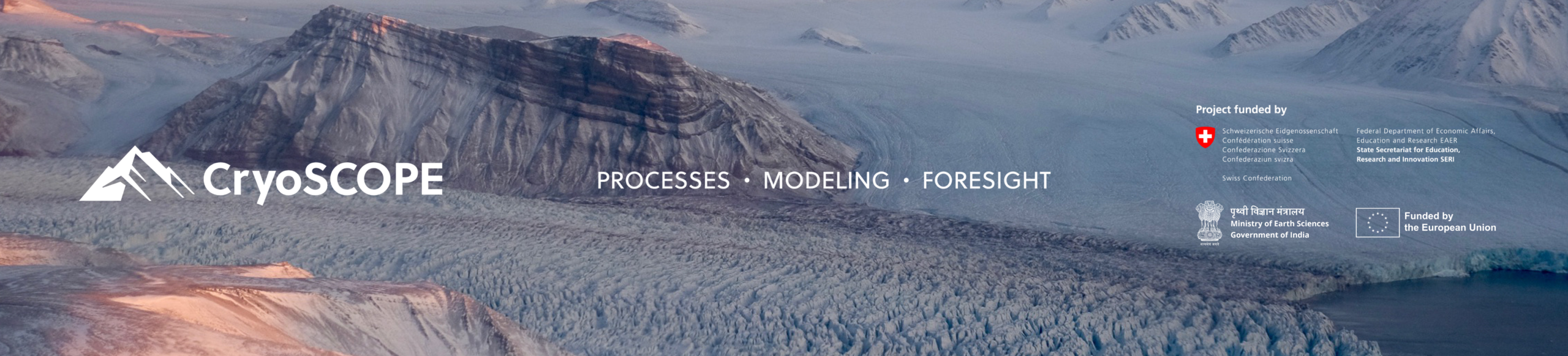
Click here to learn about the CryoSCOPE project, aimed at understanding and quantifying the physical and chemical processes within the coupled Cryosphere–Atmosphere–Hydrosphere (CAH) system across diverse cold-region landscapes.