When innovation meets water scarcity challenges: a technological and financial perspective for a better water future
Photo: SMOOBS
Photo: SMOOBS
According to the European Environment Agency (EEA), 1/3 of European countries have relatively low availability of water, less than 5,000 m3 of water per head per year, which equals 14 litres/day when we know that the average consumption is around 100 to 140 l/day. Moreover, in Europe, even countries like Belgium, the UK, and Germany, which are considered as water-healthy are now experiencing water scarcity. The EEA claims that “water scarcity occurs where there are insufficient water resources to satisfy long-term average requirements. It refers to long-term water imbalances, combining low water availability with a level of water demand exceeding the supply capacity of the natural system.” Water scarcity is exacerbated by well-known additional factors such as the constant population growth, rising demand for water, particularly in industry, and relentless urbanization.
Almost half of the EU population lives in water-scarce areas.
European Environment Agency
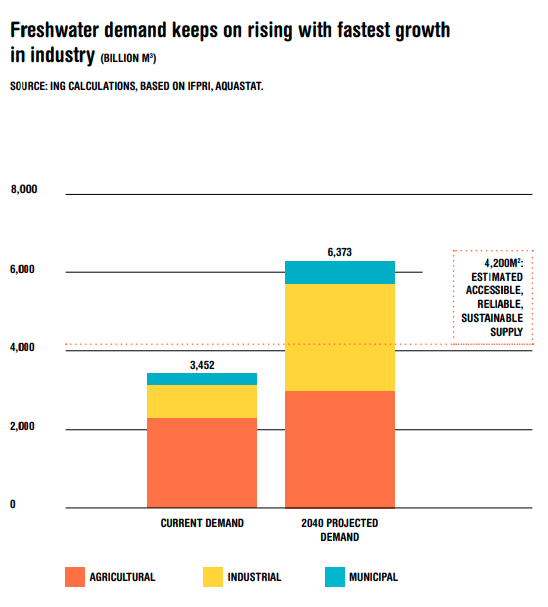
Industry is expected to use 4% more water each year in the future, according to ING Bank. Water is starting to be seen as a potential performance differentiator for industries, and has been integrated in balance sheets for business risks and asset management. As examples, Ford Motor Company recycles 100% of its industrial wastewater in India, to offset freshwater consumption. The Coca Cola Company has set a similar objective: “By 2020, safely return to communities and nature an amount of water equal to what we use in our finished beverages.”
The smart water market is estimated to reach between $15-20 billion by 2020.
Sustainable water resources management is an obvious response to addressing water scarcity. Implementation of innovative technologies and services that will contribute to optimize both the available water resources and the use of water can be considered as equally important now to address water scarcity challenges.
The emergence of the Internet of Things and more generally of smart technologies has allowed the water sector to address long-standing challenges that could worsen water scarcity impacts. Many publications have already presented the benefits and opportunities of introducing artificial intelligence (AI), machine-learning, augmented reality (AR)… to the water sector. As further illustrations of this phenomenon, here are some examples of successful start-ups:
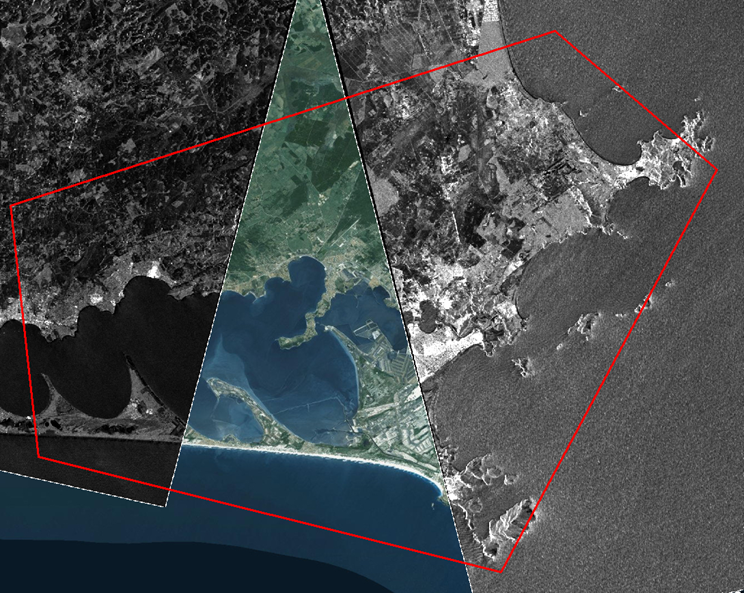
Innovative desalination technologies are ready to topple incumbent technologies. They will make non-conventional resources more attractive and increase access to water. Thanks to technological developments, desalination has been a response to the global water deficit. In 2016, the International Desalination Association (IDA) estimated that there were around 20,000 desalination plants in 150 countries to supply 300 million people. In countries such as Australia, desalination plants can provide up to 50% of drinking water.
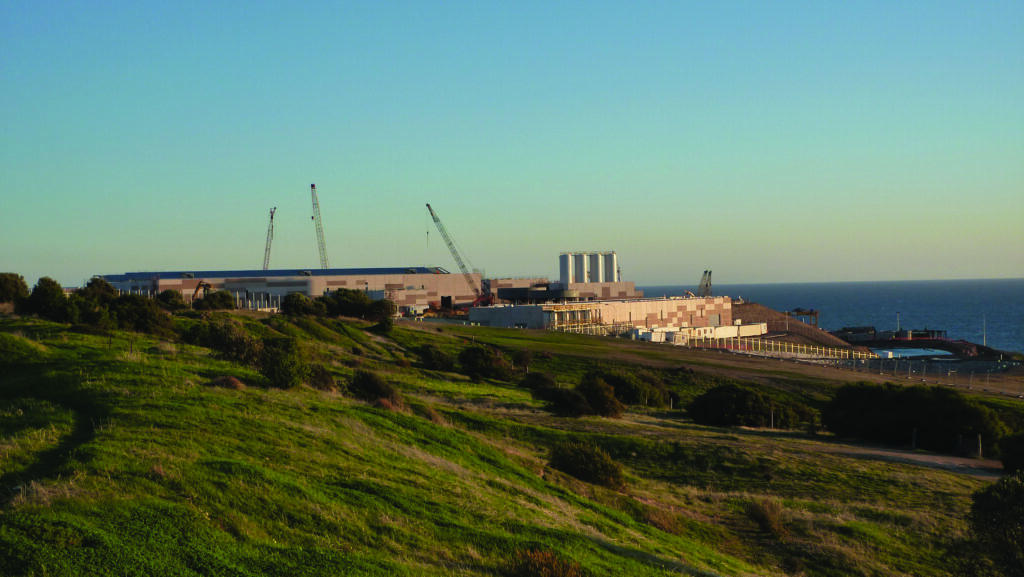
From an economic point of view, desalination has been an expensive option – the water cost can reach up to $5/m3. The implementation of a new generation of membranes are being developed to reduce operational and capital costs by up to 15%, for example, a reverse osmosis system. ANFIRO, CLEAN MEMBRANES, DESALITECH are examples of start-ups that are active in this field. An early-stage Israeli start-up, HYDROP, has developed a “peptoid-based material” that can be embedded in the reverse osmosis membrane, without amending its structure. This material is claimed to reduce up to 30% of the energy required when using reverse osmosis processes. New technologies also target high levels of recovery for brine management (up to 98%) and reuse of water.
The development of renewable energy has been another opportunity to improve access to water. Autonomous solar seawater solutions are being developed, albeit still using membranes. Innovation in this area has mainly been directed at reducing the overall costs of desalinated water and providing an off-grid solution, so that it can stand as one of the relevant responses to water shortages in remote areas, on islands there is tremendous potential.

Emerging technologies might make desalination even more attractive. Although these are still at an R&D phase, alternatives to existing membranes are being studied. A UK-based research team succeeded in “creating a graphene-based filter capable of removing salt from seawater” and announced that they would now test them against existing membranes, and assess the scalability. Similarly, engineers at the University of Illinois in the U.S. have been making progress in developing a saltwater desalination process that could be cheaper than conventional reverse osmosis membranes. The first results indicate that the technology could work for brackish waters, with low salinity. The next steps will focus on high-saline seawater.
Water scarcity challenges cannot be addressed without mentioning air-to-water technologies. A year ago, as Venture Adviser to Aster Capital, a French VC Fund, I produced a poster listing a few start-ups that have developed or are developing technologies to produce water out of air which is a billion-dollar market. An operational start-up WATERGEN in Israel seems to be fully successful in marketing its technologies. Two of the outstanding barriers are the energy costs, and relatedly the cost of the produced water. WATERGEN reckons that 10,000 of their devices could supply 25 million people. The UK-based start-up REQUENCH is designing a technology that is based on a desiccant technology using the principle that salt absorbs water. This drastically reduces the energy requirements making solar photovoltaic power practical with over 25% at low humidity. Water can be produced at a relative humidity as low as 15%.
The United Nations expects 14% of the global population to receive water from desalination by 2025.
Innovation in the water sector should not be considered just a buzz word; it can be a tangible solution to address water scarcity challenges the world is facing. Economically, the technologies aim at reducing CAPEX and OPEX, which shall be an additional incentive for greater market uptake. Financially, innovative technologies and services should be envisaged as investments for a sustainable water resources future.
INTERNATIONAL IMPACT PARTNERS is a global company working in partnership with public organizations, investment funds, industries, large companies, SMEs and start-ups on developing their innovation portfolios, undertaking technology benchmarking and facilitating market development and access, in the water and environmental sectors.