
Sharing is Caring
Photo: Thalysson Santos / Unsplash
Energy sharing’s potential hinges on political, regulatory will.
We use electricity every day without thinking too much about how it reaches our homes. Somehow the energy flows, our lights turn on, and we are able to watch our favorite show on TV. Yet behind that everyday convenience sits one of the most complex systems Europe has ever built – and one now under pressure to change faster than ever before.
As the European Union accelerates its clean energy transition, the electricity system is being asked to do more than simply deliver power. It must integrate vast amounts of variable renewable energy, remain affordable during geopolitical shocks, and actively involve consumers in keeping the grid stable. One emerging idea promises to address all three at once: energy sharing.
Peer-to-peer (P2P) energy sharing offers a more democratic and potentially more decarbonised approach to electricity systems. However, turning this vision into reality will require thoughtful market design, transparent pricing mechanisms, and clear rules that ensure fairness and equitable participation for all stakeholders.
What is peer-to-peer energy sharing?
Peer-to-peer energy sharing/electricity trading is a decentralised market arrangement in which electricity is exchanged directly between participants through a digital platform, rather than being supplied exclusively by a traditional utility. The platform facilitates matching between those who have surplus electricity and those who wish to purchase it, enabling transactions based on mutually agreed prices.
Under the conventional electricity model, consumers buy power from retailers at regulated or contract-based tariffs, while small-scale generators typically sell excess production back to the grid at administratively defined compensation rates.
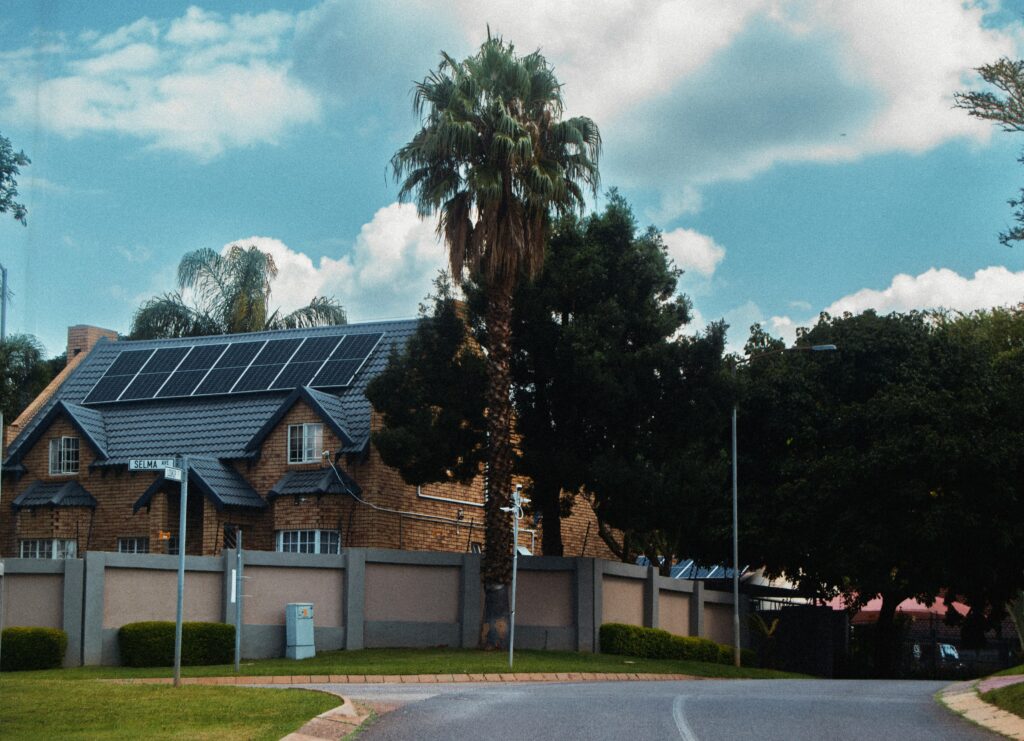
P2P trading seeks to create a more flexible framework in which participants can alternate between buying and selling electricity. By allowing direct exchange, it aims to improve price signals and generate more favourable outcomes for both sides compared to standard retail tariffs and feed-in compensation schemes.
Such arrangements can operate at different scales, from local community-based systems to wider interconnected networks. However, their viability depends on having a sufficient number of active participants and clear operational rules.
When trading occurs within the public distribution network, coordination with system operators remains necessary. Electricity flows must be managed to preserve grid stability, infrastructure costs must be covered, and any net imbalances must be settled with the broader market.
Energy sharing has big potential and can empower consumers and support local renewables. However, for it to work, national rules need to clearly define responsibilities, costs allocation, consumer protection, and grid stability.
Cillian O’Donoghue, Policy Director, Eurelectric
Energy sharing has big potential and can empower consumers and support local renewables,” Cillian O’Donoghue, Policy Director of Eurelectric, tells REVOLVE. “However, for it to work, national rules need to clearly define responsibilities, costs allocation, consumer protection, and grid stability. Without that we are just shifting risks onto suppliers or vulnerable customers and not capitalising on its major potential.
P2P energy sharing and conventional energy distribution
- In conventional energy distribution systems, electricity flows in a one-directional manner – from large, centralised power plants through transmission and distribution networks to end consumers. Generation and grid management are controlled by utilities and grid operators, who are responsible for balancing supply and demand. In this model, end users are passive consumers who purchase electricity at regulated tariffs determined by utilities or regulatory authorities. Consumers typically have limited ability to choose their energy source or negotiate prices.
- By contrast, P2P energy sharing operates on a decentralised structure. Individuals who both produce and consume electricity, commonly referred to as prosumers, can trade surplus energy directly with other participants through a shared digital platform. Energy flows can occur in multiple directions at the local level, for example from one household to another. These systems are often enabled by smart meters and digital platforms that facilitate measurement, verification, and settlement of transactions, reducing reliance on a central intermediary.
- Economically, traditional systems rely on fixed or regulated pricing structures. Customers pay standardised tariffs, and pricing is largely disconnected from real-time local supply and demand conditions. In contrast, P2P energy markets often use more dynamic pricing mechanisms. Prices can reflect local generation and consumption patterns, frequently allowing buyers to pay less than retail electricity rates while enabling sellers to earn more than standard feed-in tariffs. By reducing or redefining the role of traditional utilities, transaction structures and cost allocations may change.
- From a technical perspective, conventional energy systems involve long-distance transmission of electricity across extensive grid infrastructure. This can result in transmission and distribution losses, and centralised systems may be vulnerable to large-scale disruptions if major generation facilities fail. P2P energy sharing, on the other hand, promotes local energy trading, which can reduce transmission losses and alleviate grid congestion. By supporting distributed generation and localised balancing, P2P systems may enhance resilience and reduce dependence on single centralised sources.
- Traditional energy models have historically been slower to integrate and reward small-scale renewable generations. P2P energy sharing frameworks actively encourage distributed renewable energy sources, such as rooftop solar, by allowing prosumers to sell excess electricity within their community. These arrangements can also support the development of community microgrids capable of operating semi-independently while maximising the use of local renewable resources.
Positive vibes
The appeal of energy sharing lies in its multiple benefits – economic, environmental, and systemic. Financially, prosumers can earn more than they would through low feed-in tariffs, while consumers often pay less than retail electricity prices. For households facing high energy bills, this can make a tangible difference.
From a system perspective, consuming electricity locally reduces strain on the grid. When energy is generated and used close to where it is produced, transmission losses fall, congestion eases, and peak demand can be reduced. A study from 2023 on peer-to-peer energy sharing and trading of renewable energy in smart communities by Yuekuan Zhou and Peter D. Lund found that well-designed P2P trading can improve self-consumption rates, lower primary energy use, and reduce the need for expensive grid reinforcement.
When energy is generated and used close to where it is produced, transmission losses fall, congestion eases, and peak demand can be reduced.
Environmentally, energy sharing encourages greater uptake of renewables by making small-scale solar and storage more economically attractive. This matters in a system where wind and solar already account for nearly half of the EU’s electricity consumption – and are only expected to grow.
Compared with other energy management strategies, such as large-scale storage or power-to-X conversion, P2P energy sharing can avoid energy losses linked to battery charging and discharging. It also offers flexibility without relying solely on centralised infrastructure.
What’s the catch?
Despite its promise, energy sharing still sits uneasily within Europe’s existing Electricity Market Design. Today’s market largely fails to account for several real costs associated with decentralised energy systems including the degradation of solar panels and batteries, electricity losses across networks, and the expenses of maintaining grids, meters, and digital infrastructure. Many P2P pricing models implicitly treat electricity as if it can be generated and transported without cost.
This omission has significant implications. When prices fail to reflect underlying system costs, investment signals may become distorted, cross-subsidies can emerge, and non-participants may ultimately bear rising costs. Clear rules on pricing, grid cost allocation, and consumer protection are therefore essential to ensure that energy sharing complements rather than fragments the integrated EU energy market.
There is also a deeper issue of fairness. Most cost-benefit analyses of P2P trading focus on overall system efficiency while paying limited attention to how gains and risks are distributed. Some participants may consistently benefit more than others, and if the system is perceived as inequitable, engagement will decline. Academic research shows that while well-designed P2P systems can generate win-win outcomes for prosumers, consumers, retailers, and aggregators, models that explicitly address the fair distribution of costs and benefits remain rare.
Cooperation and governance add further complexity. Effective P2P markets require dynamic pricing that responds to supply, demand and weather conditions, as well as participants who understand how to organise and manage energy communities. Yet much of the literature still assumes self-interested individual behaviour, with limited exploration of collaborative decision-making or long-term cooperative arrangements. Questions therefore remain about how communities can reach stable and socially accepted pricing structures over time.
Regulation is a decisive factor in addressing these issues. The 2023 reform of the Electricity Market Design, in force since July 2024, together with revisions to the Renewable Energy Directive and related policy guidance, offers an opportunity to clarify how energy sharing operates within the internal market. The challenge now is to ensure that active customers and energy communities can engage in production, supply and sharing without facing legal uncertainty or disproportionate administrative burdens.
Ultimately, participation is the critical bottleneck. Energy sharing is as much a social innovation as a technical one: its success depends on trust, transparency, and perceived shared benefit.
Ultimately, participation is the critical bottleneck. Energy sharing is as much a social innovation as a technical one: its success depends on trust, transparency, and perceived shared benefit.
A shared future
Energy sharing is unlikely to replace large-scale renewables, cross-border interconnections, or other backbone elements of the European power system. But it could become a complementary layer within it – one that strengthens local participation, improves system efficiency, and supports renewable integration where it makes economic sense.
Energy sharing is expected to stimulate additional investment in renewable energy while broadening access to its benefits. By enabling electricity generated in one location to be shared among multiple users, it can open up participation to consumers who cannot install their own systems – for example, low-income households in social housing who could access more affordable renewable electricity produced on public or community buildings.
If designed carefully, energy sharing can reinforce – rather than undermine – the internal energy market. It can provide flexibility without distorting price signals, empower consumers without shifting hidden costs, and contribute to decarbonisation without fragmenting the grid.
Ultimately, the question is not whether energy sharing is technically feasible, but whether it can be integrated into Europe’s electricity system in a way that preserves stability, fairness, and trust. That will depend less on technology than on regulatory clarity and political choices made in the coming years.