Reviving Abandoned Forests Is Europe’s Best Defence Against Wildfires
Tom Lovett / REVOLVE
Tom Lovett / REVOLVE
“Every summer we fear it could happen again,” says Guillermo de Rueda Úbeda, gazing across the valley at a hillside scarred by a wildfire 25 years ago. That blaze consumed thousands of hectares, stopping just one kilometre from his farm, Eco Finca Cortijo Los Gorros.
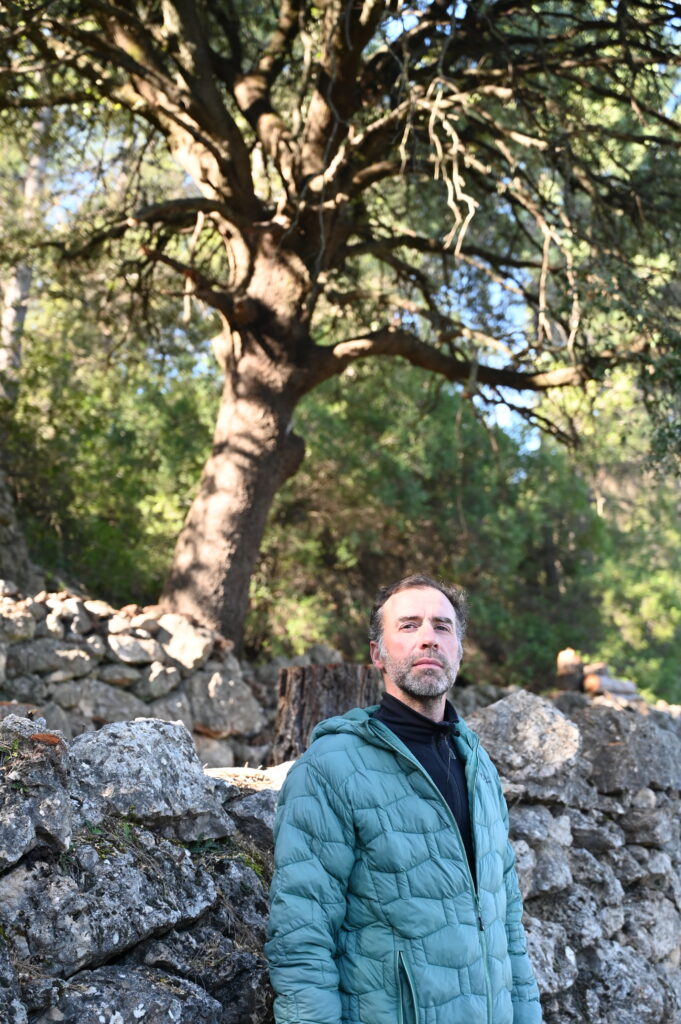
Since taking over the property permanently in 2018, de Rueda Úbeda has transformed the 100-hectare site – located within the Sierra de los Álamos, an hour inland from Murcia – into a hub of ecological plum production and rural tourism. The once burnt hillside is now a dense pine forest. But, de Rueda Úbeda explains, the expanding forest is the real threat.
Historically, the area thrived with families farming terraces, grazing livestock, and, when they needed extra cash, they’d sell timber in the nearby town of Moratalla. Today, those families have gone; remaining houses stand empty or serve as fleeting holiday homes, leaving the land abandoned. This demographic collapse has created a tinderbox. Without regular grazing or management, firebreaks vanish and pines grow unchecked. “Fire watchers are vital,” de Rueda Úbeda says, pointing to the closest lookout tower, “but we must stop the fire before it starts.”
Wildfires in Europe are spreading. They arrive earlier. Last longer. And burn with more intensity. It’s a perfect storm: rising temperatures and prolonged droughts driven by climate change, combined with a dangerous build-up of dried vegetation – the direct result of land abandonment and inadequate forest management.
Stopping wildfires requires more than reactive firefighting; it demands clear, coherent, and decisive action to transform abandoned landscapes. The true solution lies in revitalising rural economies to transform neglected forests from high-risk zones into actively managed, productive, and biodiverse havens.
The 2026 fire season arrived early in Murcia. A prolonged drought combined with strong winds created the conditions for a blaze to sweep across 400 hectares of the Sierra Espuña Natural Park in March – months before the traditional peak.
This premature start mirrors trends identified by the European Commission’s Joint Research Centre (JRC) for the 2025 season: a record for fires in Europe impacting 1,079,538 hectares. While fires also scorched parts of France, Germany, and the Netherlands, the fury was concentrated in Southern Europe, particularly on the Iberian Peninsula. A three-week heatwave in early August 2025 sparked 22 large-scale fires across Portugal and Spain, burning 460,585 hectares. This single event accounted for 43% of all land impact by wildfires in the EU during that period.
Just 80 kilometres northeast of the Sierra Espuña at Los Gorros, de Rueda Úbeda illustrates the physical reality behind much of these statistics. Access to the forest has become increasingly difficult as pines have choked the landscape. In some areas, four or five trees compete for a single square metre of land.
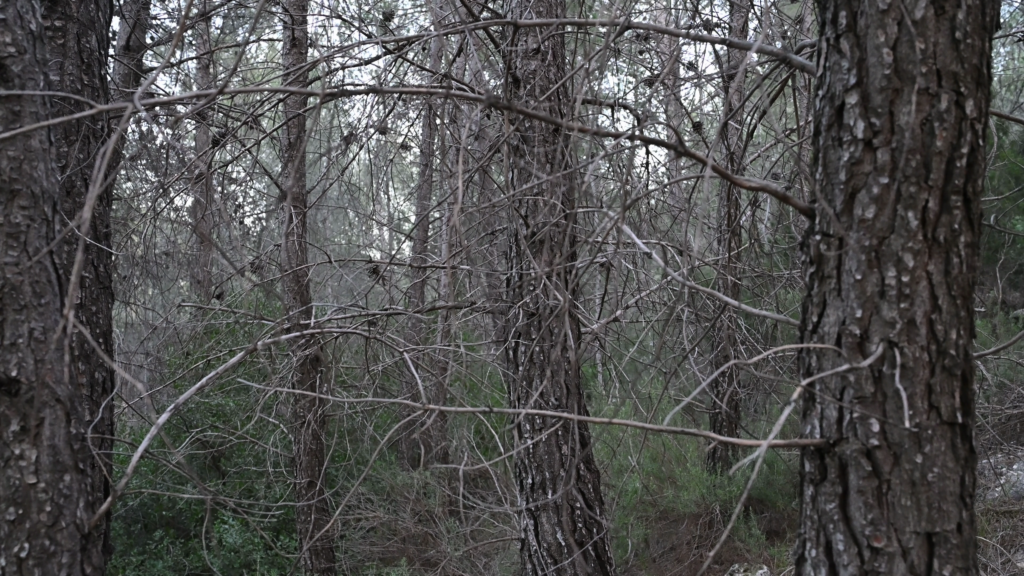
These are not tall healthy pines but scraggly trees with dried branches. “This is what I collect to start my fireplace at home” de Rueda says, snapping a nearby branch. “Imagine what can happen with thousands of hectares of this stuff,” he adds.
Wildfires are a cross-cutting crisis that threaten the core of the European Green Deal, the EU Mission on Adaptation to Climate Change, the Biodiversity Strategy, and Rural Development policies. And yet, according to Fernando Pulido, Professor of Biology and Forest Conservation and Improvement at the University of Extremadura, existing EU policies only focus on suppression, not land management. They are therefore ineffective strategies for wildfires.
“There are wildfires because there is no local economy and there is land abandonment,” Pulido, tells REVOLVE. “There is a change in social dynamics as people leave here for the cities. This leaves us with a forest that is unmanaged, leading to overly large forest fires.” In Spain, forest cover has surged from just 13% in the 1950s to 56% today. Similarly, forest ecosystems now cover 46% of Portugal.
In an age of biodiversity loss – where the WWF reports a 73% decline in global wildlife populations over the last 50 years – criticising the “greening” of landscapes through forest expansion may seem counterintuitive.
From a satellite view, Los Gorros sits within a lush forest that is part of the Natura 2000 network and a Special Protection Area for birds. But in reality, these are not thriving, biodiverse ecosystems; they are frequently monocultures. When land is abandoned, pioneering species like conifers swamp the potential for diverse flora and fauna. The result is a uniform powder keg primed to ignite.
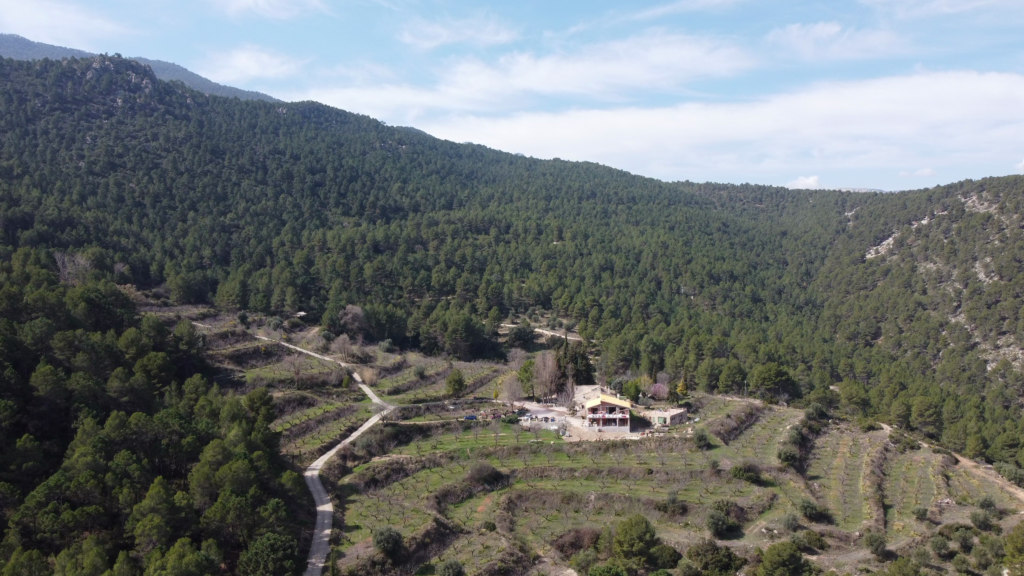
When land is abandoned, pioneering species like conifers swamp the potential for diverse flora and fauna. The result is a uniform powder keg primed to ignite.
The scale of neglect is staggering. The 2023 data shows that only 23.6% of the Spain’s 28 million hectares of forest are covered by a formal management plan. This leaves roughly 21 million hectares without any strategy for thinning, harvesting, or fire prevention. Portugal faces a similar crisis, compounded by the fact that over 90% of its forest land is privately owned, with records missing for half the territory.
This is not limited to the Iberian Peninsula. Forests are an extensive ecosystem in Europe covering 35% of the continent. And yet, research by the JRC published in 2023 found that one third of Europe’s forests are in decline.
“It’s a structural problem,” says de Rueda Úbeda, who has witnessed the forest expansion in his area over recent years. “The omission of management is a genuine danger. We see the evidence through thousands of hectares lost every summer to fires that spread in hours, days, or weeks.”
Against this backdrop of abandonment, entrepreneurs like de Rueda Úbeda are proving that active management is the only viable defence. At Los Gorros, his work is not merely about stopping fires but rebuilding a rural economy. “We are trying to make this a holistic project,” de Rueda notes, describing a space where visitors can learn about water management, renewable activities, and ecological infrastructure. “And we want to show that others can come here, take over abandoned farms and regenerate the forest.”
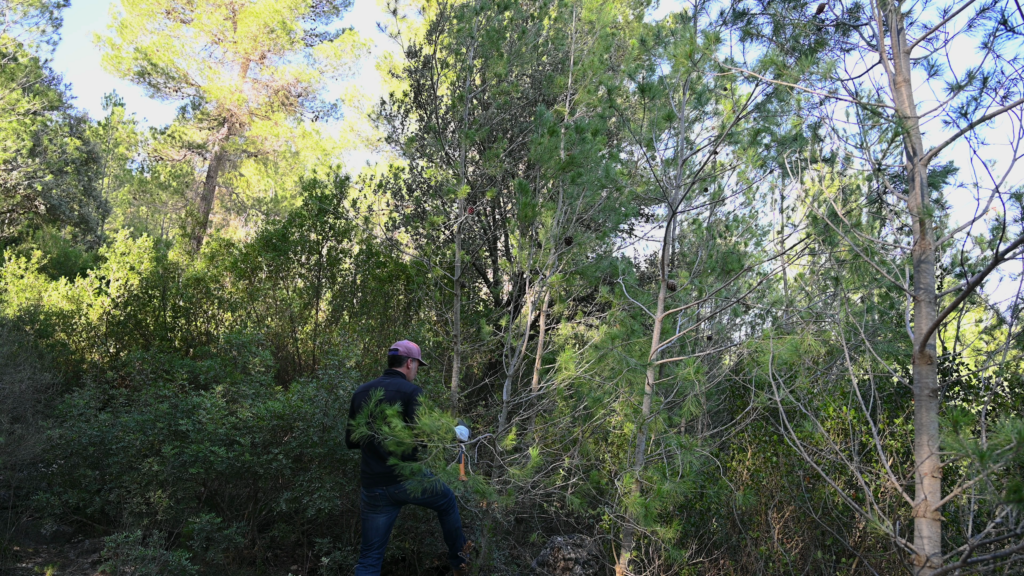
Practically, this means de Rueda Úbeda selectively extracts pine trees and clears dried vegetation to foster a more resilient, biodiverse forest. Hidden among the pines are century-old holm oaks and gall oaks, as well as their offspring. He gives such trees room to breathe by removing encroaching pines and clearing the undergrowth.
The long-term vision is a rich mosaic: holm oaks with their waxy, fire-resistant leaves; gall oaks with broad, sturdy canopies; aromatic rosemary growing on the forest floor; and ancient, long-living yew trees. Research confirms that diverse forests significantly slow the progression of wildfires, acting as natural firebreaks.
“We went from managing the forest to abandoning it. The only way forward is to regenerate it,” de Rueda explains. “We cannot afford to walk away again.”
To aid his work, de Rueda hopes to reintroduce a small herd of cows to graze the undergrowth naturally. However, this practical solution remains mired in complex bureaucracy and regulatory hurdles. Even clearing some of the larger pine trees requires a special permit, that takes months of administrative work to receive.
“We went from managing the forest to abandoning it. The only way forward is to regenerate it.”
Guillermo de Rueda Úbeda
“This is a challenge seen across Spain,” says Fernando Pulido, “legislation is designed to respond to problems from more than 40 years ago.” The foundational Ley del Monte was enacted in 1957 to protect forests at a time when they were shrinking due to over-exploitation.
While there have been adjustments since the 1950s, Pulido argues they are ill-suited to today’s evolving reality: not a lack of trees, but an excess of unmanaged biomass due to rural abandonment.
Pulido and his team work to develop forest legislation in Spain. Championed by the RESIST project – a five-year EU-funded programme that was launched to make regions more resilient to climate change – is the concept of a “productive firebreak” (PFB).
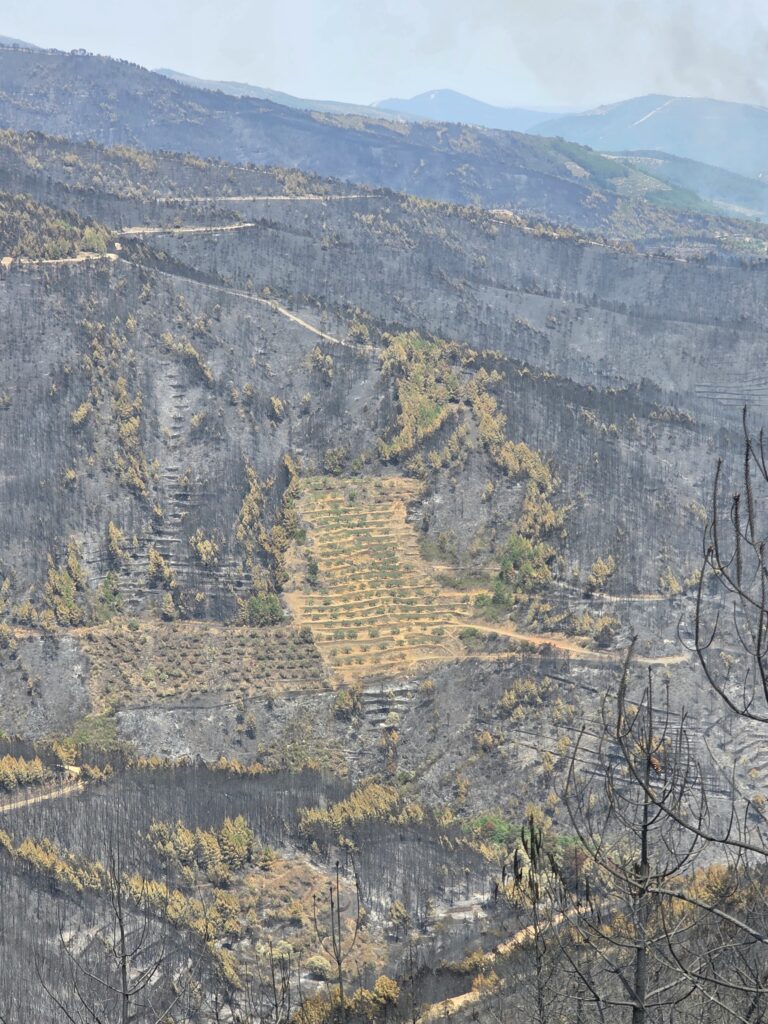
Unlike conventional firebreaks, which are simply cleared strips of land where activity is prohibited, a PFB is an area where vegetation is actively managed through economic activity. This includes livestock grazing, agroforestry, or biomass harvesting. The goal is to create a landscape that is both economically viable and naturally resistant to fire. “Traditional firebreaks carry high maintenance costs charged to the public budget,” explains Pulido, “whereas PFBs cost nothing and they prevent fires while generating economic activity.”
Pulido and his colleagues at the university have used fire simulation models to test the effectiveness of PFBs. In simulations of high-risk areas in Extremadura, strategically placed PFBs reduced fire size by 15%. However, their simulations reveal a crucial detail: when administrative and bureaucratic limitations are lifted to allow for more flexible management, that reduction jumps to 25%.
“In all major fires we observe that zones that are productive, meaning they have permanent livestock or crops, normally do not burn, or burn with much lower probability,” Pulido notes.
Empirical evidence supports the models. During the July 2025 Caminomorisco fire in Cáceres, which consumed 2,660 hectares, a viral photo taken by environmental officer José Nuñez shows an olive grove standing untouched in a scorched landscape.
“In all major fires we observe that zones that are productive, meaning they have permanent livestock or crops, normally do not burn, or burn with much lower probability.”
Fernando Pulido
Recognising this potential, Extremadura became the first region in Spain to legally define PFBs, paving the way for their integration into regional prevention strategies. While administrative hurdles remain, Pulido views this legal recognition as a critical shift from mere suppression to proactive, economy-based prevention.
This adaption is urgent. Rising temperatures and prolonged droughts are fuelling a new type of mega-fire, often termed “sixth-generation” wildfires. These blazes are so massive they generate their own weather systems, creating pyrocumulus clouds that can evolve into firestorms. Such fires are nearly impossible to control, capable of consuming thousands of hectares in a matter of hours.
Europe’s closest encounter with this phenomenon occurred in 2017 in Pedrógao Grande, central Portugal. Five separate wildfires merged into a single catastrophe that devastated 53,000 hectares – an area four times the size of Lisbon – killing 66 people and injuring 253. The triggers were lightning strikes and contact between an electrical line and dried vegetation.
It is in this same area of central Portugal that the RESIST project is developing participatory models together with communities to create fire-resilient landscapes while supporting the local economy.
In the Coimbra region, through Integrated Areas of Landscape Management (AIGP) they identify areas of risk and increase the scale of managed forests. A key tool in this effort is the “Village Condominium” model, which establishes 100-metre protective buffer zones around rural settlements by pooling land management efforts.
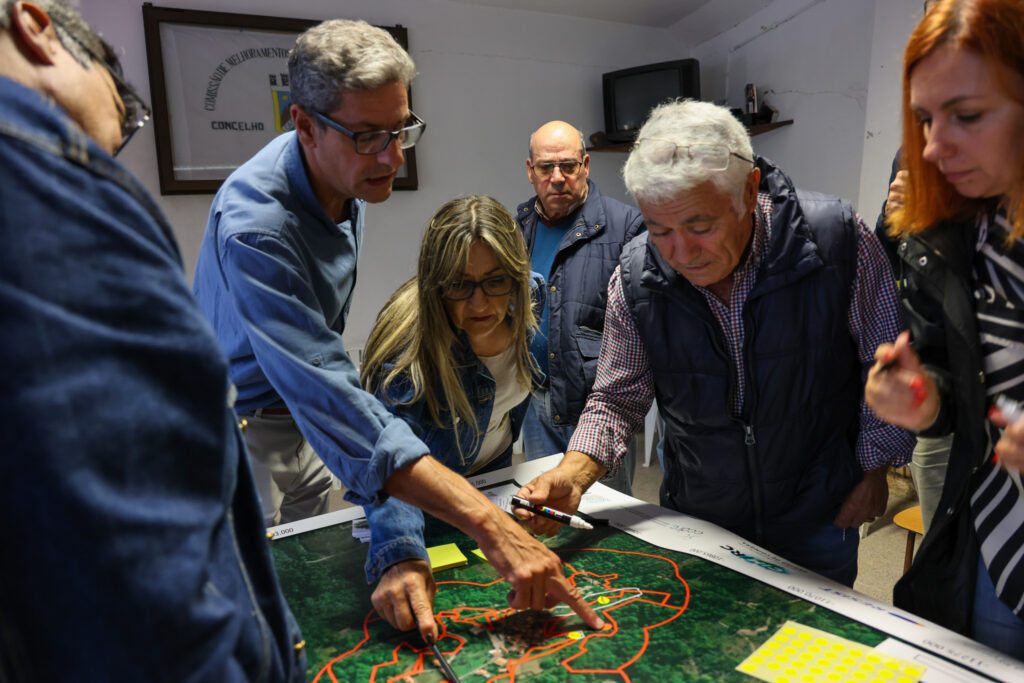
“Our primary goal is to create managed buffer zones at the village-forest interface to shield communities from external fires,” says Jorge Cunha, Project Manager for Circular Economy and Value Chains at Colab Forest Wise, a private organisation bridging the gap between science and industry. “Whether by reducing fuel loads or planting resilient species, our methodology starts by engaging local authorities and landowners to tailor solutions to each village’s specific reality.”
Cunha explains that the core challenge is economic disconnection. “Landowners are not economically dependent on these forests. In most cases, they inherited the land from their parents and view the abandoned forests as a liability rather than an asset.” The project addresses this by extracting value from abandoned forests through collecting the very fuel that creates wildfire risk and by establishing more resilient productive areas using native species.
This extracted material, which can also be used in natural-based solutions to prevent soil erosion or as shelter for animals, is already powering a diverse range of facilities, from industrial plants to public infrastructure. In one collaborating municipality, a woodchip-fuelled boiler heats the local swimming pool and sports complex. Looking ahead, the RESIST project is exploring advanced biorefinery applications, such as converting biomass into synthetic gas.
For Cunha, the immediate key to scalability remains keeping the logistics chain short, ensuring that the cost of collection and transport does not outweigh the energy value produced.
What these pioneers demonstrate is that the only cure for Europe’s worsening wildfire seasons is prevention. We can no longer afford to wait for the flames before acting; we must plan ahead. This means empowering rural entrepreneurs and communities to actively manage their landscapes – tending forests to reduce fire risks, creating buffer zones to shield villages and collaborating with experts like Pulido to use simulations for strategic planning. The goal should be to prevent catastrophe while stimulating the rural economy.
As wildfires become an enduring reality of the European summer, forest management requires a fundamental shift in perspective. Forests should not be viewed as untouched wilderness to be left alone, but as living systems requiring a relationship of management, care, and interaction. “This is never going to be an original forest,” says de Rueda, underneath the shade of a holm oak. “It has been managed by people for centuries. We’ve made terraces, we’ve cultivated, we’ve changed the ecosystem.”
The stark reality is clear: abandonment inevitably results in fire, whereas active forest management cultivates both economic vitality and resilience. “We cannot abandon the forest,” de Rueda warns. “To abandon the forest now is to ultimately abandon it to fire.”