Journey of Water: Remembering to Value Rivers, One Jog at a Time
One of the most extraordinary things about rivers is how little people value them, despite the fact that healthy rivers underpin our societies and economies – and were the very foundation of our earliest civilizations.
Today, rivers still flow through our cities and our cultures. They still provide drinking water for billions, irrigate a quarter of our crops, sustain freshwater fisheries that feed hundreds of millions, supply sediment that keeps deltas above the rising seas, and support astonishing biodiversity.
But they are still overlooked and under-valued – with decision-makers failing to factor in all the diverse benefits healthy rivers provide to people and nature…until they are lost. And we are losing them because our rivers are dying – choked by dams, pumped dry for agriculture, poisoned by pollution.
River lovers and freshwater conservationists have pondered this predicament for years, wondering how to wake people up to the value of rivers (and indeed the value of water). The conclusion: we need to try new approaches to reach mass audiences, come up with innovative ideas to inspire enough people to tip the balance. Courtesy of Thirst, Mina Guli and WWF – that’s where #Run4Rivers comes in.
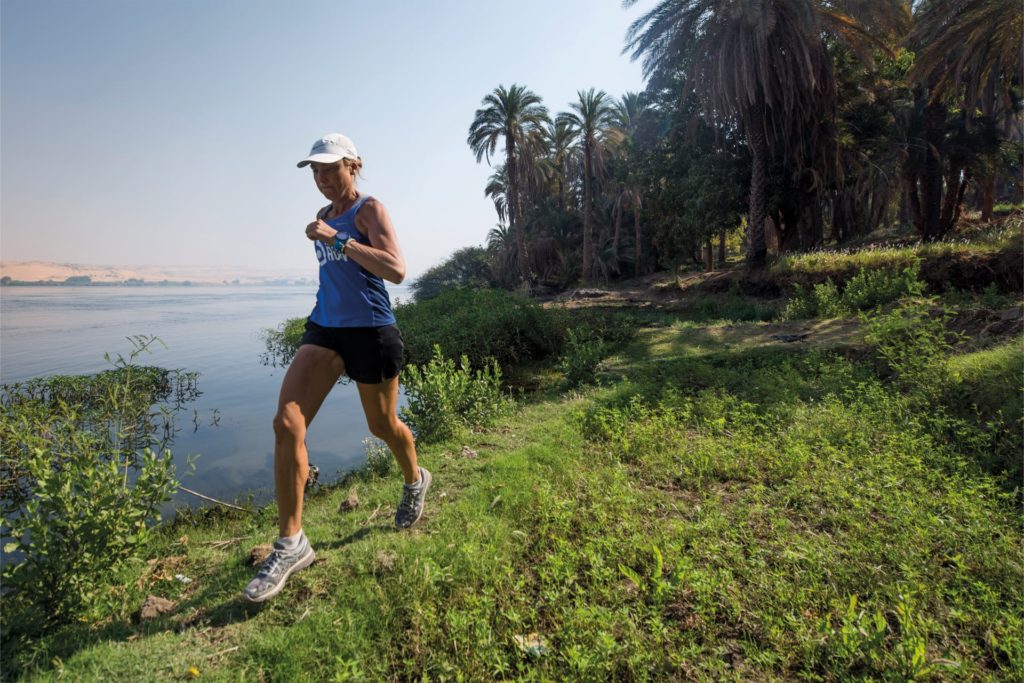
Piloted on World Running Day in 2020, the first #Run4Rivers was never likely to see millions jog for their favorite rivers considering all the COVID-19 restrictions across the world. But the enthusiastic reception showed three things:
It could do more than just remind people to value rivers. It could also help to bridge the gap between the world of freshwater conservation and water and sanitation (as the Journey of Water also seeks to do). Following the success of #Sweat4Soap, discussions are now underway to make every kilometer really count in the next #Run4Rivers, with participants potentially donating a tap for every kilometer – maybe even a toilet for every 10 kilometers.
So, keep your jogging shoes at the ready. The next #Run4Rivers is coming in 2021. It is going to be bigger and better and play a part in mobilizing people to change the path of river conservation.