Electric Vehicles Are Superstars for Decarbonizing Europe
Podcast with Diego Garcia Carvajal and Marie Kress. Source: Smart mobility podcast
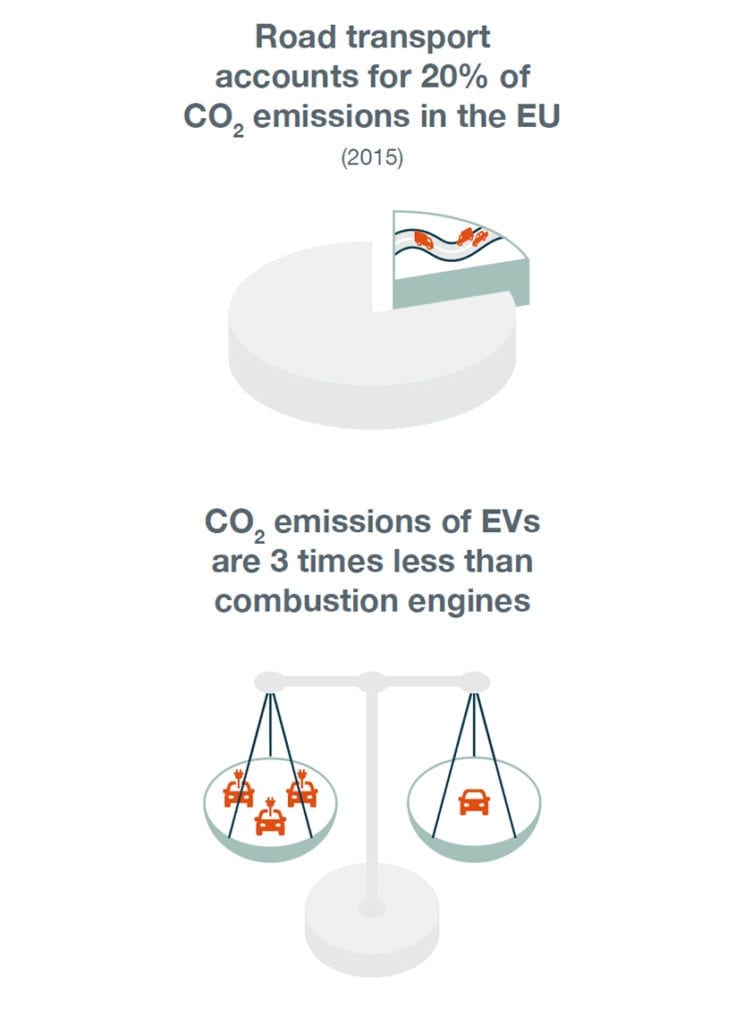
Road transport, which accounted for 20% of CO2 emissions in 2015, is ready to make a significant contribution to the effort through increased use of electric vehicles (EVs) that emit three times less CO2 than a combustion engine vehicle, when measured from ‘well-to-wheel’. The replacement of fossil fuel vehicles by EVs can also occur quite rapidly, considering the relatively short lifetime of cars.
In addition to generating much lower CO2 emissions and improving urban air quality through zero particles emissions, EVs are currently the best available road mobility technology because:
The European Copper Institute proposes to have 150kW chargers installed every 60 km along the Core European Road Network
However, the shift to electric vehicles can only occur if consumers are aware of their benefits, offered a wide range of models, and provided with the right charging infrastructure.
The “right infrastructure” includes:
The most recent intermediate car models have an autonomy of about 400 km, more than enough for everyday use. Most early adopters already have an off-street parking space to install a charger, either at home or at their workplace. An increase in the density of EV charging infrastructure is required to remove concerns about longer journeys. Therefore, the European Copper Institute proposes to have 150kW chargers installed every 60 km along the Core European Road Network. This will ensure all European countries provide enough infrastructure for EVs.
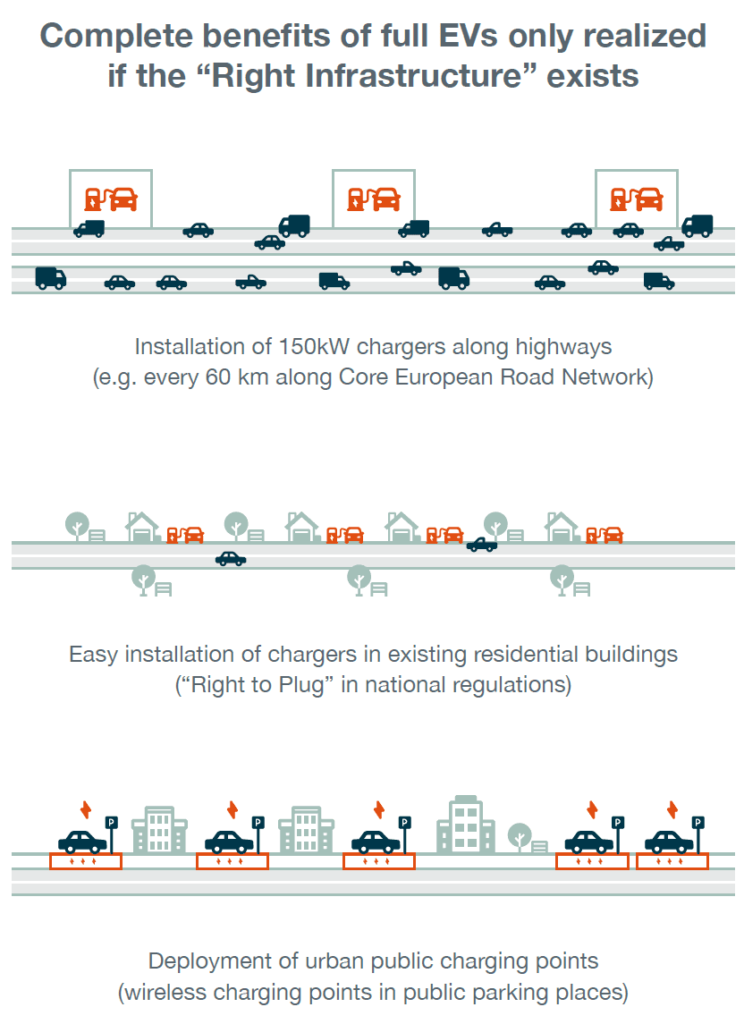
For EV users living in residential buildings with off-street parking, including the “Right-to-Plug” in national regulation will be a positive move. By so doing, a resident who wishes to install a charging point in the parking area of his building will only need to provide prior notification to the building community as a prerequisite for such an installation.
Since two thirds of cars in Europe are parked overnight in public areas (on street and car parks), the deployment of public charging infrastructure is crucial to encourage the shift to electric vehicles. For this purpose, it will be useful to have public tenders awarded before 2025 to install wireless charging points in at least 20% of public parking spaces. Cities will greet wireless charging with enthusiasm since it will avoid the proliferation of charging poles. Consumers also support wireless: no need to worry about cables or apps, the vehicle will manage the charging process by itself – in other words: “Park & Forget”.
A swift implementation of these proposals for electrification of road transport will definitely ease the path to decarbonization for the European economy.