
8 April 2026
Coimbra, Portugal
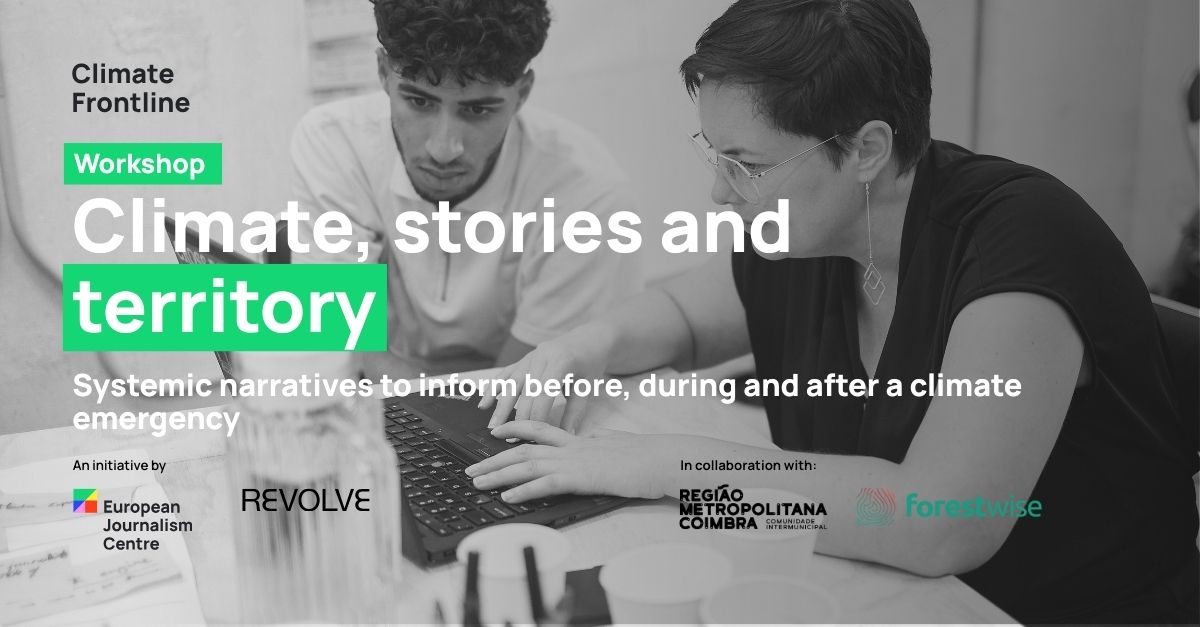
Systemic narratives to inform before, during and after a climate emergency
Climate emergencies are increasingly shaping everyday life across Europe. Wildfires, floods and extreme weather events are no longer exceptional episodes, but recurring phenomena linked to a changing climate. Beyond their immediate impacts, these emergencies raise critical questions about how information is produced, shared and understood, before, during and after they unfold.
This February, the Climate Frontline Project, co-created by the European Journalism Centre and REVOLVE, convenes journalists, communicators, civil society actors, experts and affected communities in Coimbra, Portugal for a workshop focused on rethinking how climate emergencies are reported. The meetings will explore how climate communication can move beyond isolated events to address underlying systems: risks, vulnerabilities, responsibilities and solutions.
The session will combine journalistic perspectives, expert knowledge and lived experience from the territories most affected by climate emergencies. Through roundtable discussions and participatory workshops, participants will examine how information can better support anticipation, protection, recovery and long-term understanding of climate impacts.
By bringing together diverse voices, from media, science, civil protection, public institutions and local communities, Climate Frontlines aims to strengthen collaboration and develop more useful, rigorous and context-aware narratives on climate emergencies.
Date: 8 April 2026 | 10h00 – 16h45
Location: Coimbra, Portugal
Please note that this event will be held in Portuguese
Key themes
- How to inform before and during a climate emergency to support anticipation and protection
- Explaining risk, uncertainty and vulnerability without alarmism
- Coordinating information flows between media, institutions and communities
- Reporting on recovery, accountability and inequality after emergencies fade from the news
- Connecting individual events to broader climate systems and future risks
If you are interested in participating, register now by clicking the button on the right.