What is Agroecology?
Illustration: Dariana Guevara / REVOLVE
Illustration: Dariana Guevara / REVOLVE
Agroecology is an interdisciplinary approach to agriculture that aims to integrate ecological principles into farming practices to create more sustainable and resilient food systems able to tackle climate change derived problems. These derived problems can be different depending on the region of the world but often can derive in alteration of the precipitation regime leading often to an increase in drought periods, raising temperatures extremes, soil desertification problems and wildfires appearance. Unlike conventional agriculture (which often relies heavily on synthetic inputs like pesticides and fertilizers) agroecology seeks to work with nature rather than against it, harnessing ecological processes to support agricultural production.
At the origin of agroecology is the recognition that agriculture is deeply interconnected with the environment. By understanding and considering agriculture as a natural ecosystem, agroecologists aim to maximize the benefits of ecological processes while minimizing negative impacts on the environment. This involves 3 main points focusing in: promoting biodiversity, enhancing soil health and conserving water resources.
One of the key principles of agroecology is biodiversity. In natural ecosystems, diversity is essential for resilience and stability, and the same happens in agroecological systems. Agroecologists defend diversified farming practices such as mixed farming, crop rotation, polyculture (growing multiple crops together), and agroforestry (integrating trees with crops and/or animals into the same agricultural systems). These practices not only help to reduce the spread of pests and diseases but also improve pollination, and soil fertility, enhance water retention, and provide habitat for beneficial insects and wildlife.
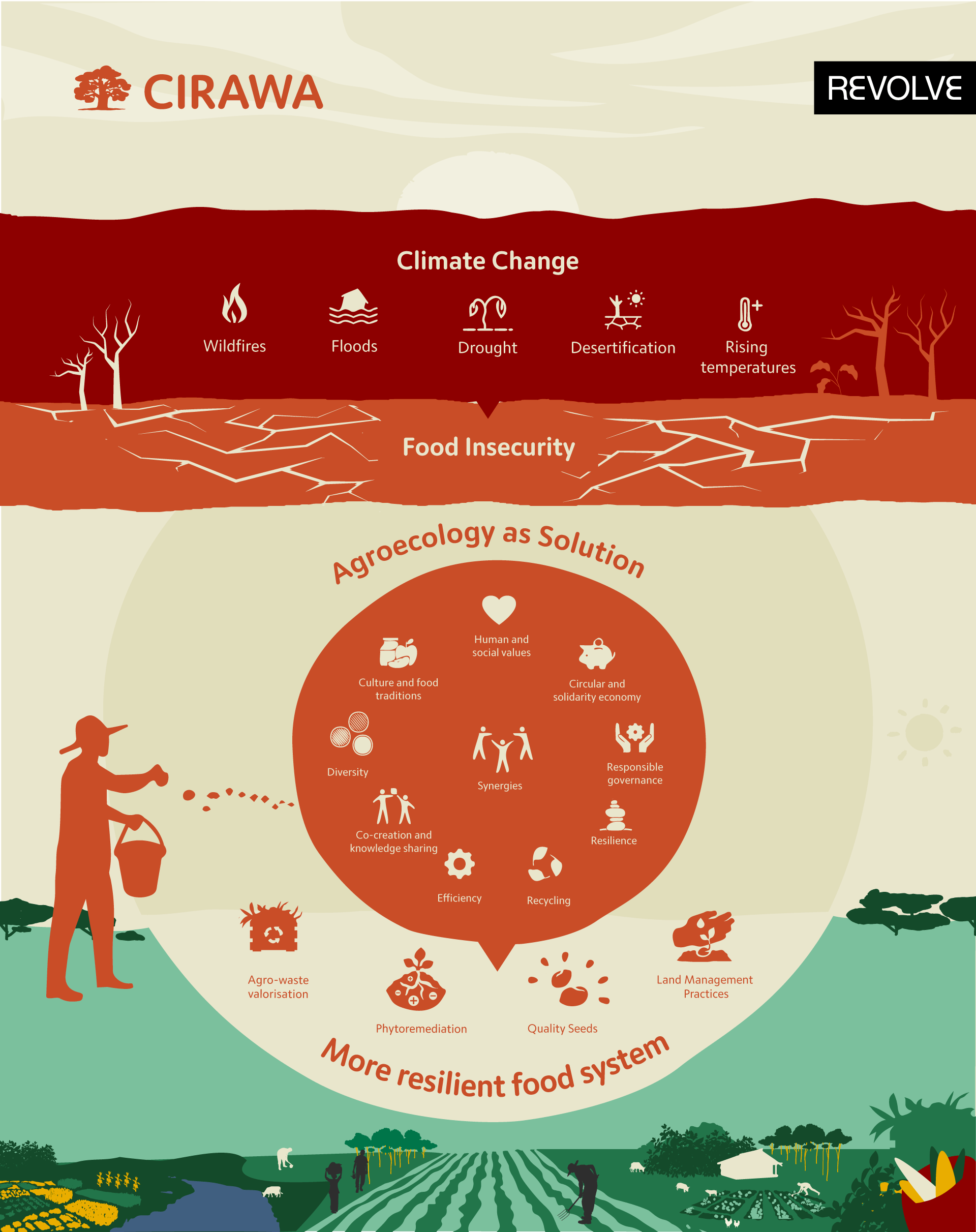
Another important aspect of agroecology is ensuring soil health. Healthy soils are the foundation of sustainable agriculture, providing essential nutrients to crops and supporting diverse soil life. Agroecological practices such as cover cropping, composting, and minimal tillage help to build soil organic matter, improve soil structure, and increase nutrient cycling. Healthy soils are more resilient to extreme weather events and more resistant to survive in droughts and floods therefore making them more resilient in front a climate change.
Water management is also a key consideration in agroecology. By capturing and conserving water on the land through practices such as rainwater harvesting, mulching (soil covering with bark, leaves, straw or any other organic material), and agroforestry (with trees helping create better microclimatic conditions), land managers can reduce the risk of soil erosion, improve water quality, and enhance water availability for crops and livestock. Efficient water management is particularly important in regions with tendencies to droughts or water scarcity periods, and where these agroecological practices can help to increase agricultural resilience and reduce reliance on irrigation.
Not only the natural aspect is considered and in addition to environmental benefits, but agroecology also prioritizes social and economic equity. By promoting localized food systems, supporting small-scale farmers, and fostering community-based decision-making, agroecology seeks to create fairer and more equitable food systems. This includes initiatives such as community-supported agriculture (CSA), farmers’ markets, and participatory research and extension programs that empower farmers to share knowledge and expertise.
In this sense, agroecology offers a more holistic and sustainable approach to agriculture that addresses the complex challenges facing food production today. By harnessing the power of ecological principles, agroecology holds the promise of feeding a world’s growing population while creating a more resilient food production system and protecting the planet for future generations.