
What Are GLOFs?
Photo: Ruben M Ramos / Shutterstock
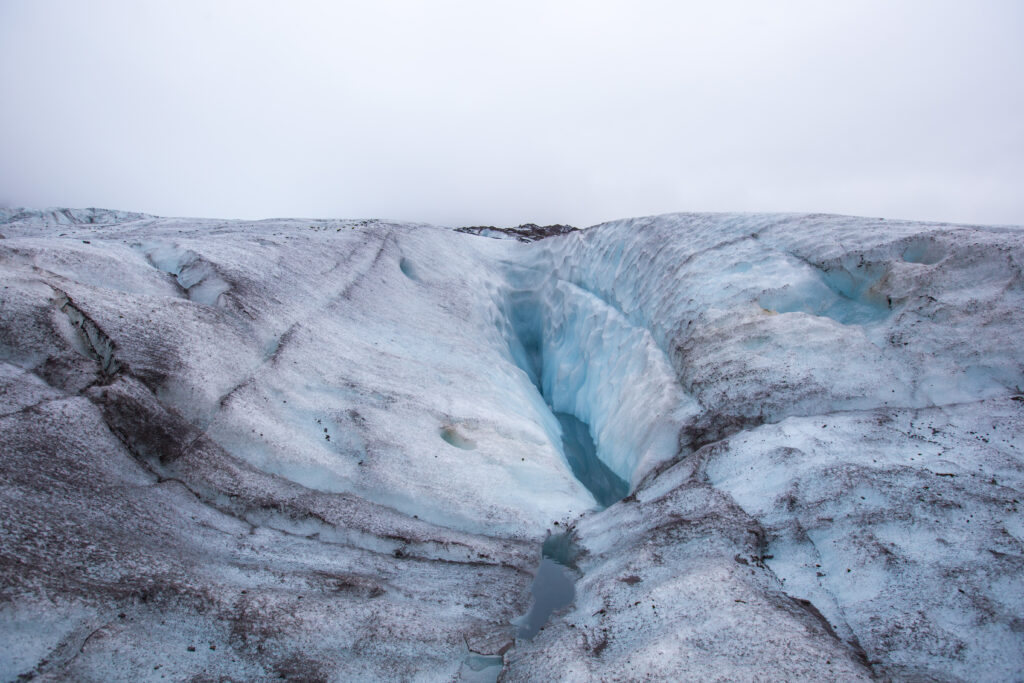
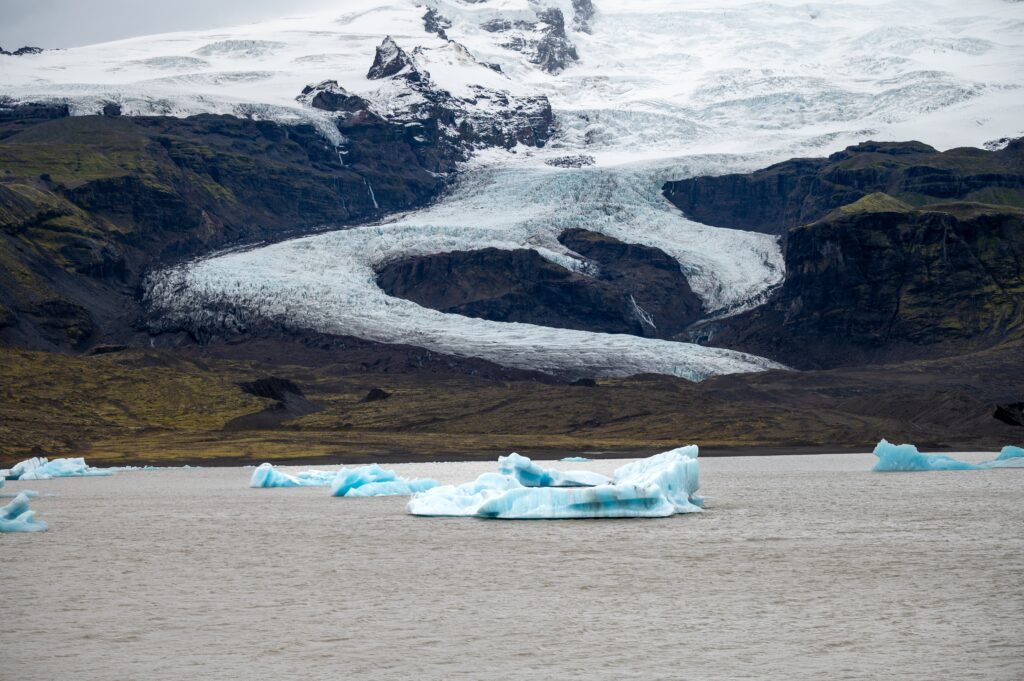
Glacial lake outburst floods, commonly known as GLOFs, are among the most dangerous and least understood climate-related hazards emerging from a rapidly warming world. They occur when lakes formed by melting glaciers suddenly release vast amounts of water after natural dams made of ice, rock, or debris collapse. These floods can travel at extreme speeds, carrying ice blocks, sediment, and boulders downstream, often leaving little or no time for communities to react.
While GLOFs have occurred for centuries, climate change is transforming their scale, frequency, and impact. Rising global temperatures are accelerating glacier retreat, leading to the rapid formation and expansion of glacial lakes in high-altitude and polar regions. At the same time, population growth, infrastructure development, hydropower projects, and tourism are pushing further into mountain valleys. The result is a growing overlap between hazard and exposure, turning what was once a remote geophysical process into a major social and political risk.
A global hazard with uneven impacts
GLOFs are not confined to one region. They have been recorded in the Himalayas, the Andes, the European Alps, Iceland, and the Arctic, among others. However, their impacts are highly uneven. In regions with strong institutions, dense monitoring networks, and emergency preparedness, GLOFs may cause disruption but limited loss of life. In contrast, in areas with weaker governance and fewer resources, the same type of event can become catastrophic.
Why prediction is so difficult
One of the defining challenges of GLOFs is their unpredictability. Unlike river floods driven by rainfall patterns, GLOFs can be triggered by a range of sudden events: ice avalanches, rockfalls, earthquakes, intense rainfall, or internal ice melting. This makes it extremely difficult to forecast the exact timing of an outburst.
Scientific models can identify which lakes are potentially dangerous, but predicting precisely when a dam will fail remains beyond current capabilities. This uncertainty complicates adaptation planning and often leads to reactive, rather than preventive, responses, such as building protective walls only after disasters occur.
From single hazards to compound risks
GLOFs rarely occur in isolation. They are often part of compound hazard chains, where one event triggers another. A glacial lake outburst can destabilise slopes, destroy bridges, block rivers, or trigger secondary floods further downstream. Climate change amplifies these interactions by altering snow cover, permafrost stability, and rainfall intensity.
Addressing GLOF risk therefore requires moving beyond single-hazard thinking. Instead, it calls for integrated approaches that consider cryosphere–atmosphere–hydrosphere systems, how ice, snow, air, and water interact across landscapes. This systems perspective is increasingly recognised as essential for effective climate adaptation in cold and mountainous regions.
The role of data and integrated modelling
One of the main barriers to reducing GLOF risk is the lack of high-quality, integrated data. Many mountain regions lack continuous monitoring, long-term observations, or reliable hazard maps, and existing data is often fragmented across institutions.
Initiatives like CryoSCOPE aim to address these gaps by studying how ice, atmosphere, and water systems interact in cold regions. Using satellite data, ground observations, and advanced modelling, the project supports better understanding of GLOF-prone areas in regions such as the European Alps, Iceland, Svalbard, and the Indian Himalayas.
Rather than predicting individual disasters, CryoSCOPE focuses on reducing uncertainty and translating scientific knowledge into usable information, helping improve hazard mapping, early warning, and long-term planning in glacier-dependent regions.
Early warning systems: necessary but not sufficient
Early warning systems are widely regarded as one of the most effective tools for reducing loss of life from GLOFs. By monitoring lake levels, dam stability, or upstream movement using sensors and cameras, these systems can provide communities with precious minutes to evacuate.
However, in extremely fast-onset events, even the best systems may offer only limited protection.
This is why experts increasingly argue that early warning must be embedded within broader governance frameworks, including land-use planning, relocation strategies, and social protection mechanisms.
Beyond emergency response
Ultimately, managing GLOF risk is about moving from emergency response to anticipatory governance. This means investing in data, strengthening institutions, supporting local knowledge, and integrating cryosphere science into long-term development planning.
As glaciers continue to shrink and glacial lakes expand, GLOFs are likely to become more common features of a warming world. Whether they remain deadly disasters or become manageable risks will depend on how well societies act on the science, and whether adaptation is treated not only as a technical challenge, but as a social and political one.