
Love and Snails in Times of War
Photo: Kylbabka / shutterstock
Endling is a smart, darkly comic tale of snails, love, and wartime guilt set against Russia’s 2022 invasion of Ukraine.
Endling
Maria Reva. Penguin Random House USA, 2025, 338 pages, 20,95€
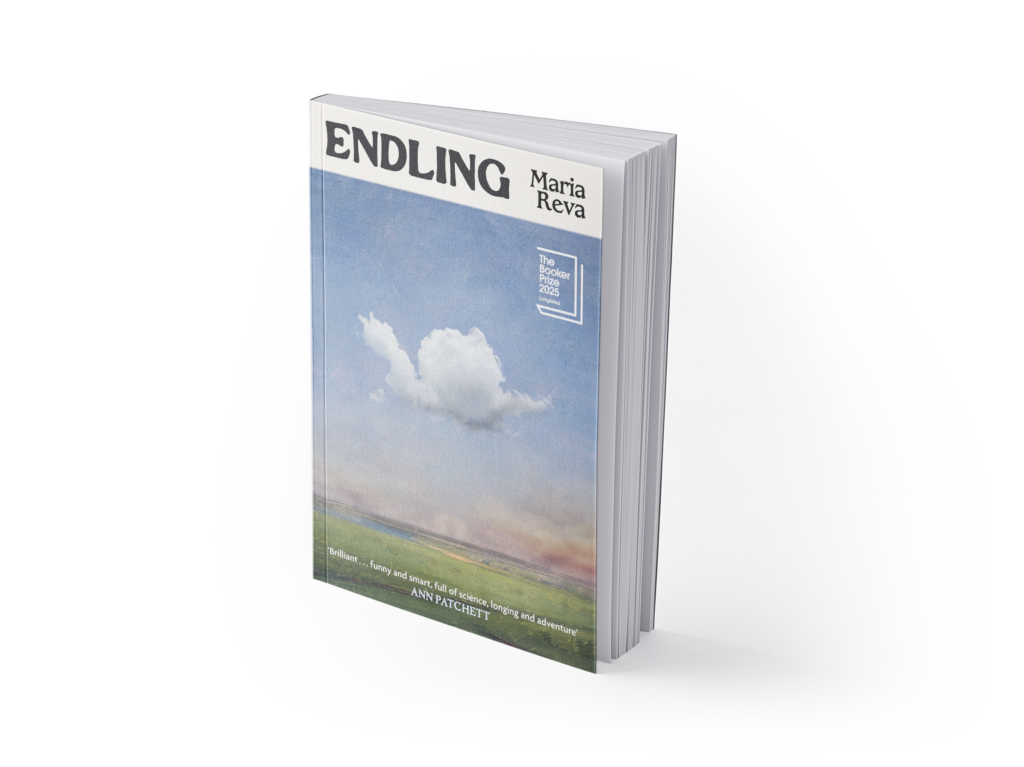
In her debut novel, Maria Reva uses the humble snail to tell a timely story of ecological fragility and human vulnerability. The term “endling” refers to the last surviving member of a species, a concept central to this 2025 Booker Prize-longlisted work.
The characters of Endling include Lefty, a snail who may be the last of his kind; Yeva, an asexual conservationist struggling with despair as war threatens snail extinction; two abandoned sisters longing for their activist mother; and the author herself, grappling with the guilt of watching a war from afar.
Endling initially appears to be a darkly comic novel. Yeva, the self-made conservationist committed to conserving rare snails, travels across Ukraine in her converted RV-lab, collecting specimens she hopes to breed. When most turn out to be endlings, her role becomes one of witnessing extinction and trying to bear the loss. These first pages with Yeva and her beloved snails are quite charming and, at moments, riotously funny. Yeva loves snails, and in the first few pages she describes their marvels.
“How the many gastropod species have evolved to live anywhere on the planet, from deserts to deep ocean trenches. How they have gills to live in water, or have lungs to live on land – some, like the apple snail, possess one of each, to withstand both monsoons and droughts. How some species can survive extreme temperatures, unsuitable for human life, with their highly reflective shells and the insulating properties of their spirals…” p.8
But these marvels are quickly juxtaposed with the current reality of climate change/war and challenges of conservationism.
“And yet what did it matter now? (…) Snails weren’t furry or cute. They weren’t interactive with humans. Snails weren’t pandas – those oversize bumbling toddlers that sucked up national conservation budgets – or any of the other charismatic megafauna, like orcas or gorillas….” p.9
To earn extra income, Yeva, who has no desire to find a mate, joins the bride industry in Ukraine. Every minute she is not on a date is spent finding endangered snails across Ukraine and providing them with a sanctuary where they can reproduce.
Her isolation mirrors that of Lefty, her favourite and now only remaining snail. Lefty’s shell spirals in the opposite direction from others in his species, making him extremely rare and at high risk of extinction. He can only reproduce with another snail sharing this left-bearing trait, so unless another “lefty” is found, he will become an endling, the last of his kind.
The plot develops when Yeva meets two sisters, Sol and Nastia, who work in the bride industry but are secretly daughters of an activist. They persuade Yeva to help them kidnap a group of visiting “bachelors” using her RV-lab. Their motivation is rooted in a deep longing for their missing mother; they want to create a scene of resistance against the bride industry so wild it garners their mother’s attention and convinces her to come out of hiding. Yeva’s passive agreement to go along with this plan stems from her depression as she watches the decline of her snails, her life’s work and only true love. In Yeva’s mind, all has already been lost except for her beloved Lefty, so why not?
Just as the plot thickens and chaos begins, the 2022 Russian invasion of Ukraine occurs, and the novel then shifts to a meta-fictional reflection, with the author entering the narrative to consider the ethics of writing about catastrophe.
In the story and the author’s guilty commentary woven throughout, Endling is a story set within and interrupted by a warzone. Reva’s longing for the war to stop and her inability to do anything but observe the violence from afar are pervasive themes.
In Endling, snails reveal how ecosystems unravel at the margins. The most vulnerable creatures are almost always the easiest to ignore. The book critiques capitalism, patriarchy, and war, human systems that value spectacle, and profit over ecological and social justice. Through snails, Reva examines species collapse and its direct ties to cultural values and policy decisions.
Ultimately, Endling avoids simplistic answers. The novel explores what it means to bear witness to a species on the brink of extinction, to have a story that is ultimately unable to be told, all within a large-scale unravelling of justice. With wit, creativity, and longing, Reva turns the fate of a snail into a powerful parable about life’s fragility and the moral responsibility to sustain it, and what happens when we cannot.
