Why Solar’s Next Leap Is Operational
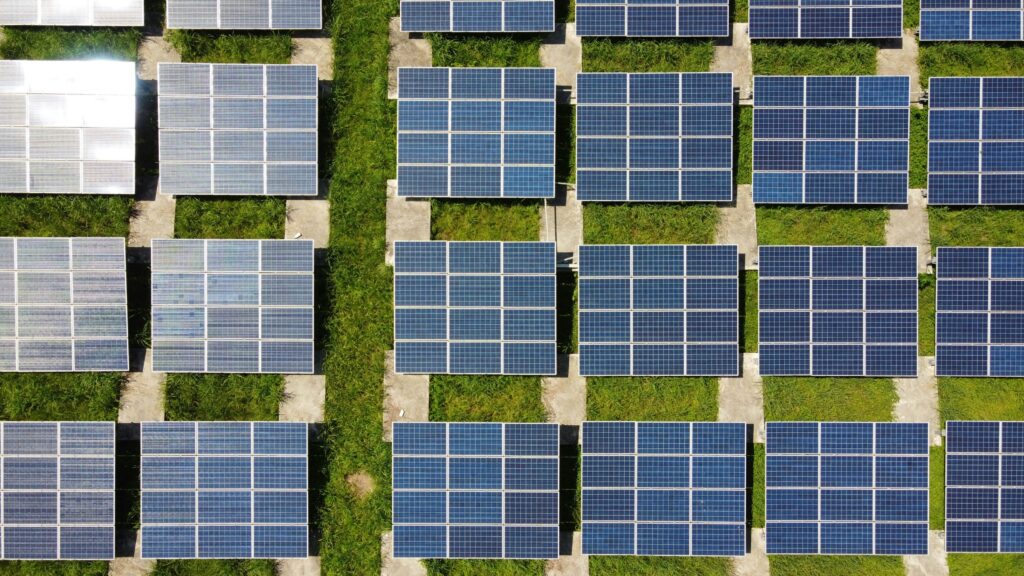
Photo: Markus Spiske / Unsplash
Solar is a shining example across Europe amid energy crises, but grid bottlenecks and price volatility demand smarter, more efficient operations.
The exposure of the EU’s energy markets to external affairs is rendered clear during geopolitical crises. Russia’s full-scale invasion of Ukraine in 2022 prompted a near pan-EU scramble to decouple from Russian gas. Four years later, the United States-led attack on Iran and the resulting blockade of the Strait of Hormuz – a maritime route for some 20% of the world’s oil and liquified natural gas (LNG) supply stream – has rocked the bloc’s energy security once again.
During times of crises, the question of whether domestic renewables could help to stabilise the EU market inevitably arises, often with some urgency. In 2025, the EU’s clean energy investments totalled some 418 billion euros (around $491B), compared to 308 billion euros in 2021, just before the 2022 energy crisis.
Renewables accounted for nearly half the EU’s energy supply in 2024 and 2025, with solar contributing 11% and 13%, respectively. In 2008, solar energy’s impact on the European energy mix was modest at just 1%. Over the years, solar became the fastest growing renewable energy source, every year saturating more of the EU’s renewable energy hunger.
A vulnerable continent
To put the EU’s energy dependency into context, it helps to look at some numbers. Before its invasion of Ukraine, Russia provided around 40% of the EU’s natural gas but that figure has since dropped to 12%, according to the EU. In 2025, 27% of total gas and LNG purchases came from the US, instead. The EU’s energy imports dependency rate was nearly 60% in 2024, underscoring the continent’s high dependency on imported fossil fuels on its path to net zero by 2050.
This is what leaves EU member states so exposed to external goings-on. Disrupted energy flows create price volatility in energy markets, as inflation rises and electricity prices increase significantly. In the words of European Commission president Ursula von der Leyen, the attacks on Iran have cost the EU 500 million euros per day. She took the occasion to highlight Europe’s need to reduce its dependence on fossil fuels and accelerate its clean energy transition.
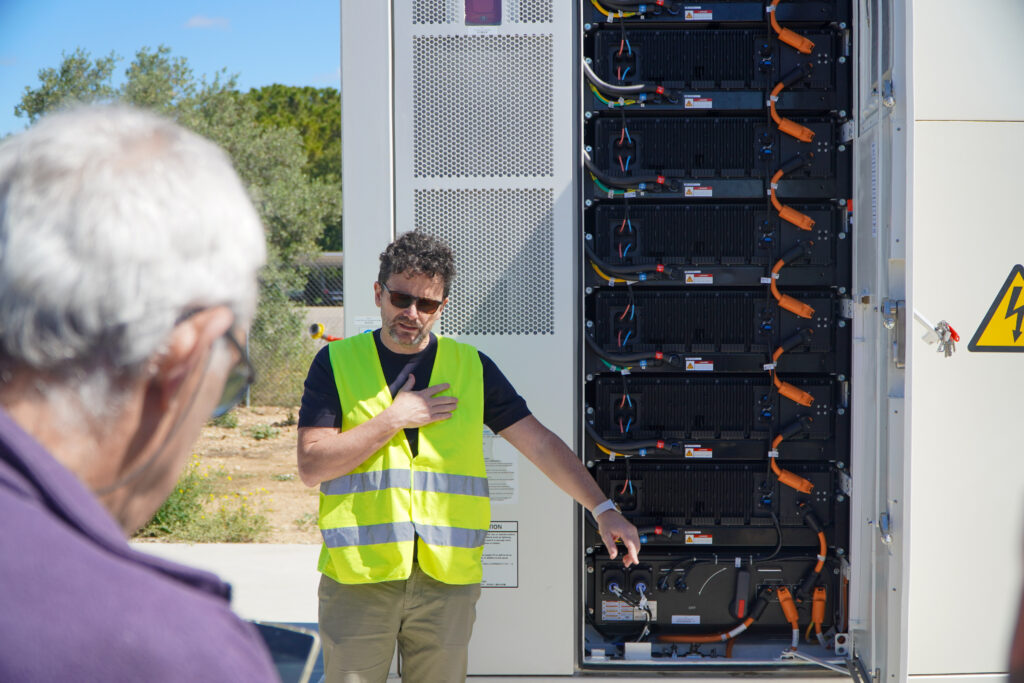
Photovoltaics specialist Luis Narvarte, professor at the Polytechnic University of Madrid (UPM) and coordinator of the EU-funded PVOP project, told REVOLVE that the “real challenge” was not just producing electricity, but transforming how energy is consumed.
“Europe must electrify sectors like heating, transport, and industry, which still rely heavily on fossil fuels. Solar will provide a large share of this electricity, but it must be integrated into a broader system transformation,” he said.
Solar has been a major component of this green transition strategy. Over the years, it has become the cheapest source of power. However, despite its fast grow, solar photovoltaic (PV) technology needs to develop solutions for its operational bottlenecks.
Solar’s flare
Our harnessing of solar energy has come a long way since the photovoltaic effect was first discovered by Edmond Becquerel in 1839. It took 115 years after that milestone to produce the first efficient solar cells, and then several decades more to deploy 3 GW of production capacity globally. But then it only took 13 years to scale from 3 GW to 300 GW by 2016. As of 2026, global solar photovoltaic (PV) capacity is approaching 3 terawatts (TW) worldwide.
The solar picture of the EU is one of the most ambitious globally. Solar power expanded rapidly in the late 2000s before slowing between 2013 and 2017, partly due to EU tariffs on inexpensive Chinese solar panels. After the tariffs were removed in 2018, growth accelerated again. The sector also proved resilient during the Covid-19 pandemic, with installations increasing by 15% in 2020.
In 2024 alone, a total of 65.1 GW of solar PV was installed across the EU. By 2025, the cumulative installed capacity of PV in the bloc had reached 406 GW, with Germany leading the market with 121 GW, over half way to its 2030 goal of hitting 220 GW.
One of the reasons for Germany’s pre-eminence in the solar sector is its introduction of the feed-in tariff (FiT) law. Dating back to early 1990s, the policy guarantees renewable energy producers a fixed price for the electricity they supply to the grid. Spain is another leading EU country in solar installation, adding 13.8 GW in 2025 alone and bringing its total solar capacity to around 48 GW. Many experts argued that this ambitious investment in clean energy was one of the reasons why Spain was relatively less affected by the latest crisis in the Middle East.
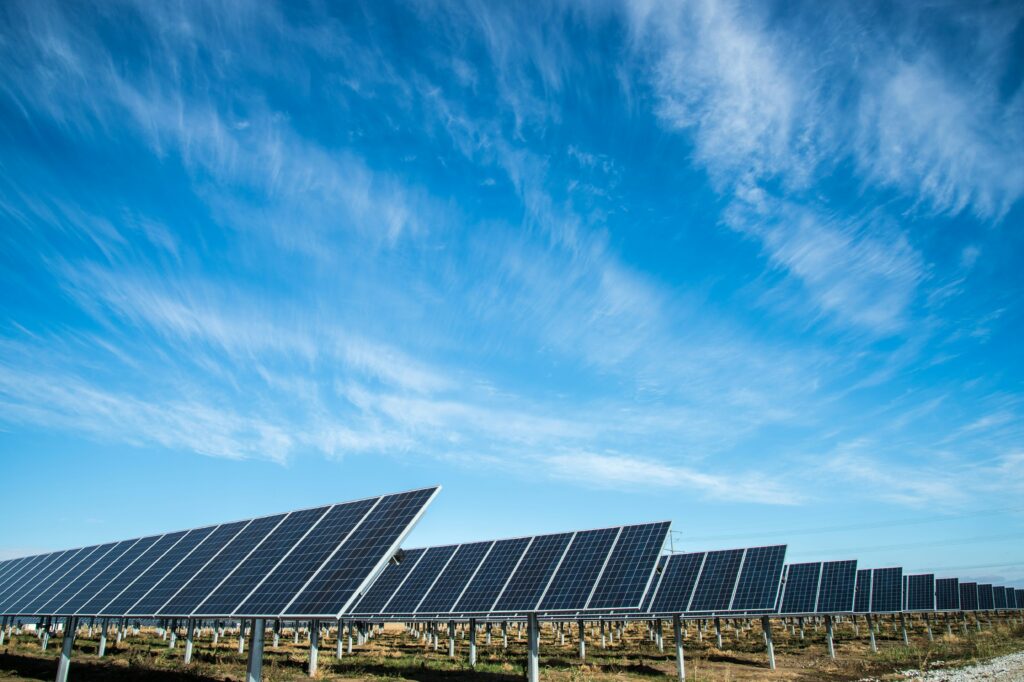
The production of solar energy is not a monolithic event. It can range from small-scale residential rooftop systems to large commercial and industrial installations, as well as utility-scale solar farms supplying electricity directly to national grids.
Solar development in the European Union has historically been driven by rooftop installations, a trend further accelerated by the energy crisis. In 2023, residential, commercial, and industrial rooftop solar segments collectively grew by 61% year-on-year, with the commercial and industrial sector recording the strongest gains.
The rapid expansion of solar PV across the European Union is not only accelerating the clean energy transition but also driving significant employment growth across the sector.
In 2024, the EU solar sector employed nearly 865,000 people, with the vast majority of jobs linked to deployment activities, which accounted for 85.9% of total employment. As solar installations continue to increase, employment in the sector is expected to rise sharply, potentially reaching 916,000 jobs by 2029, according to SolarPower Europe.
Cheap but problematic
Although its boom is well-acknowledged, solar energy is not immune to operational problems. The rapid expansion brought another reality check – building photovoltaic capacity is no longer enough.
As solar installation rises across the continent, operational complexity is increasing just as quickly. Grid congestion, curtailment risks, volatile electricity prices, and tightening profit margins are forcing operators to rethink how PV plants are managed.
“Growth is no longer the central issue,” Luis Narvarte told REVOLVE. “The challenge today is managing what already exists. Operators are dealing with an unprecedented volume of data coming from their plants.”
Modern PV installations continuously generate operational information ranging from irradiance – the amount of solar energy reaching a surface at a given moment – and temperature to inverter behaviour, tracker positions, alarms, weather inputs, and market signals. Yet much of this data gathers just dust. According to Narvarte, many supervision teams are overwhelmed by the scale of information flowing from increasingly complex solar portfolios.
As a result, even advanced solar plants often produce less energy than expected. Small issues like dirty panels, faulty connections, overheating equipment, or poorly aligned trackers can gradually lead to major energy and financial losses, especially across large solar farms.
Let’s imagine a massive utility-scale solar farm producing 500 GWh of electricity annually, enough to power roughly 150,000 European households. A seemingly small 5% performance loss would mean around 25 GWh of lost electricity every year, a chunk that would translate to millions of euros in lost revenue over the project’s lifetime.
Then what is the solution? This is where artificial intelligence and big data are beginning to reshape the sector.
How AI and big data are changing PV operations
In order to increase the efficiency of the PV operations, Europe can no longer rely on reactive maintenance. This new generation of digital tools is emerging to transform photovoltaic operations to secure a data-driven management.
Advanced sensorisation systems now monitor solar plants at string (a group of solar panels connected together as one unit), PV generator, sun trackers, power stations, and environmental dimensions. This helps improve visibility into real operating conditions and degradation trends. A good example is the digital twin models, which aim to create virtual replicas of PV plants continuously updated with live field data. This helps operators reduce forecasting uncertainty and better understand how installations behave over time.
Another example is the AI-based fault detection systems, which are changing the rules of the game by transforming how O&M is carried out. According to GreyB, a consulting firm, modern solar arrays typically lose between 0.5% and 2% of their energy output annually due to performance degradation. At the same time, studies show that around 45% of solar installations operate with at least one undetected fault, often reducing production for months before being identified.
Instead of waiting for failures to appear, machine learning models can identify abnormal patterns early, often before they affect production. According to Narvarte, this allows operators to move from reactive troubleshooting to predictive maintenance, reducing downtime and unnecessary inspection costs.
“Artificial intelligence becomes essential because the volume of operational data is simply too large to process manually,” Narvarte explains. “AI allows us to detect anomalies, predict failures, and optimise plant performance much faster and more accurately.”
The changing mindset in PV
One of the European initiatives attempting to apply these technologies at scale is the EU-funded PVOP project, which analyses operational PV data in more than 11 GW of PV plants while developing eight interconnected technical solutions focused on sensorisation, smart tracking, automated fault diagnosis, predictive asset management, electricity market forecasting, and AI-driven battery control.
“One of the biggest challenges today is the enormous amount of operational data generated by modern PV plants,” says Laura Barrutia, researcher at the Solar Energy Institute of UPM. “As the sector enters the terawatt era, digitalisation, big data, and artificial intelligence become essential for improving plant performance.”
Barrutia, who works on PVOP’s sensorisation solution, explains that the project focuses on reducing uncertainty by improving how key operational variables are measured. “The quality of the data is fundamental,” she says. “More reliable measurements allow us to build more accurate digital twins and better predict real plant behaviour.”
Other PVOP solutions focus on scaling inspection and maintenance processes for increasingly large solar portfolios. According to Nuno Marques, CEO of Aeroprotechnik, traditional inspection methods are no longer sufficient for utility-scale PV systems. “Manual inspections are too slow and limited for the scale of modern solar plants,” he says. “Issues can remain undetected for months or even years.”
Marques explains that PVOP’s AI-powered aerial inspection systems combine multispectral imaging, automation, and predictive analytics to monitor solar assets with minimal human intervention. “We are moving from reactive inspections to predictive, data-driven operations,” he says. “That shift is essential for the terawatt era of solar energy.”
PVOP doesn’t approach solar farms as static electricity generators, rather the project sees them as dynamic and data intensive systems requiring ongoing optimisation.
With the rise of renewable penetration, electricity markets are becoming more volatile and less predictable. Which shows itself with negative electricity prices, curtailment periods, and grid bottlenecks, especially in highly solarised regions across Europe.
Recent market developments already show how rapidly this issue is escalating. According to a recent Euronews report, Spain recorded nearly 400 hours of negative electricity prices in the first months of 2026 alone, largely driven by excess solar and wind generation combined with insufficient grid flexibility and storage capacity.
Similar trends are also emerging in Germany, France, and other highly renewable-dependent markets across Europe, where operators are increasingly being forced to curtail production during peak generation hours.
To adapt, AI-based forecasting tools are helping solar operators predict electricity price swings by analysing weather, energy demand, and grid conditions. Combined with smart battery systems, they allow PV plants to store electricity when prices are low, sell it when prices rise, reduce wasted energy, and support grid stability.
According to Narvarte, this marks a broader shift in the role of solar infrastructure.
“The next challenge is not simply producing electricity,” he says. “It is producing, storing, managing, and trading that electricity in the most intelligent way possible.”
But these operational challenges are not unique to Europe. As utility-scale solar expands globally, similar issues around data management, grid integration, and profitability are emerging across major PV markets worldwide.
In that sense, Narvarte also emphasised that the solutions developed under PVOP are not limited to Europe alone. “The photovoltaic market is global,” he says. “European companies managing PV assets often operate across multiple continents, from South America to Asia and Australia.”
According to Narvarte, the challenges facing the sector are increasingly shared worldwide. “Issues such as data overload, performance optimisation, and system integration are not specific to Europe,” he explains. “They are becoming common across global PV markets.”
As a result, PVOP’s solutions are being designed with scalability in mind. “These technologies can be applied wherever large-scale PV systems exist,” Narvarte says, “making their impact potentially global.”
Europe’s latest energy crises have once again exposed how vulnerable the continent remains to geopolitical shocks, fossil fuel dependency, and unpredictable energy markets. While solar power has become one of the EU’s fastest-growing and cheapest energy sources, the next phase of the transition will depend not only on expanding capacity but on operating that capacity more efficiently.
In this increasingly unstable energy landscape, the future competitiveness of solar is not about who installs the most panels, but who can operate them with the greatest efficiency, flexibility, and resilience.
Featured in