Keeping Our Collective Cool
Photo: Ana Tovar / REVOLVE
Europe’s cities are overheating. The solution to keeping cool must be collective, not individual.
Summer brings Brussels to life. For a city with a well-earned reputation for rain, once the temperatures hit 18C, jackets are tossed aside as Bruxellois pull shorts and sandals out of the closet to greet the early signs of summer. When the sun is shining, the city seems fuller, filled with sun-drunk urbanites nursing ice cold drinks, sapping up as much of those precious rays as they can before retiring home to rest and cool off.
In northern Europe, in general, we do indeed get to cool off. Even in July, the average temperature in Brussels ranges between 14C-23C, offering cool nights and a natural balm to the heat and sun. Until a heatwave hits, that is.
During a Europe-wide heatwave in July 2025, the city’s emblematic Atomium shortened its opening hours due to “extreme heat and structural limitations” – its iconic steel spheres were too hot for visitors.
Extreme heat is deadly. A 2023 study published in Nature attributed over 62,000 deaths reported across Europe in the summer of 2022 – at the time the warmest on record – to excess heat. Research published by Imperial College London’s Grantham Institute found that a climate change-fueled heatwave in late June and early July 2025 tripled heat-related deaths on the continent. Of the 2,300 estimated heat deaths in that timeframe, around 88% were people over 65.
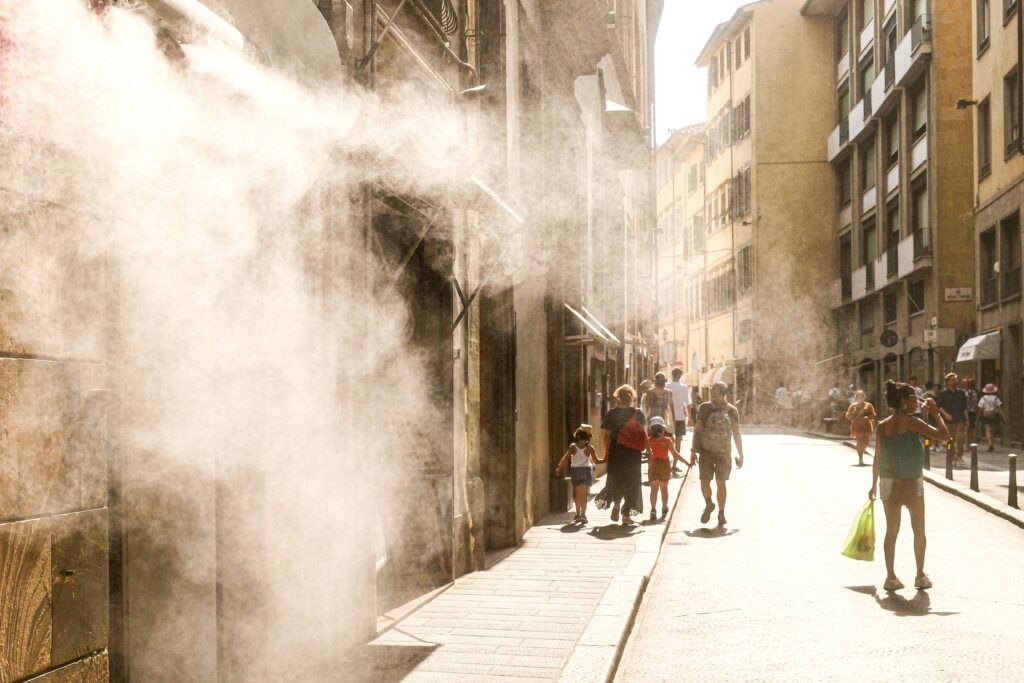
Heatwaves will not only continue to scorch swathes of Europe each year, but they will do so with ever more ferocity. Temperatures exceeding 30°C are no longer confined to the Mediterranean south; they are becoming a continental challenge that demands collective adaptation. Such changes cannot simply be dealt with by switching on the AC. We need systemic solutions that address energy demand, urban design, and social equity simultaneously.
Conventional approach to keeping cool
AC is our go-to approach for keeping cool when it gets hot. Europe is one of the fastest growing markets for air conditioning, with demand increasing by 60% between 2014 and 2021, and is forecasted to double in size by 2035, according to EuroDev, a consultancy.
Turning on the AC might cool us down, but it also creates a surge in electricity demand. During the July 2025 heatwave, total electricity demand in the EU was 7.5% higher than that same week the previous year. In Spain alone, energy demand was 16% higher compared to 2024.
Cooling Degree Days – a measure of how often and severely outdoor temperatures require a building to be actively cooled – have nearly quadrupled across the EU since 1979, according to EuroStat, the EU’s statistics agency. If left unchecked, energy demand from air conditioners could more than triple by 2050, making cooling the leading energy use in buildings.
What drives Summer Energy Poverty?
Summer energy poverty is the inability to “maintain adequate indoor thermal comfort due to insufficient or unaffordable access to cooling” and it is rarely the product of a single factor:
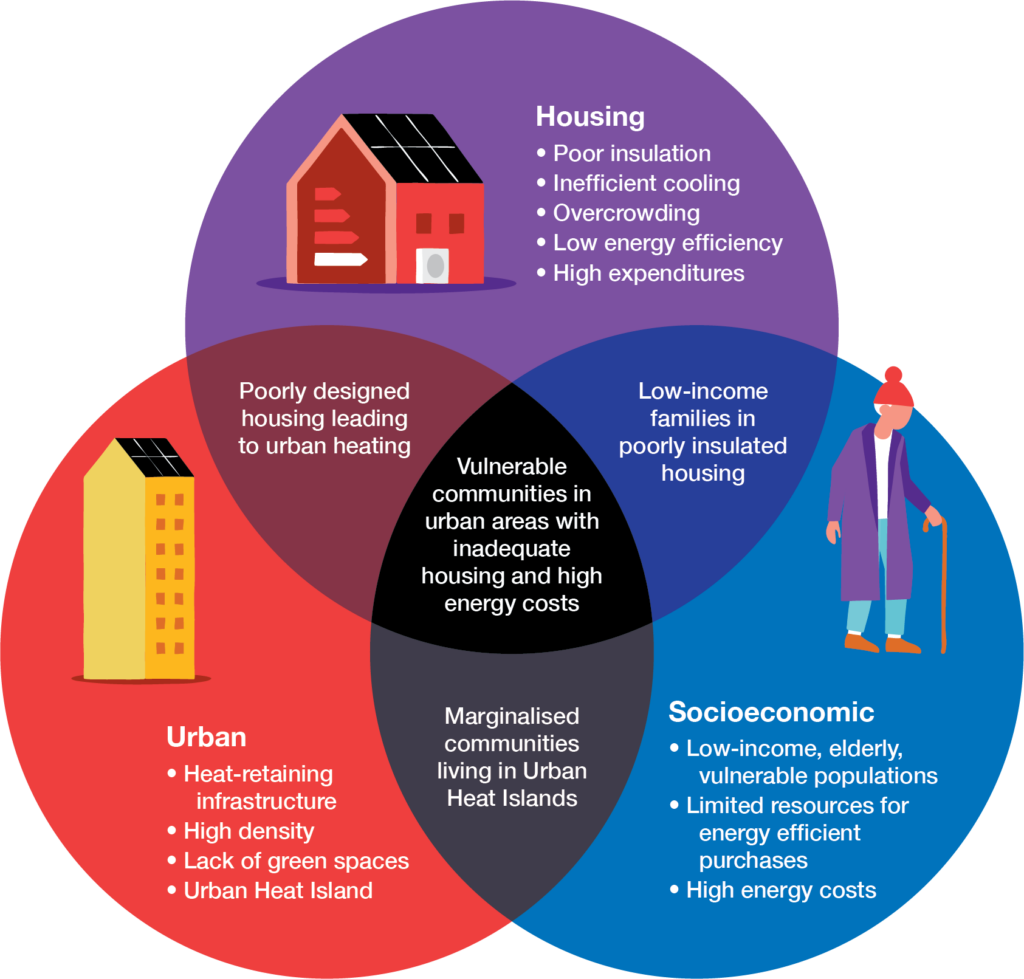
However, for those with tight budgets, AC might not be an option. Summer energy poverty is a growing concern for Europeans, particularly in southern Europe, where cooling needs are higher for longer. According to a 2023 survey by the European Commission’s Joint Research Centre, 26% of households were unable to keep their homes “comfortably cool” in 2022; 35% of those being among the lowest-income group.
The paradox of air conditioning
While we struggle to keep our individual homes cool, we’re collectively making ourselves hotter. This is a simple matter of physics: the heat we’re removing from our homes must go somewhere. In conventional AC technology, heat is removed from the air in our homes and expelled outside, along with the heat generated by the extraction process. A 2011 Applied Energy study found that AC usage in Paris could increase street-level heat by 2C-4C.
This adds to the Urban Heat Island (UHI) effect, where urban areas experience higher temperatures than surrounding suburban rural ones. It’s a consequence of the de-naturalisation of our environment, exchanging green for gray. Replacing vegetation with high-density urban sprawl. Tarmac and concrete absorb heat, releasing it back into the air, keeping cities hot and depriving residents of much needed cooler temperatures.
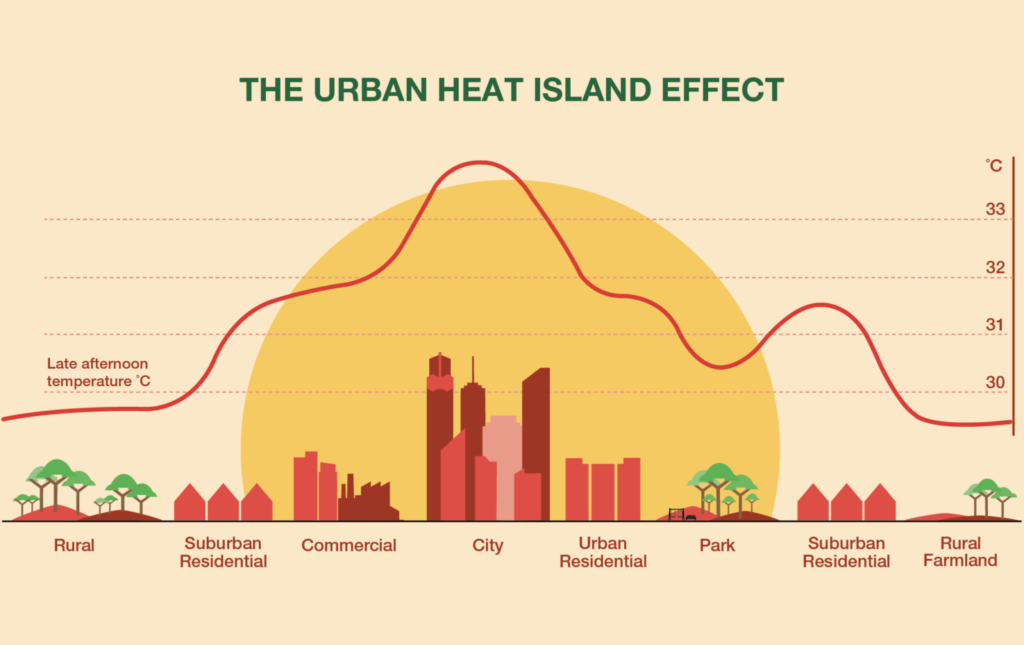
The UHI effect compounds summer energy poverty by layering physical heat onto existing social disadvantages. Lower income residents face overlapping challenges – poorly insulated homes that are expensive to cool, limited means to invest in more efficient alternatives, less access to green spaces. They also often live in areas with higher urban heat. Those with the fewest resources to escape the heat are often forced to endure the most extreme temperatures.
It’s harder to escape the heat than it is to escape the cold.
René Schellekens, Senior Consultant on Energy Transition and Energy Poverty, Netherlands Enterprise Agency (RVO)
“It’s harder to escape the heat than it is to escape the cold,” René Schellekens, Senior Consultant on Energy Transition and Energy Poverty at the Netherlands Enterprise Agency (RVO) said in an interview with REVOLVE in 2023.
So, how can we make sure that turning on the AC won’t lead to even more heat? How can we keep temperatures, costs, and emissions down all at the same time so everyone can stay comfortable and safe during extreme heat?
The solution lies in switching from individual to collective cooling approaches.
From individual to collective approaches
District cooling is a collective approach for keeping temperatures down. Unlike conventional cooling approaches, which focus on the needs of a single dwelling, or building, district cooling starts by zooming out to see how we can provide cooling on a much larger scale.
How do we keep cool today?
- Conventional split AC systems: The dominant technology, which uses refrigerant technology to remove heat from the air and expel it back into the room.
- District cooling: Centralised cooling production distributed via networks, integrating renewables and leveraging economy of scale for high efficiency.
- Passive cooling: Passive measures include using shading, ventilation, and building design to reduce active cooling needs.
Instead of every building running its own AC unit, cooling is produced centrally and distributed through a network. The approach differs fundamentally by taking advantage of scale, avoiding the explosion of individual units that worsen heat in the streets. “District cooling is basically the collective version of air conditioning,” Nicolas Raimondi, policy and project manager at the European Association of Cities in Energy Transition (Energy Cities) said in an interview with REVOLVE in 2026.
When planned effectively, it leverages scale and reduces emissions through renewables integration, as well as making use of waste heat and natural cooling from water bodies. In Stockholm, the combined District Heating and Cooling system uses free cooling from seawater. While not a mainstream option, similar examples exist across Europe, including Barcelona, Helsinki, Lisbon, and Paris.
But district cooling is not one-size-fits-all, nor does it work everywhere. It requires a certain urban density and a long-term planning vision. “You need a critical mass of buildings, a mix of uses, and coordination between urban planning, energy planning, and infrastructure investment,” Raimondi explained. “This is why local heating and cooling plans are so important.”
Since the 2023 Recast of the Energy Efficiency Directive, the obligation to produce local heating and cooling plans has been extended to all municipalities with over 45,000 residents, meaning up to 1,200 cities will need to develop plans. Those plans matter enormously: heating and cooling accounts for roughly 50% of the EU’s total energy consumption, the vast majority of which occurs in buildings.
“A lot of municipalities would like to decarbonise their energy systems, but they lack the human, financial, and technical resources to do so,” explained Giulia Conforto, senior researcher at e-think Energy Research and expert in sustainable energy transitions, on the Everything Is Changing podcast in 2025.
This often results in smaller cities outsourcing planning to larger ones with dedicated offices and resources. To bridge that gap, the EU-funded ESCALATE project is developing a training platform and materials explicitly aimed at small and medium-sized cities, giving regional energy agencies the knowledge and tools to become capable of helping municipalities develop plans that work for their communities.
The decisions taken today – on buildings, networks, urban form – will lock in energy use patterns for decades.
Nicolas Raimondi, policy and project manager at the European Association of Cities in Energy Transition (Energy Cities)
“We also need to change how we think about building renovation,” explained Raimondi. Buildings renovated today should be ‘network-ready,’ with low-temperature systems, space for connections, and flexibility to plug into future district solutions. “The decisions taken today – on buildings, networks, urban form – will lock in energy use patterns for decades,” he added.
Keeping homes cool
Before residents can reap the full benefits of optimised local cooling systems, we need stable foundations. If cooling reaches an energy-inefficient and poorly insulated home, then precious cool air, no matter how cleanly supplied, is still being lost.
“Energy efficiency [in buildings] is based first and foremost on minimising the thermal demand of the building envelope, which must therefore be the priority,” said Claudio Del Pero, Associate Professor in the department of Architecture, Built Environment, and Construction Engineering at POLIMI (Politecnico di Milano) in an interview with REVOLVE in 2026.
Over 75% of the building stock in Europe is energy-inefficient, and despite urgent need for deep renovation to meet decarbonisation goals, renovation rate remains stuck at 1%.
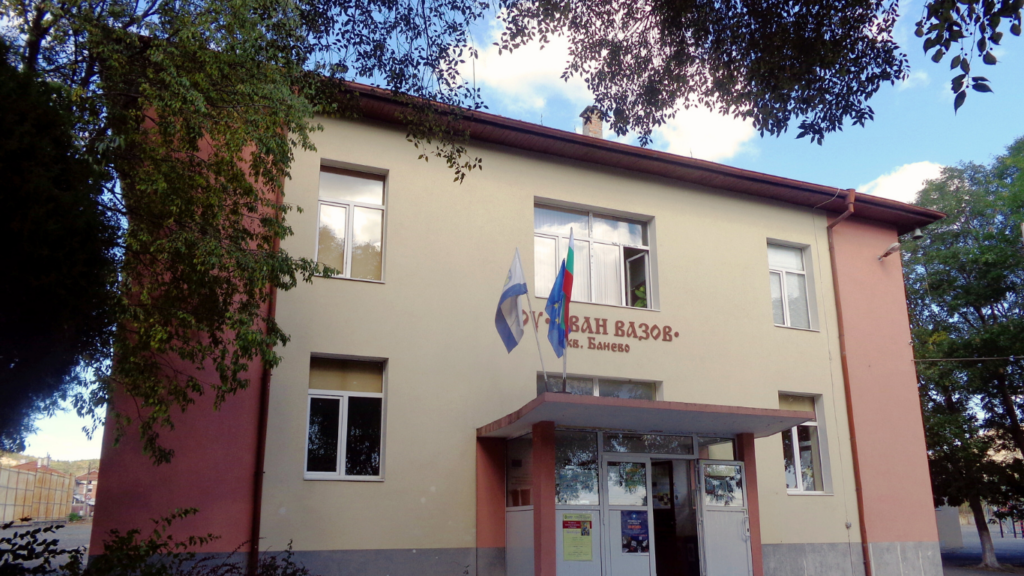
Through the RE-SKIN project, researchers have developed a modular solution to increase building efficiency that is being tested in two pilot sites: at a public school in Burgas, Bulgaria, and a community housing centre in Milan, Italy. Beyond improved insulation, the project is developing practical non-invasive cooling delivery. As Fabrizio Leonforte, fellow Associate Professor at POLIMI explained: “smart fan coils developed in RE-SKIN replace traditional radiators, allowing cooling to be delivered to all rooms in a non-invasive manner,” offering more efficient cooling at lower cost.

How we design and use buildings matters just as much as what systems we install. Passive cooling prevents heat from entering a building through shading or removes it with in-built ventilation, while simple habits – like closing shutters before midday heat builds – have measurable impacts on indoor temperature.
According to Adrienn Gelesz, sustainability expert at ABUD – Advanced Building and Urban Design, analyses conducted by the EU-funded CoolLIFE project suggest passive cooling and behavioural measures together could reduce cooling demand by up to 97% in dwellings with fans, shading, and limited use of heat generating equipment indoors.
But, behavioural change is not easy. Studies conducted as part of the CoolLIFE project show that behavioural change programmes can deliver savings of up to 12% in residential buildings, but only when the right measures are in place, and people are motivated to act. Monetary incentives help, as do so “social comparison nudges – showing occupants how their energy use compares to efficient peers – can reduce cooling consumption by approximately 2% to 5%,” explained Gelesz.
Ultimately, the impact of these strategies needs to be felt: in the form of a cool room to walk into at the end of a hot day or a lower monthly energy bill.
Greener spaces for cooler cities
Sitting on a park bench in the shade is going to be cooler than resting in a concrete square. While it seems obvious, when city planners create tree-lined streets and green spaces, it lowers the urban heat island and offers a nature-based approach to cooling.
In Greece’s capital this idea is being put to the test with strong results. Thermal data from Argentinis Dimokratias Square in Athens showed that exposed paved surfaces reached 60C, while areas shaded by trees were a comparatively cool 30C. A 30-degree difference within the same public square.
As part of the city’s guidelines for designing cooler public spaces, led by its Chief Heat Officer, a role established in 2021, parking lots have been transformed into micro forests, and cooling gardens offer refuges to residents. And these spaces do more than cool air, they offer public spaces for people to connect. As Gelesz notes, they “can also restore opportunities for socialising with neighbours”, drawing people away from the retreat into private, air-conditioned “islands of cold”.
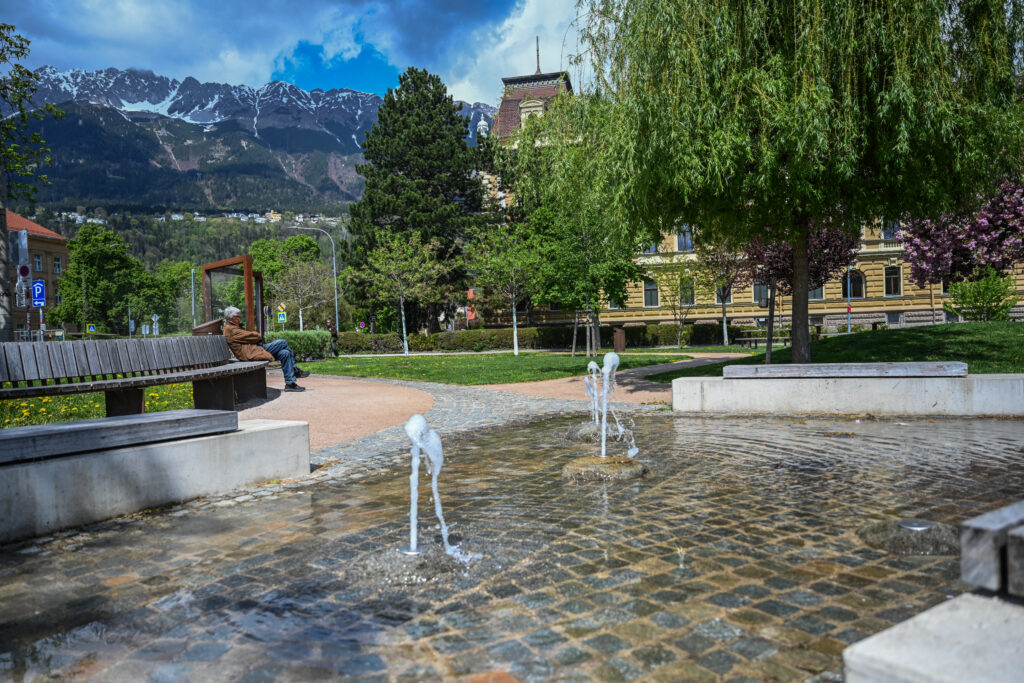
When public green spaces offer comfortable places to be on the hottest days, individual cooling demand falls and community life returns. The collective cool space becomes both an environmental and social infrastructure: somewhere to beat the heat, and somewhere to do it together.
The future we want: Our Collective Cool
Summer is coming. At the time of writing, Brussels is expecting its first 30°C temperatures of the season – in May.
Summer energy poverty is real and growing. For many, keeping cool in summer heat is an unaffordable comfort. Climate change is not creating this new inequality, it is just showing us where the cracks already existed, and where they need to be addressed.
Cities of the future must be proactively planned for heat. That means developing cooling networks that lower building temperatures efficiently, designing structures through passive strategies like ventilation and insulation, and replacing heat-absorbing concrete with green oases where people can gather and find relief.

The crisis of keeping cool is forcing us to ask a valuable question: what future do we want? The answer must be where keeping cool is a universal right, not a privilege. And where people can choose between two oases: a cool home, and a public refuge designed for the community that surrounds it.
Featured in