
Air Cargo’s Green Transition
Photo: Illia Cher / Unsplash

Air freight faces mounting climate pressure while balancing speed, cost and sustainability ambitions.
Air cargo remains one of the world’s most carbon-intensive industries, yet pressure to decarbonise global logistics is growing rapidly. From sustainable aviation fuel to AI-powered route optimisation, companies across the sector are searching for ways to reduce emissions without slowing down international trade.
Alexey Zotov, Managing Director of Air Cargo Green Capabilities, believes the industry is only at the beginning of that transition. In this interview with journalist Ahmetcan Uzlaşık, he discusses the realities behind green logistics, the limits of sustainability in aviation, and why mindset changes matter as much as technology.
What is the difference between air freight and air cargo? Why don’t we just call it air cargo?
It is actually a very good question because even inside the industry people use both terms interchangeably. We call our company Air Cargo Green Capabilities because “cargo” is a more traditional and widely recognised term in aviation. “Freight” can sometimes include many different transport modes such as sea freight or road freight, so cargo sounds more direct and specific to aviation logistics.
In practical terms, however, both mean almost the same thing. We are talking about moving goods by air from one place to another. The difference is more historical and linguistic than operational.
For people unfamiliar with the sector, what exactly does Air Cargo Green Capabilities do?
We are part of a larger international holding based in Abu Dhabi, while our operational office is located in Luxembourg. We work in freight forwarding and cargo management, helping customers move shipments globally from airport to airport.
What makes us different is that sustainability is integrated into our strategy rather than treated as an additional service. We try to help customers reduce their environmental impact through practical measures such as eco-friendly packaging, electric vehicles, and partnerships with airlines prioritising sustainable aviation fuel.
At the same time, we understand the economic realities of the sector. I worked in airlines for many years, and fuel costs represent around 35% of airline operational costs. With current geopolitical instability and fuel price increases, balancing sustainability and profitability remains one of the industry’s biggest challenges.
Your company literally includes “green capabilities” in its name. Why build the company around sustainability rather than treating it as an add-on?
Because for us sustainability is not simply a marketing slogan or a side project. It is part of the company’s DNA. Around four or five years ago we decided that sustainability should become a central business philosophy and not just another department inside the company.
We started by creating strategies for ourselves and for our partners. Sometimes we begin with airports or logistics operators completely from scratch, helping them develop long-term sustainability roadmaps for the next three to five years before implementing practical measures.
Of course, this is not always easy or profitable in the short term. Sustainable solutions often cost more money and not every partner is immediately ready for them. But we believe companies need to move from declarations to real operational changes.
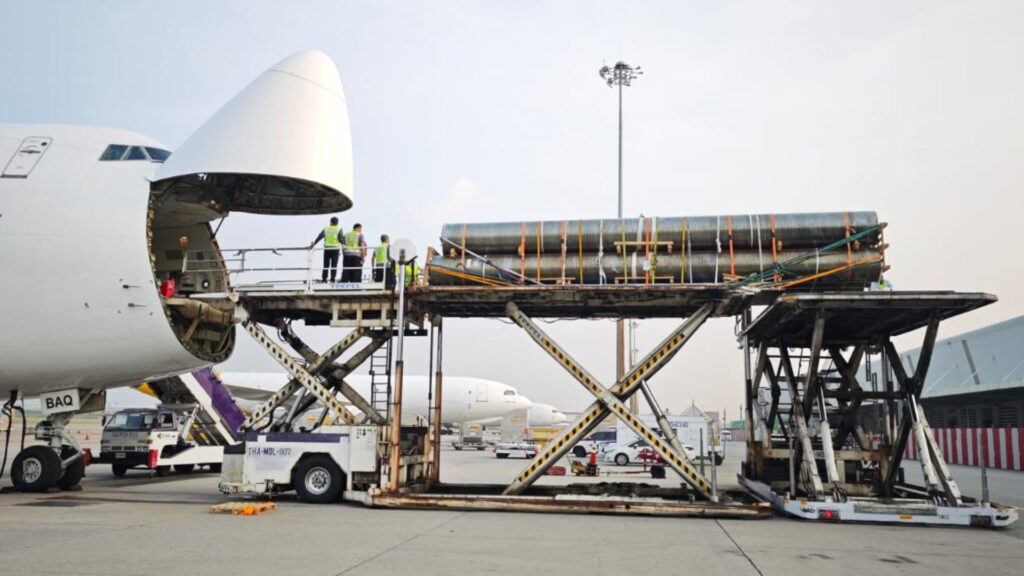
Air freight is frequently criticised as one of the most carbon-intensive transport sectors. How do you respond to people who say sustainable air cargo is almost a contradiction?
Honestly, it is the elephant in the room. It would not be honest to deny aviation’s environmental impact. Air freight produces significant CO₂ emissions and the industry has to recognise that reality openly.
That is why we started by measuring our emissions first. Before solving a problem, you need to understand it properly. We use our own CO₂ emissions calculator to evaluate carbon footprints and identify where reductions are possible.
We also look internally at our offices, vehicles, and storage operations. Sustainability cannot only be about telling customers what to do. Companies themselves need to change their mindset and operational culture first. Only then can you speak credibly with airlines, airports, and logistics partners about sustainability goals.
Do customers genuinely care about environmental impacts today, or are price and speed still the main drivers?
Price still remains the number one factor in many cases. Speed and service quality also remain extremely important because logistics is fundamentally about efficiency and reliability.
However, sustainability is becoming a serious consideration, especially in Europe. It is no longer only a public relations topic. Customers increasingly ask questions about emissions, fuel choices, and environmental reporting.
We also see major airlines investing heavily in digitalisation connected to sustainability. Lufthansa Cargo, FedEx, Qatar Airways, and Cathay Pacific are all implementing digital booking platforms, AI-based optimisation systems, or emissions calculators. These developments show that sustainability and digitalisation are becoming interconnected trends across the sector.

How realistic is sustainable aviation fuel as a real solution over the next decade?
I think it is absolutely realistic because sustainable aviation fuel already exists today. Many large airports such as Frankfurt, Amsterdam, Shanghai or Hong Kong already offer sustainable fuel infrastructure.
The challenge is scaling it globally. Smaller or more remote airports often still lack access to these fuels, which creates major logistical and economic difficulties for airlines.
The issue is not only technological. It also involves supply chains, infrastructure, transparency, and cooperation between airlines, airports, fuel suppliers, and regulators. Sustainable aviation fuel will not solve everything alone, but it is already becoming an important part of the industry’s future.
Your company reported reducing its direct environmental impact by 7% in 2024. How was that achieved?
It may sound like a small number, but for us it represented an important first step. We reduced energy consumption in our offices, transitioned more vehicles toward electric mobility, and improved operational efficiency internally.
But the bigger challenge is indirect emissions. Around 99.9% of logistics emissions come from the wider supply chain rather than our own offices or vehicles. That means airlines, airports, warehouses, and transport networks all need to move together.
This is why regulation also matters. Programmes such as CORSIA are becoming increasingly important for aviation emissions management. Airlines need to prepare now because carbon credit systems and emissions regulations will become stricter in the coming years.
How much of the logistics sector is making real operational change, and how much is still greenwashing?
If I am completely honest, real transformation is still in its early stages. Maybe only 5% of the global logistics sector is currently implementing some serious measurable sustainability actions.
Europe and the United States are ahead compared to other regions, where perhaps 20–25% of companies are genuinely active on sustainability. In some developing regions, progress is slower for understandable economic reasons.
But the overall trend is positive. Sustainability discussions are becoming more serious, operational, and data-driven. The industry is slowly moving from marketing language toward measurable action.
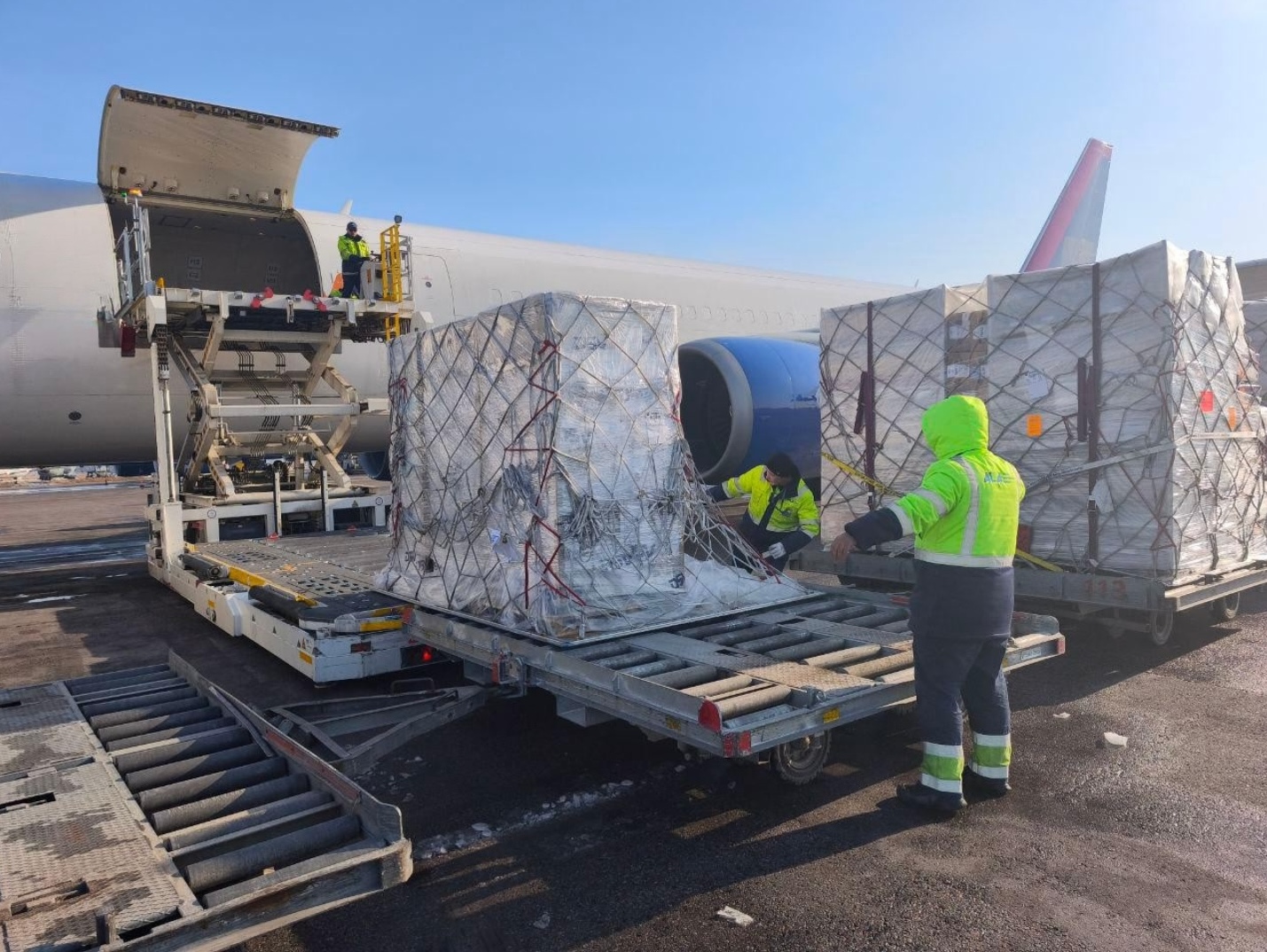
What role does AI play in the future of air cargo operations?
AI is becoming one of the biggest operational tools not only for logistics, but for almost every business sector. Its influence is enormous.
In logistics, AI can optimise routes, improve shipment planning, reduce inefficiencies, and help companies make smarter operational decisions. These technologies can potentially reduce emissions far beyond 5%. The long-term impact could easily reach 30–40% improvements in operational efficiency.
We are already using AI systems inside our own cargo operations to help customers choose more efficient and sustainable shipping solutions. This is only the beginning of what AI will eventually do for the industry.
If you could change one thing about the global air freight industry tomorrow to make it genuinely more sustainable, what would it be?
I would actually begin with education and mindset changes. Before regulations or technologies, people inside the industry need to understand sustainability properly.
We already have mandatory dangerous goods or cargo handling courses in aviation. I believe sustainability training should become equally standard across the industry.
Sometimes, a warehouse operator or a loadmaster on the ground can have better practical sustainability ideas than executives sitting in offices. Real change happens when sustainability becomes part of everyday operational thinking at every level of the industry.