
What are Regenerative Grazing Livestock Practices?
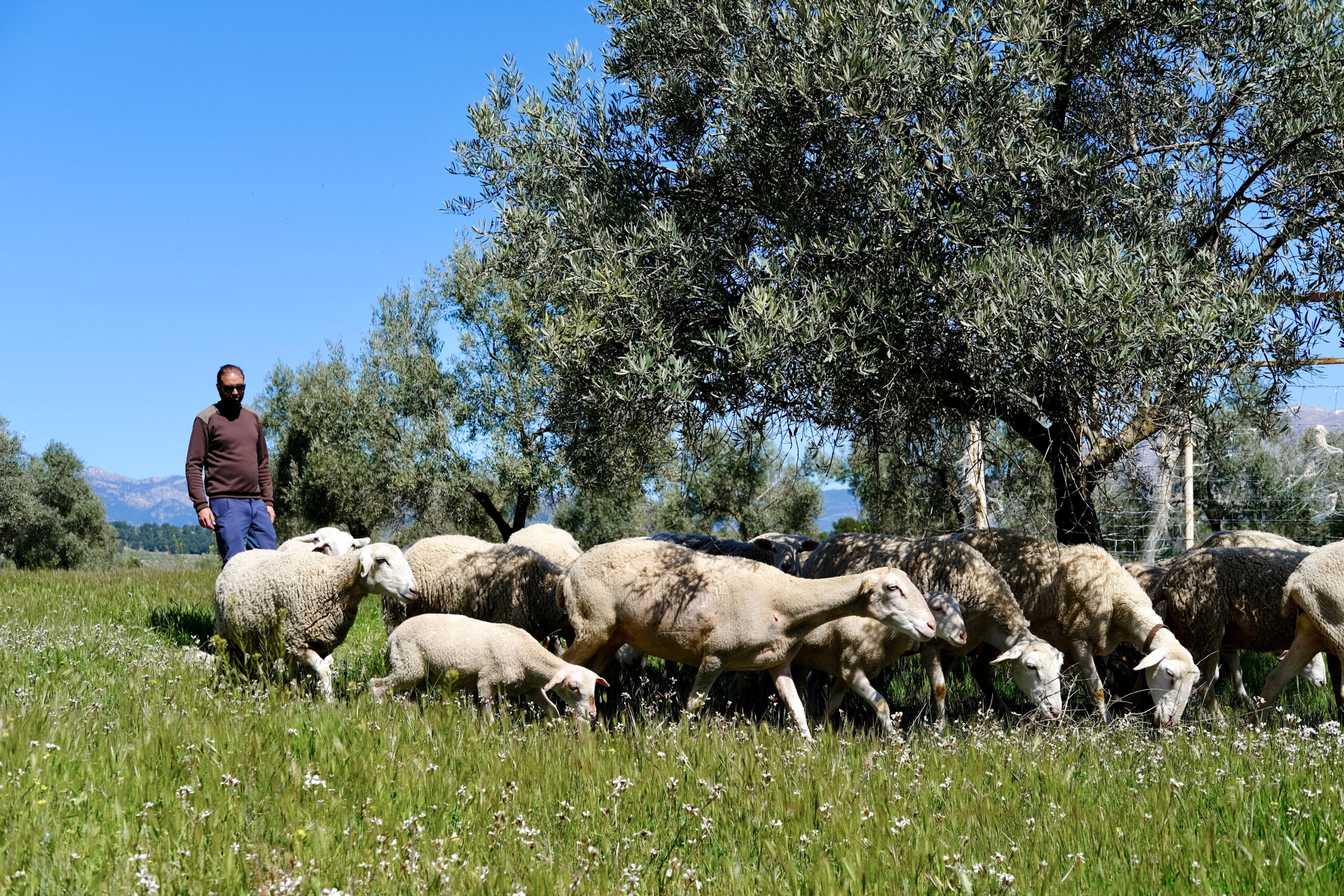
Photo: Monte Silviera
Healthy soil is disappearing fast – but could better livestock management help restore it while supporting farmers, rural communities, and nature?
The global trend in soil degradation is alarming. In Europe, 60–70% of soils are considered degraded, costing around €50 billion annually. Worldwide, degradation covers 75% of productive land, affecting an estimated 3.2 billion people – largely driven by unsustainable agricultural practices such as intensive tillage, monocropping, overgrazing, excessive agrochemical use and the removal of permanent soil cover. Soil is a finite resource: it can take centuries to form just a few centimetres, yet once-fertile soils can be lost in a matter of months.
Healthy soils are central not only to food production but also to climate resilience. When soils degrade, they release greenhouse gases and lose their ability to absorb water, weakening landscapes’ capacity to buffer floods and droughts.
Healthy soils are central not only to food production but also to climate resilience.
Regenerative Grazing Livestock Practices (RGLPs) are a set of practices that use grazing animals as tools for ecological repair rather than sources of degradation. Through carefully managed grazing, they seek to rebuild soil structure, restore vegetation, and strengthen ecosystem function.
What is regenerative grazing?
Regenerative grazing refers to livestock management strategies designed to rebuild soil, restore ecosystems, and increase biodiversity. Instead of continuous grazing – where animals remain on the same land for long periods, often causing overgrazing and compaction – regenerative systems mimic the natural movement of wild herbivores.
Semi-natural grasslands co-evolved with grazing animals over thousands of years. Periodic disturbance from grazing, trampling, and manure deposition shaped diverse plant communities and dynamic soil systems. When managed well, livestock can stimulate plant regrowth, deepen root systems, and feed soil organisms.
Grazing affects soil in several ways: animals remove vegetation, triggering new growth; their hooves disturb the surface; and their manure returns nutrients and organic matter. Over time, these processes can improve soil structure, water retention, and microbial activity to enhance the soil food web.
Evidence suggests that, particularly on degraded land, well-managed RGLPs can:
- Improve water holding capacity, reducing flood risk
- Promote biodiversity, depending on management and context
Key approaches
- Adaptive multi-paddock (AMP) grazing: Frequent livestock movement between small paddocks, adjusted to plant recovery.
- Rotational grazing: Rotating animals through fields to allow rest periods.
- Pyric herbivory: Combining controlled burning and grazing to create habitat diversity.
- Silvopasture: Integrating trees, pasture, and livestock to enhance carbon storage and biodiversity.
Greenwashing controversies
Livestock has a negative reputation in public debate. Industrial systems contribute significantly to greenhouse gas emissions, deforestation, water pollution, and biodiversity loss. Current global meat consumption – especially in high-income countries – is widely recognised as environmentally unsustainable.
Critics warn that the term “regenerative grazing” risks being misused to avoid addressing the need to reduce overall meat consumption. They argue it can enable greenwashing, helping to clean the image of companies most responsible for the harms associated with industrial livestock systems. By emphasising “better” meat rather than less meat, regenerative narratives may sidestep the question of demand reduction altogether.
Regenerative grazing does not make all meat production sustainable. It cannot justify continued consumption from industrial systems that degrade ecosystems or drive deforestation. Instead, regenerative grazing should be seen as one part of a broader food system transformation – not a loophole for business as usual.
Regenerative grazing should be seen as one part of a broader food system transformation.
GroundWork: turning principles into practice
One initiative exploring these questions in practice is GroundWork, an EU Mission Soil project led by the Cyprus Research and Innovation Centre. Working across five Living Labs in Portugal, Germany, Sweden, Belgium, and Serbia, GroundWork examines how changes in land management – including grazing – affect soil health under real climatic and economic conditions.
The project is built around four principles:
- Regenerative grazing practices: Testing adaptive and rotational systems that improve structure, water retention, and carbon storage while maintaining productivity.
- Soil health and biodiversity: Restoring organic matter, strengthening microbial life, and enhancing biodiversity above and below ground.
- Co-creation and learning: Bringing farmers, researchers and policymakers together for participatory monitoring and knowledge exchange.
- Scaling and policy support: Developing incentives and frameworks that reward regenerative outcomes and enable wider adoption.
By combining on-the-ground experimentation with soil monitoring technologies, the project aims to generate evidence on what works, where and why. In doing so, it seeks to ground regenerative grazing in measurable outcomes and locally adapted solutions.