
The Sea Doesn’t Begin at the Shore, It Begins With Us
Photo: Yucar Studios / Unsplash
How art, creativity, and storytelling can change our relationship with seas and help save the world’s oceans.
The world’s oceans are in a crisis. Marine life is under stress from pollution – estimates from UNEP suggest that 23 million tonnes of plastic enter seas every year. A recent FAO study reports that more than 35% of fish stocks are over fished. And only 8.4% of the world’s oceans are protected, failing far below the 30% targets set for 2030. But what if saving the world’s ocean relies less on science, and more on feeling and connection?
In this episode of the Blueboard podcast series by Everything is Changing, Ahmetcan Uzlaşık speaks with two women changing how people relate to and connect with their seas. Rebecca Katsaris, an educational progam designer for young children, shares how she brings art and creativity into classrooms in her native Cyprus to raise marine awareness. While Agnė Marcinkevičiūtė, a Lithuanian filmmaker and director, talks about her new film The Sea Begins Here and the power of stortytelling and how emotion can reshape our relationship with the ocean.
From classrooms in Cyprus to communities around the Baltic Sea, both guests are working at the intersection of science, art, and society, translating complex environmental challenges into something people can feel, relate to, and act upon.
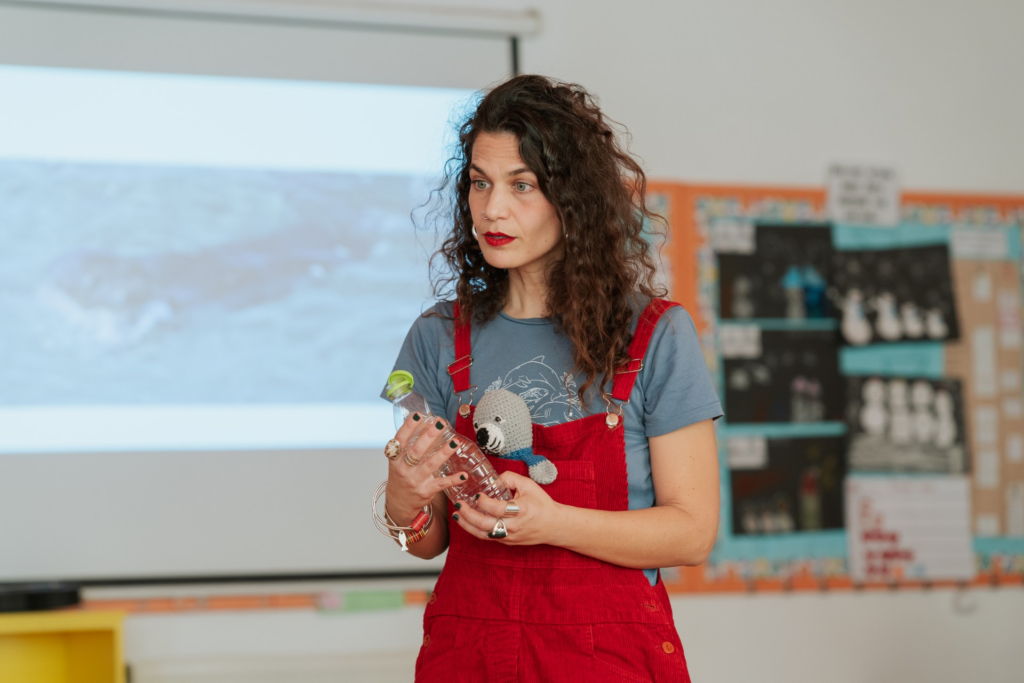
Rebecca, can you give us an overview of your work on marine environmental awareness through the creative arts?
Rebecca Katsaris: Our work really started from a simple realisation: knowledge alone does not change behaviour. You can give children facts about the ocean, pollution, or biodiversity, but unless they feel something, those facts remain distant.
So, what we do is bring together educators, artists, and marine scientists to create experiences rather than just lessons. We design workshops, storytelling sessions, puppet theatre, music activities, all built around real scientific data, but translated into something children can emotionally connect with.
For example, instead of telling children that plastic pollution is a problem, we create a story around a marine animal affected by it. We invite children to respond, through drawing, music, or storytelling, and suddenly they are not just learning about the problem, they are part of it, they are reacting to it.
Our aim is to cultivate empathy. Because once children feel that connection with the ocean, they naturally begin to care about it, and that’s where meaningful awareness starts.
You work with very young children. How do you explain complex environmental issues to them?
Rebecca Katsaris: We always begin with something real and relatable. We use actual images, videos, and materials provided by scientists, and we make it very clear to children that these are real situations, not something artificial or invented.
Then we simplify the language, but not the meaning. Children are much more capable than we sometimes assume. They may not remember every scientific term immediately, but they understand the concept behind it, especially if they experience it.
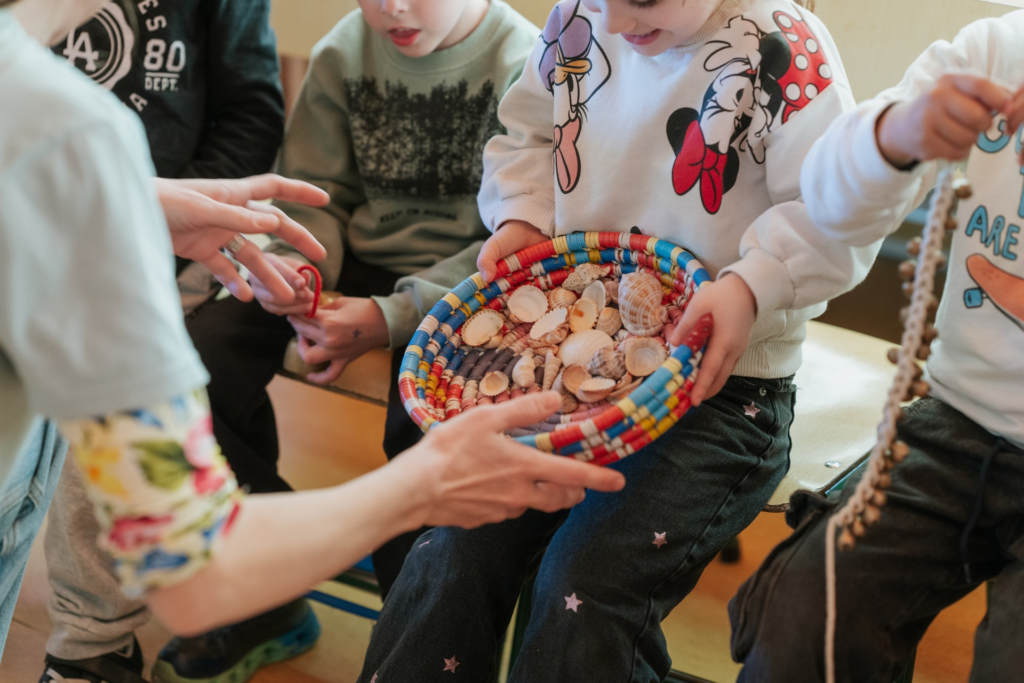
For example, when we talk about ghost nets or bycatch, we don’t just explain it verbally. We recreate it in the classroom. We use objects, movement, and play. Children physically see and feel what happens.
But the key element is always emotion. We ask them: How does this make you feel? Because understanding follows emotion. If they feel empathy, they will remember. If they remember, they will care.
Why do you think creativity is more effective than traditional education methods?
Rebecca Katsaris: Because creativity engages the whole person, not just the mind, but also the emotions.
Traditional education often relies on transferring information, but environmental issues are not just intellectual challenges, they are deeply emotional and ethical ones. If we don’t engage that emotional dimension, we are missing something essential.
Through art, storytelling, and music, children connect in a very natural way. And creativity also removes barriers. We work with children from different countries, different languages, different backgrounds, but when we use art, everyone can participate.
So for us, creativity is not just a method, it’s a bridge, a bridge between knowledge and feeling, between understanding and action.
Agnė, your documentary is titled The Sea Begins Here. Why that title?
Agnė Marcinkevičiūtė: Because the sea is not something distant or separate from us. It is directly connected to our everyday lives.
The Baltic Sea is one of the most polluted seas in the world, and some parts are already considered dead zones. But I didn’t want to make a film that only presents data or focuses on negativity.
For me, the central idea is connection. Even if you live far from the coast, your actions still reach the sea. Every river carries something – nutrients, pollution, waste – and eventually everything flows into the ocean.
So the title reflects that idea: the sea begins where we are. It begins in our choices, in our behaviour, in our everyday lives.
Your work combines science with human stories. Why did you choose this approach?
Agnė Marcinkevičiūtė: Because people connect to stories, not to data. Scientific information is very important, and it must be accurate. But if you present it in a purely analytical way, it often remains abstract. People understand it intellectually, but they don’t necessarily feel it.
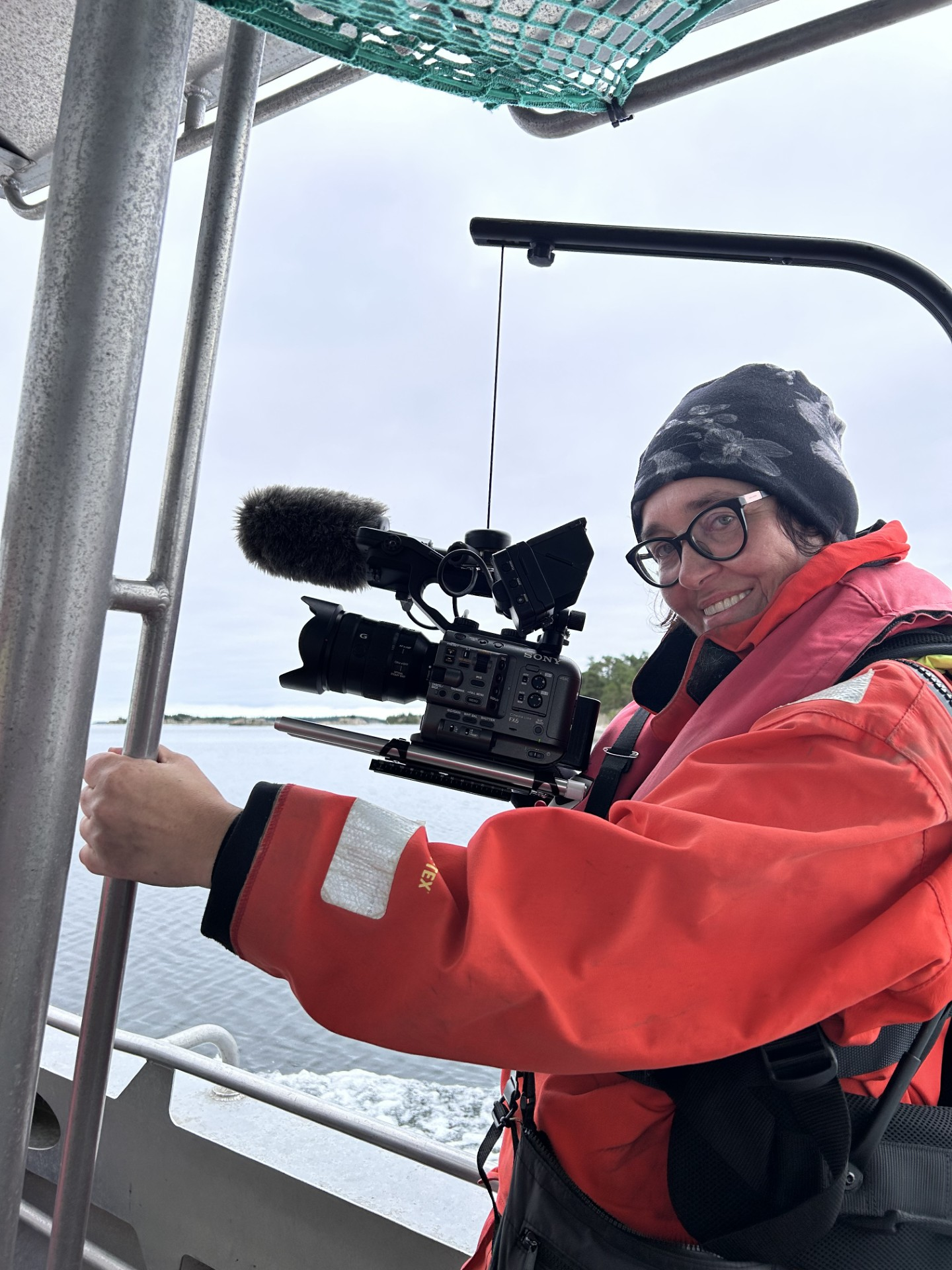
In my film, I follow a journey, activists walking around the Baltic Sea, meeting communities, sharing experiences. Through their stories, the science becomes human.
As a filmmaker, I don’t want to tell people what to think. I want to create space for reflection. When people feel something, when they recognise themselves in a story, they begin to think differently, and that’s where change can begin.
Your film highlights communities and collective action. Why is that important?
Agnė Marcinkevičiūtė: Because environmental challenges are collective by nature. No single individual can solve them alone, but together we can make meaningful change. Communities create a sense of shared responsibility, and they also make change feel possible.
In the film, I wanted to show not only the problems but also the people who are already working on solutions: scientists, activists, local communities. These stories are important because they show that action is already happening.
And when people see that, they realise they are not alone, and that encourages them to take part.
Rebecca, you also work with teachers. Why is educating educators matter?
Rebecca Katsaris: Because teachers multiply impact. We noticed that many educators feel uncertain about teaching environmental topics. They think these issues are too complex, or they feel they don’t have enough scientific knowledge.
So, part of our work is to support them, to show them that they don’t need to be experts to start. We provide tools, methods, and confidence. We show them how to approach these topics creatively, how to engage students emotionally as well as intellectually.
And once teachers feel confident, they bring that into their classrooms. That’s how the impact grows, not just through one workshop, but through ongoing learning.
In a time when global climate ambition seems to be slowing down, how do you stay motivated?
Rebecca Katsaris: For me, it’s the children. When you work with young people, you see curiosity, honesty, and openness. That gives you hope.
I focus on what I can do in the present moment, how I can contribute through my work, how I can treat people, how I can create meaningful experiences. That helps me stay grounded.
Agnė Marcinkevičiūtė: I also look at positive examples. There are cases where action has led to real improvement, like the recovery of certain species after harmful chemicals were banned. These stories remind us that change is possible. It may take time, but it happens.
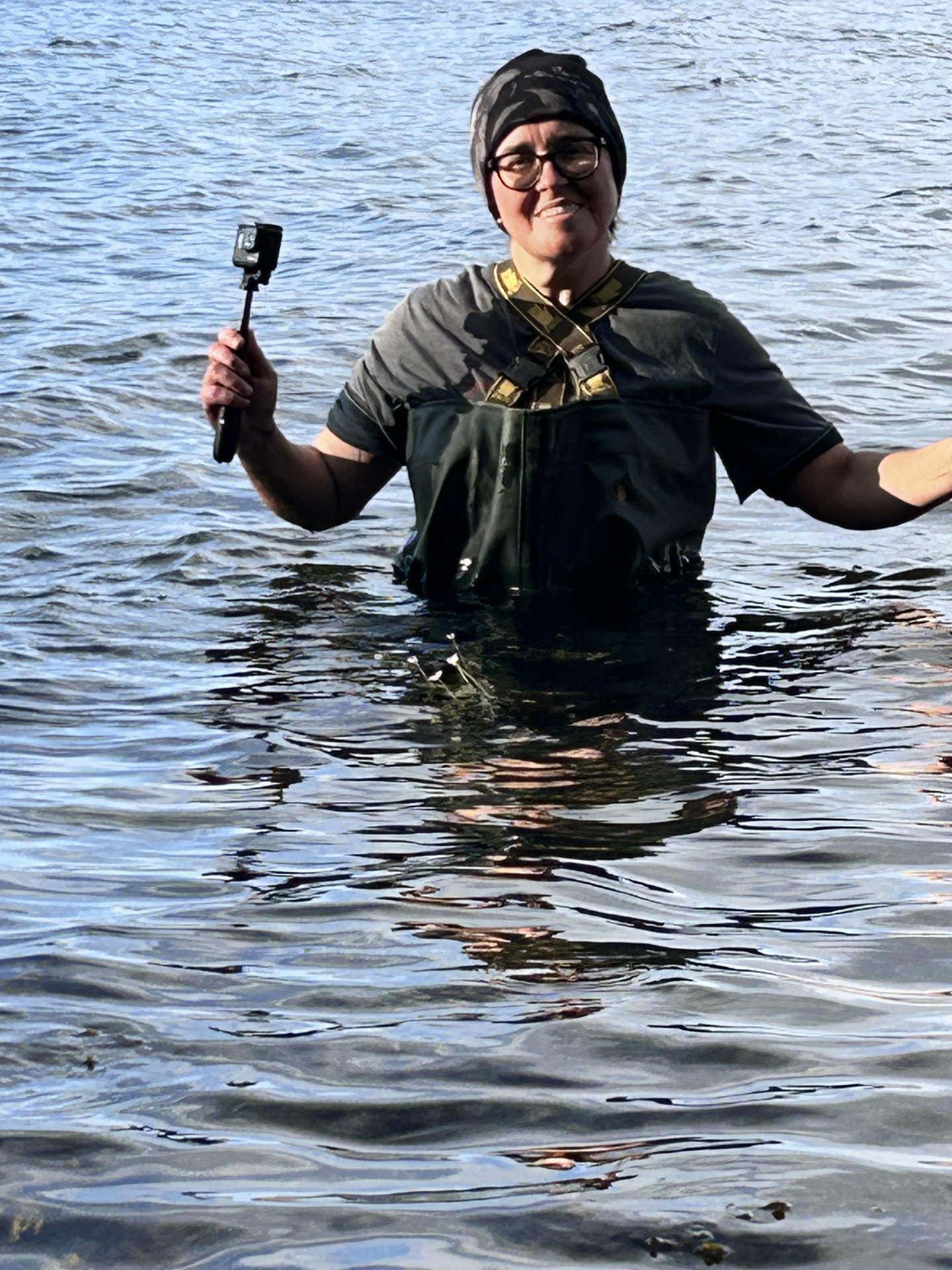
Agnė, what impact do you hope your film will have beyond the screen?
Agnė Marcinkevičiūtė: I hope the film travels across countries, across communities, and creates conversations.
For me, success is not only about the film itself, but about what happens after. If people start thinking differently about their relationship with the sea, about consumption, about responsibility, then the film has done something meaningful. Even a small shift in perspective can lead to change.
Rebecca, what would success look like for your work in the future?
Rebecca Katsaris: A world where creative environmental education is part of everyday learning. Children are naturally connected to nature, but modern life often creates distance. If we can bring them closer again, through experience, creativity, and emotional engagement, they will reconnect. And that connection is the foundation for everything else.