
Diving into Ocean Literacy Through Underwater Virtual Reality
Photo: Fernando Jorge / Unsplash
Immersive underwater virtual reality is opening new ways to connect people emotionally with the ocean.
Connecting people with the ocean is increasingly seen as essential for building stronger environmental awareness and stewardship. Yet for many people, the ocean remains physically distant and difficult to access. New immersive technologies are beginning to bridge that gap by creating powerful experiences that bring underwater ecosystems closer to everyday life.
Géraldine Fauville is an Associate Professor at the University of Gothenburg and an affiliate at Stanford University. Her research explores how immersive technologies, particularly underwater virtual reality (VR), can enhance ocean literacy and environmental engagement. In this conversation with Ahmetcan Uzlaşık for the Blueboard podcast by Everything is Changing, Fauville explains how immersive technologies can transform blue education and help people build emotional connections with the ocean.
What first sparked your connection to the ocean, and how did that early fascination shape your career path?
I get that question quite often, and unfortunately I do not have a very dramatic story. I am originally from Belgium, which only has about sixty kilometres of coastline, essentially one long sandy beach. I used to spend time there during the summer, but I cannot really pinpoint a specific moment when my fascination with the ocean began.
As a child, I was constantly asking for books about the ocean as birthday or holiday presents. I had a collection of beautiful books with photographs of sea creatures, and I would spend hours studying them. At some point I realised that marine biology was actually something I could study. From that moment on, it became my goal.
Your work highlights the emotional side of ocean literacy. Why are feelings like wonder and empathy so important for motivating people to care about the ocean?
Early research in environmental psychology and environmental education assumed that if you simply gave people environmental knowledge, they would automatically change their behaviour. But over time, researchers realised that this assumption was too simplistic.
Information alone does not necessarily lead to pro-environmental behaviour. What appears to be much more effective is helping people interact directly with nature. Research shows that people who spend time in natural environments tend to develop what we call “nature connectedness,” meaning that they see their identity as connected to the natural world.
This sense of connection includes both cognitive and emotional elements. We believe that similar mechanisms apply to the ocean as well. However, the ocean is often inaccessible for many people. Not everyone lives near the coast or has the resources to experience it directly. That is why we need alternative ways to help people connect with the ocean.
Your work uses underwater virtual reality and something you call “double immersion.” What does this experience offer that traditional VR cannot?
Traditional virtual reality already provides a powerful immersive experience. When someone wears a VR headset, they are visually transported into another environment. If they move their head, the visual perspective changes just as it would in the real world.
This creates what we call “presence.” The brain begins to treat the virtual environment as if it were real, and people respond emotionally and psychologically as they would in real-life situations.
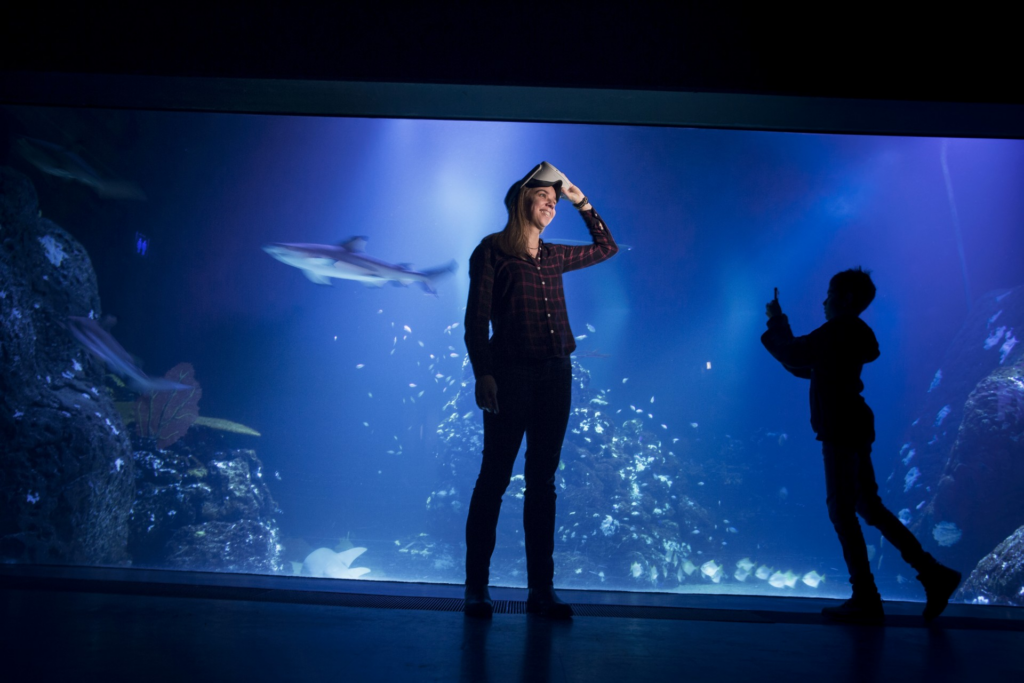
However, when someone experiences underwater environments in regular VR, there is still a sensory mismatch. You may see yourself underwater and hear ocean sounds, but your body still feels gravity and your feet on the ground.
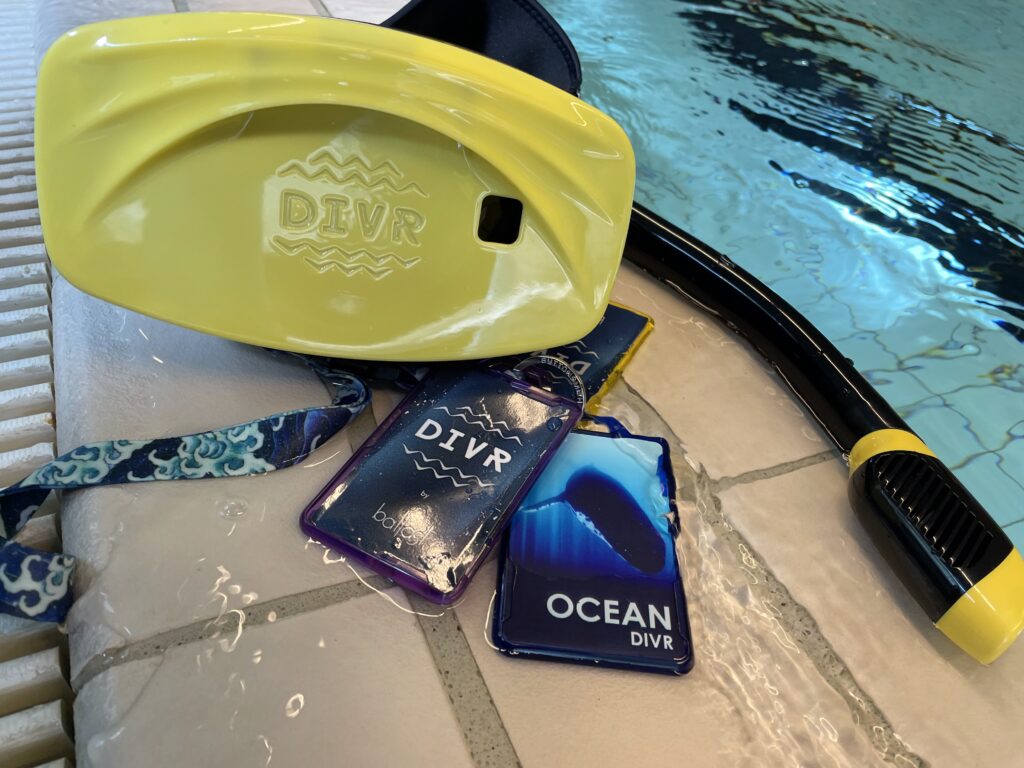
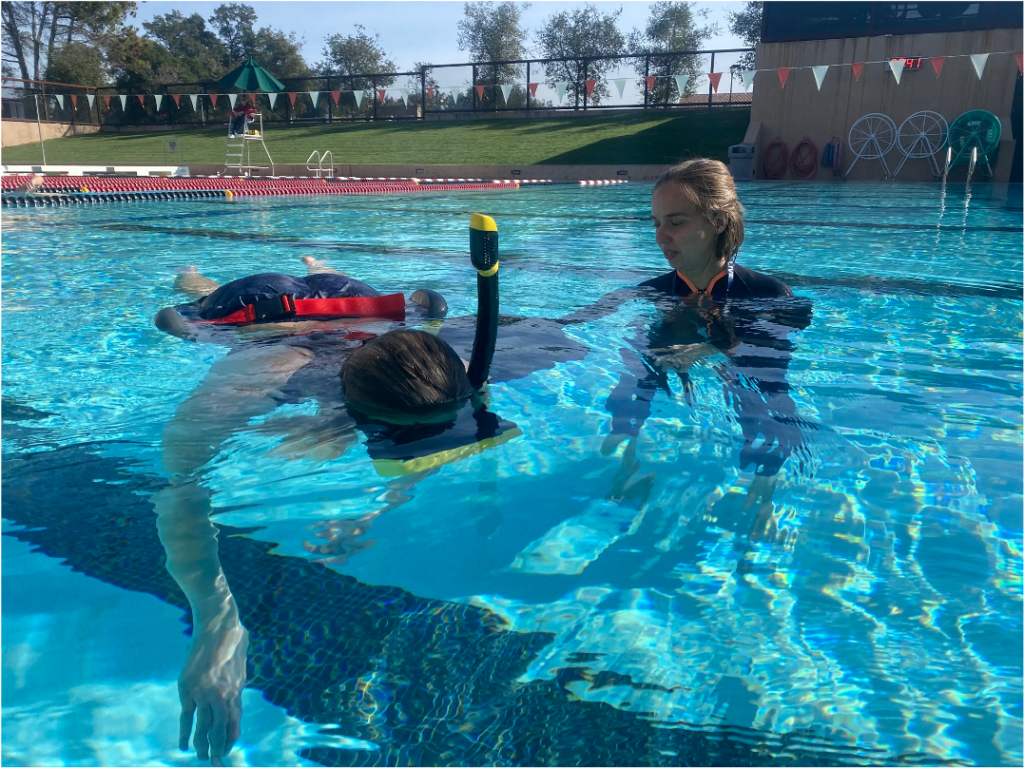
Underwater VR solves this mismatch. Participants wear a waterproof VR headset while floating in a pool. Suddenly, all the sensory inputs align: visually you are underwater, and physically your body is floating in water. This alignment of sensations creates what we call “double immersion,” making the experience much more convincing for the brain.
That sounds like an unusual and perhaps intimidating experience for participants. How do people typically react?
We take a lot of time to make sure participants feel comfortable before starting the activity. People are not familiar with this equipment. They wear a waterproof headset and breathe through a snorkel while floating in the water.
Since 2019 I have conducted these experiences with hundreds of participants, and reactions vary widely. Some people are initially quite nervous, especially if they have never used a snorkel before. But we guide them step by step.
Often people who begin the experience feeling uncertain end up finishing it with excitement and amazement. Watching that transformation is one of the most rewarding aspects of the project.
Many people may never have the opportunity to see coral reefs or dive in the ocean. Can underwater VR help democratise access to the ocean?
Yes, that is one of the motivations behind this work. Not everyone can travel to the ocean or participate in diving activities. However, many more people have access to swimming pools, particularly in countries where swimming lessons are part of school education.
If we can bring immersive ocean experiences into those spaces, it could offer a form of remote access to underwater ecosystems. In that sense, underwater VR has the potential to reduce inequalities in access to ocean experiences.
The technology sounds expensive and complex. How feasible is it to scale projects like this?
At the moment the equipment is indeed expensive, and the setup requires a pool, trained staff, and specialised devices. We are still in the early stages of researching underwater VR.
Right now, the main question we are trying to answer is whether this technology can actually contribute to ocean literacy. If the results continue to be promising, the next challenge will be finding ways to make the technology more accessible and scalable.
Your research suggests underwater VR can influence behaviour. What evidence do you have that these experiences actually change how people act?
We recently conducted a study led by Anaïs Voşki, a PhD student at Stanford’s Doerr School of Sustainability, in collaboration with researchers from Stanford University and the University of Gothenburg.
Participants watched the same ocean-related video content in three different formats: on a computer screen, through traditional VR, and through underwater VR. We measured emotional responses and attitudes before and after the experience.
Participants also received a small financial compensation for participating in the experiment. At the end, we gave them the option to donate part of that compensation to a beach-cleaning organisation.
Participants who experienced underwater VR donated significantly more than those in the other groups. This suggests that underwater VR can indeed influence pro-environmental behaviour.
However, when we followed up one month later, the behavioural differences disappeared. That result is not surprising, since the immersive experience lasts only about ten minutes. The next challenge is figuring out how to combine these immersive experiences with educational materials that can create longer-lasting impacts.
You have worked with many participants since 2019. Is there a moment that captures why this work matters to you?
One of the most powerful moments is watching participants overcome their initial fears. Some people arrive at the pool saying they are uncomfortable in water or unsure about using the snorkel.
We spend time helping them get used to the equipment. Sometimes they ask me to hold their hand during the activity or they stay close to the edge of the pool.
Then something remarkable happens. Slowly they begin swimming and exploring the virtual environment. When they finish, they often come out of the water excited, proud, and amazed by what they have experienced.
Seeing someone move from fear to curiosity and wonder in just a few minutes is incredibly rewarding.
Can technologies like underwater VR replace traditional forms of blue education?
No, and they should not. Digital technologies should never replace real experiences in nature. Going to the beach or interacting directly with the ocean should always remain the most important form of learning.
But there are barriers to accessing the ocean, and many environmental processes, such as underwater ecosystems or pollution, are invisible to the public.
Technologies like underwater VR can make these hidden aspects visible. They should be viewed as complementary tools that support teachers, books, and field experiences rather than replacing them.
Looking ahead, what emerging technologies in blue education excite you the most?
One technology I am particularly interested in is augmented reality. VR systems are expensive and usually involve one person at a time.
Augmented reality, on the other hand, can work with devices that many people already own, such as smartphones. Imagine being able to transform your living room into a virtual aquarium using your phone.
This kind of approach could make immersive ocean experiences far more accessible.
Finally, how do you integrate the idea of citizenship and responsibility into blue education?
At the moment, much of our research focuses on understanding the impact of the immersive tools themselves. But an important next step is designing the educational framework around these experiences.
The activity should not simply be a fun ten-minute experience. Educators need to provide learning materials before and after the immersion so participants can reflect on what they saw.
This could involve discussions about the role individuals and communities play in ocean conservation and how people can contribute to solving environmental challenges.
The goal is to transform a short immersive experience into a meaningful learning process that encourages long-term engagement with ocean protection.