If We Can Recycle Bottles, We Can Recycle This
Photo: Helena Lopes / Pexels
The circular economy faces a messy challenge – recycling one of the most complex waste streams of all: absorbent hygiene products.
Nappies are on my mind. By the time this is published, I will likely already be a father to a baby girl. Preparing for her arrival has been both joyful and daunting. The nursery. The cot. The pram. All the tiny clothes of escalating sizes to fit the baby as she grows. Bottles, bottle drying racks, car seats. And, of course, nappies.
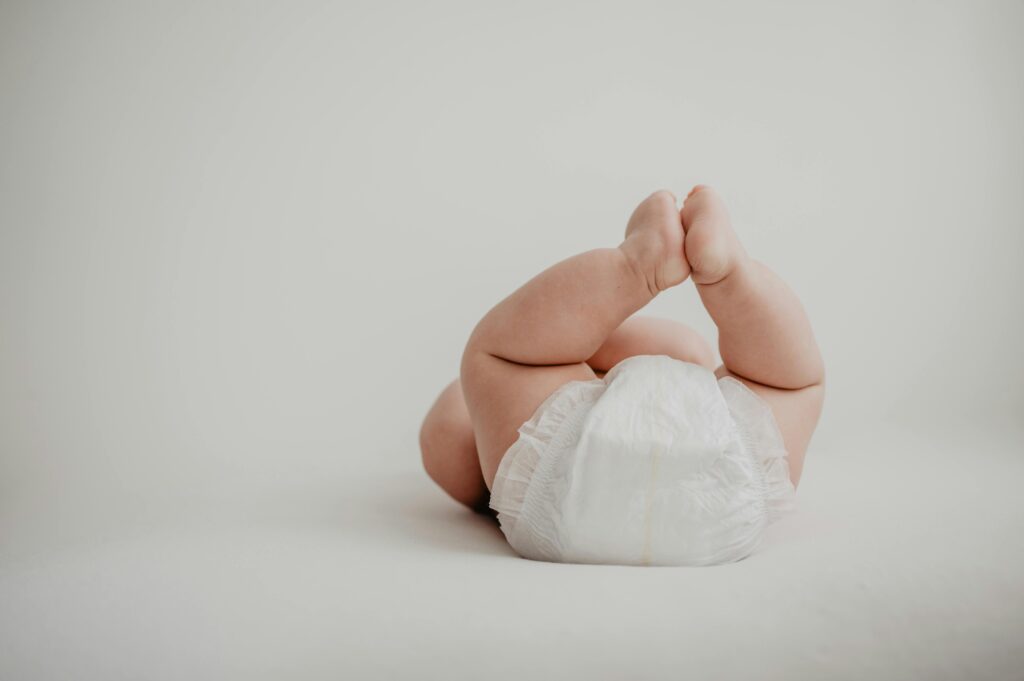
Nappies, also known as diapers, are a ubiquitous baby product. Like the vast majority of families – industry estimates suggest around 95% in developed countries – we will rely on disposable nappies. Each child uses between 4,000 and 6,000 before being potty trained. That creates an extraordinary amount of waste. More than 300,000 disposable nappies are sent to landfill or incinerated every minute.
But what if that waste could instead become a building material?
A new circular economy process suggests that one day we could be living in, walking on, and using products made from recycled nappies and other absorbent hygiene products. The question is no longer whether it is technically possible – but whether policy, infrastructure and markets will align to make it happen.
Nappies are a waste problem globally
The existing model for disposable nappies is fundamentally linear: extract non-renewable resources, manufacture a product designed to last a few hours, then leave local municipalities and, often, ecosystems to deal with the consequences.
According to the Ellen MacArthur Foundation, the global disposable nappy industry consumes more than 248 million barrels of crude oil each year. Most nappies take 150 to 500 years to decompose.
The existing model for disposable nappies is fundamentally linear: extract non-renewable resources, manufacture a product designed to last a few hours, then leave local municipalities and, often, ecosystems to deal with the consequences.
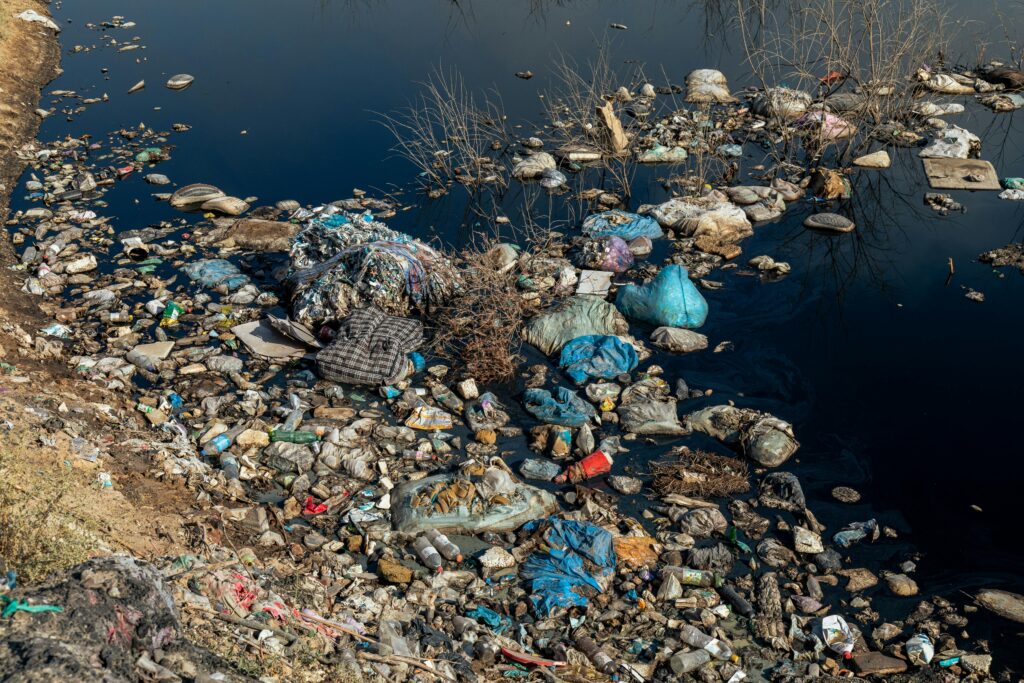
In countries without robust waste infrastructure, nappies have become a serious environmental problem. A 2018 World Bank report found that nappies accounted for a fifth of the waste found in Indonesia’s waterways. Along parts of the West African coastline, fishers complain of diapers floating out at sea in the hundreds. “Dirty nappies could be considered the most harmful item of marine litter,” Jo Royle, Director of Common Seas & Advisory, has warned.
Alternatives exist, but each carries a trade-off. Bio-based disposable nappies can cost up to €1.60 per unit – a significant premium when multiplied across the thousands used during a child’s early years. Reusable cloth nappies are more cost-effective over their full lifecycle yet require upfront investment. Families also need access to reliable washing facilities, access to clean water and hygienic conditions – circumstances that are far from universal. Not to mention the time and energy it takes to wash reusable nappies, resources that new parents are typically deprived of.
Recycling, meanwhile, has long been considered technically unfeasible for not just nappies but also other absorbent hygiene products (AHP), which include sanitary pads and incontinence products.
“These products are highly complex because they are made of mixed materials – plastic, superabsorbent polymers and cellulose – bonded together in a multilayer structure,” Giuseppe Landolfo, CFO at i-Foria, tells REVOLVE.
i-Foria, an Italian clean-technology company headquartered in Pescara, is working to change that. At its research centre in Spresiano, Veneto, the company operates a demonstration plant where it is developing and testing the innovative process for recycling absorbent hygiene products.
Pioneering a breakthrough process to recover high-quality secondary raw materials from AHP waste, the company is rethinking what has long been treated as unrecoverable waste.
Part of the EU Horizon-funded ICARUS project – an initiative designed to advance circular economy principles through research and innovation – the company is advancing solutions to transform one of Europe’s most challenging waste streams into valuable circular resources.
AHP waste represents up to 7% of municipal solid waste in Europe, with almost 90% made up of nappies. Developing a viable recycling pathway has been a persistent challenge. It is not only the mixed materials, but the organic waste that ends up in products like used nappies. “So far, the difficulty of separating these materials and their biological contamination has made them impossible to recycle,” Landolfo says.
The technological breakthrough
The i-Foria team developed a proprietary technology that sterilises AHP waste and turns it into a recyclable resource. “We are now able to sterilise this material, reduce the drug residual, and separate high quality secondary raw materials, in compliance with end-of-waste criteria and with low energy process,” explains Landolfo.
The process begins with controlled collection and processing of used products. These undergo thermo-mechanical treatment and sterilisation. The material is then separated into plastics, cellulose, and superabsorbent polymers. Before being analysed for potential reuse. The entire process is designed to preserve material quality.
The plastics that emerge from AHPs are notably high grade. Originally manufactured to be thin, elastic, and compatible with delicate skin, they retain strong performance characteristics after treatment. “The plastic granules, due to their high quality can be used in many applications that expand from urban furniture and playgrounds up to bottle caps, or even clothes hangers,” Landolfo says.
The cellulose extracted is equally valuable. Designed to sit against a baby’s skin, it is soft, high purity, and largely free from lignin – a component that complicates other cellulose waste streams such as wood pulp. It can be used in insulation panels and construction fillers, sectors urgently seeking lower-carbon inputs.
The construction industry accounts for almost 40% of EU emissions and nearly a third of all waste. Recovered cellulose can also be processed into agricultural substrates or serve as feedstock for biochemicals.
“Each tonne of recycled AHP saves virgin pulp, reduces the production of plastic, carbon footprint, and therefore the dependency on fossil-based and forest-based materials,” Landolfo adds.
When nappies, AHPs, and other waste products are transformed into high-quality materials that directly replace virgin inputs, the result is more than simple recycling – it represents high-value circular recovery of resources.
Circular policy meeting industrial reality
This ambition aligns with the European Union’s circular economy agenda. The Circular Economy Act due for adoption in 2026 aims to establish a Single Market for secondary raw materials by increasing both supply and demand for high-quality recycled inputs. One key indicator of progress is the circularity rate: the share of materials in the economy that come from recycled or reused sources rather than virgin extraction.
Currently, the EU’s circularity rate stands at around 12%. The bloc aims to double that to 24% by 2030. This growth is expected to drum up new employment and business opportunities. According to the European Parliament, the circular economy could create 700,000 jobs by 2030 and unlock €1 trillion in investments by 2050.
“Europe’s competitiveness and resilience depend on how efficiently we use our resources” Jessika Roswall, Commissioner for Environment, Water Resilience and a Competitive Circular Economy, said in December 2025. “This is about creating new opportunities for European industry, speeding up the transition to circularity, reducing our dependencies and ensuring our economy is fit for the future.”
The i-Foria facility currently operates as a pre-industrial demonstration plant, handling around 100 kilograms per batch while producing secondary raw materials compliant with End-of-Waste criteria. Part of the challenge lies in securing stable end markets for those recovered materials – embedding them within wider industrial value chains.
This is where the concept of industrial symbiosis becomes relevant. As Christophe Yvetot, UN Industrial Development Organization (UNIDO) Representative to the European Union, told REVOLVE: “Waste is not really waste. It is only raw material we have not yet learned how to reuse. Industrial symbiosis is part of the solution. The waste of one company becomes the input of another.”
Waste is not really waste. It is only raw material we have not yet learned how to reuse.
Christophe Yvetot, UN Industrial Development Organization (UNIDO)
In that sense, recycled nappies and AHPs are not simply diverted from landfill. They become feedstock for construction manufacturers, plastics producers, and other industries. Transforming what was once municipal waste into a productive industrial resource.
The next step for i-Foria is to construct a semi-industrial module that operates on continuous feed with a processing capacity of one to two tonnes per day, backed by both public and private stakeholders. The goal is to demonstrate that AHP recycling is viable not only technically, but economically across Europe. But that requires more than chemistry. It depends on regulatory alignment, logistics, and recycling infrastructure.
We have done this before
An everyday example shows that this would not be the first time that we have unlocked the circular potential of a waste stream. Consider the plastic bottle.
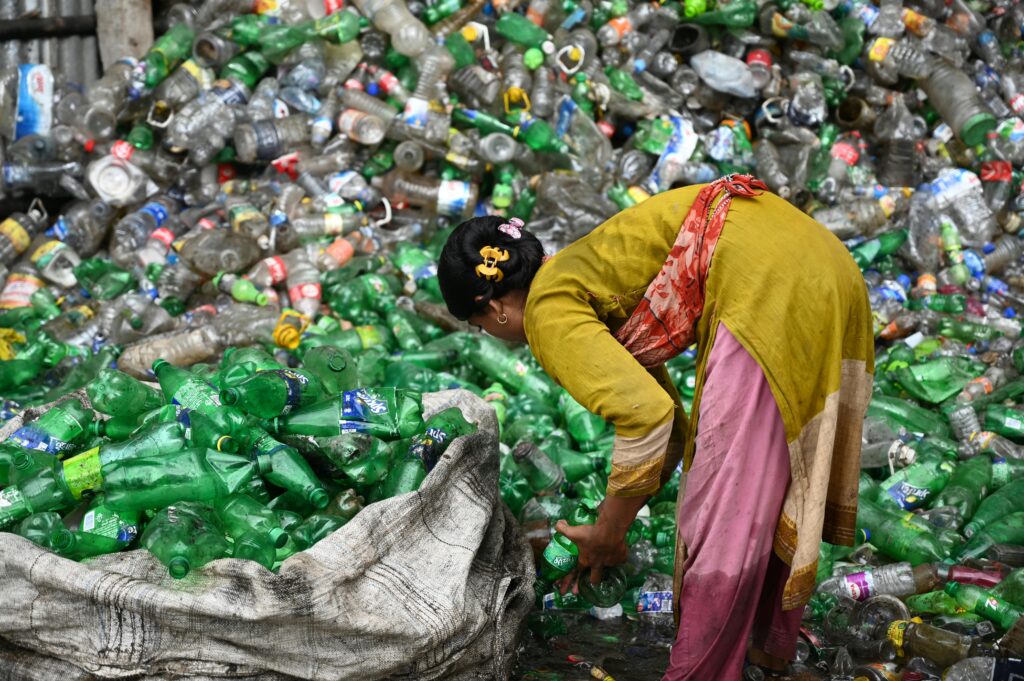
The last time you finished a soft drink, what did you do with the bottle? Chances are, you placed it in a recycling bin – or, in countries with deposit return schemes (DRS), fed it into a reverse vending machine and received a small refund. That bottle does not simply disappear. It enters a tightly organised system where it becomes a feedstock for recycled plastic production. And within months, it may return to the shelf as another bottle.
Once emblematic of throwaway culture, PET – polyethylene terephthalate – has become the most established plastics recycling market in the world. The first PET bottle was recycled in 1977. Today, recycled PET is transformed into textiles, packaging trays, car components, drinks bottles, and countless other products.
According to a 2019 report by S&P Global Platts, around 35% of PET bottles – more than seven million metric tonnes – were recycled globally in 2015, with projections suggesting rates could reach 60% by 2030. Some countries are already approaching near-total recycling rates. In 2023, over 92% of all bottles sold were recycled in Norway amounting to 21,833 tonnes of plastic returned and recycled.
This is all guided by deposit return schemes that guarantee high-quality, uncontaminated feedstock and incentivising consumers to return bottles. At the same time, demand for recycled PET is reinforced through regulation: the EU Single-Use Plastics Directive requires PET beverage bottles to contain at least 25% recycled content by 2025 and 30% by 2030, creating a stable and predictable market.
PET is technically simpler to recycle than AHPs like nappies. But its success was not inevitable. It happened because policy created certainty.
The problem is not the nappy
Back in my soon-to-be daughter’s nursery, I notice the dome-shaped bin in the corner that my partner has carefully prepared. It turns out it has a specific name – a nappy bin, or a “diaper pail”. Designed to hygienically seal away used nappies and trap odours with a “twist & click” system, it is a small piece of engineering built for a very specific problem.
In the United States, an estimated 60% of new parents use a nappy bin and adoption appears to be gradually increasing globally. It is a market response to an unavoidable reality – babies generate waste, and families need a way to manage it.
A nappy bin is a relatively low-cost purchase. We bought ours for €20 second-hand. It’s an item that, one day, could even be manufactured from used nappies and given to parents by municipalities, sitting alongside the specific recycling bins that many households already host.
“Twenty million citizens are already served by separate diaper collection in Italy,” Landolfo explains. In municipalities with well-developed door-to-door systems, the waste is already sorted. “But paradoxically,” Landolfo adds, “diapers collected separately still end up in traditional disposal facilities.”
The technology to change that exists. The capacity to scale exists. Market demand for secondary raw materials exists.
What is missing – for me, and for millions of parents worldwide – is a dedicated, harmonised system that connects the nursery bin to a truly circular outcome.
Because the problem is not the nappy in the bin. It is what happens after we empty it.