
Black Sea at War: Pollution, Mines and a Growing Regional Threat
Photo: NASA / Flickr
War is turning the Black Sea into a polluted, mined and long-term environmental disaster zone
The war in Ukraine is usually told through destroyed cities and lost lives. But far from the frontlines, another crisis is unfolding; quieter and harder to measure, with potentially long-term consequences. The Black Sea, already under environmental pressure, is now absorbing the ecological consequences of war.
Four years into Russia’s full-scale invasion of Ukraine, the damage is no longer limited to land. Oil spills, drifting mines, toxic floodwaters, and unexploded ordnance are turning the Black Sea into a shared environmental risk for all six of its coastal countries, and many more connected to it through rivers.
A fragile sea
Even before 2022, the Black Sea was struggling.
The 436,400 km2 body of water is a nearly enclosed basin with slow water renewal, connected to the Mediterranean only through the narrow Bosphorus. This makes it especially vulnerable to pollution. Rivers such as the Danube and the Dnipro, which empty into the Black Sea after long journeys through agricultural lands, carry with them fertilizers and industrial waste. The discharge of untreated sewage – estimated at 571 million cubic metres annually – into the sea introduces microbiological contaminants that pose a threat to human health and to the economy. In addition, around 95,000 tons of unrecoverable oil waste is discharged annually into the Black Sea.
This pollution does not only stem from large-scale tanker accidents but also from chronic sources such as river runoff, coastal industry, port operations, and routine maritime transport. Much of it enters the sea gradually through operational discharges and land-based inputs, making it less visible but persistent. Because the Black Sea is a semi-enclosed basin with limited water exchange, these pollutants tend to accumulate and circulate within the system, increasing long-term environmental pressure on marine ecosystems. Over time, this has led to eutrophication – nutrient overload that disrupts marine ecosystems.
“Eutrophication essentially means pollution,” Prof. Dr. Bayram Öztürk from the Turkish Marine Research Foundation (TUDAV) told REVOLVE. “It is not a new phenomenon in the Black Sea, it existed before the war and continues today.” He added that the main cause is nutrient input, “especially nitrogen and phosphorus, coming from land-based sources.”
The structure of the sea itself adds to the problem. Due to limited oxygen circulation, a vast portion of its deeper waters is effectively lifeless, containing hydrogen sulfide. As an enclosed sea, the Black Sea traps solid waste from ships and coastal areas, causing debris to wash ashore, threatening both marine life and human health.
The Black Sea was already “a wounded sea” long before the war, Öztürk added. “First, below 200 meters, there is no oxygen. Instead, there is a hydrogen sulfide layer. This means that only about 9% of the Black Sea can support life, while 91% is essentially lifeless,” he said. “Second, the Black Sea has experienced significant pollution over the past 30 years. A major source of this pollution is the Danube River, which carries pollutants from across Europe.”
Öztürk underlined that the environmental stress on the Black Sea goes beyond pollution alone, pointing to overfishing, illegal fishing, and the growing impacts of climate change. He noted that the sea is warming rapidly, a process often described as “Mediterreanisation.”
War adds a new layer of damage
The war has not created the crisis, but it has deepened it. According to Carnegie Endowment analysis, the conflict has accelerated environmental degradation through chemical pollution, damaged infrastructure and the spread of naval mines. These risks are not temporary as many will persist for decades.
Andriy Grafov, Project Coordinator at the HELCOM Secretariat, told REVOLVE that “in the context of the war, the range of environmental threats has grown significantly. There are floating mines, sunken drones, missiles, helicopters, aircraft, and other munitions. On top of that, there are older legacy munitions already on the seabed from the World Wars and Soviet-era dumping practices.
“The war has added a new layer of risks to an already poorly mapped problem,” he added.
One example came in December 2024, when two Russian oil tankers, Volgoneft-212 and Volgoneft-239, were caught in a storm in the Kerch Strait. One sank, releasing around 4,300 tons of mazut oil, while the other leaked at least 2,000 tons.
Mazut is particularly hazardous due to its heavy composition and persistence. Unlike lighter fuels, it forms thick, tar-like masses that do not easily disperse, making cleanup difficult. It can remain in the water or sediments for long periods, contaminating marine ecosystems and food chains.
According to Öztürk, there is not enough information on how these tanker disasters will affect the region. Grafov also pointed to the wider ecological fallout of the Kerch incident, noting that the spill “affected both Russian and occupied Crimean coasts, and reached Ukrainian waters near Odesa as well.”
The Kakhovka dam: pollution on a massive scale
The destruction of the Kakhovka Dam in June 2023 triggered one of the war’s worst environmental disasters, sending 18 cubic kilometers of water rushing downstream over four days and flooding more than 620 square kilometers. The collapse devastated ecosystems along the Dnipro, wiped out breeding grounds for sturgeon, left billions of mussels rotting in the drained reservoir, and carried polluted sediments loaded with heavy metals and other toxic substances toward the Black Sea.
When the floodwaters reached coastal areas near Odesa, they sharply reduced salinity and contaminated the water with metals, petroleum byproducts, and other pollutants, dealing a severe blow to marine life. Chemicals, sewage, heavy metals, and bacteria, including Salmonella, E. coli and Vibrio cholerae, were pushed into the Dnipro-Buh delta and eventually into the Black Sea. Beaches were closed, fishing was banned, and some areas were described as “garbage dumps” and “animal cemeteries.”
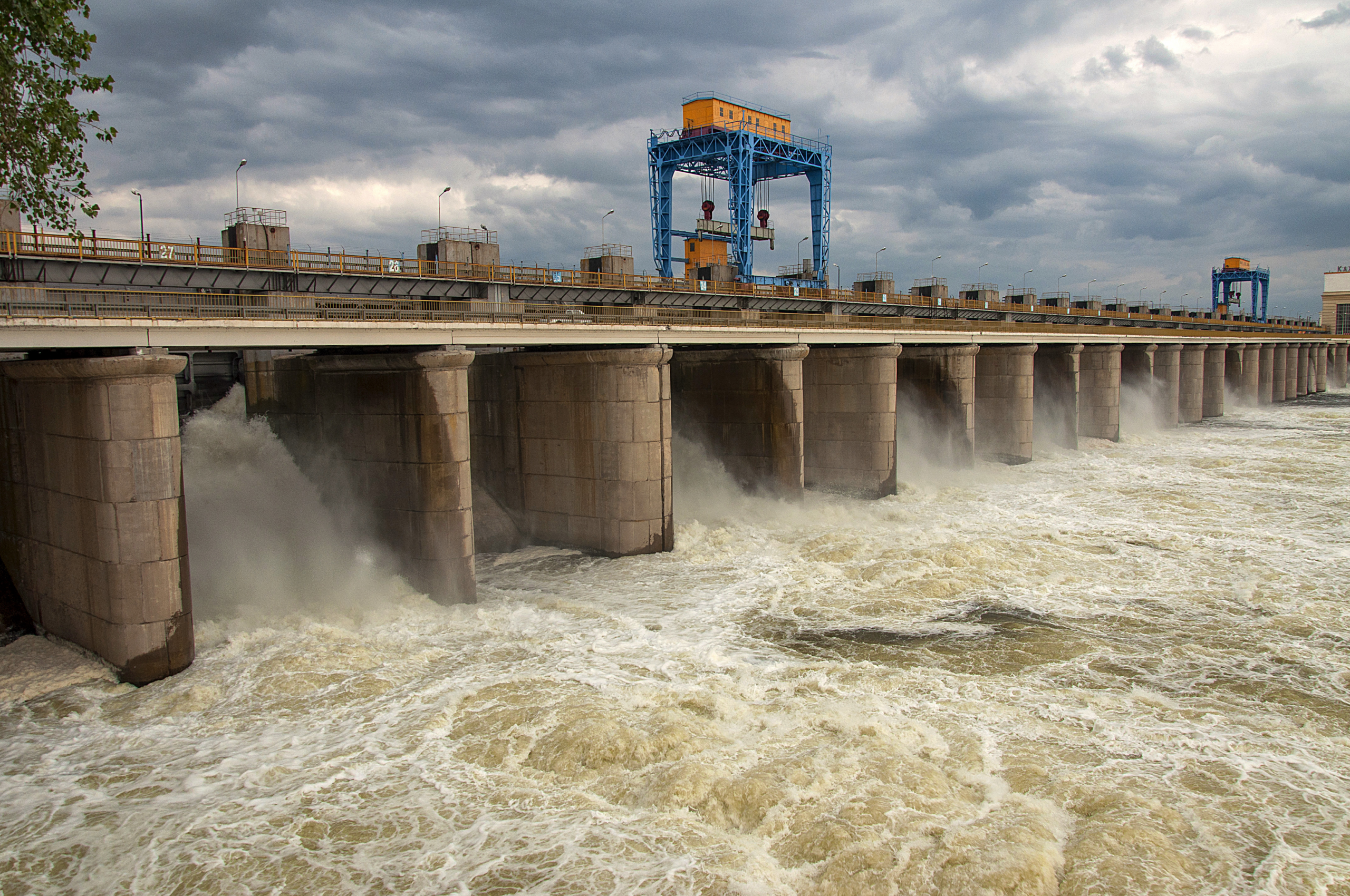
Grafov described the event as a turning point for coastal habitats, saying it “caused a large inflow of freshwater and sediments into the sea.” He added: “that sharply reduced salinity in some coastal zones for several weeks, which in turn caused major habitat disruption. These kinds of changes can have very serious effects on marine ecosystems.”
Decades-old industrial pollution that had settled in reservoir sediments was also released. As the current disturbed these layers, toxic materials entered the water column and moved downstream. At the same time, the ecological toll on land was severe: more than 50,000 hectares of forest were flooded, massive fish die-offs occurred, and protected areas were devastated as the Black Sea faced one of its biggest challenges in its history.
Mines drift danger across borders
Alongside pollution, naval mines have become one of the most immediate challenges. Since the beginning of the war, mines deployed by both Russia and Ukraine have drifted across the Black Sea. Carried by currents, some have reached the coasts of Romania, Bulgaria and Türkiye. Incidents involving ships have already been recorded.
The destruction of the Kakhovka Dam made the situation worse. Floodwaters displaced landmines, turning them into floating explosives.
Mine clearance operations are ongoing, but they bring their own risks. Explosions used to neutralise mines can harm marine life, especially mammals sensitive to sound. Öztürk said one of the most visible wartime effects has been on cetaceans: “We know that over a thousand individuals have washed ashore. These marine mammals are affected by underwater explosions and noise pollution, as they rely on sound and must surface to breathe.”
At the same time, he urged caution with wartime numbers. “Data is limited, and some figures circulating in public discourse are not scientifically reliable,” he said. “We need a robust and independent scientific monitoring system to understand the real scale of the damage.”
For coastal communities, the impact is also economic. According to Öztürk, fear of mines has disrupted fishing activities, with small-scale fishers unable to go to sea, and no compensation mechanisms in place.
Grafov also warned that the mine danger is both immediate and long-term. “In shallow areas, munitions may be caught by fishing gear or dredging operations, which creates an immediate danger for fishers and marine workers,” he said. “Floating mines are also a direct threat to shipping and coastal safety.”
A regional problem without a regional response
The danger is not limited to what floats as unexploded ordnances from past conflicts already exists in the Black Sea. A Romanian survey conducted between 2015 and 2018 identified more than 2,000 underwater objects, including mines, anchors, and wreck fragments.
Most are not immediately dangerous, but they remain a long-term environmental risk. The Black Sea’s unique conditions, low oxygen and low salinity, allow metal objects to remain intact for decades. At the same time, currents, and sediments can shift or expose them unpredictably.
Grafov stressed that the Black Sea remains poorly understood compared with other European basins. “The main difficulty is that we still know much less about the Black Sea than we do about the Baltic Sea,” he said.
“In the Black Sea, there is a major knowledge gap.” He also noted that the sea’s physical characteristics make assessment more difficult: “The Black Sea has very specific characteristics. It is deeper than the Baltic and behaves differently.” In particular, “below roughly 150 metres the waters do not mix. These deeper waters are anoxic, with no oxygen, and contain hydrogen sulfide.”
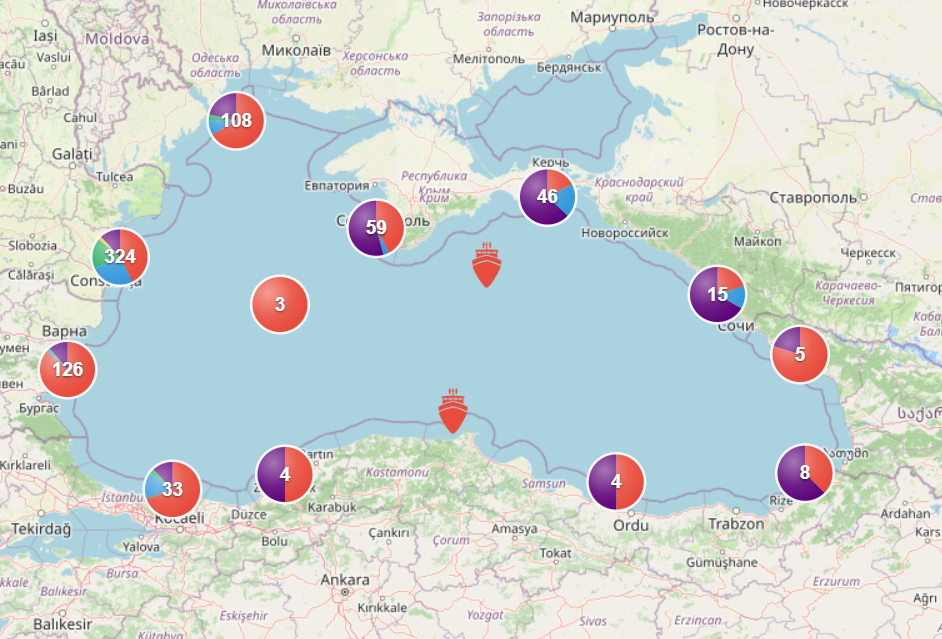
The war added a new layer to this knowledge gap. Sunken ships, explosives, drones and military debris are accumulating on the seabed. The impact this will have is still unclear.
“We are not sure,” Öztürk says. “After the war, an inventory must be made.” In a longer interview with REVOLVE, he expanded on that point: “All Black Sea coastal countries must work together to assess how the sea has been affected. This requires the establishment of an international scientific commission.”
Grafov echoed the concern from a technical perspective. “As munitions sit on the seabed, they corrode,” he said. “Once the casing degrades, the contents can leak into the surrounding environment. Conventional munitions are already a major pollution concern, and if chemical munitions are present, the risks are even more serious.”
Yet the response remains weak. Öztürk said: “There are several regional organisations related to the Black Sea, including those focused on economic cooperation and environmental protection. However, their impact has been extremely limited.” He added: “We are not seeing meaningful action on environmental protection, fisheries management, or biodiversity conservation.”
An uncertain environmental future
One of the biggest challenges is simply understanding the scale of the damage.
War conditions make scientific monitoring difficult. Access to affected areas is restricted, and data can be incomplete or politicized. Even widely circulated claims, such as large-scale dolphin deaths, remain contested.
What is clear, however, is that the environmental consequences will outlast the war. Chemical contamination, damaged habitats, drifting mines and submerged explosives will continue to shape the Black Sea for years, possibly decades. And because it is a shared sea, the burden will not fall on one country alone.
That is why projects like SAFE BS2BKS (Safe Actions for Environment – Baltic Solutions to the Black Sea) are trying to build a basis for long-term action. Grafov said the idea is to transfer knowledge, methods and experience from the Baltic Sea to the Black Sea. He added that the goal is not simple replication, but rather “informed adaptation.”
Complementing these efforts, EU-backed initiatives are also expanding regional cooperation. The €5.9 million CAMMera project supports knowledge exchange with Black Sea stakeholders through workshops and joint activities, bringing together authorities, scientists and industry to co-develop solutions and feed regional expertise into wider EU munitions strategies. These efforts are further supported by shared platforms such as the Munitions in the Sea Portal, aimed at improving coordination and information exchange across European sea basins.
Öztürk, who has studied the Black Sea for more than three decades, ended on a note of warning. “The Black Sea is already under significant environmental pressure. The fact that attention is now diverted away from conservation and toward conflict makes the situation even more unfortunate.”
This article includes contributions from JPI Oceans.