
Women and Youth Can Drive Sustainable Agriculture in Senegal
Photo: Jacob Threadgould / REVOLVE
In Senegal, the seeds of the future are in the hands of its women and youth.
The West African nation of Senegal is highly vulnerable to climate change, caught between coastal exposure and a heavy reliance on natural resources. According to United Nation figures from 2024, approximately 60% of Senegal’s population lives in rural areas, and over half of those rural dwellers rely on agriculture for their survival. In a country where livelihoods are deeply intertwined with the land, environmental shifts quickly translate into economic and social instability.
Senegal’s geography creates a ‘perfect storm’ of climate challenges. In the north and centre, desertification is thinning topsoil, while areas in the delta and coastal regions face threats from rising sea levels and saltwater intrusion. For the millions of rural dwellers who rely on rainfed agriculture, this is not an environmental statistic but a threat to their way of life. Soil degradation and salinisation make it harder for crops to take root, while shifting weather patterns make the traditional planting calendars that were passed down over generations unreliable. Rains arrive later than expected, end sooner, or fall in intense events that wash away fragile topsoil, leaving farmers struggling to adapt season after season.
Within this complex context, women are the backbone of rural food security in Senegal.
Within this complex context, women are the backbone of rural food security, comprising nearly 70% of Senegal’s agricultural workforce and producing 80% of the nation’s food. Despite these contributions, women continue to face systemic barriers, ranging from discriminatory social norms to legal frameworks, limiting their access to land ownership, a financial services, and agricultural extension services. While a male farmer may own the land he farms, women often gain access via traditional grazing rights, or family permission, making their long-term investment in the soil a riskier endeavour.
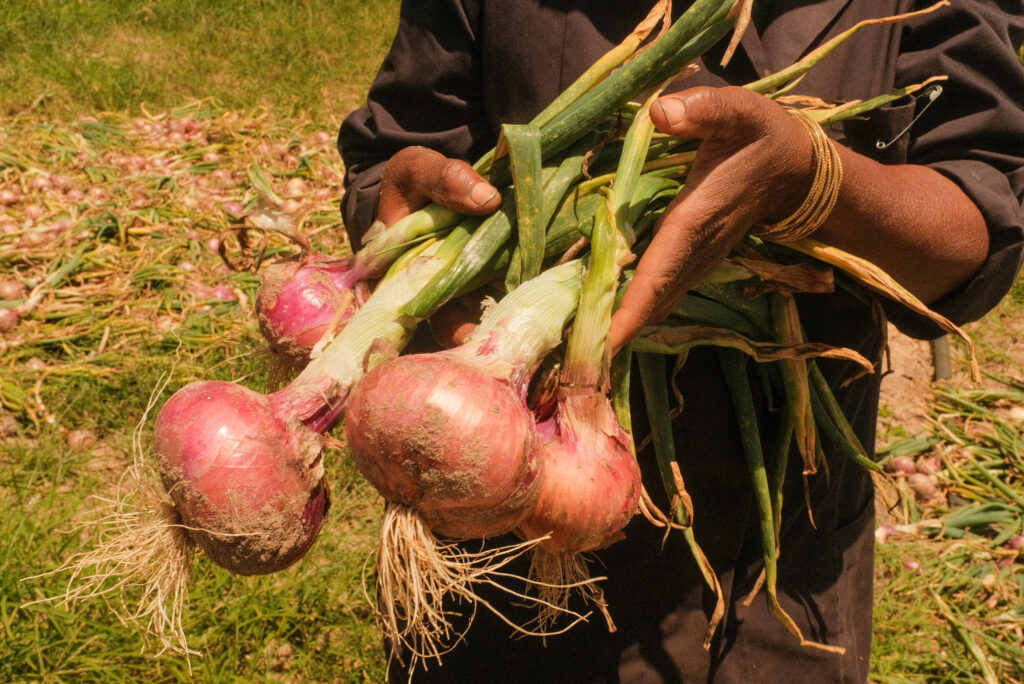
The distinction between customary land usage rights and formal land ownership is critical. Traditional usage rights may grant women the ability to cultivate a plot, but these rights are often informal or contingent on family relationships. However, these rights do not provide the legal security to use the land as collateral to access credit or invest in long term soil restoration. Many agroecological practices that improve conditions and support climate resilience require time before results are visible. Without guaranteed tenure, the incentive to invest in measures that may only yield returns after several seasons is significantly reduced. In this way, insecure land access not only undermines farmers decision-making, but also broader efforts to build climate resilience and restore degraded ecosystems.
At the same time, Senegal is home to a large and growing youth population. According to an analysis of UN population data from PopulationPyramids, over half of the country’s population is under 21 years old. Without adequate support systems, however, this demographic opportunity might be missed and Senegal’s youth risk being excluded from shaping the future of Senegal’s agricultural sector. Investing in sustainable agricultural education and entrepreneurship is essential not only for securing rural livelihoods, but also for addressing long-term challenges such as climate adaptation and food system resilience.
One of the biggest challenges to youth participation in agriculture is the insufficient access to knowledge, information, and education. In many rural areas, agricultural training remains limited, and young people are incentivised to pursue urban opportunities rather than farming careers. It is therefore important to improve young people’s access to these resources and to incorporate agricultural skills into rural education, to ensure rural youth have the skills to take part in the emerging green economy.
One of the biggest challenges to youth participation in agriculture is the insufficient access to knowledge, information, and education.
Another challenge is the limited access to financial services, as most providers are hesitant to support rural youth due to factors like insufficient collateral, low financial literacy, and other barriers. Developing and promoting financial products tailored to youth, strengthening mentoring programmes, and expanding start-up funding opportunities could help remedy this issue and unlock hidden entrepreneurial potential. By expanding financial inclusion, Senegal can help transform agriculture from a subsistence activity into a dynamic and innovative sector.
From agricultural workers to decision-makers
Addressing these challenges to empower women and youth is not only a matter of equity, but an economic and environmental imperative that strengthens food security, fosters inclusive economic growth, and creates a more resilient food system. To build a sustainable system in Senegal, these groups must move from being viewed as solely farm workers, to being recognised and supported as decision-makers, innovators, and leaders.
Creating an enabling environment is essential if women and youth are to truly thrive in agriculture. This means advocating for the effective implementation of existing laws that grant land access, alongside ensuring the rehabilitation and fair distribution of agricultural plots. Policy alone, however, is not enough: training programmes tailored to their specific needs are fundamental to success, and strengthening coordination between local authorities, research institutions, and farmer organisations can further ensure these policies translate into tangible improvements on the ground.
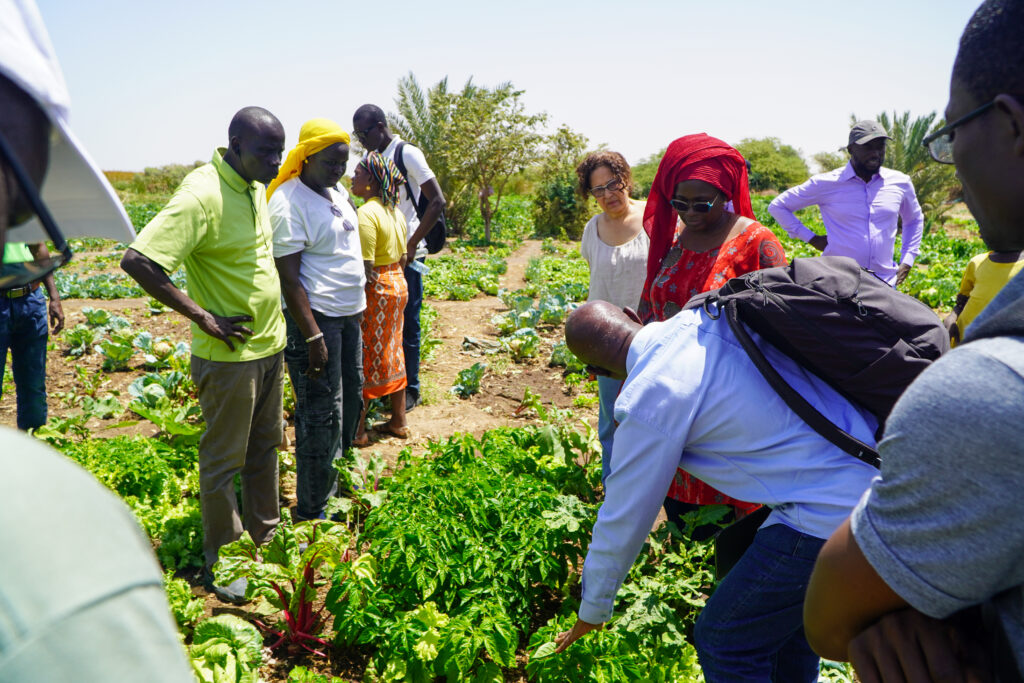
This success is rooted in agroecology, a farming approach that works with nature rather than against it. Activities such as workshops focused on practices like composting, seed selection, and water management can help to equip women and young farmers with the practical tools needed to restore soil health while navigating climate risks.
To truly empower these communities, training centres must embrace a holistic curriculum tailored to the specific needs of women and youth. This means integrating leadership and entrepreneurial training alongside field-based skills. While workshops provide the immediate means to survive a changing climate, the addition of digital tools and sustainable business models ensures that the next generation sees agriculture not just as a viable career, but as an innovative and exciting one.
Success stories
Across Senegal, change is already taking root. In May 2025, the country officially launched the second phase of the PAVIE project (Projet d’appui et de valorisation des initiatives entrepreneuriales des femmes et des jeunes) at the Grand Théâtre National in Dakar. Building on the first phase that created 93,000 jobs, this new chapter focuses on introducing key improvements, including the complete digitalisation of all business processes, enhanced territorial support through localised mechanisms, and focused economic empowerment in underserved areas. In doing so, PAVIE aims to strengthen the agricultural, livestock, and fisheries sectors while fostering innovation.
Complementing this is the CIRAWA project, an EU-funded initiative dedicated to developing new agroecological-based practices that build on existing local and scientific knowledge to help create more resilient food supply chains in West Africa. The project prioritises the inclusion of women and youth, and has been conducting targeted awareness-raising campaigns since its launch in 2022.
CIRAWA: Agroecological Strategies for Resilient Farming in West Africa
CIRAWA is an EU-funded project working with small-holder farmers in West Africa to improve food nutrition, local livelihoods, and ecosystem health. Bringing together 16 partners from 9 countries, CIRAWA is developing new agroecological-based practices that build on existing local and scientific knowledge to help create more resilient food supply chains in 8 regions across Cape Verde, Ghana, Senegal, and The Gambia.
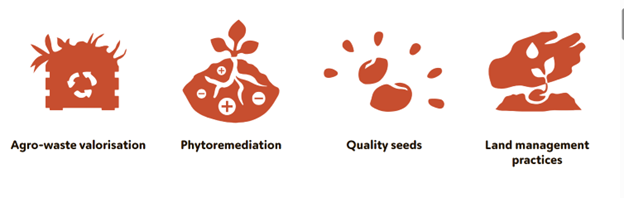
CIRAWA aims to demonstrate how working with nature can enhance ecosystem health and biodiversity, while improving local livelihoods and climate resilience using four key agroecological approaches:
In April 2025, CIRAWA hosted a week-long event in Saint-Louis to raise awareness about agroecology, giving students the opportunity to get hands-on experience with sustainable farming techniques that support soil health. The project also organised a visit to meet and learn from members of the Femmes Battantes de Mbane, a women-led farming initiative in the area that is demonstrating that strength lies in numbers.
Women farmer networks
Fatou Thiaw, a member of Femmes Battantes de Mbane, spoke more about the initiative from her farmland on the banks of the Lac de Guiers, a major source of freshwater in Senegal. Like many farmers on the banks of the lake, Thiaw relies on flood irrigation. During the rainy season, the lake’s water fills the plots, which are then planted when the water subsides.
“We women work in agriculture. Each of us has a few plots to cultivate,” Thiaw explained to REVOLVE. “We work with CIRAWA, which helps us a lot. We are also seeking help from relevant authorities to combat soil salinity… (because) salinity makes production difficult.”
The Femmes Battantes de Mbane collective, which has around 50 members, is more than just a farming group, it is a vital support network. By organising as a collective, the group offers stronger representation and bargaining power to advocate for their needs in the face of climate change and structural inequalities.
Alongside environmental challenges, Thiaw and her colleagues face distribution and infrastructural challenges: “We don’t yet have complete control over compost production, and it’s not easy to produce it on our own… in addition, we have product distribution problems: sometimes crops rot due to lack of preservation and they are fed to animals.”
An appetite for knowledge
Further south, near the town of Mboro, Binta Ba’s farm emerges from the arid plain like a green oasis, rows of cabbages are watered under the shade of an iconic boabab tree. Farming is in her blood, and she endeavours to employ agroecological practices like compost but points out that there is a lack of regulatory support, training, and finance.
“If we had training in seed production, we wouldn’t have to buy them,” she told REVOVLE in an interview. “Or if the government guaranteed the purchase of our crops, and provided cold storage facilities, it could fill market gaps without resorting to imports. This would be truly beneficial for us, the producers.”
Ba works closely with the CIRAWA project’s regional partner Senegalese Agricultural Research Institute (ISRA) to implement socially minded agroecological practices in the country. Dr Mame Farma Ndiaye, research head at ISRA-Saint-Louis told REVOLVE she was optimistic.
“I have hope. With 15 years of experience at ISRA, when we started working only on organic material, with the same producers, in the same areas, we realise that the farmers themselves are aware of this: they’re aware of the dangers of the excessive use of chemical fertilisers on their health, they see for themselves the degradation of the soil,” she said.
I have hope. They are aware that they need to change their farming methods.
Dr. Mame Farma Ndiaye, Research Lead, ISRA-Saint-Louis
Women and youth at the heart of change
Building a sustainable agricultural sector requires placing women and youth at the centre. Given Senegal’s climate vulnerability, climate-resilient agricultural practices need to be increasingly employed.
As Senegal continues to stimulate entrepreneurial growth, ensuring that women and youth have access to tools and resources to support locally adapted sustainable agricultural practices will have far-reaching impacts across the country. In doing so, the country can build resilience to climate change while strengthening rural livelihoods and domestic food systems.
In this context, training and education that offer practical experience in implementing climate-resilient farming techniques are essential not only to safeguard the sector but to enable it to thrive despite growing environmental challenges.
For the shorter version of this article, visit: Women and Youth Driving Sustainable Agriculture in Senegal.