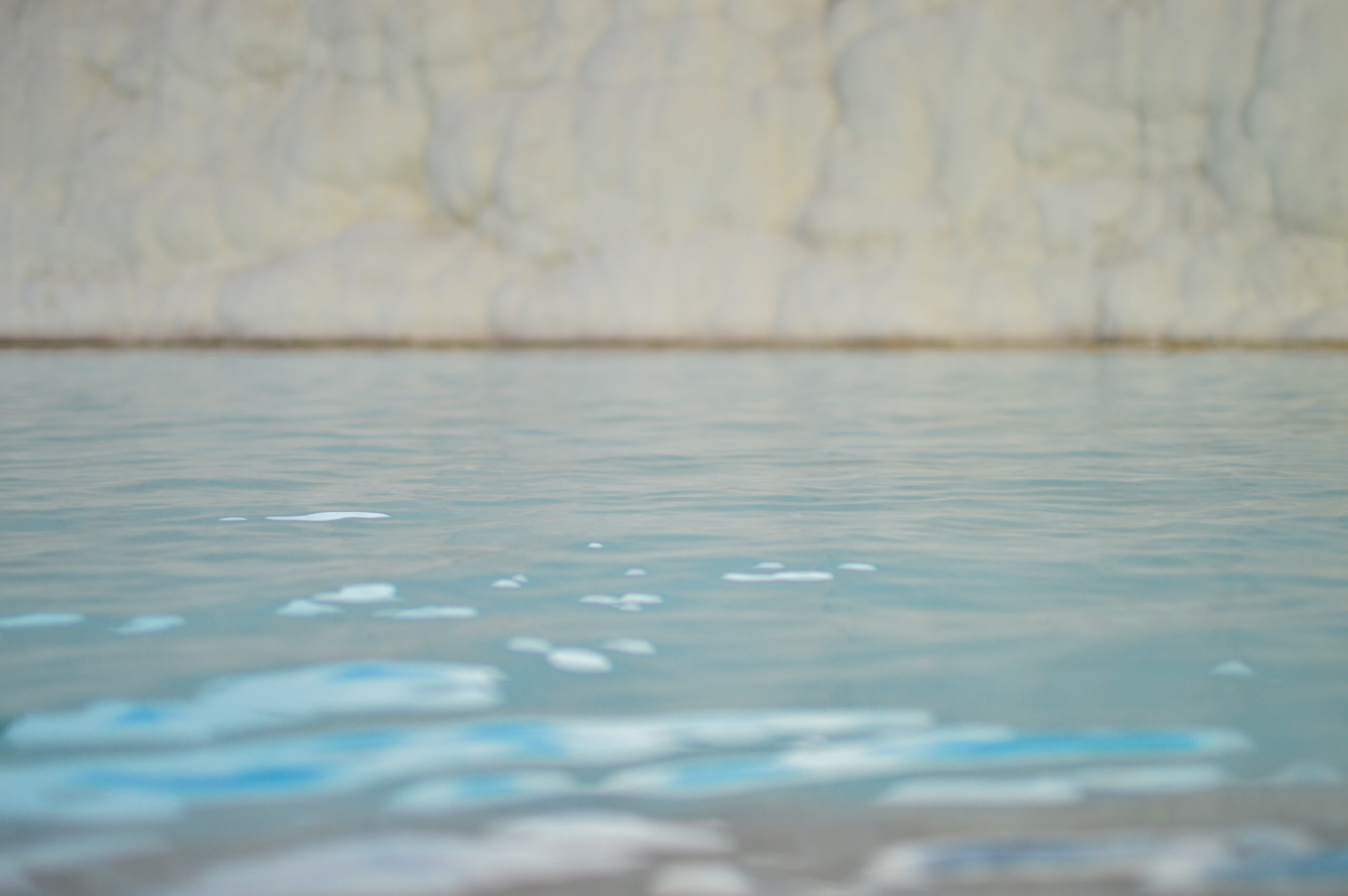
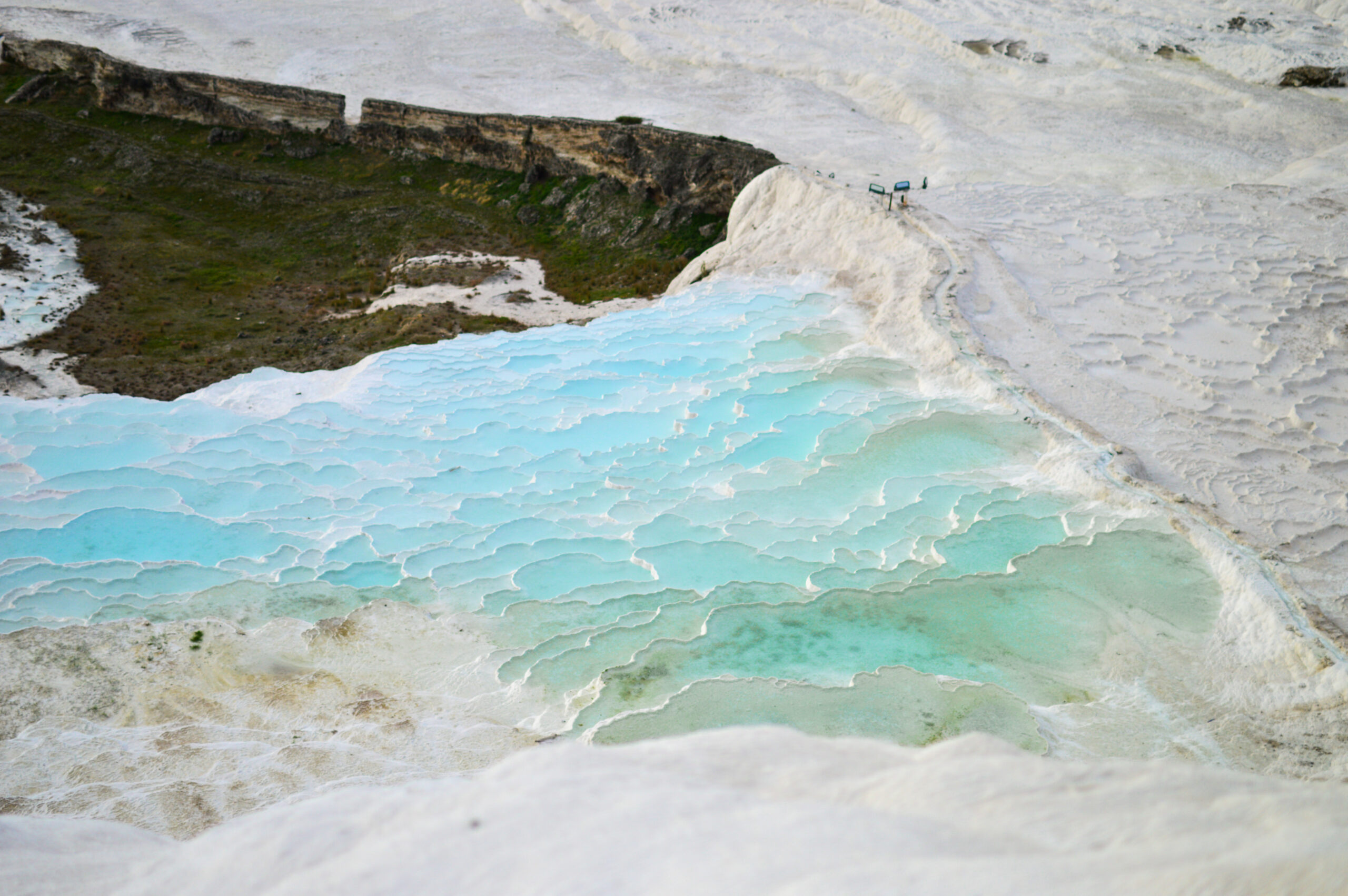
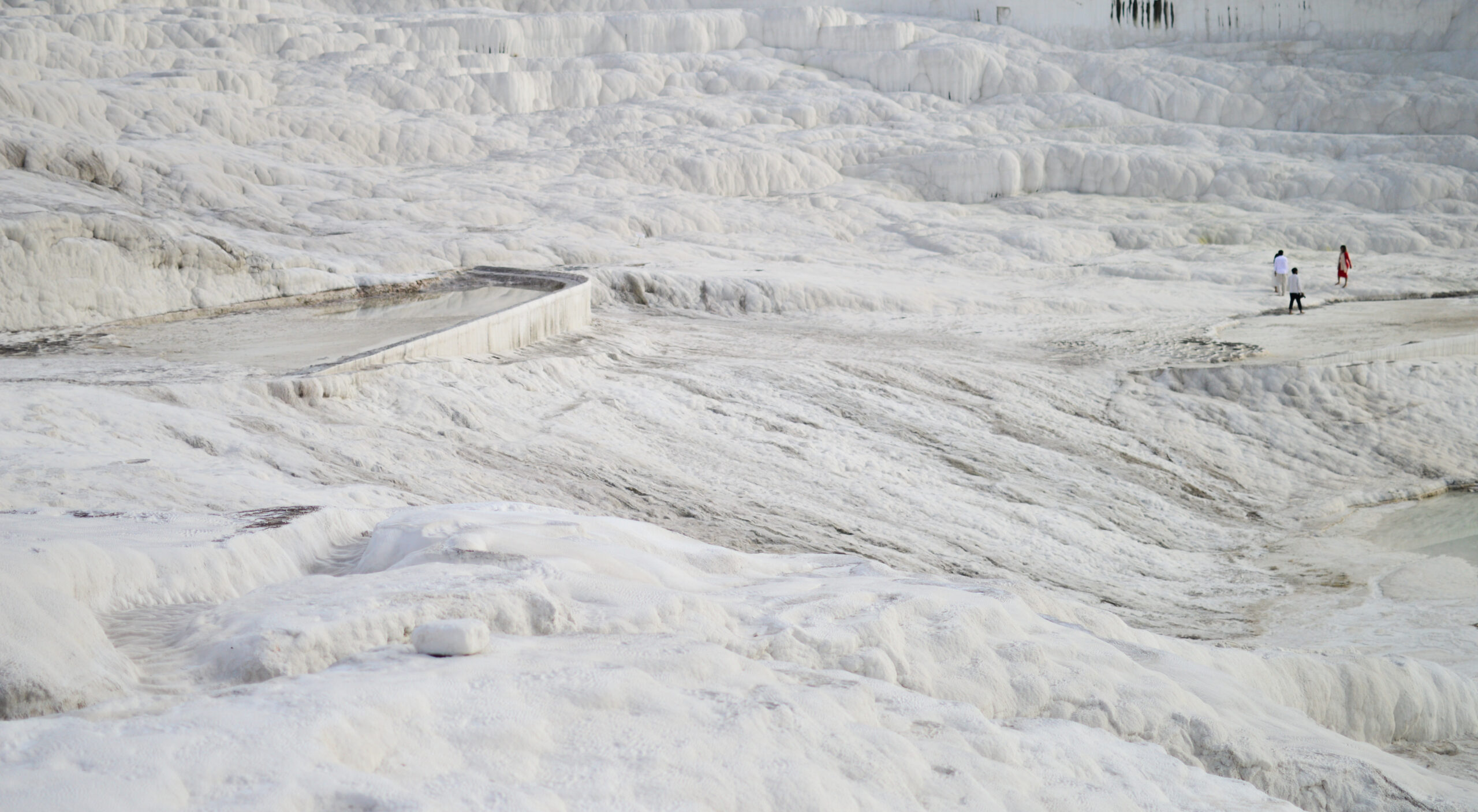
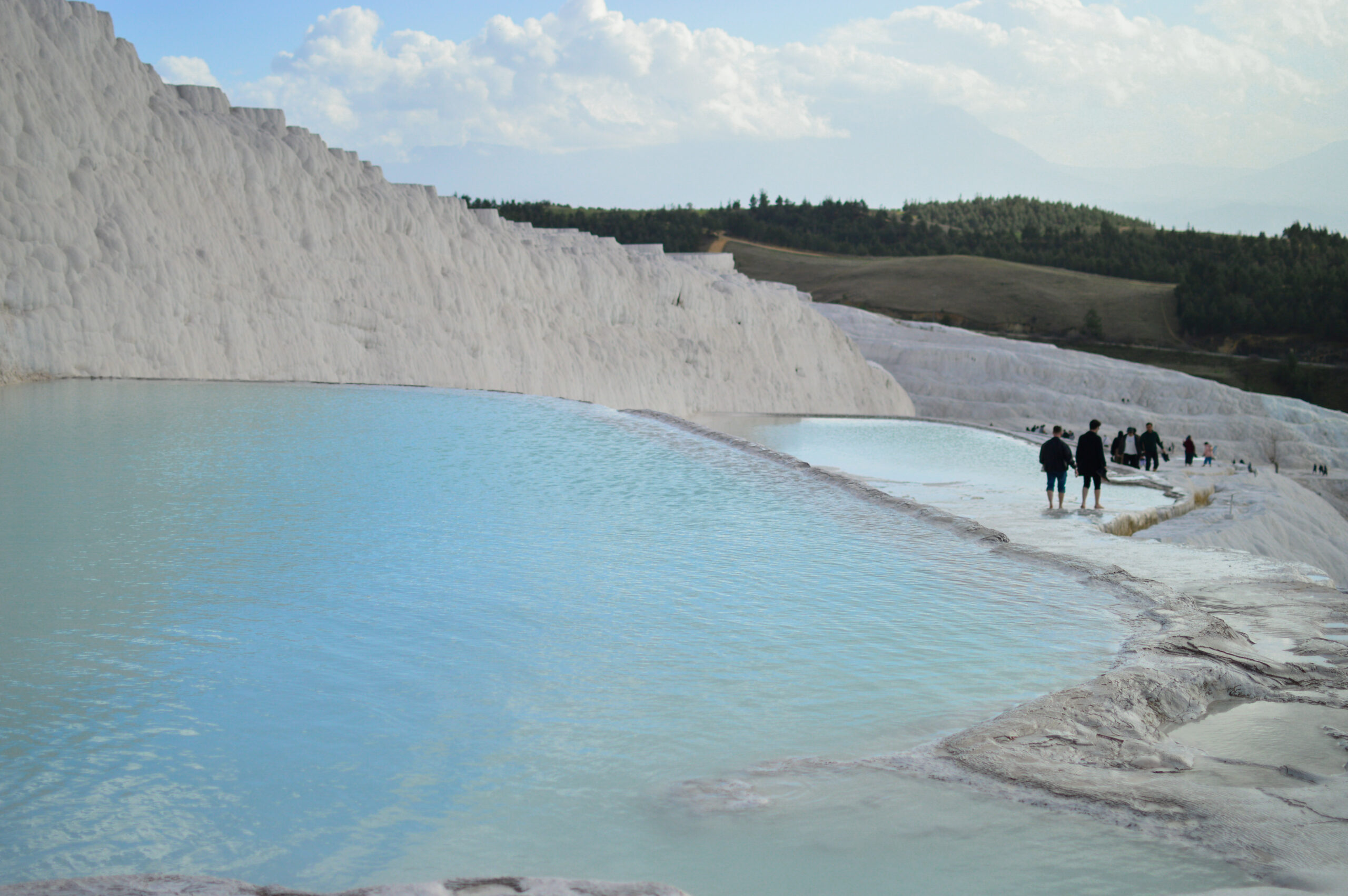
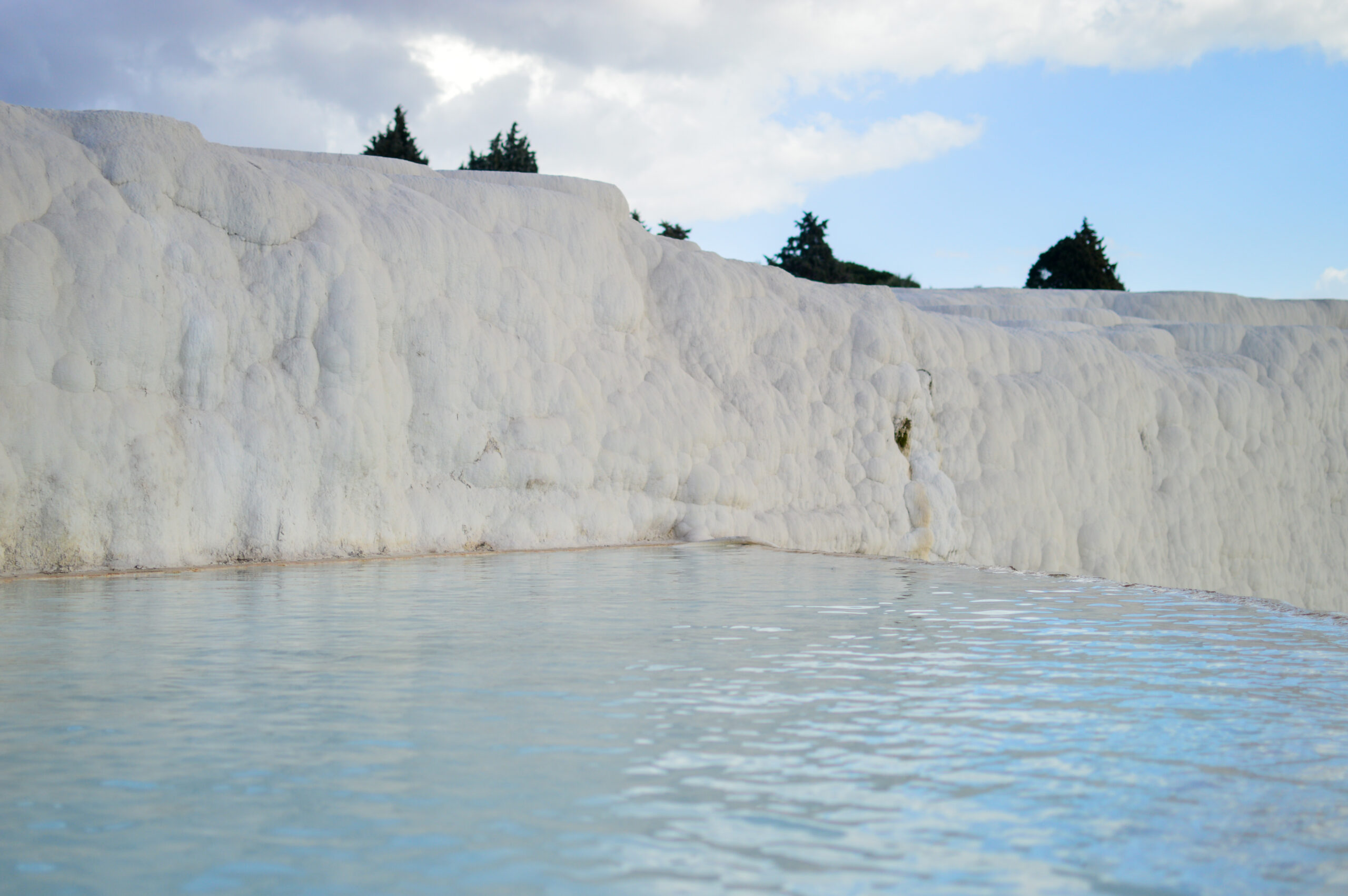
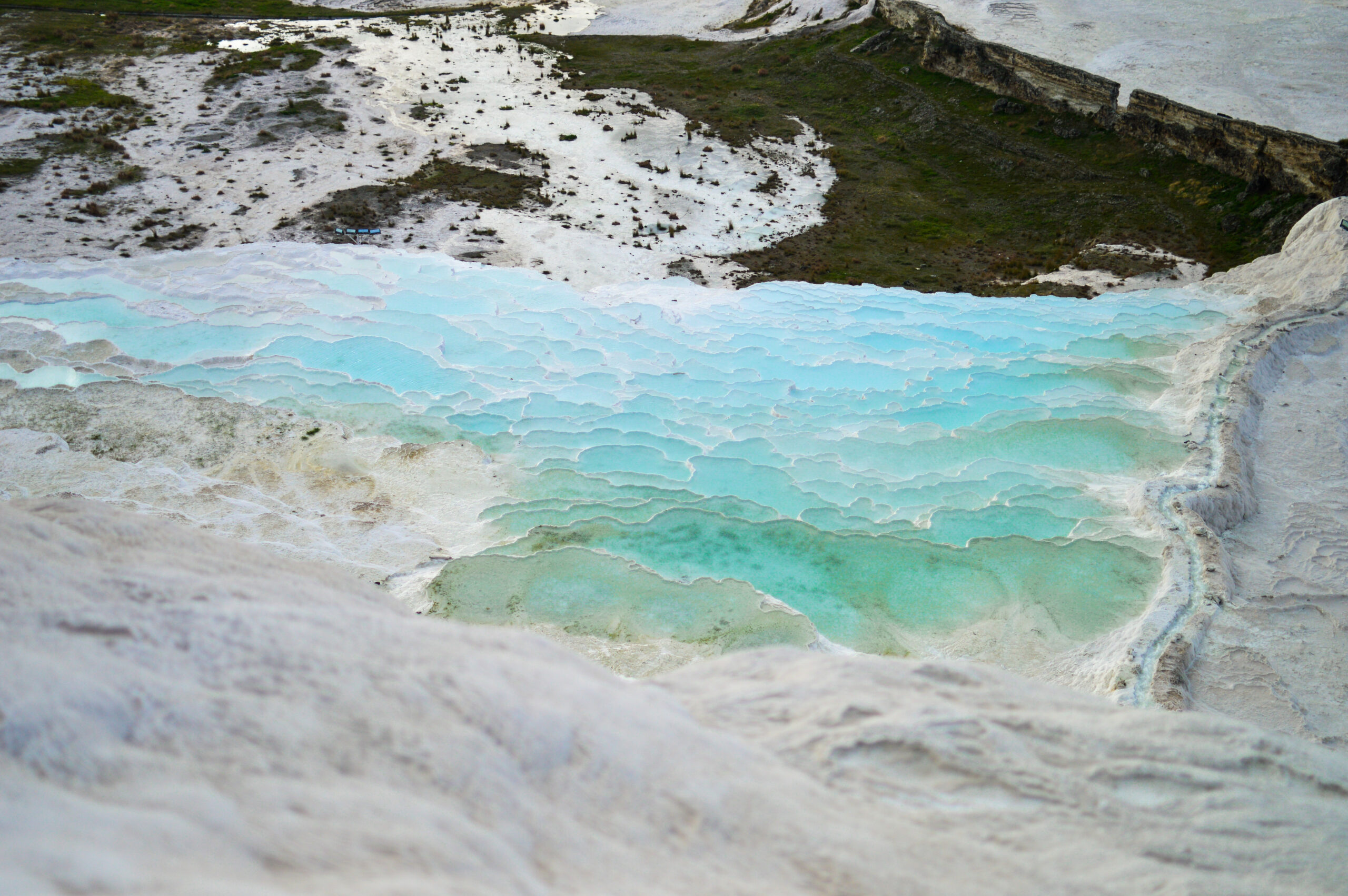
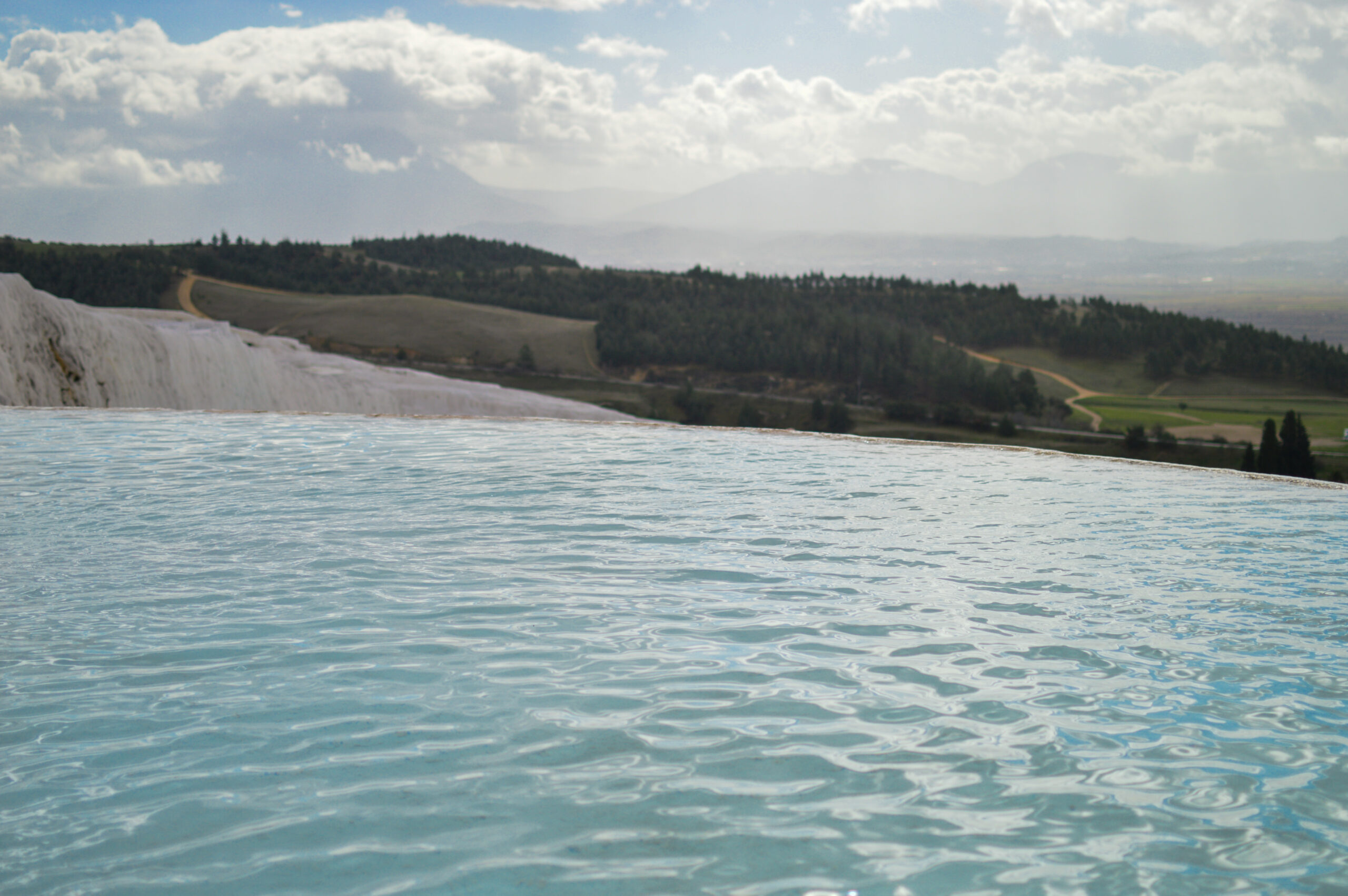
At Pamukkale in southwestern Türkiye, nature has built something that feels almost impossible, bright white terraces stepping down the hillside, filled with warm, clear pools. The formations run for nearly 3 kilometers, created as hot spring water, some of it close to 100°C, flows downhill and leaves behind thin layers of calcium that slowly harden into limestone.
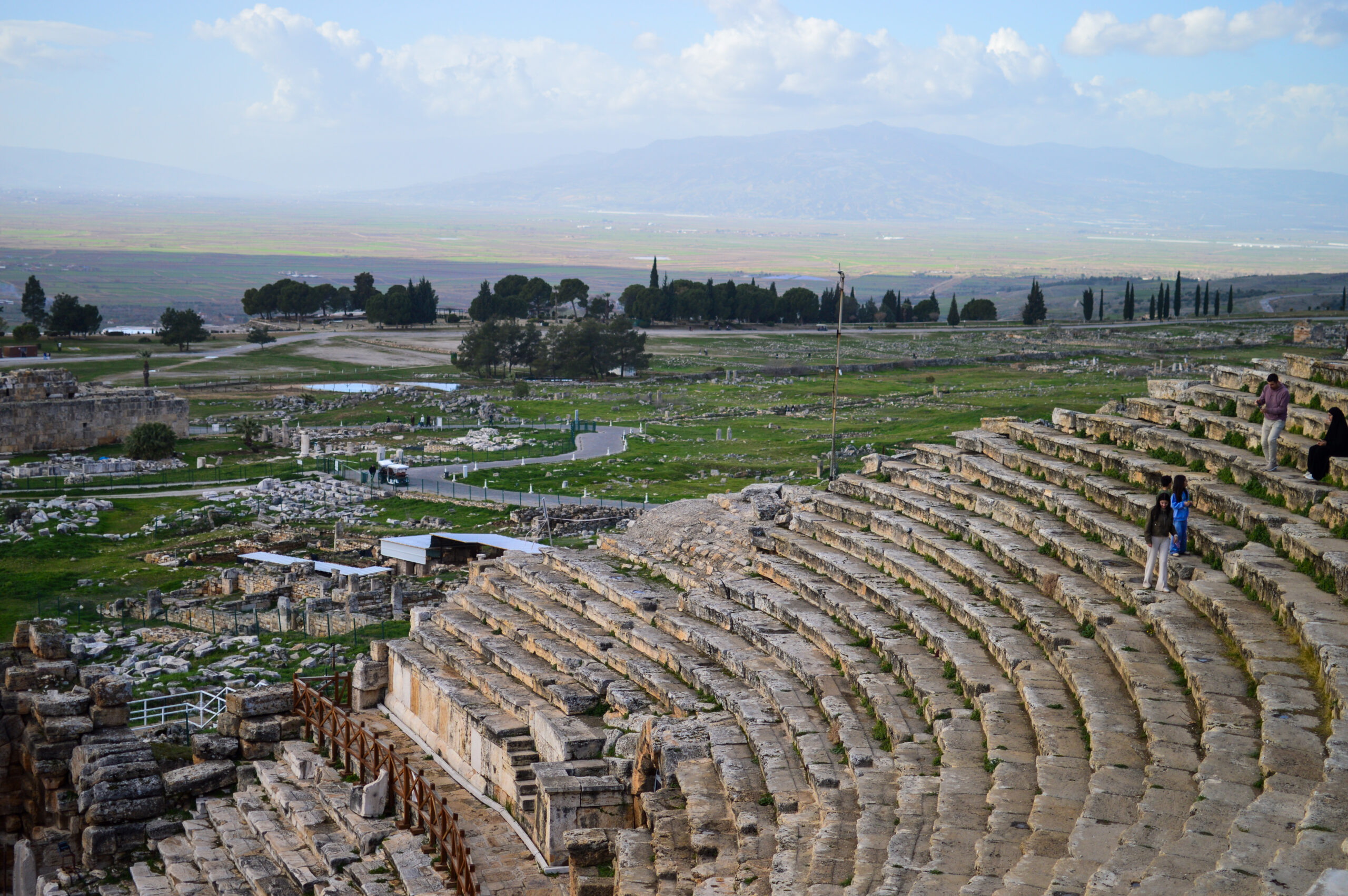
Just above the terraces stands the ancient city of Hierapolis, founded over 2,000 years ago around these same thermal waters. Once a major spa town of the Roman world, it’s now a spread of ruins, a grand theatre, stone streets, broken columns, all overlooking the bright pools below. The link between people and water here has lasted for centuries.
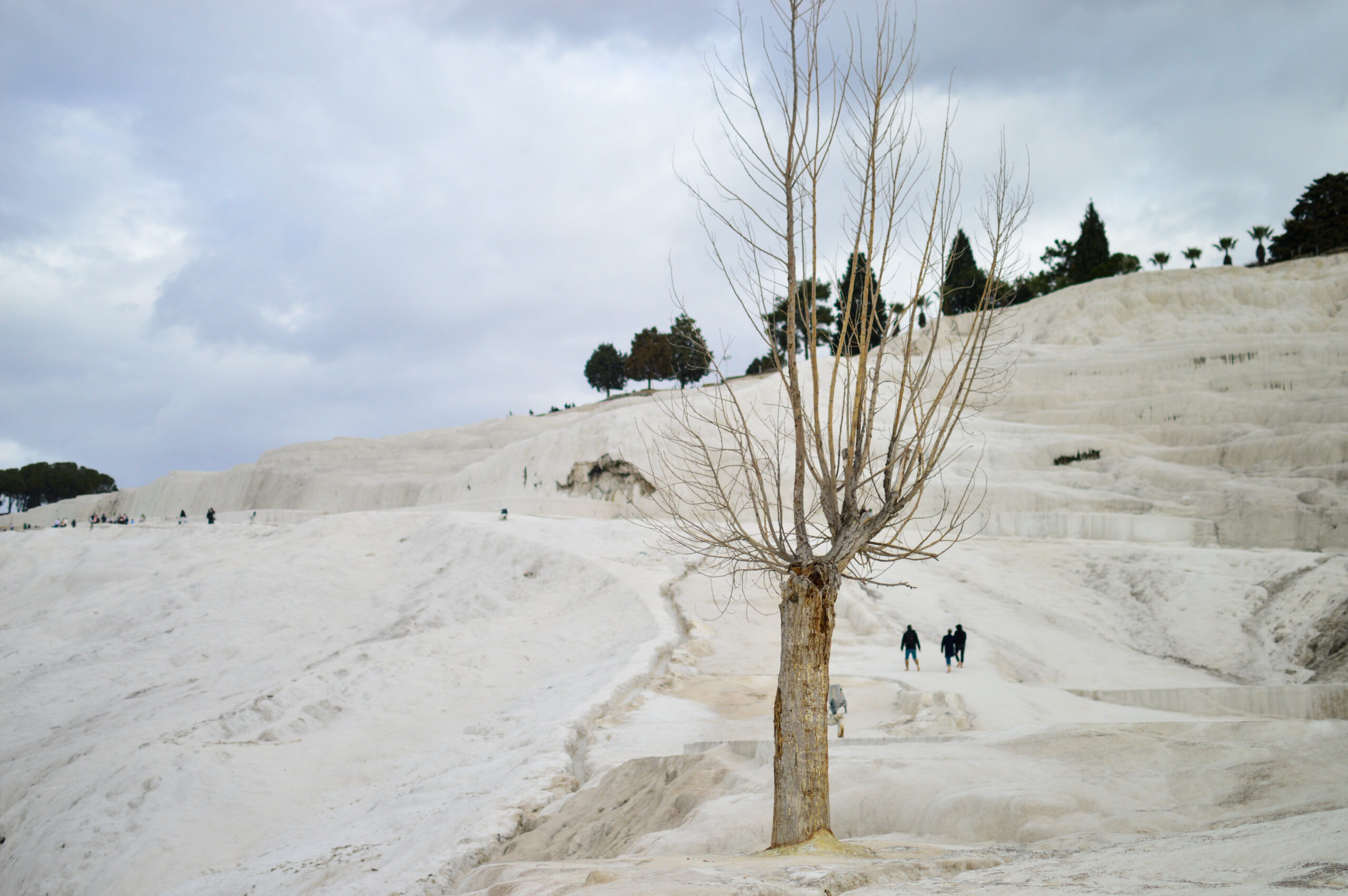
Today, Pamukkale is a UNESCO World Heritage Site and one of Türkiye’s most visited places, drawing more than two million people each year. But the springs that built the terraces are weakening. In recent measurements, water flow in some areas has dropped from around 400 liters per second to nearly 100–150, raising alarms about darkening stone and long-term damage. Scientists link the decline mainly to a decade of ongoing drought, reduced snowfall and thinner snow cover in recharge areas, heavier short rainstorms that fail to feed groundwater properly, and increased underground water and geothermal extraction in the surrounding region.
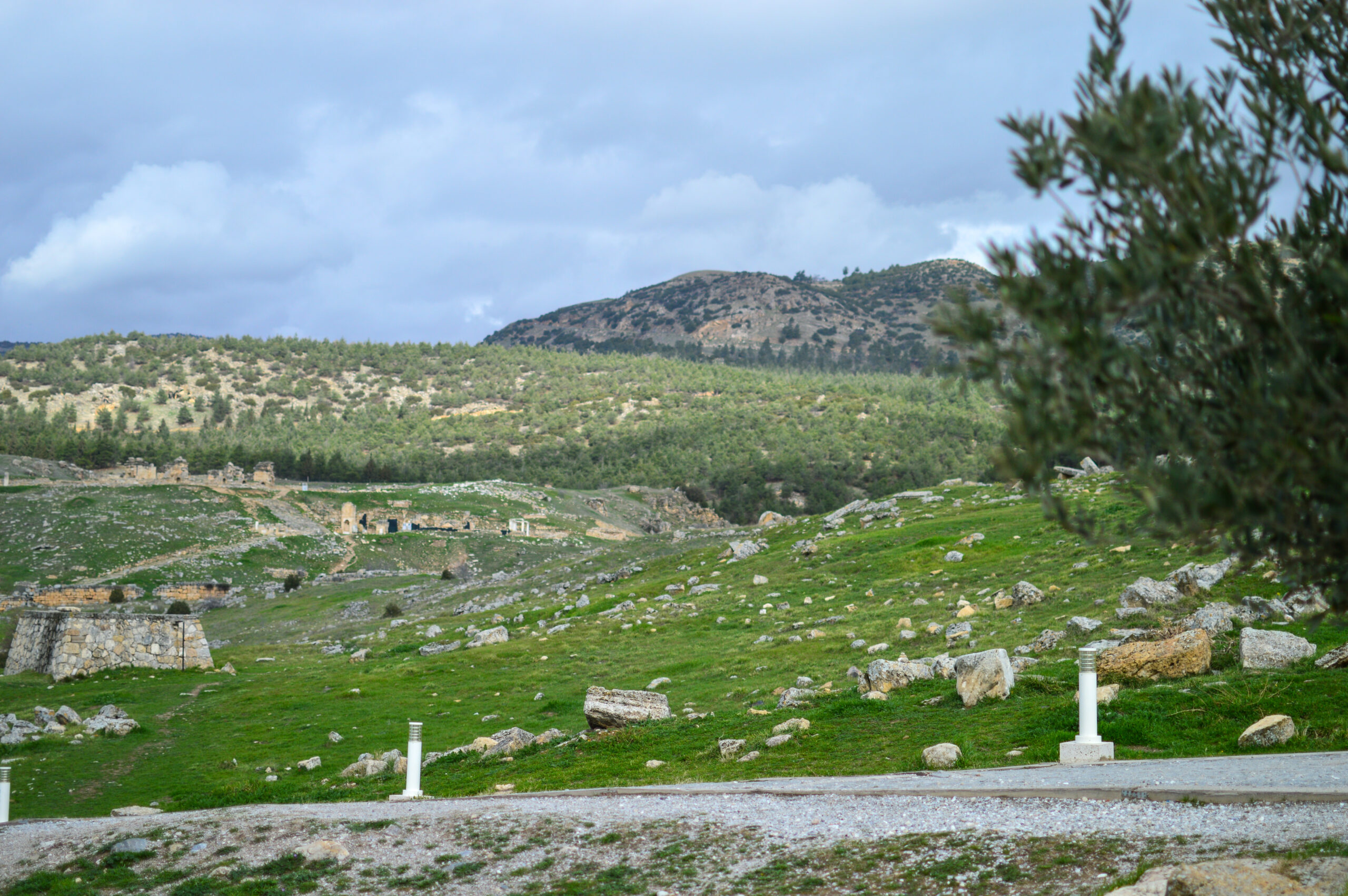
These photos show Pamukkale as it is now, stunning, busy, and fragile, a landscape shaped by slow geology and fast modern pressure, where every stream of warm water matters.