
Resilience Must Redesign Europe’s Energy System
Photo: Robert Tjalondo / Rockin’ Pictures
Europe’s energy transition will fail without resilience as the organising principle of system redesign.
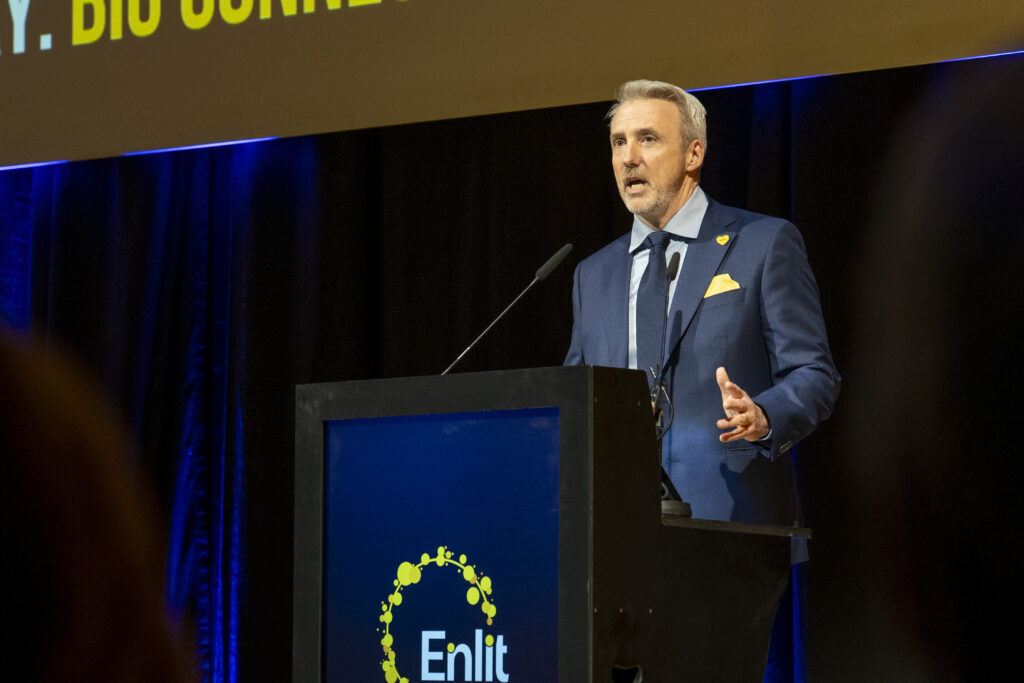
Enlit Europe 2025 in Bilbao offered a compelling snapshot of an industry in transition — ambitious, innovative and technically capable, yet grappling with a stark truth: Europe’s energy system remains dangerously exposed.
Despite record investments and political commitment, the structure underpinning Europe’s energy supply is still shaped by old assumptions and legacy dependencies. Meanwhile, the pressures acting on that system, from geopolitical volatility to rapid electrification and climate-driven extremes, are intensifying.
Across the halls, sessions and roundtables in Bilbao, one message resonated above all: resilience is no longer a goal to aspire to. It is the precondition for Europe’s energy future.
The old blueprint cannot support the new reality
Discussions at Enlit underscored that Europe’s historic, centralised, fossil-fuel-based model is no longer fit for purpose. Gas price spikes have destabilised economies. Ageing infrastructure is struggling under the strain of electrification. And even as renewable deployment accelerates, Europe remains tied to global supply chains for critical technologies.
Climate impacts, from heatwaves to storms, expose further weak points in a system that was never built to absorb such stress.
The takeaway from Bilbao is clear: the vulnerabilities are systemic, and so the solutions must be too.
Redesigning the system around flexibility and integration
Speakers and delegates emphasised that resilience cannot be achieved simply by adding more renewable capacity. A full architectural transformation is required.
Electrification is accelerating across industry, transport and buildings. Data centres, semiconductor fabs, EV fleets and heat pumps are driving unprecedented demand. At the same time, households and businesses are becoming energy producers through rooftop solar and storage.
This growing complexity can be an asset — but only if Europe builds a system capable of orchestrating it.
The consensus at Enlit was clear: Europe needs a flexible, distributed and fully integrated energy system that reflects how energy is produced, consumed and exchanged today.
Digitalisation: the backbone of resilience
Bilbao showcased a wave of digital tools that are no longer optional add-ons but essential foundations of a resilient energy system.
These include:
- Digital monitoring and predictive maintenance for real-time insight and system efficiency
- AI-enabled grid automation capable of anticipating faults and mitigating extreme weather impacts
- Smart tariffs and automated home energy systems that empower consumers to support system balancing
- Distributed energy resource management to integrate solar, storage, EVs and flexible loads into one coherent system
The takeaway is clear: digitalisation is the connective tissue that turns complexity into resilience.
Sector integration, the next strategic leap
A recurring theme in Bilbao was the need to integrate electricity, gas and emerging vectors such as hydrogen. Gas will continue to play a role — not as baseload, but as a flexible partner to renewables.
Proper integration enhances security of supply, reduces costs and provides adaptability during climate-driven disruptions. Yet current regulation remains fragmented and technology-specific, slowing progress.
What Europe now needs are technology-neutral, innovation-friendly frameworks that match the realities of an interconnected energy system.
Collaboration, the defining requirement
Perhaps the strongest takeaway from Enlit Europe 2025 was that resilience cannot be built in silos.
Progress demands:
- Grid operators modernising and digitalising at speed
- Industry embracing flexibility, electrification and efficiency
- Policymakers enabling cross-sector planning and integrated market design
- Consumers becoming active participants through smart devices and automated demand response
- Technology providers accelerating advances in digitalisation and storage
The future belongs to systems, not sectors.
The cost of inaction is rising
Europe has the technologies it needs — digitalised grids, flexible demand, renewables, automation, storage and integrated infrastructure. What it lacks is speed, alignment and the willingness to redesign the system around resilience.
The takeaway from Bilbao is unambiguous: resilience is not an upgrade. It is the foundation of Europe’s sovereignty, competitiveness and climate leadership.
If Europe acts now, it can build an energy system that is cleaner, smarter, more integrated and more resilient than anything that came before. If it waits, today’s vulnerabilities will become tomorrow’s entrenched crises. The time to build a resilient, future-proof European energy system is now.